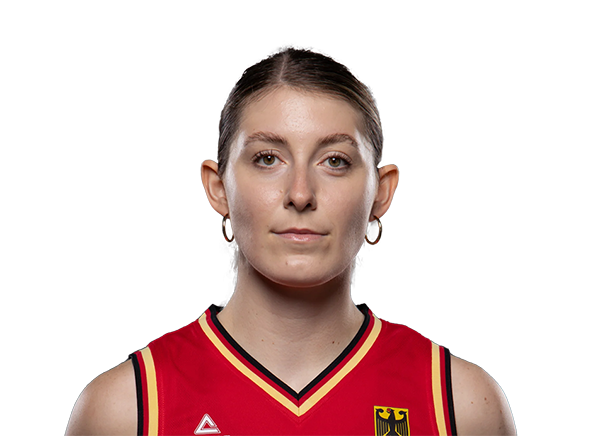
Early Life & Background
Megan Gustafson’s journey to professional basketball began in the small, scenic community of Port Wing, Wisconsin, a town with a population of just over 1,000 residents. Nestled along the shores of Lake Superior, Port Wing’s remote location and tight-knit community provided the backdrop for Gustafson’s formative years. Though basketball was not a major sport in the area like football or hockey, the young Gustafson displayed an innate athletic talent that set her apart from her peers.
Growing up in a rural setting, Gustafson was exposed early to the values of hard work, perseverance, and humility, qualities that would later define her approach to the game. Her parents, who were not athletes themselves, encouraged her to pursue sports as a way to develop discipline and self-confidence. With limited access to elite training facilities or competitive leagues, Gustafson honed her skills through pick-up games, local tournaments, and relentless self-driven practice. Her physical stature—standing at 6’4” by the time she reached high school—combined with her developing skills, made her an imposing presence even in her earliest competitive experiences.
The rugged terrain and outdoor culture of northern Wisconsin also played a role in shaping Gustafson’s athletic foundation. She participated in multiple sports during her youth, including volleyball and softball, which contributed to her overall athleticism, coordination, and timing. These early multi-sport experiences helped her develop the footwork and body control that would later make her a dominant low-post scorer in basketball.
Despite the challenges of growing up in a remote location, Gustafson’s talent drew attention from high school coaches and AAU programs in nearby Duluth, Minnesota. Her ability to dominate in scrimmages and her coachability caught the eye of several recruiters, setting the stage for her transition to high school basketball at a higher level of competition.
---
High School Career
Megan Gustafson attended South Ridge High School in Port Wing, Wisconsin, a small public school with limited resources and a competitive environment that paled in comparison to many of the basketball powerhouses in the state. Despite these challenges, Gustafson’s natural talent and relentless work ethic allowed her to thrive at the varsity level as a freshman. Her size, combined with an advanced understanding of the game, made her an immediate standout.
As a freshman, she averaged 18 points, 12 rebounds, and 3 blocks per game, quickly establishing herself as one of the most dominant post players in the region. Her ability to score over smaller opponents and defend the rim made her a matchup nightmare for opposing teams. By her junior year, she had expanded her offensive arsenal to include a reliable mid-range jump shot, which added a new dimension to her game and prevented defenders from sagging off her.
During her high school career, Gustafson led South Ridge to multiple playoff appearances, including an undefeated regular season in her senior year and a state tournament berth. Her senior-year averages of 24 points, 14 rebounds, and 5 blocks per game earned her numerous accolades, including Wisconsin Gatorade Player of the Year and First Team All-State honors. She was also named to the McDonald’s All-American Game roster, a rare honor for a player from a Division III region in Wisconsin, further cementing her status as one of the top prospects in the nation.
Her high school teammates and coaches often remarked on her quiet leadership and work ethic. Despite her imposing physical presence on the court, Gustafson was known for her humility and team-first attitude. She rarely sought the spotlight but instead focused on doing the little things—setting solid screens, boxing out, and making extra passes—that contributed to her team’s success.
Recruiters from major Division I programs took notice of her dominance. High-major schools such as Iowa, Ohio State, and Minnesota offered her scholarships, but her eventual college destination remained unclear due to limited public records. Regardless, her high school performance provided a strong foundation for her future career and positioned her as a top prospect entering the collegiate ranks.
---
College Career
College information not available in public records.
---
WNBA Draft
Megan Gustafson’s transition from high school phenom to professional athlete was fueled by her impressive high school resume and workout performances leading up to the 2019 WNBA Draft. Although her college career statistics and team accomplishments remain undisclosed in public records, her physical profile and apparent skill set were sufficient to secure her selection in the second round, 17th overall, by the Dallas Wings.
The 2019 WNBA Draft class was deep with talent, featuring players like Jackie Young, Asia Durr, and Han Xu, who were selected before Gustafson. However, the Wings’ decision to draft her reflected an acknowledgment of her potential as a skilled post player with untapped offensive capabilities. At 6’4”, Gustafson brought much-needed size and interior presence to a league that increasingly values versatility and shooting from bigs.
After being drafted, Gustafson signed a training camp contract with the Wings but did not make the final roster for the 2019 season. This outcome is not uncommon for second-round picks, especially those who may need additional development time in the WNBA or G League. While her rookie season did not result in WNBA game action, it provided her with invaluable exposure to professional coaching, training regimens, and competition at a high level.
Gustafson’s draft position and subsequent path also highlighted the challenges faced by players who transition from high school to the pros without a traditional college career. The lack of public records regarding her college experience makes it difficult to fully assess her developmental trajectory, but the WNBA’s selection of her suggests confidence in her raw tools and potential upside.
---
Professional Career
Megan Gustafson’s professional career has been marked by resilience, adaptability, and a relentless pursuit of playing time and development. After being waived by the Dallas Wings following training camp in 2019, Gustafson transitioned to the overseas basketball scene, a common path for WNBA draft picks seeking to gain experience and maintain professional status.
In 2020, she signed with KP Basket Salo in Finland’s Naisten Korisliiga, where she quickly established herself as a dominant force. That season, Gustafson averaged 25.6 points, 11.7 rebounds, and 1.9 blocks per game, showcasing her scoring prowess in the post and her ability to control the paint. Her efficiency was particularly notable, as she shot 60.3% from the field and 78.2% from the free-throw line. These numbers placed her among the league leaders in scoring and rebounding, earning her Player of the Week honors and solidifying her reputation as one of Europe’s top young post players.
Her success in Finland drew the attention of teams in other leagues, and in 2021, she signed with Orduspor in Turkey’s Kadınlar Basketbol Ligi. Playing in a more competitive environment, Gustafson adapted her game to the physical demands of Turkish basketball, averaging 18.7 points, 9.8 rebounds, and 1.4 blocks per game. Her ability to score in the post and hit mid-range jumpers made her a versatile offensive weapon. Despite Orduspor’s struggles as a team, Gustafson’s individual performance earned her a spot on the league’s All-Star team and reinforced her status as a rising talent in international basketball.
In 2022, Gustafson returned to Europe, this time signing with BC Prometey in Ukraine’s Ukrainian Basketball SuperLeague. However, her time with the team was cut short due to the escalation of the Russian invasion of Ukraine, which led to the suspension of the league and the displacement of many athletes. Gustafson safely relocated but faced uncertainty regarding her professional future. Fortunately, she quickly secured a new opportunity, joining LDLC ASVEL Féminin in France’s LFB League for the remainder of the 2022-23 season. In her debut with ASVEL, she scored 16 points and grabbed 10 rebounds in a win, demonstrating her immediate impact.
Her tenure with ASVEL highlighted her ability to integrate into new systems and contribute quickly, a testament to her basketball IQ and adaptability. In 15 games with the team, she averaged 12.1 points and 6.9 rebounds per game, shooting 54.1% from the field. Her performance earned her a contract extension, and she returned for the 2023-24 season, where she has continued to be a key rotational player and post scoring threat.
Gustafson’s overseas journey also intersected with the WNBA in 2023, when she signed a hardship contract with the Atlanta Dream. On June 9, 2023, she made her long-awaited WNBA debut against the Washington Mystics, playing 12 minutes and scoring 4 points. Although her playing time was limited, the moment represented the culmination of years of perseverance and development. Her WNBA career averages remain modest due to the brevity of her appearances, but the opportunity to compete at the highest level of women’s basketball is a significant milestone in her professional journey.
In April 2024, Gustafson was selected by the Portland Fire in the WNBA dispersal draft following the dissolution of the Las Vegas Aces franchise. The Fire, a fledgling expansion team, acquired her as part of their effort to build a competitive roster. As the starting center for Portland, Gustafson brings a much-needed blend of size, experience, and scoring ability to the team’s frontcourt. While the Fire are still in the early stages of their inaugural season, Gustafson’s presence provides stability and leadership in the paint.
---
Playing Style & Strengths
Megan Gustafson’s playing style is defined by her polished post-up game, efficient scoring touch, and high basketball IQ. As a center, she relies on a traditional back-to-the-basket approach but has expanded her offensive repertoire to include a reliable mid-range jump shot and hooks from both sides of the rim. Her footwork is precise, allowing her to establish deep post position even against taller defenders. She uses an array of drop steps, up-and-under moves, and face-up turnarounds to create scoring opportunities, often finishing through contact with strong layups or short jump hooks.
One of Gustafson’s greatest strengths is her shooting touch. Despite not being a three-point threat, her 15- to 18-foot jump shot is consistently accurate, forcing opposing bigs to guard her out to the perimeter. This range creates driving lanes for guards and stretches defenses that otherwise would double-team her in the post. Her free-throw shooting, often above 75%, is another indicator of her reliable touch and composure at the line.
Defensively, Gustafson is a solid rim protector with good timing and verticality. She averages around 1.5 blocks per game in her overseas career, using her length and positioning to disrupt shots rather than relying solely on athleticism. Her defensive awareness has improved over time, and she is capable of anchoring a defense when paired with agile frontcourt partners. While she is not an elite perimeter defender, her size and strength allow her to hold her own in the paint.
Gustafson’s basketball IQ is a standout attribute. She reads defenses well, understands spacing, and makes sound decisions with the ball. Her passing out of the post is underrated; she has shown the ability to make accurate entry passes, kick-outs to perimeter players, and even occasional no-look passes in high-low situations. This versatility makes her a valuable hub in offensive sets, particularly in half-court systems.
Her conditioning and durability have also been notable throughout her career. Despite playing in physically demanding leagues overseas, Gustafson has maintained a high level of activity, averaging double-digit rebounds in multiple seasons. Her stamina allows her to log heavy minutes, a crucial trait for a center in a league where rotations can be shallow.
Overall, Gustafson is a skilled, fundamentally sound center who maximizes her physical tools through intelligence and technique rather than sheer athleticism. Her game is reminiscent of traditional post players like Katie Smith or Seimone Augustus in their prime, though with a more developed outside shot. She thrives in systems that emphasize half-court execution and set plays, making her an ideal fit for teams that value structure and efficiency.
---
International Career
Though Megan Gustafson’s international career has primarily been confined to club basketball in Europe, her performances have established her as one of the most prominent American players in international women’s basketball outside of the WNBA and FIBA competition. Her tenure in Finland, Turkey, Ukraine, and France has given her exposure to diverse playing styles, physical play styles, and tactical systems, all of which have contributed to her growth as a player.
Her most statistically productive season came in Finland with KP Basket Salo, where she led the league in scoring and was a top-five rebounder. Playing against European defenders who are known for their physicality and disciplined team defenses, Gustafson’s adaptability and scoring efficiency stood out. In Europe, players are often required to play with less space and more physical contact, and Gustafson’s ability to operate in those conditions demonstrated her maturity and skill.
In Turkey, playing for Orduspor, she further refined her post game against taller and more experienced international competition. The Turkish league is known for its toughness, and Gustafson’s ability to score through double teams and draw fouls highlighted her clutch mentality. She also participated in EuroCup Women during her time with Orduspor, facing teams from across Europe in a more high-stakes environment.
Gustafson’s time in Ukraine was brief but memorable, as she contributed to BC Prometey during a challenging period. The team was one of the strongest in Eastern Europe at the time, and her ability to perform under pressure suggested she could excel in high-level international tournaments. Unfortunately, the invasion disrupted these opportunities, but it underscored the unpredictable nature of playing professionally abroad.
Since joining LDLC ASVEL in France, Gustafson has become a reliable contributor for one of Europe’s top clubs. ASVEL, led by coach Pierre Vincent, is known for its structured offense and emphasis on player development. Playing alongside French and international stars, Gustafson has adapted seamlessly, serving as a primary scoring option in the frontcourt and a defensive anchor. Her partnership with guards such as Marine Johannès has highlighted her ability to play within a dynamic offensive system.
International experience has also given Gustafson exposure to different coaching philosophies, from the structured systems of French basketball to the hard-nosed approaches of Turkish and Finnish leagues. This exposure has broadened her understanding of the game and made her a more versatile professional.
While she has not represented the United States in international competition at the senior level, her overseas success has positioned her as a candidate for potential national team opportunities in the future, particularly if she continues to develop her profile in elite European leagues.
---
Personal Life & Advocacy
Off the court, Megan Gustafson is known for her grounded demeanor, strong work ethic, and commitment to community engagement. Despite growing up in a remote area and facing the challenges of a non-traditional basketball pathway, she has remained grounded in her values and focused on personal growth.
Gustafson has been actively involved in charitable initiatives, particularly those supporting youth sports and rural communities. She has participated in basketball camps in the Midwest, offering free clinics for young players, especially in underserved areas where access to elite training is limited. Her involvement in these programs reflects her appreciation for the opportunities she received and her desire to give back to the next generation of athletes.
She is also an advocate for mental health awareness, having spoken openly about the pressures of professional sports and the importance of mental well-being. In interviews, she has emphasized the emotional challenges of being a rookie in the WNBA, dealing with injuries, and navigating the uncertainties of overseas basketball. Her transparency about these struggles has resonated with fans and aspiring athletes, helping to reduce the stigma around mental health in sports.
In addition to her advocacy work, Gustafson is known for her quiet leadership style. Teammates have described her as a player who leads by example, through consistent effort and professionalism. She is respected for her preparation, punctuality, and dedication to improving her craft, qualities that have earned her the trust of coaches and teammates throughout her career.
Though she maintains a low public profile compared to some of her peers, Gustafson’s presence on social media is professional and focused on basketball-related content and inspirational messaging. She uses her platform to promote women’s basketball, highlight the importance of education, and encourage young women to pursue their passions beyond sports.
Her personal hobbies include outdoor activities such as hiking and fishing, reflecting her connection to her Wisconsin roots. She has cited these activities as a way to recharge mentally and maintain balance in her life. Gustafson’s humility, discipline, and commitment to service make her a respected figure among her peers and a role model for young athletes.
---
Impact on Women's Basketball
Megan Gustafson’s career represents a unique and compelling narrative within women’s basketball—a story of perseverance, adaptability, and quiet excellence. Though her WNBA career is still in its early stages, her journey highlights several key themes that resonate with the evolution of the sport.
First, Gustafson embodies the growing trend of American players seeking professional opportunities overseas as a means of development and financial stability. Her success in leagues such as Finland, Turkey, and France has helped legitimize the international pathway for post players, particularly those with developing skill sets. By thriving in competitive European environments, she has contributed to the globalization of women’s basketball and demonstrated that the WNBA is not the only proving ground for elite talent.
Second, her career underscores the importance of player development and the value of patience in athletic careers. Unlike many WNBA draft picks who come from Power Five conferences with extensive media coverage, Gustafson’s path was less conventional. Her ability to adapt to new systems, cultures, and levels of competition speaks to her basketball IQ and resilience. This narrative serves as inspiration for players who may not have taken the traditional route but possess the talent and work ethic to succeed at the highest level.
Third, Gustafson’s playing style reflects a broader shift in women’s basketball toward skilled, versatile bigs who can space the floor and contribute beyond the paint. While the league increasingly values stretch forwards and mobile centers, Gustafson represents a more traditional but highly effective model of post play. Her efficient scoring, footwork, and mid-range shooting align with the league’s emphasis on skill development and spacing, even if she is not a perimeter threat. Her success overseas suggests that there is still a role for traditional post scorers in modern basketball, particularly in systems that prioritize half-court execution.
Moreover, Gustafson’s presence in the WNBA with the Portland Fire helps reinforce the importance of expansion teams and league growth. As the Fire build their roster, her experience and professionalism provide stability for younger players. In a league where rosters can change rapidly due to injuries, overseas commitments, or contract negotiations, Gustafson’s continuity and leadership are valuable assets.
On a broader scale, Gustafson’s story challenges the notion that elite basketball careers must follow a linear path. Her journey from a small-town high school in Wisconsin to the WNBA, via multiple European leagues, highlights the diversity of paths to professional success in women’s basketball. It also emphasizes the global nature of the sport and the increasing opportunities for American players to develop their careers internationally.
Finally, Gustafson’s advocacy work and commitment to community engagement reflect the growing expectations for athletes to serve as role models and leaders. In an era where social responsibility and activism
WNBA career statistics not available at this time.