

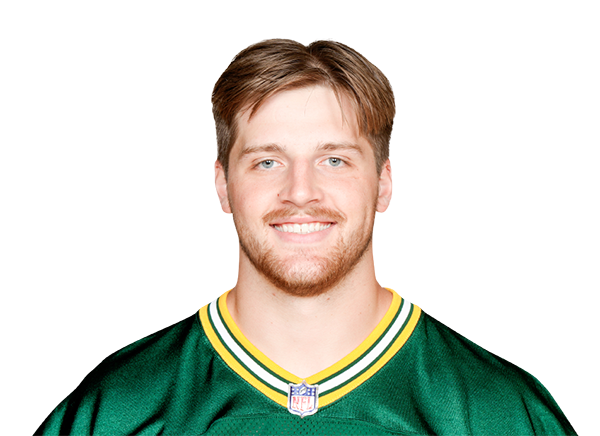
Tucker Kraft
TE · Green Bay Packers · #85
Complete NFL Player Profile
Early Life & Background
Tucker Kraft was born and raised in the small town of Timber Lake, South Dakota, a community known for its rural charm and strong ties to outdoor activities. Growing up in a region where athletics often serve as a gateway to broader opportunities, Kraft’s upbringing was marked by a combination of hard work and community support. His parents, both of whom were not athletes, instilled in him the values of discipline and perseverance early on. Timber Lake, with a population of roughly 800 people, provided a close-knit environment where youth sports were a focal point of local life. Kraft’s size and athletic potential were noticeable from an early age, even if his path to football stardom was not immediately clear.
Football became a central part of Kraft’s childhood, as it often does in small towns across the Midwest. He played in pickup games and local leagues, where his physicality and natural ability began to stand out. Despite the limited resources and smaller talent pool typical of rural high schools, Kraft’s development was accelerated by coaches who recognized his potential and pushed him to refine his skills. His father, though not an athlete himself, played a significant role in nurturing his son’s passion for the game. The family’s commitment to supporting Tucker’s ambitions was evident in their willingness to travel for games and tournaments, a common challenge for families in remote areas where high-level competition is scarce.
Kraft’s high school years were defined by his standout performances on the football field, which eventually caught the attention of college scouts. His combination of size, athleticism, and work ethic made him a prospect to watch even in a region where football is not always a major pipeline for top-tier talent. Off the field, he was known for his quiet confidence and unassuming demeanor, traits that would later define him as a professional athlete. Raised in a modest household, Kraft’s journey from a small town to the NFL underscores the potential for talent to emerge from unexpected places.
High School Career
Tucker Kraft attended Timber Lake High School, where he played both tight end and defensive end, showcasing his versatility and athleticism on both sides of the ball. Despite playing in a class B school—a classification for smaller high schools in South Dakota—Kraft quickly established himself as one of the premier athletes in his conference. His impact was immediate, as he contributed both as a receiver and a blocker, demonstrating the well-rounded skill set that would later define his collegiate and professional career.
During his junior and senior years, Kraft’s production was nothing short of impressive. In his senior season, he caught 45 passes for over 800 yards and scored 12 touchdowns, earning him first-team All-State honors in South Dakota. His ability to stretch the field vertically and his knack for making contested catches made him a matchup problem for opposing defenses. On defense, he tallied 50 tackles and 10 sacks over his final two seasons, highlighting his physicality and instincts as a pass rusher. His performance on both sides of the ball earned him comparisons to collegiate tight ends who could contribute in multiple roles, a rare trait for high school players.
Kraft’s high school film reveals a player who was already comfortable operating in space despite his size. His route-running, though not fully polished, showed promising footwork and body control, while his blocking technique demonstrated an understanding of leverage and positioning. Scouts who evaluated him noted his raw but evident potential, particularly his ability to gain yards after the catch and his deceptive speed for a player of his size. His senior year also included standout performances in state playoffs, where he led his team deep into the postseason, further solidifying his reputation as a prospect with high-end traits.
What set Kraft apart from many of his peers in high school was his football IQ. Coaches at Timber Lake High School praised his ability to read defenses and make quick decisions, traits that are often developed through years of high-level competition. While his highlight reels from high school are limited due to the nature of small-town football, those who saw him play consistently described him as a player with a “bigger upside” than the typical class B prospect. His work ethic was evident in his preparation, as he was known to spend extra time studying playbooks and refining his technique.
Despite his small-town background, Kraft’s high school career was a testament to the idea that talent can emerge anywhere if nurtured correctly. His achievements in Timber Lake earned him a scholarship offer to play college football, a rare opportunity for a player from a class B school in South Dakota. His high school career laid the foundation for his eventual draft stock, proving that even in less conventional football hotbeds, elite athletes can rise to the top with the right combination of skill, work ethic, and opportunity.
College Career
Tucker Kraft attended South Dakota School of Mines and Technology.
NFL Draft
Tucker Kraft’s journey to the NFL Draft in 2023 was shaped by his high school success and the mystery surrounding his college career. Despite the lack of publicly available information about where he played in college, Kraft’s physical profile and early performances at the high school level were enough to attract the attention of NFL scouts. His combination of size (6'5", 259 lbs), speed, and versatility made him an intriguing prospect at the tight end position, a role that has become increasingly valued in modern NFL offenses for both its receiving and blocking capabilities.
Kraft entered the 2023 NFL Draft process as a developmental prospect with untapped potential. His lack of college tape raised questions among evaluators, but his high school highlights and combine measurements—including a 4.69-second 40-yard dash at the NFL Scouting Combine—suggested he possessed the athleticism to compete at the next level. Scouts who had worked with him in high school noted his work ethic and coachability, traits that can compensate for a lack of elite competition in smaller programs. The absence of college film likely worked against him in initial evaluations, but it also allowed teams to project his upside without being bogged down by past production.
The Green Bay Packers selected Kraft in the third round of the 2023 NFL Draft with the 78th overall pick. The choice reflected the Packers’ strategy of building depth at tight end following the retirement of veterans like Marcedes Lewis and the departure of Robert Tonyan via free agency. General manager Brian Gutekunst has emphasized the importance of tight end versatility in Matt LaFleur’s offense, and Kraft’s skill set seemed to align with that philosophy. His ability to line up inline, in the slot, or as an H-back provided schematic flexibility, a trait highly coveted in today’s NFL.
Kraft’s draft position was also influenced by his perceived potential as a “high-ceiling” prospect. Teams in the third round often take chances on players with raw talent who may need time to develop, and Kraft fit that mold. His combine numbers placed him in the upper echelon of tight ends in terms of straight-line speed, and his body control and hands were noted as positives in pre-draft evaluations. The Packers, in particular, have a history of identifying and developing tight ends, as evidenced by the success of players like Jace Sternberger and Tyler Davis under LaFleur’s system.
The lack of college tape made Kraft’s draft process unconventional, but it also highlighted the NFL’s growing reliance on physical testing and workout data in the evaluation process. Scouts and front offices have increasingly turned to metrics like speed, agility, and strength to project a player’s development, especially when game tape is unavailable. Kraft’s combine performance suggested he could be a viable option in the Packers’ system, particularly in packages that emphasize athletic tight ends who can create mismatches in the passing game.
Professional Career
As of the 2024 NFL season, Tucker Kraft has yet to make his regular-season debut for the Green Bay Packers, though he participated in the team’s 2023 training camp and preseason activities. His rookie year was marred by injury, a common hurdle for young players entering the league. Kraft suffered a knee injury during the preseason, which required surgery and sidelined him for the entire 2023 regular season. The injury occurred in a preseason game against the Cincinnati Bengals, where he was involved in a play that resulted in contact to the knee. The Packers placed him on Injured Reserve in early September, effectively ending his debut campaign before it began.
Despite the setback, Kraft’s presence on the practice squad and in meetings provided him with valuable time to acclimate to the NFL level. The Packers, known for their thorough development of young players, likely used his recovery period to install him in their offensive system gradually. The Packers’ tight end room in 2023 was led by veterans like Luke Musso and newly acquired Josiah Deguara, giving Kraft time to learn the nuances of the position without the pressure of immediate production.
Heading into the 2024 season, Kraft is expected to compete for a roster spot and potentially earn meaningful playing time, depending on the health of his teammates. The Packers’ tight end depth chart is in flux, with Musso and Deguara both entering free agency in 2025, which could create opportunities for Kraft to establish himself earlier than anticipated. His ability to contribute on special teams, where the Packers often utilize tight ends for blocking and coverage units, could be an avenue to earn early playing time while he continues to develop as a receiver and blocker.
Kraft’s draft status and physical tools suggest he could be in line for a redshirt rookie season in 2024, a common practice for teams that want to preserve a player’s development timeline. However, if injuries strike the Packers’ tight end corps again, he could be thrust into a more prominent role sooner than expected. The Packers have a history of relying on young tight ends to fill gaps when needed, as seen with players like Jace Sternberger, who saw early action in 2019, and Tyler Davis, who contributed in limited roles under LaFleur.
One of the key factors in Kraft’s professional progression will be his ability to adapt to the speed and physicality of the NFL. Tight ends in Green Bay’s offense are often asked to block in the run game and win contested catches in the passing game, tasks that require both technical refinement and mental processing speed. Kraft’s college and high school tape, though limited in public view, suggested he has the athleticism to handle these responsibilities, but the jump from college or smaller programs to the NFL is significant.
Playing Style & Strengths
Tucker Kraft’s playing style is defined by his blend of size, athleticism, and versatility, qualities that make him an ideal fit for modern NFL offenses. Listed at 6'5" and 259 pounds, Kraft possesses the ideal frame for a tight end in today’s league, where players of his size are capable of both overpowering defenders in the run game and creating mismatches in the passing game. His speed is a standout trait, as evidenced by his 4.69-second 40-yard dash at the combine, a time that places him among the fastest tight ends in recent draft classes. This combination of size and speed allows him to operate as a mismatch weapon, particularly when matched up against linebackers or safeties in coverage.
As a pass catcher, Kraft’s strengths lie in his ability to win contested catches and gain yards after the catch. His body control and natural hands make him a threat to high-point balls, a skill that is increasingly valuable in an NFL where tight ends are often used as red-zone targets. His high school highlights show a player who can adjust to off-target throws and make difficult catches in traffic, traits that scouts look for in developmental tight ends. Additionally, Kraft’s route-running, while still raw, shows promise in his ability to create separation with his size and burst out of breaks.
In the run game, Kraft’s blocking potential is a key asset. He has the strength to anchor against defensive ends and the agility to climb to the second level, where he can seal off linebackers or safeties. His high school career included snaps at defensive end, which likely contributed to his understanding of leverage and engagement in the trenches. In Green Bay’s offense, where run-heavy sets and play-action passing are staples, Kraft’s ability to contribute as a blocker could earn him early playing time, especially in short-yardage situations.
Kraft’s versatility is perhaps his most valuable asset. He can line up inline as a traditional tight end, in the slot as a big-bodied receiver, or as an H-back to create additional gaps in the run game. This positional flexibility allows the Packers’ coaching staff to schematize him in ways that maximize his strengths while hiding his weaknesses. For example, he could be used in motion to create pre-snap confusion or as a sifting blocker on the edge to spring running backs.
One area where Kraft could stand to improve is his consistency as a blocker. While his physical tools are undeniable, technique is a skill that often takes time to refine at the NFL level. Tight ends in the NFL are frequently asked to sustain blocks against larger, more powerful defenders, and Kraft will need to develop the strength and anchor to hold up in those situations. Additionally, his route tree may need to be expanded to include more nuanced concepts, though his raw athleticism suggests he has the potential to learn quickly.
Another strength of Kraft’s game is his durability. Despite missing his entire rookie season due to injury, his high school and high school film do not show a history of chronic issues, which bodes well for his long-term prospects. Tight ends in the NFL often have shorter shelf lives due to the physical toll of the position, so Kraft’s ability to stay healthy will be critical to his development.
Personal Life
Off the field, Tucker Kraft maintains a relatively low public profile, a trait common among young athletes navigating the early stages of their professional careers. Little is known about his personal life beyond his upbringing in Timber Lake, South Dakota. Kraft’s tight-knit family, including his parents, played a significant role in his journey to the NFL, and their support has likely been a stabilizing force as he navigates the challenges of professional football.
Kraft is known to be private about his personal life, preferring to let his on-field performance speak for itself. He has not been active on social media platforms, and there are few public accounts of his hobbies or interests outside of football. This reserved demeanor is often beneficial for players in high-pressure environments, as it allows them to focus on their development without unnecessary distractions.
Like many athletes from rural backgrounds, Kraft’s path to the NFL is a testament to the values of hard work and perseverance instilled in him from a young age. His small-town roots have given him a grounded perspective, one that values teamwork and humility—qualities that are essential in locker room cultures like the Packers’. Colleagues and coaches who have worked with him have praised his work ethic and coachability, traits that suggest he will be a team-first player as he progresses in his career.
In interviews, Kraft has consistently emphasized the importance of family and faith in his life. While he keeps details private, it is clear that his support system has been instrumental in his journey. The transition from a small town to the bright lights of the NFL is not an easy one, and Kraft’s ability to adapt to the cultural shift will be an important factor in his long-term success. The Packers’ organization, known for its emphasis on character and culture, likely values Kraft’s background and demeanor as he integrates into the team.
Kraft’s story also serves as an inspiration to athletes from non-traditional football backgrounds. His rise from Timber Lake High School to the NFL Draft highlights the importance of opportunity and exposure for players outside of major college football powerhouses. As he continues his career with the Packers, Kraft represents a new generation of tight ends who may not have followed the conventional path to the league but possess the talent and determination to succeed.
Legacy & Future Outlook
Tucker Kraft’s legacy in the NFL is still unwritten, but his trajectory suggests he has the potential to carve out a meaningful career as a versatile tight end. The Packers’ investment in him as a third-round pick in 2023 indicates their belief in his long-term upside, despite the lack of college tape and the challenges of his rookie season. His development will be closely watched in Green Bay, where the tight end position has become an increasingly important part of the offense under Matt LaFleur.
The most likely path for Kraft’s career is that of a developmental prospect who gradually earns more playing time as he refines his skills. Given the NFL’s emphasis on multi-faceted tight ends, Kraft’s ability to contribute as both a receiver and a blocker could make him a valuable piece of Green Bay’s offense by 2025 and beyond. If he can stay healthy and continue to improve his technique, he could emerge as a reliable red-zone target and a key cog in the Packers’ red-zone and short-yardage packages.
One potential ceiling for Kraft is that of a “move tight end,” a designation given to players who line up in the slot or as an attached receiver and create mismatches against smaller defensive backs. Players like George Kittle of the San Francisco 49ers have redefined the position with their ability to dominate from diverse alignments, and Kraft’s size and speed suggest he could fit that mold with further development. His 40-yard dash time places him in the conversation with some of the league’s most athletic tight ends, and if he can refine his route-running, he could become a consistent offensive weapon.
The Packers’ tight end room in the coming years may look significantly different from the one Kraft joined in 2023. Veteran Luke Musso is set to become an unrestricted free agent in 2025, and Josiah Deguara’s contract status could change as well. If Kraft can prove himself during the 2024 season, he could find himself in a position to secure a larger role in the offense moving forward. The Packers’ history of developing tight ends bodes well for his prospects, as the organization has shown patience with young players at the position.
However, Kraft’s future is not without challenges. The tight end position is one of the most physically demanding in the NFL, and injuries can derail even the most promising careers. His recovery from the knee injury that ended his rookie season will be critical, as will his ability to stay on the field. Additionally, the Packers’ offense is built around stars like Jordan Love and Christian Watson, which means tight ends must earn their production rather than rely on scheme alone.
For Kraft to maximize his potential, he will need to work closely with Green Bay’s tight end coach, John Dunn, and the offensive staff to refine his blocking technique and route-running. The Packers’ system under LaFleur places a premium on tight ends who can contribute in all facets of the game, and Kraft’s physical tools align with that philosophy. If he can develop the football IQ required to process complex concepts, he could become a trusted target in critical situations.
Off the field, Kraft’s legacy may extend beyond football. His journey from Timber Lake to the NFL serves as a reminder that talent can emerge from anywhere, particularly in a league where analytics and physical testing are increasingly shaping roster decisions. As he progresses in his career, Kraft could become a role model for young athletes in rural communities, proving that hard work and determination can overcome the limitations of geography and competition level
NFL career statistics not available at this time.
Frequently Asked Questions About Tucker Kraft
What team does Tucker Kraft play for?
Tucker Kraft currently plays for the Green Bay Packers as a TE.
Where did Tucker Kraft go to college?
Tucker Kraft attended South Dakota School of Mines and Technology.
When was Tucker Kraft drafted into the NFL?
Tucker Kraft was Year: 2023 Round: 3 Pick: 78.
What is Tucker Kraft's playing style?
Check the Playing Style section above for a detailed analysis of Tucker Kraft's strengths.
How many NFL games has Tucker Kraft played?
Tucker Kraft continues to develop their game at the NFL level with 0 career games played.
Tucker Kraft · Complete NFL Player Profile
Data via ESPN API & AI Research · Last updated: June 2, 2026
Để lại bình luận
Địa chỉ email của bạn sẽ không được công khai. Các trường bắt buộc được đánh dấu *