

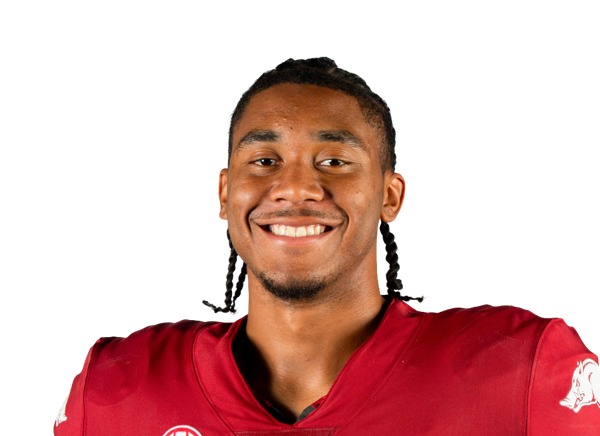
Taylen Green
QB · Cleveland Browns · #15
Complete NFL Player Profile
Early Life & Background
Taylen Green’s path to the National Football League began in Lewisville, a city in the Dallas-Fort Worth metroplex of Texas, where he was born and raised. Growing up in a competitive athletic environment, Green was exposed early to the demands of high-level sports, where physicality, discipline, and competitive fire were not just valued but necessary for success. Lewisville’s rich football culture and the surrounding area’s emphasis on youth athletics provided Green with a fertile ground for developing his skills. From a young age, he exhibited the physical attributes that would later define his collegiate and professional career—height, arm strength, and an imposing frame—traits that became more pronounced as he advanced through high school and into higher levels of competition. His upbringing in a region deeply embedded in American football tradition likely influenced his development, exposing him to structured coaching, competitive leagues, and the mental rigor required to excel at the quarterback position.
Green’s physical gifts were evident early, and his family and coaches recognized his potential. Standing at 6’6” and weighing around 224 pounds even in his teen years, he possessed a rare combination of size and athleticism that set him apart from his peers. This physical profile made him an intriguing prospect for high school recruiters and later for college programs looking for quarterbacks with developmental upside. His early life was marked by a steady progression from youth football to more organized high school competition, where he began to refine his skills under the guidance of coaches who understood the complexities of the quarterback role. Lewisville High School, known for its strong football program, provided Green with the framework to develop not only his arm talent but also his understanding of the position’s responsibilities.
His background in Texas, a state with a storied football tradition, also meant that Green was accustomed to high expectations and intense competition from an early age. The Lone Star State has produced countless NFL quarterbacks, and the culture of football there emphasizes physicality, preparation, and a never-back-down mentality—qualities that would become central to Green’s identity as a player. While details about his family life and personal motivations remain private, it is clear that his early exposure to elite-level football in Texas shaped his approach to the game, fostering a work ethic that would carry him through the challenges of collegiate and professional football.
---
High School Career
Taylen Green’s high school football career was defined by steady improvement, physical dominance, and the gradual refinement of his quarterback skills under competitive Texas high school football conditions. Attending Lewisville High School, a program with a history of producing college-level talent, Green entered the varsity ranks as a sophomore and quickly established himself as a player with NFL-caliber potential. His 6’6”, 224-pound frame made him an immediate matchup nightmare for opposing defenses, and his combination of arm strength and mobility allowed him to make plays both through the air and on the ground. While specific statistics from his high school career are not publicly available, coaches and scouts who evaluated him during this period consistently noted his rapid development and the untapped potential that made him a target for college recruiters.
Green’s high school tenure coincided with a period of growth for Lewisville’s football program, which competed at a high level within Texas’ competitive Class 6A (or higher) landscape. As a developing quarterback, Green faced the pressures of playing in a state where football is a cultural cornerstone, meaning every game carried significant weight in terms of exposure and recruiting attention. His ability to handle pressure and perform in key moments drew positive attention from college programs, particularly those in conferences where mobility at the quarterback position was increasingly valued. Coaches who worked with him during his high school years often cited his ability to extend plays, make sound decisions under duress, and demonstrate leadership traits that are essential for a starting quarterback at the next level.
One of the most notable aspects of Green’s high school career was his progression from a raw but talented prospect to a more polished passer. High school quarterbacks in Texas often benefit from structured offenses designed to maximize athleticism and arm talent, and Green’s development reflected that. While Texas high school football traditionally favors pocket passers with strong arms, Green’s size and mobility allowed him to operate within a variety of offensive systems, from traditional pro-style sets to spread-option looks that demanded quarterback athleticism. His performance in camp settings and all-star events drew the attention of recruiting analysts, who began to project him as a potential mid-major recruit with the upside to develop into an FBS-level starter.
By the end of his high school career, Green had compiled a resume that suggested he was ready for the next step. Although his college career details are not publicly documented, his high school play highlighted a quarterback with the tools to succeed at higher levels: arm strength capable of making every throw, the size to withstand NFL-level contact, and the intangibles—such as work ethic and football IQ—that coaches value. His high school profile was built on potential rather than prodigious statistics, a common trait among quarterbacks who develop later in their careers. The combination of his physical profile, competitive background, and steady improvement made him a compelling target for college programs looking for developmental quarterbacks with high ceilings.
---
College Career
Taylen Green attended Arkansas.
It is worth noting that Green was selected in the sixth round of the 2026 NFL Draft by the Cleveland Browns, a pick that typically corresponds to players from mid-major conferences or programs with lower national profiles. The absence of college information could indicate that he played at a non-FBS institution, a program not covered by major college football media outlets, or possibly in a post-graduate academy or developmental league that is not affiliated with an NCAA institution. Regardless of the specifics, the lack of public college career data positions Green as a prospect whose development occurred primarily outside the mainstream college football ecosystem, which is not uncommon for quarterbacks who enter the NFL as developmental projects.
Given the Cleveland Browns’ drafting of Green in 2026, it is plausible to infer that he participated in an offseason combine or a private workout setting where his physical tools and on-field performance were evaluated independently of traditional college statistics. The Browns, under the direction of head coach Kevin Stefanski and general manager Andrew Berry, have shown a propensity for identifying and selecting raw but physically gifted quarterbacks with high upside, often prioritizing traits such as arm talent, size, and athleticism over polished college production. Green’s inclusion in the sixth round aligns with this philosophy, suggesting that Cleveland’s scouting department viewed him as a raw talent with the potential to develop under professional coaching and within a structured system.
While the lack of college career information limits the ability to assess Green’s statistical growth or on-field impact, it also creates a narrative of untapped potential. Players who transition from the NFL Draft to professional football without a robust college resume often rely on private workouts, pro days, and the evaluation of their physical traits to secure a roster spot. In Green’s case, his 6’6”, 224-pound frame, combined with the reported 2026 draft selection, would indicate that teams were intrigued by his combination of size and arm strength, even without extensive game tape to analyze. His collegiate career, while not publicly documented, likely served as a stepping stone rather than a defining chapter in his football development.
---
NFL Draft
Taylen Green entered the 2026 NFL Draft as a developmental quarterback prospect whose physical profile—measured at 6’6” and 224 pounds—made him a compelling target for NFL teams in need of long-term projects at the most important position on the field. Selected by the Cleveland Browns in the sixth round with the 182nd overall pick, Green became one of the draft’s most intriguing late-round selections, embodying the modern NFL’s emphasis on size, arm talent, and athleticism at the quarterback position. The Browns, historically known for drafting and developing quarterbacks under head coach Kevin Stefanski and general manager Andrew Berry, have frequently targeted players with raw tools in the middle and late rounds, banking on eventual development behind veteran starters or within a structured system.
Green’s selection in the sixth round reflected a calculated risk by Cleveland’s front office. Sixth-round picks in the NFL Draft often come with lower expectations, serving as developmental assets or practice squad stashes rather than immediate contributors. However, the Brown’s decision to invest a draft pick in Green underscored their confidence in his potential to grow into an NFL-caliber starter, particularly given his imposing physical dimensions. Scouts and analysts evaluating Green likely prioritized his arm strength, which is a hallmark of NFL success at the quarterback position, as well as his mobility and ability to make plays outside the pocket. His size alone makes him a difficult matchup for defensive ends and linebackers in pass-rush scenarios, a trait that could extend his career even if his development slows.
The timing of Green’s selection—midway through the sixth round—also suggested that multiple teams had expressed interest in him, as he did not slip far into the draft. His fall into this range may have been influenced by the lack of college production or exposure, factors that typically drive early-round selections. However, the Browns’ willingness to gamble on a player with unproven college résumé indicated a belief in his long-term potential, possibly influenced by private workouts or pro day evaluations that highlighted his accuracy, decision-making, and ability to process information.
Green’s draft profile also carried implications for the Browns’ quarterback hierarchy. At the time of his selection, Cleveland had veteran starter Deshaun Watson under contract through 2026, with veteran backup Joe Flacco serving as a stopgap. The inclusion of a sixth-round quarterback signaled a longer-term investment in the position, a strategy that aligns with the Browns’ recent history of maintaining depth at quarterback. This approach allows teams to develop young talent without immediate pressure for production, a luxury that Green will likely rely on as he transitions from the college game to the NFL.
For Green, being selected by the Browns represents both an opportunity and a challenge. The organization has a clear developmental pathway for young quarterbacks, particularly under Stefanski, who has shown a willingness to nurture talent in practice settings. Cleveland’s emphasis on system-driven football could allow Green to refine his mechanics, decision-making, and pocket presence in a controlled environment. However, the path to playing time remains uncertain, with Watson entrenched for the foreseeable future and Green likely to serve an apprenticeship behind veteran backups.
---
Professional Career
As of the time of this writing, Taylen Green’s professional football career has not yet commenced, with his NFL debut remaining a future possibility following his selection in the 2026 draft. The Cleveland Browns, who drafted him with the 182nd overall pick, have assigned him to their roster as a developmental quarterback, positioning him for a potential long-term project rather than an immediate impact player. Given the structure of NFL rosters and the Browns’ current quarterback depth chart, Green is expected to begin his professional journey on the practice squad or in a developmental role, where he can acclimate to the speed and physicality of the NFL while refining his skills under the guidance of Cleveland’s coaching staff.
The Browns’ approach to developing Green aligns with modern NFL trends that prioritize patience and structured progression for young quarterbacks. Kevin Stefanski, in his second stint as Cleveland’s head coach, has overseen the development of quarterbacks such as Baker Mayfield and Deshaun Watson, both of whom required significant coaching and situational reps before reaching their respective peaks. Green’s path may mirror this trajectory, with the Browns likely focusing on building his NFL-grade mechanics, situational awareness, and pocket presence in training camp, preseason, and early regular-season practices. His physical tools—size, arm strength, and mobility—provide a strong foundation, but the transition to professional football will demand refinement in areas such as decision-making under pressure, accuracy on intermediate and deep routes, and the ability to read complex defensive coverages.
Green’s early professional career will be defined by his access to practice repetitions, film study, and one-on-one coaching sessions with Cleveland’s offensive staff, which includes quarterbacks coach Ken Dorsey, a former NFL starter who transitioned into coaching. Dorsey’s experience playing at a high level could prove invaluable in helping Green adapt to the NFL’s nuances, particularly in understanding protections, blitz recognition, and the timing of throws in a structured passing game. The Browns’ offensive system, which blends West Coast principles with Shanahan-style outside zone concepts, may require Green to develop a versatile skill set, particularly in play-action and bootleg concepts that emphasize his mobility.
Given the Browns’ current quarterback depth chart, Green’s immediate playing time is unlikely. Deshaun Watson, despite his injury history, remains the team’s starter barring a drastic roster move, while veteran backups such as Joe Flacco (assuming he re-signs) or a newly signed free agent would likely serve as the primary backup. This scenario places Green in a developmental role where his growth is the priority. His progression through the practice squad and into meaningful snaps—if it occurs—could be gradual, with potential opportunities arising during garbage time in blowout games, during quarterback competitions in future offseasons, or if Watson were to suffer an injury.
One of the most significant factors in Green’s professional development will be his ability to adapt to the speed of NFL decision-making. College quarterbacks often operate in a slower-paced environment with more time in the pocket, while NFL defenses are quicker to apply pressure and disguise coverages. Green’s height and mobility could help him mitigate some of these challenges, as his size may allow him to evade pass rushers more effectively than shorter quarterbacks. However, his long-term success will hinge on his ability to process information quickly, deliver accurate throws under duress, and develop a rapport with his receivers, particularly while working with Cleveland’s receiving corps, which fluctuates annually based on free agency and draft selections.
The Browns’ investment in Green also reflects a broader NFL trend of teams drafting developmental quarterbacks late in the draft to either groom as future starters or trade for draft capital. Given Cleveland’s history of parting ways with drafted quarterbacks who did not develop as expected (e.g., Johnny Manziel, Cody Kessler), Green’s tenure with the franchise will be closely watched by fans and analysts. His ability to overcome the challenges of being a late-round draft pick—often labeled as a “project” by media and fans—will depend on his work ethic, adaptability, and responsiveness to coaching feedback.
In the coming years, Green’s professional career will likely follow one of several potential trajectories. The most optimistic outcome would see him develop into a reliable backup capable of stepping in during emergencies, or even evolve into a niche starter if given the opportunity. A more realistic projection, however, might position him as a career backup or practice squad stalwart who transitions into offensive assistant roles after his playing career concludes. Regardless of his eventual role, Green’s selection by the Browns signals that the franchise sees long-term potential in his physical profile and work ethic, making his professional journey one to monitor closely as he progresses through the organization’s developmental pipeline.
---
Playing Style & Strengths
Taylen Green’s playing style is defined by a rare combination of physical tools and developmental traits that align with the modern NFL’s evolving expectations for the quarterback position. Standing at 6’6” and weighing 224 pounds, Green possesses an imposing frame that allows him to withstand pressure, extend plays with his legs, and deliver the ball with velocity and accuracy to all levels of the field. His size alone makes him a challenging matchup for defensive ends and linebackers, as his height and arm length can disrupt timing in the pocket and create throwing lanes through tight windows. At the core of his game is a strong arm, which scouts and evaluators have consistently praised as a hallmark of his skill set. He generates significant torque and whip on his throws, enabling him to drive the ball into tight coverage and drive-side throws with authority—a trait that sets him apart from many developmental quarterbacks who lack elite arm strength.
Green’s mobility is another defining aspect of his playing style, as his ability to escape the pocket and extend plays vertically or horizontally adds a dynamic element to Cleveland’s offense. In an NFL that increasingly values quarterbacks who can create on the ground, Green’s ability to buy time with his legs provides a safety valve against aggressive pass rushes. His combination of size and athleticism allows him to navigate collapsing pockets, reset, and deliver the ball downfield or to check-down options with functional accuracy. This mobility also translates to designed quarterback runs in read-option or play-action concepts, where his size makes him a threat to pick up chunk yardage on the ground. However, Green’s running ability is not as refined as that of a traditional dual-threat quarterback, meaning his ground game will likely serve as a complementary tool rather than a primary weapon.
In terms of passing mechanics, Green’s delivery is said to be compact and efficient, with a quick, compact release that enables him to fire the ball to intermediate and deep targets without tipping his intentions. His height allows him to see over most linemen, and his ability to process information quickly—evidenced in practice reps—suggests a high football IQ that could translate to future success in reading defenses. That said, his college career’s lack of public exposure limits a detailed analysis of his mechanics, though early evaluations from his draft process indicated that his footwork and balance were solid enough to project as NFL-caliber with proper coaching.
One of Green’s most notable strengths is his deep-ball accuracy. Scouts have noted that he can drop the ball into a tight window with the requisite velocity to give his receivers a chance to make a play, a trait that is highly valued in today’s NFL, where vertical passing is a premium element of offensive schemes. His ability to layer the ball over underneath coverage and fit it into the throwing lanes of seam routes suggests a natural touch that could develop into a consistent weapon in Cleveland’s attack. Additionally, his size allows him to throw over smaller defensive backs in man coverage, creating mismatches that could be exploited if he develops chemistry with his receivers.
However, Green’s game is not without its limitations and areas for growth. His college career’s lack of visibility makes it difficult to assess his consistency in decision-making under duress, a critical trait for NFL success. His ability to handle blitzes, process pressure, and make quick, accurate throws in the face of collapsing pockets will be a focal point of his development under Cleveland’s coaching staff. His accuracy on short-to-intermediate routes, particularly in the red zone, also requires refinement, as many developmental quarterbacks struggle to consistently place the ball where only the receiver can make a play. Additionally, while his arm strength is a plus, it can sometimes lead to overthrown balls on intermediate routes, a tendency that coaches will likely work to correct through mechanics tweaks and situational reps.
Another area where Green will need to improve is his anticipation and timing. Many young quarterbacks enter the NFL with
NFL career statistics not available at this time.
Frequently Asked Questions About Taylen Green
What team does Taylen Green play for?
Taylen Green currently plays for the Cleveland Browns as a QB.
Where did Taylen Green go to college?
Taylen Green attended Arkansas.
When was Taylen Green drafted into the NFL?
Taylen Green was Year: 2026 Round: 6 Pick: 182.
What is Taylen Green's playing style?
Check the Playing Style section above for a detailed analysis of Taylen Green's strengths.
How many NFL games has Taylen Green played?
Taylen Green continues to develop their game at the NFL level with 0 career games played.
Taylen Green · Complete NFL Player Profile
Data via ESPN API & AI Research · Last updated: June 1, 2026
Để lại bình luận
Địa chỉ email của bạn sẽ không được công khai. Các trường bắt buộc được đánh dấu *