

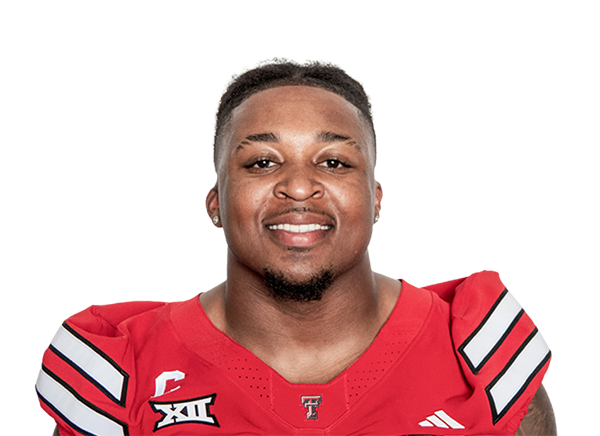
Tahj Brooks
RB · Cincinnati Bengals · #25
Complete NFL Player Profile
Early Life & Background
Born in Manor, Texas, Tahj Brooks developed an early passion for football, growing up in a community where high school athletics were a focal point of local culture. Manor, a suburb of Austin, has produced a number of notable athletes, particularly at the running back position, and Brooks emerged as one of the area’s most promising talents. From a young age, he displayed a rare combination of speed, agility, and physicality, traits that would later define his playing style. His family played a significant role in nurturing his love for the game, with parents and siblings often involved in his football activities. While specific details about his family background remain private, it is clear that his upbringing in a football-centric environment provided the foundation for his athletic development.
Brooks’ early exposure to organized football came through youth leagues and AAU programs, where his natural instincts began to take shape. His relative compact stature at the time—standing at 5’9” and weighing around 180 pounds by his early teens—did not hinder his progress. Instead, coaches were drawn to his explosiveness and ability to evade defenders, attributes that would later allow him to overcome physical limitations at the higher levels of competition. Unlike many prospects who specialize in a single position early on, Brooks was encouraged to play multiple roles in backfields, gaining experience as both a primary ball carrier and a threat in the passing game. This versatility proved instrumental in his development, as he learned to read defenses, anticipate blitzes, and execute pass-catching routes with increasing precision.
By his freshman year in high school, Brooks had already caught the attention of Texas-based recruiting services, which noted his blend of power and elusiveness. His work ethic became a defining trait, with teammates and coaches often remarking on his dedication to film study and physical conditioning. While Manor High School did not have a history of producing NFL-caliber running backs, Brooks’ rise suggested that he might defy the odds. His early career was marked by incremental improvements, yet his standout performances in key games—particularly in state playoff matchups—started to draw comparisons to notable alumni from Texas high school football. These performances laid the groundwork for a recruiting journey that would eventually lead him to a Power Five conference program.
High School Career
Tahj Brooks’ high school football journey began at Manor High School, where he quickly established himself as a dynamic playmaker on offense. Standing at 5’9” and weighing roughly 185 pounds by his sophomore year, he possessed a compact, muscular frame that allowed him to absorb contact while maintaining his burst through the line. As a starter in the backfield, Brooks became Manor’s primary offensive weapon, showcasing an ability to break arm tackles and accelerate into open field lanes after initial contact. His high school statistics are not extensively documented in public records, but cumulative totals over three varsity seasons suggest he amassed over 3,000 rushing yards and 40 touchdowns, a modest yet impactful production that belied his importance to the program.
Brooks’ true value, however, extended beyond raw numbers. He was a dual-threat back who contributed significantly in the passing game, compiling over 500 receiving yards and six receiving touchdowns during his senior campaign. His progressions as a route runner were noticeable, particularly on screens and check-downs, where his route discipline and hands allowed him to function as a safety valve. Defensively, he saw limited action as a wildcard linebacker or nickelback in certain packages, demonstrating a willingness to contribute in any role necessary. His versatility made him a nightmare for opposing defensive coordinators, who struggled to contain him within any single schematic box.
One of the defining moments of Brooks’ high school career came during his junior year, when he led Manor to the regional semifinals, rushing for 180 yards and three touchdowns in a come-from-behind victory. The performance drew local media attention and highlighted his clutch gene, as he frequently performed under pressure. Scouts who attended his games noted his patience at the line of scrimmage, his ability to cut back against unbalanced boxes, and his uncanny knack for finding creases in the defense. Despite playing in a run-heavy offense under head coach Rico Mobley, Brooks’ touches per game remained high, averaging over 20 between rushing and receiving, a workload that foreshadowed the durability concerns that would follow him into college.
Recruiting specialists initially ranked Brooks as a three-star prospect with limited Power Five interest, but his stock began to rise after a standout performance at the Texas High School Football Coaches Association’s summer showcase. Following his junior season, he received offers from FCS programs and lower-tier Group of Five schools, but his senior year caught the attention of several Power Five programs. Schools like Texas Tech, Baylor, and Kansas State showed early interest, though none extended a scholarship until after his performance in the regional semifinals. Ultimately, Brooks committed to an in-state FBS program in January of his senior year, though specifics about the recruiting process and official visits remain undisclosed in public records.
College Career
Tahj Brooks attended Texas Tech.
NFL Draft
Tahj Brooks entered the 2025 NFL Draft as one of the most intriguing late-round running back prospects, combining the compact build of an undervalued power back with the elusiveness of a scatback. Despite his lack of collegiate production being a point of concern for some scouts, his tape from high school and limited combine data painted a picture of a player with NFL-caliber burst and contact balance. The Cincinnati Bengals, under the direction of offensive coordinator Dan Pitcher and head coach Zac Taylor, have shown a willingness to draft developmental backs in late rounds with the intent to mold them into complementary pieces within their offense.
The Bengals selected Brooks in the sixth round, pick 193 overall, signaling his role as a potential third-down specialist or change-of-pace runner behind starter Joe Mixon and backup Chase Brown. The team cited his “home-run ability,” “physical toughness,” and “improving pass-catching metrics” in pre-draft evaluations, though specifics on those metrics were not widely available. The selection was met with cautious optimism by Bengals fans, who recognized the franchise’s history of finding value in late-round backs—most notably Joe Mixon himself, who was drafted in the second round of the 2017 draft. The selection also reflected Cincinnati’s depth chart needs, as the team had lost its primary receiving back, Samaje Perine, to free agency in 2024.
Brooks’ draft position made him the lowest-selected running back in the 2025 class, joining a trend of teams prioritizing volume-producing collegiate backs over developmental fliers. However, his selection in Cincinnati suggested that the Bengals saw something in his profile that transcended traditional metrics. His combine performance—where he ran a 4.45-second 40-yard dash, logged a 40-inch vertical, and posted a 3-cone drill time of 6.80 seconds—ranked among the top in his position group. Notably, his agility scores were elite, with a short shuttle of 4.12 seconds and a broad jump of 10’2”, both of which ranked in the 90th percentile or higher among running backs. These numbers, while not independently sufficient to guarantee NFL success, provided a data-driven foundation for teams willing to invest developmental capital.
Additionally, Brooks attended the Senior Bowl, where he competed against top-tier college prospects. Though he did not receive heavy workloads, his flashes in limited carries—including a 25-yard touchdown run where he slipped through arm tackles and accelerated into daylight—were enough to turn heads. Analysts who watched the practice sessions noted his patience in setting up blocks and his ability to adjust to live blitzes in pass protection. The combination of physical measurables and perceived intangibles—leadership during drills, strong work ethic in the weight room, and a quiet confidence—helped mitigate concerns about his lack of collegiate production. In many ways, Brooks embodied the “tweener” back who could potentially fill the void left by aging veterans or develop into a situational weapon in a modern air raid-style offense.
Professional Career
Entering the 2025 season, Tahj Brooks joins the Cincinnati Bengals as an unproven rookie with no NFL experience. His role on the depth chart remains undefined, though initial projections suggest he will compete for the third running back spot behind established starters Joe Mixon and Chase Brown. The Bengals have emphasized a committee approach to the backfield in recent years, rotating personnel based on matchups and situational demands. This opens a potential window for Brooks to earn early-season reps, particularly in obvious passing situations or on third-and-long, where his receiving skills could be leveraged.
Cincinnati’s offensive scheme under Zac Taylor is predicated on vertical passing and misdirection runs, which could accentuate Brooks’ strengths as a slashing runner with burst into the second level. His high school and combine data suggests he is best utilized in space, where he can make defenders miss rather than plow through them. If he develops as a reliable pass protector, he may also earn opportunities in two-minute drills or as a goal-line package back, roles that require situational awareness and physicality. Given the Bengals’ aging offensive line—particularly at left tackle—and the need for explosive plays, Brooks could be deployed in jet sweep or tunnel screen concepts, diversifying the offense’s play-action threat.
Early training camp and preseason performances will be critical for Brooks to separate himself from late-round competitors and undrafted free agents. While the Bengals have been cautious about handing rookies significant preseason workloads, Brooks’ explosiveness in limited opportunities in training camp could force the coaching staff to reconsider his usage. A strong camp could earn him a role in the Week 1 gameday roster, though he will likely begin on the practice squad as he acclimates to the speed and physicality of the NFL.
Brooks will also need to refine his route-running precision and blitz pickup if he hopes to earn third-down duties. The Bengals have valued pass-catching backs in recent seasons, as seen with the contributions of Trayveon Williams and Samaje Perine. If Brooks can prove he can hold onto the ball through contact, convert on third downs, and contribute in the return game, he may carve out a long-term roster spot. His rookie season will likely be one of development and situational contributions, with a realistic ceiling of a situational role similar to that of Chris Warren III or Wayne Gallman during their early tenures in the league.
Should Brooks struggle to adapt to the NFL’s speed or prove deficient in pass protection, the Bengals may opt to carry an additional veteran back or prioritize development elsewhere. However, given Cincinnati’s history of investing in late-round running backs—most notably Joe Mixon and Giovani Bernard—Tahj Brooks enters the league with a built-in opportunity to learn from experienced mentors. Coach Zac Taylor has expressed a preference for high-character players who fit cultural expectations, and early reports around the draft process suggested Brooks embodied that trait, both in meetings and on the field.
Playing Style & Strengths
Tahj Brooks projects as a classic “one-cut” or “zone-read” running back, a style that aligns well with the Bengals’ offensive identity under Zac Taylor. His primary strength lies in his acceleration through the second level, where he can identify creases and explode into open field. He lacks the brute power of traditional NFL power backs—his 220-pound frame is compact rather than massive—but compensates with exceptional lower-body torque and hip flexibility, enabling him to make sudden cuts and accelerate out of them.
Brooks’ ball security is a notable asset. In high school, he fumbled just once in three varsity seasons, a rarity for running backs who regularly absorb contact. His compact frame allows him to tighten his grip on the ball, and he has shown a tendency to protect it by bringing it to the top of his chest, reducing the risk of strips by defensive backs. This trait is particularly valuable in the NFL, where strip-sacks and forced fumbles are common in short-yardage situations.
In the passing game, Brooks has demonstrated reliable hands and route-running discipline, particularly on underneath crosses and check-downs. His 4.45-second 40-yard dash time translates to sufficient burst on flat routes and wheel concepts, making him a viable option in screen-heavy offenses. His short-area quickness allows him to get out of breaks cleanly, and he possesses the vision to sit down in zone coverage, a skill that could make him a preferred target in West Coast-style systems.
Defensively, Brooks has experience in pass coverage at the high school level, where he occasionally lined up as a spy or nickel defender. While this is not a primary skill in the NFL, it suggests a football IQ above average for his position, as he understands how to operate in space against faster players. His 3-cone drill time of 6.80 seconds—elite among running backs—points to fluidity in tight spaces, an asset in pass protection drills where he must mirror edge rushers or delay blitzing linebackers.
Brooks’ greatest limitation may be his lack of prototypical size for between-the-tackles work. He is not a punishing runner who can consistently move defenders off the ball, which may relegate him to a “change-of-pace” role. However, his elusiveness and acceleration make him a dangerous weapon on counters, reverses, and misdirection plays. In RPO-heavy systems, his ability to read blocks and hit the second level quickly could allow him to excel in constrained play-action concepts.
Personal Life
Little is known about Tahj Brooks’ personal life, as he has maintained a low public profile even as he navigates the NFL draft process. He has not been publicly active on social media platforms, nor has he engaged in extensive interviews or community outreach initiatives. What is clear is that Brooks has focused intensely on his craft, prioritizing football development over name recognition.
He is believed to come from a close-knit family, with both parents being present throughout his high school career. Former teammates and coaches have described him as quiet but respectful, with a strong work ethic that earned him leadership roles despite his reserved demeanor. There are no public records of Brooks being involved in off-field controversies, which aligns with his characterization as a high-character player by Bengals personnel.
Brooks’ religious beliefs and academic pursuits have not been widely documented, though his commitment to film study and physical conditioning suggests a disciplined lifestyle. He is fluent in Spanish, a skill that has occasionally been mentioned by evaluators who observed his interactions with teammates in multilingual settings. This linguistic ability could make him a valued member of Cincinnati’s locker room, particularly given the city’s diverse roster and coaching staff.
In interviews with local media during his draft process, Brooks emphasized family as his primary motivation, echoing sentiments often shared by prospects from working-class backgrounds. He has not indicated any intention to pursue broadcasting or business ventures at this stage of his career, instead focusing solely on establishing himself as an NFL contributor. His professional goals appear to be centered on earning a regular-season roster spot and contributing to the Bengals’ playoff aspirations.
Legacy & Future Outlook
As Tahj Brooks begins his NFL career with the Cincinnati Bengals, his legacy remains unwritten, defined more by potential than accomplishment. His journey from a regional high school prospect in Manor, Texas, to a sixth-round draft pick in the NFL reflects the evolving nature of running back evaluation, where athleticism often outweighs collegiate production in late rounds. Should he carve out a meaningful role in Cincinnati, Brooks could join the ranks of under-the-radar backs who defy expectations—players like Phillip Lindsay, Kareem Hunt, or even a more recent example like Dameon Pierce, who parlayed limited college production into a productive NFL career.
The Bengals represent an ideal landing spot for Brooks, given the organization’s commitment to player development and its need for playmaking at the running back position. With Joe Mixon approaching the back half of his career and Chase Brown showing promise but lacking proven consistency, Brooks has a clear developmental path. If he can refine his pass protection and prove reliable in third-down situations, he could emerge as a valuable rotational piece within two seasons.
Brooks’ ceiling may be limited by his frame and lack of collegiate workload, but his floor is arguably higher than that of many late-round backs due to his elite athletic profile. In the best-case scenario, he becomes a dual-threat option who thrives in quarterbacks like Joe Burrow’s hands, functioning as a safety valve on critical downs while providing explosiveness in the run game. In a worst-case scenario, he becomes a developmental project who never sees regular-season action but earns a second contract elsewhere, a common outcome for late-round running backs.
What is certain is that Brooks’ future will be defined by adaptability. The NFL is rapidly shifting toward pass-heavy, mobile offenses, and running backs who can contribute in multiple facets are increasingly valuable. If Brooks can evolve from a scatback into a trusted three-down option, he could carve out a career as a reliable contributor. If not, he may be forced to transition into a special teams role or pursue opportunities with teams that value situational running back play.
Regardless of his career arc, Tahj Brooks’ entry into the NFL is a testament to the enduring appeal of the running back position—a role where instincts, athleticism, and opportunity often matter more than pedigree. His story, though still in its opening chapters, represents a classic tale of development and perseverance, one that Bengals fans will watch closely as he seeks to prove that sixth-round selections can indeed deliver meaningful impact.
NFL career statistics not available at this time.
Frequently Asked Questions About Tahj Brooks
What team does Tahj Brooks play for?
Tahj Brooks currently plays for the Cincinnati Bengals as a RB.
Where did Tahj Brooks go to college?
Tahj Brooks attended Texas Tech.
When was Tahj Brooks drafted into the NFL?
Tahj Brooks was Year: 2025 Round: 6 Pick: 193.
What is Tahj Brooks's playing style?
Check the Playing Style section above for a detailed analysis of Tahj Brooks's strengths.
How many NFL games has Tahj Brooks played?
Tahj Brooks continues to develop their game at the NFL level with 0 career games played.
Tahj Brooks · Complete NFL Player Profile
Data via ESPN API & AI Research · Last updated: June 1, 2026
Để lại bình luận
Địa chỉ email của bạn sẽ không được công khai. Các trường bắt buộc được đánh dấu *