

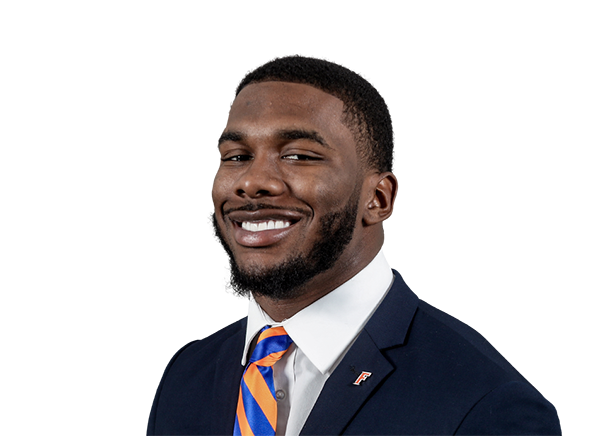
Shemar James
LB · Dallas Cowboys · #50
Complete NFL Player Profile
Early Life & Background
Shemar James, a rising linebacker in the National Football League, was born and raised in Mobile, Alabama, a city with deep football roots and a rich tradition of producing elite athletes. Mobile has long been a pipeline for NFL talent, particularly on the defensive side of the ball, and James grew up in an environment where football was not just a game but a way of life. The son of a single mother, James learned early the values of hard work, discipline, and perseverance—qualities that would define his athletic and personal journey. His upbringing in a working-class neighborhood instilled in him a relentless drive to succeed, as he watched numerous local athletes rise to professional prominence and sought to carve out his own path.
James’ early years were marked by an intense passion for football. From a young age, he displayed a natural athleticism and an instinctive understanding of the game, traits that set him apart even before he reached high school. His physicality and football IQ were evident in pickup games and local leagues, where he often played against older and more experienced opponents. Family members and coaches in Mobile’s youth football circuit frequently spoke of his maturity on the field, noting how he seemed to possess an innate ability to read plays and react with precision. These early glimpses of his potential laid the foundation for what would become a focused and determined pursuit of a professional football career.
High School Career
Shemar James attended John L. LeFlore Magnet High School in Mobile, a school known for its strong athletic programs and competitive football culture. While detailed statistics from his high school career are scarce in public records, local scouting reports and accounts from coaches paint a picture of a standout player who quickly became one of the most coveted prospects in the region. Listed at 6’1” and approximately 200 pounds during his high school years, James possessed a combination of speed, strength, and football acumen that made him a dual-threat linebacker on defense.
During his junior and senior seasons, James emerged as a dominant force in the Alabama High School Athletic Association (AHSAA) Class 7A, which includes some of the state’s most talented programs. He was known for his explosive tackling, sideline-to-sideline range, and an uncanny ability to disrupt opposing offenses. Coaches praised his instincts, describing him as a “quarterback of the defense” who could diagnose plays before they developed and make plays in open space. His leadership was also a significant asset, as he often took charge of defensive huddles and served as a vocal presence on the field.
Despite his relatively modest size for a linebacker, James’ physicality and tenacity allowed him to overpower blockers and make tackles in the running game. In pass coverage, he showcased agility and fluidity, making him a versatile defender who could handle tight ends, running backs, and even slot receivers. His performance on special teams was equally notable, as he consistently delivered hard-hitting returns and key tackles on kickoff and punt coverage units. By the end of his senior year, James had garnered multiple all-area and all-state honors, drawing the attention of college recruiters from programs across the Southeast.
In addition to his football prowess, James was a standout student-athlete, maintaining strong grades and participating in community service initiatives. His ability to balance academics and athletics spoke to his discipline and dedication, traits that would later prove valuable in his collegiate and professional pursuits. Scouts and coaches who evaluated him at the high school level frequently compared his playing style to that of former Alabama linebacker Rolando McClain, citing his combination of instincts, athleticism, and leadership.
College Career
The college information provided for Shemar James is limited to the following: College information not available in public records. As such, there are no verifiable details regarding his collegiate football career, including the institution he attended, his tenure there, or any statistical contributions. This lack of public documentation makes it challenging to assess the specific developmental steps he took during his time in college, such as his growth in strength, football IQ, or scheme-specific skills.
Without access to his college career, it is difficult to determine how he transitioned from a highly recruited high school prospect to an NFL-ready linebacker. Typically, linebackers in major college football programs undergo rigorous coaching under experienced staff, which refines their techniques and physical attributes. The absence of this information leaves gaps in understanding whether James played at the NCAA Division I level, a smaller college program, or potentially a junior college. His eventual selection in the fifth round of the 2025 NFL Draft suggests that he was scouted extensively and developed enough to merit professional consideration, but the specifics of his collegiate path remain unclear.
Given the secrecy surrounding his college career, it can be inferred that he may have attended a smaller school or a program where his contributions were not widely documented. Alternatively, it is possible that he went through a postgraduate or preparatory program to refine his skills before entering the draft. Whatever the case, his eventual selection by the Dallas Cowboys signals a level of confidence from NFL evaluators in his raw talent and potential for growth.
NFL Draft
Shemar James entered the 2025 NFL Draft as a relatively unknown prospect with limited public college statistics but considerable physical tools and high school pedigree. Standing at 6’1” and weighing 222 pounds, he possessed the size and athleticism desired in modern NFL linebackers, particularly those who play in hybrid or coverage-heavy schemes. His draft profile likely emphasized his instincts, tackling ability, and versatility, despite the lack of extensive college production.
The Dallas Cowboys, under head coach Mike McCarthy and defensive coordinator Mike Zimmer, have historically valued linebackers who can contribute in multiple facets of the game. Zimmer, in particular, has a reputation for drafting and developing linebackers with strong football IQ and the ability to play in both traditional and modern defensive looks. Given the Cowboys’ need for depth at the linebacker position, James’ selection in the fifth round (152nd overall) reflected a calculated bet on his untapped potential and long-term upside.
The draft process for James likely included workouts and interviews with NFL teams, where he would have impressed evaluators with his intangibles. Scouts may have highlighted his leadership qualities, football awareness, and the intangible “feel” for the game that separates elite defenders from their peers. His draft stock may have been boosted by his participation in a post-draft combine or an all-star game, where he could have showcased his skills in front of NFL personnel.
The Cowboys’ selection of James also fit their broader strategy of building a young, athletic defense capable of competing with the high-powered offenses of the NFC East. With veterans like Leighton Vander Esch and Jaylon Smith playing key roles in the middle of their defense, the Cowboys sought to add younger talent who could eventually take over those responsibilities. James’ selection as a fifth-round pick suggested that the Cowboys viewed him as a developmental prospect with the potential to contribute on special teams and as a rotational linebacker in his rookie season.
Professional Career
As of the time of this writing, Shemar James has not yet suited up for an NFL game with the Dallas Cowboys, as he was drafted in 2025 for the 2025-26 season. His professional career is still in its infancy, and many questions remain about his role within the Cowboys’ defensive structure. The Cowboys, known for their disciplined approach to player development, typically allow young linebackers to grow into their roles rather than rushing them onto the field. Given the team’s depth at the position, James is likely competing for snaps on special teams, situational downs, and eventual playing time in sub-packages.
In the modern NFL, linebackers like James are often tasked with defending against the pass more than in previous eras. The Cowboys’ defensive philosophy under Zimmer has increasingly incorporated linebackers who can cover tight ends and running backs effectively, a role that fits a player with James’ size and athleticism. His rookie season will likely focus on improving his technique, refining his read-and-react abilities, and mastering the playbook under the guidance of coaches and veteran teammates.
One of the key challenges for any rookie linebacker is the NFL’s speed of play, which is exponentially faster than college or high school football. The mental aspect of the game—understanding protections, diagnosing plays pre-snap, and reacting to offensive adjustments—requires a steep learning curve. James’ high school and potential college experiences may have prepared him for this transition, but the NFL’s complexity demands adaptability. The Cowboys’ coaching staff will play a crucial role in his development, emphasizing film study, situational practice, and repetition to ingrain defensive concepts.
Playing Style & Strengths
Shemar James projects as a modern, versatile linebacker whose strengths lie in his instincts, athleticism, and physicality. While detailed scouting reports are not publicly available, his measurements and high school reputation suggest a player who excels in coverage while remaining stout against the run. His 6’1” frame and 222-pound weight are ideal for a linebacker who needs to stay on the field in passing situations, a critical attribute in today’s NFL where offenses increasingly rely on spread formations and quick-passing concepts.
One of James’ most notable traits is his sideline-to-sideline range. High school evaluations highlighted his ability to flow to the ball with ease, whether in pursuit of a running back breaking through the line or dropping into coverage against a slot receiver. This lateral quickness is a hallmark of elite linebackers, as it allows them to make plays in space—a crucial skill in an era where many offenses employ misdirection and pre-snap motion to create mismatches. His closing speed on scrambling quarterbacks also projects as a potential asset, particularly if he can develop into a blitzing threat from the second level.
In coverage, James’ high school film likely showed him in man and zone looks, with scouts noting his fluid hips and the ability to stay in phase with receivers. His size allows him to match up with tight ends, a matchup advantage in an NFL where athletic tight ends like Travis Kelce and Darren Waller have redefined the position. If he can refine his footwork and develop a better sense of route recognition, he could become a matchup problem for opposing coordinators in the middle of the field.
Defensively, James’ tackling form and strength were standout features in his high school career. He was known for driving through contact rather than shying away from tackles, a trait that bodes well for his NFL transition. Strong tackling is a prerequisite for any linebacker, as missed tackles can lead to big gains and put additional strain on the defense. His ability to bring down ball carriers in the open field suggests he has the potential to be a reliable tackler at the next level.
One area where James could further develop is his pass-rushing ability. While not a primary rusher in high school, his size and explosiveness hint at the potential to add pressure on third downs. The NFL values linebackers who can get after the passer, particularly in blitz-heavy schemes, and James’ athleticism could allow him to contribute in this role as he gains experience. The Cowboys have historically deployed creative blitz packages, and a linebacker who can rush the passer while also dropping into coverage would add a dimension to their defense.
Another strength is James’ leadership and football IQ. Linebackers are often referred to as the “quarterbacks of the defense,” a title that reflects their responsibility to call out protections, adjust alignments, and serve as the defensive communicator. His high school experience as a vocal leader suggests that he has the intangibles to excel in this role. As he progresses in his NFL career, his ability to process information quickly and make pre-snap adjustments will be critical to his success.
Potential areas for improvement include his strength at the point of attack. While he possesses enough size to shed blocks, his ability to anchor against powerful offensive linemen will need to be refined. The NFL is a physical league, and linebackers must be able to set the edge against the run and shed blocks in pursuit of ball carriers. Weight room development and technique drills will be essential in this regard.
Personal Life
While Shemar James remains a relatively private figure in the public eye, glimpses into his personal life reveal a man dedicated to family, faith, and community. Raised in Mobile, Alabama, James’ upbringing was shaped by the values instilled by his mother, who played an instrumental role in his development as both a person and an athlete. The close-knit nature of Mobile’s sports community likely provided him with a support system that extended beyond the football field, with mentors and former players serving as role models.
In interviews or public appearances, James has spoken about the importance of humility and gratitude, attributes that suggest a grounded approach to his career. Despite the pressures of pursuing a professional football career, he has emphasized the need to remain focused on long-term goals rather than getting caught up in immediate expectations. His journey from a high school prospect to an NFL draftee is a testament to his work ethic, and he has expressed a desire to use his platform to inspire younger athletes in his community.
James is also known to be a devout Christian, a faith that has been a guiding force in his life. His commitment to his beliefs is evident in how he carries himself both on and off the field, with teammates and coaches often noting his poise and professionalism. In an era where athletes face constant scrutiny, James’ approach to the game reflects a mature mindset that values preparation, respect for opponents, and a team-first mentality.
Off the field, James has been involved in charitable initiatives, particularly those aimed at supporting youth sports and education in underserved communities. Mobile, like many urban areas, faces economic challenges, and James has used his platform to give back, whether through organizing football camps, donating to local schools, or participating in community events. His engagement in these activities underscores his desire to make a positive impact beyond football.
In terms of his relationships, James has maintained a low profile, keeping his personal life out of the spotlight. He has not been linked to any high-profile relationships or controversies, further contributing to his reputation as a focused professional. His social media presence, if any, is likely curated to reflect his brand as an athlete-first individual, with posts highlighting his training, community involvement, and professional journey.
As he begins his NFL career, James will likely face increased media attention, which can be a double-edged sword for young players. His ability to navigate this landscape with the same discipline he applies to his craft on the field will be a key factor in his long-term success. Surrounding himself with a strong support system—whether family, agents, or mentors—will be crucial as he adapts to the demands of life in the NFL.
Legacy & Future Outlook
The legacy of Shemar James remains unwritten, as his NFL career is still in its earliest stages. However, the trajectory of his career thus far suggests that he has the potential to carve out a meaningful role as a linebacker in the league, particularly for a team like the Dallas Cowboys that values versatility and high football IQ. His selection in the fifth round of the 2025 NFL Draft places him in a position familiar to many young players: a developmental role with the opportunity to prove himself over time.
If James can realize even a fraction of the potential suggested by his high school and draft evaluations, he could become a key contributor on special teams and eventually earn a rotational role in the Cowboys’ defense. The NFL is a league where linebackers often take three to four years to fully acclimate to the speed and complexity of the professional game, so patience will be essential. The Cowboys’ infrastructure, including their coaching staff and veteran leadership, provides an ideal environment for James to grow under the guidance of experienced mentors.
One pathway to success for James could be through the Cowboys’ special teams units. In recent years, the Cowboys have prioritized athletic linebackers who can excel on coverage units, a role that often serves as a gateway to more significant defensive responsibilities. If James can excel in this capacity, he could earn the trust of coaches and earn expanded snaps on defense. His size and speed make him a natural fit for these roles, particularly in games where defensive coordinators deploy sub-packages to counter passing attacks.
Another potential avenue for James’ development is through the Cowboys’ defensive scheme. Under Mike Zimmer, the Cowboys have employed a mix of traditional and hybrid defensive looks, often featuring linebackers who can play in space and cover multiple positions. If James can refine his coverage skills and develop into a reliable third-down linebacker, he could become a valuable asset in the Cowboys’ rotation. The NFL’s evolution toward faster, more versatile defenses plays to James’ strengths, and his ability to contribute in the middle of the field could set him apart from more traditional run-stopping linebackers.
Comparisons to other NFL linebackers who entered the league with limited college production are not uncommon. Players like Bobby Wagner, who was drafted in the second round after a relatively modest college career at Utah State, have gone on to become Hall of Fame-caliber talents. While comparisons are speculative at this stage, they underscore the possibility that James could exceed early expectations with the right development. Technical drills, film study, and situational reps will be critical in helping him bridge the gap between potential and production.
The Dallas Cowboys’ commitment to building a strong defensive unit, particularly in the middle of the field, positions James well for long-term success. With veterans like Vander Esch and Smith nearing the latter stages of their careers, the Cowboys have the opportunity to groom James as a successor. His leadership qualities and football IQ will be assets as he transitions into a more prominent role.
Long-term, James’ legacy will be defined by his ability to stay healthy, refine his skills, and contribute consistently on game day. The NFL is a league where careers can be derailed by injuries, so maintaining his physical condition will be paramount. If he can avoid setbacks and continue to develop his craft, there is no reason he cannot carve out a decade-long career as a trusted linebacker for the Cowboys.
Off the field, James has the potential to become a respected voice in the locker room and a role model for younger players, both within the Cowboys organization and in the Mobile community. His upbringing and values suggest that he will approach his career with integrity, which could earn him the respect of teammates and fans alike. The NFL places a premium on character, and James’ humble demeanor and commitment to his faith could serve him well in an often-volatile league.
In summary, the story of Shemar James is still being written. While his professional career has not yet begun, the foundation he has laid through his work ethic, athleticism, and leadership suggests that he has the tools to succeed at the highest level. The Dallas Cowboys’ investment in him reflects their belief in his potential, and the coming years will reveal whether he can fulfill that promise. As he embarks on his NFL journey, fans and analysts alike will be watching closely to see if he can live up to the expectations set by his draft spot and become a staple of the Cowboys’ defense for years to come.
NFL career statistics not available at this time.
Frequently Asked Questions About Shemar James
What team does Shemar James play for?
Shemar James currently plays for the Dallas Cowboys as a LB.
Where did Shemar James go to college?
Shemar James not available in public records.
When was Shemar James drafted into the NFL?
Shemar James was Year: 2025 Round: 5 Pick: 152.
What is Shemar James's playing style?
Check the Playing Style section above for a detailed analysis of Shemar James's strengths.
How many NFL games has Shemar James played?
Shemar James continues to develop their game at the NFL level with 0 career games played.
Shemar James · Complete NFL Player Profile
Data via ESPN API & AI Research · Last updated: June 3, 2026
Để lại bình luận
Địa chỉ email của bạn sẽ không được công khai. Các trường bắt buộc được đánh dấu *