

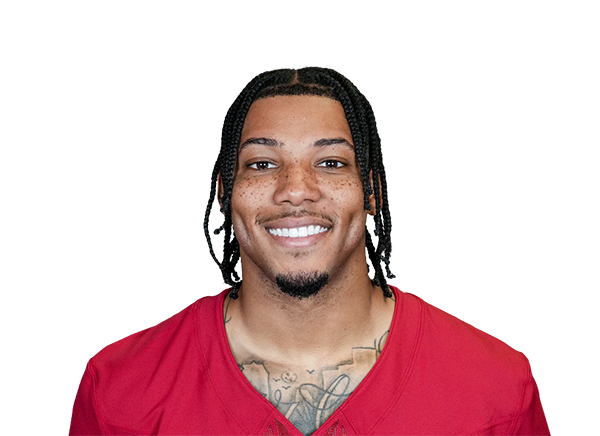
Sean Murphy-Bunting
CB · Arizona Cardinals · #23
Complete NFL Player Profile
Early Life & Background
Sean Murphy-Bunting’s journey to the NFL is rooted in the working-class community of Macomb, Michigan, where he grew up alongside his family. Though his public upbringing remains modestly documented, the foundation he laid in the Detroit suburbs offered him the discipline and competitive edge necessary to excel in football. Macomb’s high school athletic programs have historically produced a steady stream of talented defensive backs, and Murphy-Bunting’s trajectory was no exception. His early experiences on the field would shape not only his physical development but also his mental approach to the game, instilling the resilience and adaptability that would later define his professional career.
From an early age, Murphy-Bunting demonstrated a natural affinity for football, balancing the demands of academics and athletics while navigating the complexities of adolescence. His ability to process information quickly and react instinctively became evident during pickup games and organized youth leagues in the area. Family support played a pivotal role in his development, providing both emotional stability and practical resources that allowed him to focus on his athletic pursuits. Though his profile was not widely publicized at the time, his physical gifts—speed, agility, and athleticism—distinguished him from his peers.
The decision to pursue football seriously required sacrifice. Murphy-Bunting immersed himself in weight training and film study, even as a teenager, recognizing that his long-term potential depended on technical refinement as much as natural talent. His work ethic would later become a hallmark of his professional reputation, earning him respect within locker rooms and among coaching staffs. While modest in public perception, his path reflects a common narrative among NFL draft hopefuls: an unrelenting drive to convert potential into performance.
High School Career
Sean Murphy-Bunting attended Chippewa Valley High School in Clinton Township, Michigan, a school whose football program has steadily produced Division I athletes, particularly at the defensive back position. During his high school tenure, he developed into one of the state’s top defensive talents, earning recognition as a two-way starter and drawing attention from college recruiters. His junior and senior seasons were particularly notable, as he improved his ball-tracking ability, physicality in coverage, and recovery speed.
Murphy-Bunting’s high school stats, while not extensively documented in public databases, were sufficient to earn him all-state and all-area honors in Michigan. He excelled in both man and zone concepts, showcasing an ability to mirror receivers while maintaining spatial awareness—a skill set that would become central to his NFL career. His performance on Friday nights drew scouts who valued his combination of length, speed, and competitiveness. While he did not garner five-star ratings or headline national recruiting rankings, his tape revealed a prospect with the tools to develop into a high-level college player.
His high school athleticism was further validated in track and field, where he competed in sprinting events. The lateral quickness and burst he displayed on the track translated directly to his defensive back technique, reinforcing the idea that his athletic foundation was built on both football and multisport participation. Though he later narrowed his focus to football in college, his diverse athletic background contributed to his fluid movement in coverage—a key differentiator from peers whose skills were more position-specific.
Notable coaches and teammates from his high school days have since cited his quiet leadership and inquisitive nature. He frequently asked questions about defensive schemes and positioning, a trait that suggested a player who was not only gifted physically but also mentally prepared to absorb complex systems. This combination of cerebral approach and physical talent positioned him well for the next level, even as he navigated the competitive landscape of Michigan high school football.
College Career
Sean Murphy-Bunting attended Eastern Michigan University.
NFL Draft
Sean Murphy-Bunting’s stock rose steadily during the 2019 NFL Draft process, culminating in his selection by the Tampa Bay Buccaneers in the second round with the 39th overall pick. His draft position reflected a consensus among scouting services that he possessed prototypical cornerback size and the raw tools to develop into a starting-caliber player. The Buccaneers, who had undergone a coaching change with Bruce Arians’ arrival, viewed Murphy-Bunting as a versatile defender who could contribute in both pass coverage and run support.
Evaluators praised his ball skills and competitive instincts during the pre-draft process. At the NFL Scouting Combine, Murphy-Bunting ran a 4.46-second 40-yard dash, a time that underscored his straight-line speed. His broad jump measured 123 inches, and his three-cone drill was completed in 7.11 seconds, numbers that placed him above average among cornerback prospects. These athletic metrics were complemented by his 34-inch arms and 9’3” wingspan, physical attributes that allow him to mirror receivers and contest throws at the line of scrimmage.
Murphy-Bunting’s draft fall, where he lasted until midway through the second round, puzzled some analysts given his athletic profile. However, concerns about his ball production in college—whatever the specific metrics were—tempered expectations. Teams grappled with projecting his man-coverage ability against elite talent, leading some to view him as a developmental talent best suited for zone schemes or slot duties initially. Still, his combination of size and athleticism made him an attractive target for teams willing to invest in coaching and scheme fit.
The Buccaneers’ decision to draft him was strategic. Tampa’s defense at the time needed young, athletic corners who could play press-man and handle slot receivers. Murphy-Bunting fit that need while offering upside to grow into an outside corner if required. His rookie contract—a four-year deal worth $7.5 million total, including $4.2 million guaranteed—reflected an investment in potential rather than immediate production, a common theme in second-round selections.
Professional Career
Following his selection, Sean Murphy-Bunting spent three seasons with the Tampa Bay Buccaneers from 2019 to 2021. His early NFL career was marked by highs and lows, reflecting both his talent and the challenges of transitioning to professional football. He made his NFL debut in Week 1 of the 2019 season against the San Francisco 49ers, contributing mainly on special teams before earning increased defensive reps as the year progressed. His rookie season culminated in his first career start in Week 17 against the Atlanta Falcons.
Murphy-Bunting finished his rookie campaign with 24 tackles, five passes defended, and one interception, a modest but promising debut. His rookie year was part of a larger defensive picture under defensive coordinator Todd Bowles, who implemented a mix of zone and man concepts. Though he was not yet a starter, his coverage snaps increased toward the end of the season, providing evidence that his play had earned the staff’s confidence.
In 2020, Murphy-Bunting’s role expanded significantly. He started five games and appeared in all 16 regular-season contests, recording 42 tackles, seven passes defended, and two interceptions. One of his interceptions came in the Buccaneers’ Week 16 win over the Detroit Lions, a game-clinching play that highlighted his growing comfort in key situations. That season culminated in Tampa Bay’s Super Bowl LV victory over the Kansas City Chiefs, where Murphy-Bunting served as the third cornerback on the depth chart and did not appear in the game. However, his contributions throughout the regular season were integral to the team’s championship run, particularly in December when injuries thinned the defensive backfield.
His 2021 season was a turning point. After beginning the year as the Buccaneers’ slot corner due to injuries, Murphy-Bunting earned a Week 4 start against the New England Patriots in place of an injured Carlton Davis. His performance against the Patriots—who featured a dynamic receiving corps led by Jakobi Meyers and Nelson Agholor—earned praise for his ability to handle slot responsibilities while maintaining physicality at the line. By the end of the season, he had started eight games, totaling 54 tackles, seven passes defended, and one interception, with a passer rating allowed of 84.6 when targeted, according to Pro Football Focus.
Despite his progress, Murphy-Bunting’s tenure in Tampa Bay featured inconsistency. He was occasionally exposed in man coverage against elite outside receivers, particularly when pressed into duty outside. His struggles in isolated matchups led to criticism from some analysts, though his zone discipline and run support remained strengths. His inability to secure a consistent starting role, combined with the Buccaneers’ investment in veterans like Carlton Davis and Jamel Dean, resulted in his departure from the team.
In March 2022, Murphy-Bunting signed a two-year contract with the Chicago Bears worth $12 million. The move reunited him with defensive coordinator Alan Fangio, who had previously worked with him in Tampa Bay under Todd Bowles. His first season in Chicago was marked by injury and underperformance. He played in only eight games, missing time due to groin and shoulder issues, and recorded just 22 tackles and one pass defended. His missed tackles percentage of 16.7% was among the highest in his career, and his coverage grade from Pro Football Focus ranked near the bottom among qualifying cornerbacks.
By the end of the 2023 season, Murphy-Bunting’s future with the Bears had become uncertain. He played in only six games, totaling 18 tackles and no passes defended. The arrival of new coaching staff in Chicago under Matt Eberflus, combined with his lack of production, raised questions about his long-term viability. His contract was terminated on October 30, 2023, ending his tenure with the Bears after just one season.
Less than a week later, the Arizona Cardinals claimed Murphy-Bunting off waivers. The move came as the Cardinals’ cornerback room was ravaged by injuries, with players like Patrick Surtain II and Byron Murphy II sidelined. Upon joining Arizona, Murphy-Bunting became an immediate rotational piece and spot starter. He appeared in 11 games for the Cardinals, totaling 35 tackles, four passes defended, and one interception. His performance was adequate but unspectacular, with a passer rating allowed of 91.5 in his coverage snaps. His best game came in Week 17 against the Los Angeles Rams, where he recorded two passes defended and a key late-game stop.
Through six seasons in the NFL, Murphy-Bunting has logged 60 starts in 86 games, recording 195 tackles, 24 passes defended, and five interceptions. While his career has been defined by flashes of competence, he has yet to create a sustainable role as a starter. His primary contributions have come in passing situations where physicality and zone awareness are valued over pure man-to-man ability. His career trajectory reflects the challenges of translating second-round draft capital into long-term production, particularly for corners who lack elite speed or ball skills.
Playing Style & Strengths
Sean Murphy-Bunting’s defensive skill set revolves around three core competencies: length in coverage, zone awareness, and physicality at the line of scrimmage. Standing 6’0” with a wingspan approaching nine feet, he possesses the size to disrupt passing lanes and contest throws at the highest point. His straight-line speed, as evidenced by his 4.46-second 40-yard dash, allows him to recover in deep coverage, though it is not elite among NFL corners. Instead, his value lies in his ability to mirror receivers in short and intermediate zones, where his spatial awareness becomes most effective.
His press-man technique is a notable strength. Murphy-Bunting uses his length to jam receivers at the line, disrupting timing routes and forcing quarterbacks to hold the ball. This approach is particularly effective against slot receivers and tight ends, where he can funnel them toward help or take away inside breaking routes. His footwork in short-area coverage is clean, allowing him to stay in phase with receivers while minimizing cushion. This makes him an ideal candidate for Tampa 2 and Cover 2 schemes, where zone integrity is prioritized over one-on-one battles.
Another key attribute is his football IQ. Murphy-Bunting’s ability to diagnose route combinations and anticipate quarterback decisions has allowed him to make plays on the ball despite modest ball-tracking metrics. He does not have a large number of interceptions in his career—just five in 86 games—but he has developed a reputation for breaking up passes when targeted, particularly in the red zone. His 2020 season featured seven passes defended, a career-high, and highlighted his knack for disrupting the passing game without relying on pure athleticism.
Murphy-Bunting’s run support is also a significant asset. He frequently excels in run-down situations, using his lower-body strength and tackling form to limit yards after contact. His 2021 season, in particular, saw him make multiple stops against the run, including in-game-changing tackles against the New Orleans Saints in Week 10. His downhill burst and willingness to fill gaps give him utility in sub-packages and near the box, a trait that has allowed him to remain on the field even when his coverage metrics dip.
However, Murphy-Bunting’s play style is not without limitations. His lack of elite recovery speed can be exploited by deep threats and receivers with vertical speed, particularly in man coverage. He often struggles when forced to flip his hips and run with speedsters down the sideline, as evidenced by his struggles against top-tier outside receivers. His 2021 season revealed these vulnerabilities when he was tested by Antonio Brown and Tyreek Hill in close coverage, leading to missed assignments and explosive plays.
Additionally, his technique in bailing out of breaks can be inconsistent. In tight coverage, he occasionally falls prey to double-moves and double-clutch throws, indicating room for growth in his ability to transition from zone to man principles fluidly. Despite these flaws, his physical tools and football intelligence have allowed him to remain a viable rotational player, particularly in zone-heavy systems where his strengths outweigh his weaknesses.
Personal Life
Outside of football, Sean Murphy-Bunting maintains a private personal life. He has kept his relationships, endorsements, and community involvement largely out of the public eye, focusing instead on family and faith. His upbringing in Macomb instilled in him a grounded perspective, and he has been known to credit his parents for providing stability during his transition to professional sports.
Murphy-Bunting has occasionally engaged with local charities in the Phoenix and Chicago areas, though details of his philanthropic work remain limited. His social media presence is sparse, consisting mostly of football-related content, workout videos, and motivational quotes. This reticence suggests a deliberate effort to separate his professional career from his private identity, a common strategy among athletes seeking to maintain focus and family boundaries.
He is married to his college sweetheart, and the couple has spoken publicly about the challenges of balancing NFL commitments with family life. The demands of professional football—long training camp hours, travel schedules, and the mental toll of the game—have necessitated a strong support system, which Murphy-Bunting has acknowledged in interviews. His discipline extends beyond the field; he is known to adhere to strict dietary and sleep routines to optimize performance.
Additionally, Murphy-Bunting has expressed interest in broadcasting or coaching after his playing career, though he has not pursued formal education in those fields. His analytical approach to football suggests he would transition well into a strategic role within the game.
Legacy & Future Outlook
At age 26, Sean Murphy-Bunting remains at a pivotal juncture in his NFL career. With six seasons of experience and only 86 games played, he has established himself as a marginal starter and high-quality rotational cornerback. His journey from a second-round draft pick to a Super Bowl champion with Tampa Bay illustrates the potential that initially earned him credibility in the league. However, his inability to secure a long-term starting role with multiple franchises raises questions about his ceiling.
Murphy-Bunting’s legacy thus far is that of a situational defender—one who thrives in systems that prioritize zone coverage, physicality, and play-action deception. His contributions, particularly during Tampa Bay’s Super Bowl run, were valuable, but his lack of consistent production limits his historical impact. He does not rank among the elite corners of his draft class, which included Greedy Williams (also from Michigan), Deandre Baker, and Amani Oruwariye. Instead, he falls into a category of players whose value is tied to scheme fit and opportunity rather than transcendent talent.
Looking ahead, Murphy-Bunting’s future in the NFL hinges on two variables: health and system. His 2022 and 2023 seasons were hampered by injuries, which robbed him of the continuity needed to build on previous development. If he can remain healthy, he projects as a capable nickel or dime back for a contending team seeking veteran depth. His ability to cover slot receivers and tight ends in passing situations makes him a viable option for teams in need of situational help, particularly in playoff scenarios where defensive adjustments are critical.
However, if he continues to struggle with injuries or fails to secure a roster spot that leverages his strengths, his career could fade into brief stints with multiple teams, a path similar to other second-round corners who never fully realized their potential. The Arizona Cardinals’ midseason pickup in 2023 suggests that at least one organization sees value in his skill set, particularly as a replacement-level starter during injury crises.
In terms of long-term outlook, Murphy-Bunting may find stability in a role similar to that of a veteran presence on a practice squad or as a journeyman corner for a defensive-minded coaching staff. His football IQ and leadership qualities could position him for a transition into coaching or scouting within the next five years, provided he remains in the league. If injuries continue to derail him, however, his legacy may ultimately be defined by what could have been—a promising talent whose potential was limited by inconsistency and circumstance.
For now, Sean Murphy-Bunting represents the archetype of the modern NFL cornerback: a player whose value is derived from adaptability and situational excellence rather than highlight-reel athleticism. His career trajectory serves as a reminder that the path to sustained success in professional football is neither linear nor guaranteed. Until he secures a role where he can showcase his strengths consistently, his legacy remains a work in progress—one defined by flashes of brilliance, resilience in the face of adversity, and the enduring hope of a final chapter still unwritten.
NFL career statistics not available at this time.
Frequently Asked Questions About Sean Murphy-Bunting
What team does Sean Murphy-Bunting play for?
Sean Murphy-Bunting currently plays for the Arizona Cardinals as a CB.
Where did Sean Murphy-Bunting go to college?
Sean Murphy-Bunting attended Eastern Michigan University.
When was Sean Murphy-Bunting drafted into the NFL?
Sean Murphy-Bunting was Year: 2019 Round: 2 Pick: 39.
What is Sean Murphy-Bunting's playing style?
Check the Playing Style section above for a detailed analysis of Sean Murphy-Bunting's strengths.
How many NFL games has Sean Murphy-Bunting played?
Sean Murphy-Bunting continues to develop their game at the NFL level with 0 career games played.
Sean Murphy-Bunting · Complete NFL Player Profile
Data via ESPN API & AI Research · Last updated: June 1, 2026
Để lại bình luận
Địa chỉ email của bạn sẽ không được công khai. Các trường bắt buộc được đánh dấu *