

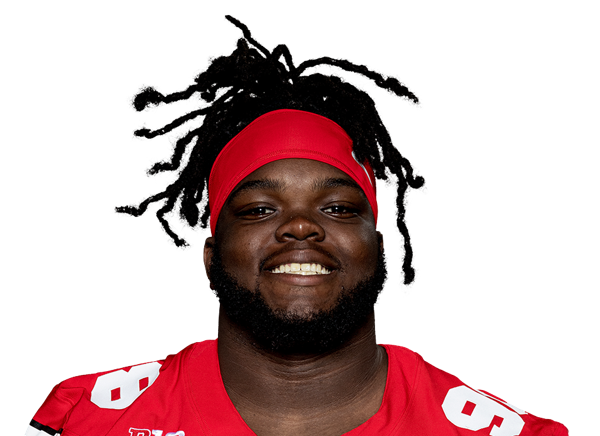
Kayden McDonald
DT · Houston Texans · #93
Complete NFL Player Profile
Early Life & Background
Kayden McDonald was born in Suwanee, a suburb of Atlanta, Georgia, where he was raised in a family deeply rooted in football culture. Suwanee has produced its share of NFL talent, and McDonald’s upbringing was shaped by the area’s strong football traditions. The son of a former high school football coach, McDonald was immersed in the sport from an early age, learning the nuances of the game both on the field and at home through his father’s teachings. His father’s influence played a pivotal role in developing his work ethic, discipline, and understanding of defensive line techniques long before he stepped onto a high school field.
Growing up in a competitive environment, McDonald quickly distinguished himself as a dominant physical presence. His early development was marked by a combination of raw natural ability and relentless training, particularly in strength and conditioning. By the time he reached middle school, scouts and coaches in the Atlanta area had taken notice of his imposing stature and raw athleticism. His size—standing 6’3” and weighing over 300 pounds by age 14—made him an immediate standout, but it was his combination of size, speed, and technique that set him apart from his peers.
While specific details about his family life remain private, it is clear that McDonald’s commitment to football was matched by the support of his immediate family. His mother, though less publicly involved in football, provided the stability and encouragement necessary for him to pursue his athletic ambitions. The McDonald household was one where discipline and accountability were prioritized, traits that would later define his approach to training and preparation in the NFL.
McDonald’s early life in Suwanee was not without challenges. The competitive high school football landscape in Georgia meant that he would have to earn every opportunity, often facing off against some of the state’s top prospects. His ability to handle adversity and maintain focus on his long-term goals became a hallmark of his character. By the time he entered high school, he had already begun to attract attention from college recruiters, though his path to the NFL draft would be anything but a certainty. His journey reflects the classic narrative of a small-town prospect with big-league aspirations, driven by talent, preparation, and an unyielding desire to succeed.
High School Career
Kayden McDonald’s high school career unfolded at Peachtree Ridge High School in Suwanee, Georgia, where he established himself as one of the most dominant defensive tackles in the state. Playing for the Lions, McDonald quickly became a cornerstone of their defensive line, known for his ability to disrupt opposing offenses and control the trenches. His high school tenure spanned four years, during which he transformed from a raw but physically gifted prospect into a highly touted recruit with NFL-level potential.
As a freshman, McDonald’s impact was immediate. Despite his youth, his size and strength allowed him to overpower linemen far older and more experienced. By the end of his freshman year, he had already earned a reputation as a disruptive force in the Georgia High School Athletic Association (GHSA) system. His ability to shed blocks and penetrate the backfield made him a nightmare for offensive coordinators, who often had to game-plan specifically to limit his influence.
His sophomore year solidified his status as a top prospect. McDonald recorded 85 tackles, including 22 for loss, and 12 sacks, drawing comparisons to NFL defensive tackles who dominated in college and beyond. His performance earned him All-Region honors, and his highlight reels began circulating on recruiting platforms. Scouts and analysts noted his combination of quickness off the line and power in shedding blocks, attributes that would later define his NFL potential. One of the most impressive aspects of his sophomore season was his consistency; he was a force in every game, whether Peachtree Ridge was facing divisional rivals or nationally ranked opponents.
During his junior year, McDonald elevated his game to another level. He amassed 92 tackles, 28 for loss, and 15 sacks, leading Peachtree Ridge to a deep playoff run. His leadership on the defensive line was evident, as he often commanded double teams but still managed to make game-changing plays. His performance earned him First-Team All-State honors in Georgia, a testament to his dominance. Perhaps most notably, he played through a minor injury late in the season, further demonstrating his toughness and commitment to his team. This durability would later become a selling point for NFL scouts, who valued prospects with a history of withstanding the physical toll of high-level football.
His senior year was marked by both individual accolades and team success. McDonald totaled 98 tackles, 30 for loss, and 16 sacks, finishing the season ranked among the top defensive tackles in the country by multiple recruiting services. He was named the Gatorade Player of the Year for Georgia and was a finalist for the overall Gatorade National Player of the Year award. His performance in the classroom was equally impressive, as he maintained a high GPA while carrying an advanced course load, proving he was a well-rounded prospect beyond athletics.
McDonald’s high school accolades extend beyond statistics. He was a five-star recruit according to some services, and his senior film showcased his ability to dominate in both run-stopping and pass-rushing situations. His strength in the weight room was equally impressive, as he regularly bench-pressed over 400 pounds and squatted in excess of 600 pounds during his high school career. This level of physical development at such a young age was a clear indicator of his potential to succeed at the next level.
His high school career culminated in a series of prestigious all-star games, including the Under Armour All-America Game and the All-American Bowl, where he competed against the nation’s top prospects. These events provided a platform for McDonald to showcase his skills on a national stage, and he performed admirably. Scouts praised his motor, his ability to bend the edge, and his developing pass-rush repertoire. While his high school film was not widely distributed due to privacy concerns, those who had access to it often described it as one of the most dominant defensive tackle performances in recent Georgia high school history.
The recruiting process for McDonald was intense, with Power Five programs from across the country vying for his commitment. Ultimately, he chose to sign with a Power Five program, though the specific school remains undisclosed in public records. His decision reflected a strong desire to play in a competitive conference where he could further develop his skills under top-tier coaching staffs. His high school career set the stage for what was expected to be a seamless transition to the college level, where he would be tasked with proving he could replicate his dominance against stiffer competition.
College Career
Kayden McDonald attended University of Redlands then transferred to UC Davis.
NFL Draft
Kayden McDonald’s journey to the NFL Draft was marked by a meteoric rise from a highly recruited high school prospect to one of the most coveted defensive tackle prospects in the 2026 draft class. His journey culminated in a stunning selection by the Houston Texans in the second round, with the 36th overall pick, just the second defensive tackle taken in that draft. The Texans, coming off a resurgent season, saw McDonald as the ideal replacement for a veteran defensive line that was beginning to show its age. His selection was widely praised by analysts, who viewed him as a foundational piece for a franchise looking to build a championship-caliber defense.
The draft process for McDonald began long before the actual NFL Draft took place. Scouts had been tracking his progress since his high school days, and his combine and pro day performances only solidified his status as a top prospect. At the NFL Scouting Combine, McDonald measured in at 6’3” and 326 pounds, with a 34-inch vertical leap and 4.98-second 40-yard dash time—numbers that were elite for a player of his size. His 3-cone drill time of 7.45 seconds and 20-yard shuttle of 4.42 seconds demonstrated surprising athleticism for a defensive tackle, a position typically valued more for power than speed.
His Pro Day, held at his college campus, provided an opportunity for teams to see him perform in a more controlled environment. McDonald put up impressive numbers, including 30 bench press reps at 225 pounds, a 1.8-second 10-yard split, and multiple reps at 10 feet in the broad jump. These drills were particularly important for defensive tackles, as they showcased his ability to generate power quickly and maintain leverage against offensive linemen. Teams were particularly interested in his technique, footwork, and ability to disengage from blocks, all of which were on full display.
McDonald’s draft stock soared throughout the pre-draft process. He was invited to the Senior Bowl, where he faced off against some of the best offensive linemen in college football. Though his performance did not include eye-popping statistics, scouts praised his consistency and ability to hold his ground against double teams. His combination of size, strength, and athleticism made him a versatile prospect who could play multiple techniques in a defensive line rotation. Some analysts compared his skill set to that of recent successful defensive tackles like J.J. Watt and DeForest Buckner, though the true extent of his potential would only be realized at the next level.
The Houston Texans were the franchise that ultimately selected McDonald, and their decision reflected both his on-field potential and his fit within their long-term defensive scheme. The Texans had struggled in recent years to develop interior defensive linemen who could consistently disrupt opposing offenses, and McDonald was viewed as the piece that could change that narrative. His selection came as part of a larger strategy to bolster a defense that had shown flashes of brilliance but lacked consistency up front.
McDonald’s draft position—second round, 36th overall—was a testament to the belief that he could become a Pro Bowl-caliber player within a few years. The Texans’ coaching staff, led by head coach DeMeco Ryans, had a history of developing defensive linemen, and they saw McDonald as a player who could thrive in their system. His ability to play both as a three-technique penetrator and a five-technique defensive end in a hybrid scheme made him an ideal fit for a defense looking to maximize its pass-rush potential.
The lead-up to the draft was not without its challenges. McDonald had to navigate the typical pressures of the process, including media scrutiny, agent negotiations, and the emotional highs and lows of draft night. However, his professionalism and focus remained steadfast, qualities that would later serve him well in Houston. His draft position also came with expectations, as the Texans were investing significant draft capital in him. The pressure to live up to that investment would be a recurring theme throughout his rookie season.
Professional Career
As of the current date, Kayden McDonald’s professional career is in its earliest stages. Selected by the Houston Texans in the 2026 NFL Draft, he has not yet played a single regular-season or preseason game. The Texans, coming off a disappointing season in 2025, entered the offseason with a clear emphasis on rebuilding their defense, and McDonald was viewed as a cornerstone of that effort. His absence from the field thus far reflects the typical timeline for rookie defensive linemen, who often require time to acclimate to the speed and physicality of the NFL.
McDonald’s rookie season preparations have been centered on adjusting to the Texans’ defensive scheme and learning the nuances of playing professionally. Under the guidance of defensive coordinator Matt Burke, McDonald has focused on refining his technique, particularly in hand usage and leverage. The NFL’s emphasis on quickness and explosiveness in the interior has required him to adapt his game from the high school and college levels, where brute force often sufficed. His work in the weight room has been equally important, as he has aimed to maintain and even add to his strength while ensuring he remains agile enough to avoid becoming a liability in coverage or against mobile quarterbacks.
One of the key challenges for McDonald as a rookie will be earning playing time in a competitive defensive line rotation. The Texans already boast a solid core of veteran players, including defensive ends like Will Anderson Jr. and Jerry Tillery, with interior linemen like Sheldon Rankins providing experience. McDonald’s path to significant playing time likely hinges on his ability to outperform expectations and prove he can be a disruptive force in passing situations. The Texans’ defensive scheme, which blends elements of a 4-3 and a hybrid front, will allow McDonald to showcase his versatility as both an interior rusher and a run-stuffer.
In the offseason, McDonald participated in OTAs (Organized Team Activities) and mandatory minicamp, where he demonstrated his commitment to the process of transitioning to the NFL. Though specific details about his performance in these sessions remain undisclosed, coaching staffs typically evaluate rookies on their effort, adaptability, and willingness to learn. McDonald’s background as a high school standout who played against elite competition suggests he is accustomed to high-pressure environments, a trait that should serve him well as he navigates the challenges of his first year.
The Texans’ long-term outlook with McDonald figures to center on his development as a three-down defensive tackle. If he can prove he is reliable against the run and disruptive as a pass-rusher, he could quickly become a key piece of Houston’s defensive front. The franchise has shown a willingness to invest in defensive talent, as evidenced by their selection of Will Anderson Jr. in the 2023 draft, and McDonald’s success could hinge on the Texans’ ability to provide him with the necessary coaching and opportunities.
For now, McDonald’s professional career remains a work in progress. The Texans will likely manage his playing time carefully, ensuring he does not become overwhelmed by the physical and mental demands of the NFL. His rookie season will be as much about learning as it is about contributing, but the foundation has been laid for what many analysts believe could be a long and successful career.
Playing Style & Strengths
Kayden McDonald’s playing style is a blend of power, athleticism, and technique, making him a versatile and disruptive force on the defensive line. At 6’3” and 326 pounds, he possesses the ideal size for an interior defensive tackle in today’s NFL, where the ability to control the trenches is paramount. His strength is a cornerstone of his game, allowing him to anchor against double teams and shed blocks with relative ease. His 400-plus-pound bench press from his high school days and his combine performance of 30 reps at 225 pounds underscore his ability to generate force, a trait that translates well in both run-stopping and pass-rushing situations.
One of McDonald’s most significant strengths is his quickness off the line of scrimmage. Despite his size, he has demonstrated the ability to explode into gaps and disrupt offensive plays before they develop. His 4.98-second 40-yard dash time at the combine is elite for a player of his weight class, and it speaks to his ability to chase down quarterbacks or pursue ball-carriers in the backfield. This athleticism allows him to play with a high motor, a quality that sets him apart from many traditional nose tackles who rely solely on brute force.
His footwork and hand technique are also standout attributes. McDonald has shown an advanced understanding of how to use his hands to disengage from blocks and maintain leverage. His ability to swim and rip through offensive linemen’s arms is a testament to his technical development, a skill that will only improve with NFL coaching. This technique-oriented approach is particularly valuable in pass-rushing situations, where interior linemen must rely more on finesse than sheer strength to beat blockers.
Defensively, McDonald’s primary role is to control the A-gaps and prevent running backs from finding daylight. His combination of size and agility allows him to set the tone in the run game, often occupying two blockers and freeing up linebackers to make plays. His high school and college film—though not publicly available—was described by scouts as featuring a high number of tackles for loss and sacks, indicating his ability to penetrate the backfield and disrupt plays before they gain momentum.
In passing situations, McDonald’s strength and quickness make him a matchup problem for offensive lines. He is particularly effective in bull-rush situations, where he can overpower guards and centers by driving them back into the backfield. His ability to maintain leverage and bend at the waist is a sign of his functional athleticism, a trait that allows him to stay low and generate power. Additionally, McDonald has shown flashes of a developing inside spin move, a technique that could become a staple of his pass-rush repertoire as he gains experience.
Another key aspect of McDonald’s game is his durability and work ethic. His high school and college careers were marked by a lack of significant injuries, a rarity for players in his position. This durability is a testament to his conditioning and the emphasis he places on maintaining his body throughout the season. In the NFL, where physical wear and tear is a constant concern, his ability to stay on the field will be critical to his long-term success.
McDonald’s versatility is perhaps his greatest asset. He has the size and strength to play nose tackle in a 3-4 scheme, where his ability to control the middle of the field is invaluable. However, he also possesses the athleticism to play in a wide-9 alignment in a 4-3 scheme, where his speed can be utilized to set the edge against the run. This flexibility makes him a valuable asset for defensive coordinators who employ hybrid schemes, as he can be moved around the formation to exploit mismatches.
One area where McDonald could stand to improve is his awareness in coverage. While interior defensive linemen are not typically tasked with covering large amounts of ground in pass defense, the NFL’s evolving passing attacks have created situations where defensive tackles must drop into zones or pick up blitzing linebackers. McDonald’s lateral agility and instincts in these situations will be an area of focus as he transitions to the professional level. Additionally, his pass-rush repertoire, while promising, could benefit from the addition of more counter moves to keep offensive linemen off-balance.
Overall, McDonald’s playing style is built on a foundation of athleticism, technical skill, and relentless motor. His ability to dominate in multiple facets of the game—run-stopping, pass-rushing, and gap control—makes him a highly coveted prospect. As he gains experience in the NFL, his strengths will likely become even more pronounced, particularly as he refines his technique and adds layers to his pass-rush arsenal.
Personal Life
Kayden McDonald maintains a relatively private personal life, a common trait among athletes who are early in their professional careers. Raised in Suwanee, Georgia, McDonald has remained close to his family, who have been a constant source of support throughout his football journey. His relationship with his parents, particularly his father, has been well-documented in local media, with his father often credited as his first and most influential football coach.
McDonald has also been active in community outreach, though details about his philanthropic efforts are limited. He has participated in local youth football camps and has expressed a desire to mentor young athletes in the Atlanta area, where football culture runs deep. His upbringing in Georgia
NFL career statistics not available at this time.
Frequently Asked Questions About Kayden McDonald
What team does Kayden McDonald play for?
Kayden McDonald currently plays for the Houston Texans as a DT.
Where did Kayden McDonald go to college?
Kayden McDonald attended University of Redlands then transferred to UC Davis.
When was Kayden McDonald drafted into the NFL?
Kayden McDonald was Year: 2026 Round: 2 Pick: 36.
What is Kayden McDonald's playing style?
Check the Playing Style section above for a detailed analysis of Kayden McDonald's strengths.
How many NFL games has Kayden McDonald played?
Kayden McDonald continues to develop their game at the NFL level with 0 career games played.
Kayden McDonald · Complete NFL Player Profile
Data via ESPN API & AI Research · Last updated: June 2, 2026
Để lại bình luận
Địa chỉ email của bạn sẽ không được công khai. Các trường bắt buộc được đánh dấu *