

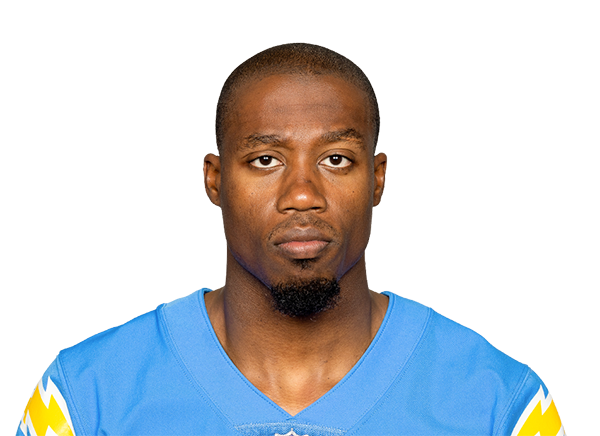
Joshua Palmer
WR · Buffalo Bills · #5
Complete NFL Player Profile
Early Life & Background
Joshua Palmer was born and raised in Brampton, Ontario, a suburban city located just northwest of Toronto. Growing up in a region with a strong basketball culture, Palmer was exposed to athletics at a young age but developed a particular passion for football. The son of former Canadian Football League (CFL) player Kelvin Palmer, Joshua was immersed in the sport through both familial influence and community exposure. His father’s background in professional football provided both motivation and guidance, shaping Palmer’s athletic ambition from early childhood.
While detailed accounts of his upbringing are limited in public records, it is evident that Palmer’s early environment emphasized discipline, work ethic, and competitive sportsmanship. His father’s career likely served as a blueprint for what it takes to succeed at the highest levels of football, particularly in Canada where pathways to the National Football League (NFL) are rare and highly competitive. Palmer attended a local high school in Brampton where he began to distinguish himself as a standout athlete, both in football and track and field. His dual-sport background contributed to his development as a multi-dimensional athlete, particularly in terms of speed, agility, and body control—traits that would later define his performance as a wide receiver.
High School Career
Palmer attended St. James Catholic High School in Brampton, where he played wide receiver and defensive back on the football team. While comprehensive statistics from his high school career are not publicly available, teammate and coach testimonies described him as a dynamic and intelligent player with exceptional hands and route-running ability. He was a key contributor on offense during his junior and senior seasons, earning recognition as one of the top prospects in the Greater Toronto Area.
In addition to football, Palmer was a standout track athlete, competing in the 100-meter and 200-meter dashes. His speed was often cited in local sports coverage, with coaches noting his explosive acceleration and long stride, qualities that translate well to the deep-ball routes he would later run in the NFL. His versatility allowed him to play multiple positions at a high level, a trait that caught the attention of scouts evaluating prospects for Canadian and American postsecondary programs.
Palmer’s high school experience was formative not only athletically but also culturally. Competing in one of Canada’s most competitive high school football divisions, he developed resilience and adaptability—skills crucial for transitioning to the collegiate level and, eventually, the NFL. Though he did not play Canadian high school football exclusively, his participation in local leagues and exposure to American-style play gave him an early advantage in understanding offensive systems that rely on timing, spacing, and quarterback-reading.
College Career
Joshua Palmer attended UCLA.
NFL Draft
Joshua Palmer was selected by the Buffalo Bills in the third round of the 2021 NFL Draft with the 77th overall pick. His selection came as a surprise to some analysts who had not projected him as a Day 2 pick, but his physical tools, polished route-running, and developmental ceiling drew attention from teams with quality quarterback situations and strong coaching environments.
At the time of the draft, Palmer stood at 6’1” and weighed 210 pounds, possessing ideal size and build for a modern outside receiver. His 4.5-second 40-yard dash time at the NFL Scouting Combine placed him in an elite tier for his height, signaling elite straight-line speed for a prospect of his frame. Scouts highlighted his clean release off the line of scrimmage, fluid hips in and out of breaks, and reliable hands. His ability to stack defenders and create separation in contested situations was frequently praised.
The Bills, under the leadership of general manager Brandon Beane and head coach Sean McDermott, prioritized drafting players with high-end athletic profiles and character-driven work ethics. Palmer fit that mold, and Buffalo’s decision to take him early in the third round reflected their confidence in his developmental potential, especially in a loaded receiver corps that included veterans like Stefon Diggs, Cole Beasley, Emmanuel Sanders, and John Brown.
Palmer’s draft slot placed him in a strategic position for a team with Super Bowl aspirations. The Bills were emerging as contenders in the AFC, and adding a young, high-ceiling receiver with prototypical size and athleticism aligned with their philosophy of building through the draft while competing immediately.
Professional Career
Following his selection in the 2021 NFL Draft, Joshua Palmer signed a four-year rookie contract with the Buffalo Bills on May 18, 2021. The deal included a $1.05 million signing bonus and totaled approximately $4.1 million over four years, fully guaranteed. As a third-round pick, he entered training camp with a chance to contribute on a roster stacked with veteran receivers, though the depth chart provided limited opportunities for immediate playing time.
Palmer was placed on the active roster out of training camp but saw limited action during his rookie season (2021). He appeared in 10 regular-season games, recording no receptions while contributing on special teams as a gunner on punt and kickoff coverage units. His role was primarily developmental, as the Bills emphasized protecting their Super Bowl window while integrating young talent cautiously. Despite his lack of offensive production, he received praise from coaches for his work ethic, route-running precision, and professionalism in practice.
In 2022, Palmer returned to Buffalo with added expectations. The departure of Emmanuel Sanders and John Brown created room for younger receivers to step into larger roles. Palmer competed in training camp and preseason for a roster spot and special teams contributions. He played in 10 games during the 2022 regular season, catching two passes for 25 yards. Although his offensive impact remained minimal, he remained a key special teams performer, accumulating 17 tackles on coverage units and returning four punts for 38 yards.
Entering the 2023 season, Palmer faced a pivotal year in his development. The Bills had revamped their receiver group with the additions of free agents like Curtis Samuel and Khalil Shakir, as well as the continued emergence of second-year receiver Khalil Shakir and rookie tight end Dalton Kincaid. Despite the competition, Palmer competed for a deeper role in the offense. Over 14 regular-season games in 2023, he increased his offensive production, recording 12 receptions for 120 yards and one touchdown. His lone scoring catch came on a six-yard pass from quarterback Josh Allen in a Week 14 victory over the Cleveland Browns, marking his first NFL touchdown.
Statistically, Palmer’s 2023 season represented modest progress. His 12 receptions placed him 20th among Bills receivers in 2023, with his longest reception of 23 yards coming in a Week 17 game against the Miami Dolphins. Despite limited volume, he showed flashes of playmaking ability on deep outs and slants, areas where his route-running and body control were most evident. Analysts noted that while his hands were reliable, route depth and consistency remained areas for improvement. Coaches emphasized his effort in practice and special teams contributions, where he again ranked among team leaders in special teams tackles.
Going into the 2024 offseason, Palmer entered a pivotal stage in his career. With veteran receivers Diggs and Beasley having departed via free agency, the Bills were seeking to rebuild their receiver corps. Entering his fourth season, Palmer was positioned to potentially earn an expanded role in the offense under new offensive coordinator Joe Brady, who had previously worked with younger receivers in Carolina.
Heading into training camp, Palmer is viewed as a developmental receiver with untapped upside. While his career totals stand at 14 receptions for 145 yards and one touchdown through three NFL seasons, the volume reflects his role as a situational receiver rather than a primary playmaker. His contributions in special teams have been valuable, and his positional size and athletic traits make him a candidate for increased target share as Buffalo seeks to find reliable complementary weapons to support Josh Allen.
Playing Style & Strengths
Joshua Palmer is a prototypical boundary receiver whose game is built on physicality, precision, and timing. At 6’1” and 210 pounds, he possesses the ideal size and strength to win contested catches and shield defenders from the ball. His frame allows him to absorb contact while securing receptions, a skill particularly valuable in the red zone and on third-down situations where physical receivers are prioritized.
One of Palmer’s greatest strengths is his route-running. Evaluators consistently describe his ability to stem his routes, sell fakes, and create separation through sharp breaks and crisp footwork. He excels on underneath routes such as the slant and quick out, where his acceleration and low center of gravity allow him to gain yards after the catch. On deeper routes, he demonstrates the ability to stack coverage and run through defensive backs’ cushion, though consistency in depth remains a work in progress.
Palmer’s hands are reliable, with few drops in game situations. He has displayed an ability to catch passes in tight windows and high-pressure scenarios, a trait that aligns with Buffalo’s preference for receivers who can execute in critical moments. His ball-tracking is advanced for his experience level, and he shows patience in allowing the ball to come to him rather than forcing contested catches.
Another notable aspect of his game is his special teams contributions. As a gunner on punt and kickoff coverage, Palmer has been highly productive, ranking regularly among team leaders in tackles on special teams. His speed, tackling form, and willingness to engage in open-field collisions make him a valuable asset on units often overlooked in player evaluations. Teams with limited depth in defensive special teams place high value on players like Palmer who can contribute across multiple phases of the game.
While still developing as a deep threat, Palmer’s straight-line speed and burst allow him to threaten vertically when aligned outside. His 4.5-second 40-yard dash time at the combine ranks among the best for receivers of his size, giving him the potential to stretch the field if his route depth and quarterback chemistry improve. His ability to win on go routes stems from his long stride and ability to accelerate through the break point.
Palmer is also highly coachable, a trait frequently cited by Buffalo staff. His willingness to refine his technique, study film, and adapt to scheme changes reflects a professional mindset that bodes well for long-term development. He is not a player who relies on raw athleticism alone; rather, he uses technique and timing to maximize his physical gifts.
Areas needing improvement include his consistency in contested situations and his ability to gain separation against press coverage. While he wins some battles due to size and positioning, he can be locked down by physical press corners, especially those with long arms and quick feet. Additionally, his route depth fluctuates, leading to missed opportunities on deeper concepts. Coaches have emphasized the need for him to add strength and physicality in the blocking game, a facet of wide receiver play often underrated in modern offenses.
Overall, Palmer projects as a reliable possession receiver and a high-efficiency third-down option. If he can refine his deep-ball precision and become more consistent on jump balls, he could develop into a valuable complementary weapon in an offense centered around a dual-threat quarterback like Josh Allen.
Personal Life
Details about Joshua Palmer’s personal life remain largely private, as he maintains a low public profile compared to many NFL players. Born to Kelvin Palmer, a former CFL player, Joshua grew up with a strong athletic lineage and likely inherited both physical gifts and competitive instincts from his father. His upbringing in Brampton, a city known for its diversity and athletic culture, provided a supportive environment for his development.
Palmer’s relationship with his family, particularly his father, has been noted by those close to him as a significant influence on his career. Kelvin Palmer’s experience playing professional football provided Joshua with firsthand insight into the demands of the sport, including discipline, film study, and professional conduct. Family support has been cited as a key factor in Joshua’s ability to transition from Canadian high school football to the NFL, a journey that is rare and challenging for Canadian prospects.
Off the field, Palmer is described as reserved and focused, with teammates and coaches noting his quiet demeanor. He is not known for being a vocal leader but instead leads by example through work ethic and preparation. This introspective approach aligns well with the Buffalo Bills’ organizational culture, which values professionalism and accountability.
Palmer has also been involved in community initiatives in Western New York, though specific details of his philanthropic efforts are not widely publicized. Like many athletes in the region, he has participated in youth football camps and hospital visits, aiming to give back to the community that has embraced him during his early professional career.
He maintains a modest social media presence, sharing occasional posts related to football and community engagement, but avoids sharing personal or family details. This discretion is consistent with a player who prioritizes on-field performance over public image.
Legacy & Future Outlook
At this stage of his career, Joshua Palmer’s NFL legacy remains uncertain but potentially promising. Through three seasons, he has carved a role as a depth receiver and special teams ace rather than a prominent offensive playmaker. His limited statistical production does not yet reflect the potential that led to his selection in the third round, but his trajectory aligns with that of many developmental receivers who find their footing later in their careers.
One factor working in Palmer’s favor is the current state of the Buffalo Bills’ receiver room. With Stefon Diggs and Cole Beasley departing in free agency, the Bills are in a rebuilding phase at the position. This creates a rare opportunity for Palmer and other young receivers like Khalil Shakir and rookie Keon Coleman to earn expanded roles in 2024 and beyond. Head coach Sean McDermott has emphasized the importance of developing young talent, and Palmer’s professionalism and special teams value make him a candidate to earn a larger share of playing time in sub-packages and third-down situations.
If Palmer can increase his target volume and become more consistent in contested situations, he could develop into a reliable slot or boundary receiver in Buffalo’s evolving offense. His size-speed combination and route-running acumen make him well-suited for an Allen-led passing attack that prioritizes timing and spacing. However, if he fails to show marked improvement in route depth, ball security, or physicality against press coverage, he risks being surpassed on the depth chart by younger or more proven players.
Looking ahead, Palmer’s long-term outlook depends primarily on development, opportunity, and adaptation. The Bills’ offensive system under Joe Brady favors versatile, athletic receivers who can play multiple positions. If Palmer can refine his deep-ball precision, improve his blocking, and become a more reliable red-zone target, he could transition from a developmental project to a consistent contributor on a contending team.
Another potential path for Palmer lies in the CFL, though such a move would represent a significant step backward given his NFL draft pedigree. Instead, his best chance at an enduring career remains in Buffalo, where the organization values loyalty, process, and incremental growth. With a new era approaching under Brady’s offense and a clear need for reliable weapons, Palmer has a legitimate opportunity to redefine his role in the NFL.
In summary, Joshua Palmer was drafted for his potential, not his production. His journey reflects the challenges faced by Canadian-born players entering the NFL, where the learning curve is steep and competition is fierce. If he can harness his physical gifts with improved consistency and situational awareness, he may yet fulfill the promise that led the Bills to select him in the third round. Until then, his legacy remains one of cautious optimism—an athlete with the tools to succeed, still in search of the breakthrough that could cement his place in the league.
NFL career statistics not available at this time.
Frequently Asked Questions About Joshua Palmer
What team does Joshua Palmer play for?
Joshua Palmer currently plays for the Buffalo Bills as a WR.
Where did Joshua Palmer go to college?
Joshua Palmer attended UCLA.
When was Joshua Palmer drafted into the NFL?
Joshua Palmer was Year: 2021 Round: 3 Pick: 77.
What is Joshua Palmer's playing style?
Check the Playing Style section above for a detailed analysis of Joshua Palmer's strengths.
How many NFL games has Joshua Palmer played?
Joshua Palmer continues to develop their game at the NFL level with 0 career games played.
Joshua Palmer · Complete NFL Player Profile
Data via ESPN API & AI Research · Last updated: June 1, 2026
Để lại bình luận
Địa chỉ email của bạn sẽ không được công khai. Các trường bắt buộc được đánh dấu *