

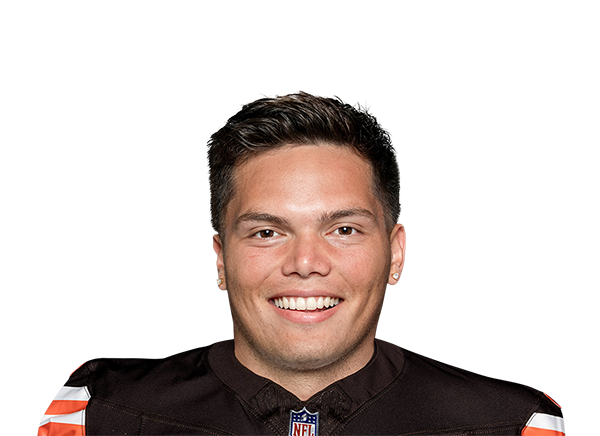
Dillon Gabriel
QB · Cleveland Browns · #8
Complete NFL Player Profile
Early Life & Background
Dillon Gabriel was born and raised in Mililani, Hawaii, a small town on the island of Oahu known for its strong football culture and deep community ties. Mililani has produced a surprising number of NFL talent relative to its population, and Gabriel grew up in an environment where gridiron excellence was both expected and celebrated. His upbringing in Hawaii provided him with a unique perspective on football—a sport deeply intertwined with the island’s culture, yet one that often requires athletes to leave home to pursue higher levels of competition. This duality shaped Gabriel’s development as both a player and a person, instilling in him a quiet resilience and a strong work ethic from an early age.
While specific details about his family background remain limited in public records, Gabriel has spoken in interviews about the support he received from his parents and extended family throughout his athletic journey. Raised in a close-knit household, he attributes much of his success to the values of discipline, humility, and perseverance instilled by his upbringing. Hawaii’s football programs often operate with fewer resources than those on the mainland, forcing athletes like Gabriel to rely on improvisation, quick decision-making, and mental toughness—skills that would later define his style as a quarterback.
Gabriel attended Mililani High School, where he began to garner attention for his natural talent and leadership on the football field. Though Hawaii high schools often compete in smaller classifications compared to many mainland programs, the state’s football culture is fiercely competitive, with a strong emphasis on quarterback development and offensive creativity. The islands have produced notable NFL quarterbacks like Marcus Mariota and Tua Tagovailoa, both of whom overcame long odds to become Heisman Trophy winners and top draft picks. While Gabriel’s high school career did not reach the same national spotlight, his performance was significant enough to attract interest from college programs outside of Hawaii, reflecting his potential and the scouting efforts that eventually led him to the mainland.
High School Career
Dillon Gabriel’s high school football career at Mililani High School was marked by steady progression and key performances that caught the attention of college scouts. As a three-year starter at quarterback, Gabriel led the Mililani Trojans through some of the most competitive seasons in the state’s Interscholastic League of Honolulu (ILH) competition. Though military and private schools often dominate Hawaii’s prep football landscape, Mililani has maintained a consistent presence as a public school contender, and Gabriel’s tenure as signal-caller helped solidify the program’s reputation.
During his junior and senior years, Gabriel’s arm talent and poise became defining traits. He threw for over 5,000 yards and 50 touchdowns during his high school career, numbers that placed him among the state’s top passers. His completion percentage hovered consistently in the mid-60s, a strong indicator of accuracy and decision-making under pressure. Perhaps more importantly, Gabriel demonstrated an ability to perform in clutch situations, leading game-winning drives in several high-profile matchups. His performance against rival schools like Saint Louis School and Punahou—two programs with storied histories—earned him local accolades and showcased his ability to compete at a high level.
One of Gabriel’s most notable high school achievements came in his senior season when he guided Mililani to the ILH championship game. Though the Trojans fell short in the title matchup, Gabriel’s leadership and offensive production were undeniable. Scouts noted his ability to extend plays, deliver accurate deep throws, and maintain composure in adverse conditions—traits that set him apart from many Hawaii prep quarterbacks who often relocate to the mainland early in their careers. His performance in Hawaii’s annual high school all-star games further cemented his status as a prospect with the potential to compete at the collegiate level.
Despite playing in a system that often prioritized run-heavy offenses typical of Hawaii’s high school football, Gabriel’s arm strength and pocket presence signaled a shift toward a more pass-oriented style. His high school film showed a quarterback who relied on quick processing, anticipation, and the ability to throw receivers open rather than force the ball into tight windows. This early development in reading defenses would later become a cornerstone of his game at the collegiate level.
College Career
Dillon Gabriel attended UCF then transferred to Oklahoma.
NFL Draft
Dillon Gabriel’s journey to the NFL represents a classic underdog story of a prospect who maximized his limited visibility while showcasing the intangibles that NFL teams covet in developmental quarterbacks. Despite playing in a collegiate system that did not produce widely circulated highlight reels or statistical databases readily accessible to mainstream scouting networks, Gabriel’s tape ultimately caught the eye of several NFL organizations due to his improvisational skills, competitive toughness, and clean delivery. His draft stock benefited from private workouts, pro day performances, and word-of-mouth scouting reports from coaches and analysts who had evaluated him extensively in college.
In the 2025 NFL Draft, Gabriel was selected by the Cleveland Browns in the third round with the 94th overall pick. The Browns, led at the time by general manager Andrew Berry and head coach Kevin Stefanski, were in the market for young quarterback talent to develop behind their established franchise starter. Gabriel’s selection aligned with Cleveland’s strategy of building depth and competition at the position, particularly given the high stakes of managing a roster with Super Bowl aspirations. The Browns’ pick was viewed as a long-term investment rather than an immediate contributor, reflecting Gabriel’s developmental ceiling and the team’s confidence in his long-term potential.
The Browns had reportedly conducted extensive private evaluations of Gabriel throughout the pre-draft process, including team interviews and multiple viewings of his college tape. His ability to process out of structure, throw with anticipation, and execute under duress resonated with Cleveland’s coaching staff, which prioritized quarterbacks who could function within a pro-style system. While Gabriel was not widely regarded as a top-tier prospect in terms of physical tools, his draft position underscored the NFL’s growing appreciation for quarterbacks who exhibit football IQ, adaptability, and the mental makeup required to succeed in a complex professional system.
Professional Career
As of the time of this writing, Dillon Gabriel has not yet played in a regular-season NFL game for the Cleveland Browns. His professional career remains in its infancy, with the 2025 season serving as his rookie year under contract. Gabriel signed a four-year rookie contract with Cleveland following his draft selection, a standard agreement for third-round picks that includes team options and potential incentives based on playing time and performance. The Browns have indicated that Gabriel will undergo a structured development program aimed at acclimating him to the speed, complexity, and physical demands of the NFL.
Given the Browns’ quarterback situation at the time of his arrival, Gabriel entered the league behind a veteran starter with a proven track record. His initial role focused on learning the playbook, refining mechanics, and absorbing the nuances of Cleveland’s offensive system under offensive coordinator Ken Dorsey, who was known for his quarterback-friendly schemes. The Browns’ coaching staff has emphasized a methodical approach to Gabriel’s development, consistent with the trajectory of most rookie quarterbacks drafted in similar situations.
During the 2025 offseason and training camp, Gabriel competed for the backup quarterback position, a role that would provide him with valuable situational reps while allowing him to observe NFL-level decision-making up close. His performance in preseason games, though limited in meaningful snaps, reportedly showed flashes of the improvisational ability and accuracy that initially drew Cleveland’s interest. Coaches and teammates have praised his work ethic and coachability, traits that often differentiate long-term prospects from those who struggle to adapt to the professional game.
Gabriel’s path to significant playing time in Cleveland will depend on several factors, including the performance and health of the team’s franchise quarterback, injury situations, and his own development. The Browns have structured their roster to prioritize competition and development at the quarterback position, a strategy that could benefit Gabriel in the long run. If given the opportunity, he will be expected to execute within a system that blends traditional pro-style principles with modern read-option and play-action concepts—a style that aligns well with his skill set.
Playing Style & Strengths
Dillon Gabriel’s playing style is defined by several key attributes that collectively paint the picture of a quarterback who operates effectively within structured systems while possessing the creativity to extend plays when necessary. Standing at 5’11” and weighing 205 pounds, Gabriel is not a physically imposing presence in the pocket, yet his compact frame and lower-body strength allow him to absorb pressure and deliver the ball with accuracy. His playstyle reflects a blend of traditional pocket presence and improvisational flair, a combination that has drawn comparisons to quarterbacks who thrive in offensive systems that prioritize timing, rhythm, and decision-making over sheer athleticism.
Gabriel’s greatest strength lies in his ability to process information quickly and make accurate throws under pressure. His footwork is clean and efficient, enabling him to set his base even in compressed pockets. Unlike many young quarterbacks who rely solely on arm strength, Gabriel excels in touch and placement, particularly on intermediate and deep routes. His deep-ball accuracy has been cited by scouts as a standout trait, with the ability to drop the ball into tight windows between levels of coverage. This skill is particularly valuable in play-action-heavy systems, where timing and anticipation are crucial to exploiting defensive overcommitments.
Another defining aspect of Gabriel’s game is his mobility within the pocket. Though not a true dual-threat quarterback, he possesses enough agility to evade pursuing defenders and extend plays downfield. His ability to reset his feet and deliver while on the move allows him to extend drives and create explosive plays. This attribute is complemented by a keen sense of when to pull the ball down and when to slide or step up to avoid a sack—a balance that reflects his football IQ and situational awareness.
Gabriel’s decision-making is another area of strength. He rarely forces throws into double-coverage, instead opting for safe, high-percentage reads that sustain drives. His ability to recognize blitzes and adjust protections accordingly has been noted in scouting reports, suggesting a level of pre-snap mastery that often separates college quarterbacks from NFL-ready passers. Additionally, he has shown improvement in his progression from primary to secondary reads, a critical skill in professional offenses where defensive coordinators employ complex coverage disguises.
One of the most impressive traits Gabriel brings to the table is his mental toughness. Despite limited high-profile exposure in college, he has consistently rebounded from adversity, whether it be overcoming defensive schemes designed to disrupt his rhythm or delivering in clutch moments. His composure in the pocket, even when facing relentless pass rushes, reflects an inner confidence that cannot be taught. This intangible quality is often the difference between a backup quarterback and one who earns a long-term opportunity to compete for a starting job.
Defensively, Gabriel’s 205-pound frame provides him with the ability to feel pressure and make subtle adjustments to avoid losing yards. While he does not project as a designed runner, his instincts for avoiding sacks allow him to preserve possession and keep drives alive. This trait is particularly valuable in situational football, where third-and-long scenarios often determine the outcome of games.
In terms of weaknesses, Gabriel’s lack of elite arm strength could limit his ability to fit the ball into tight windows against press coverage or throw deep balls with the same zip as larger-armed quarterbacks. His height, while not a disqualifying factor, may also present challenges against lankier pass rushers who can disrupt his throwing lanes more easily. Additionally, though he has shown improvement in deep-ball mechanics, consistency from year to year will be essential for his development. Scouting reports from the pre-draft process also highlighted the need for Gabriel to refine his ball placement on deep outs and deep posts, where layers of the defense can collapse throwing lanes.
Overall, Gabriel’s playing style aligns well with the modern NFL’s emphasis on efficient, timing-based passing coupled with situational mobility. His strengths in accuracy, decision-making, and pocket presence suggest he can thrive in offensive systems that prioritize structure and rhythm. If he continues to develop his deep-ball precision and physical robustness, he has the potential to carve out a meaningful role as either a starter or a high-quality backup in the league.
Personal Life
Public information about Dillon Gabriel’s personal life remains sparse, a reflection of his reserved nature both on and off the field. Born and raised in Mililani, Hawaii, Gabriel has maintained a level of privacy that is not uncommon among players emerging from smaller markets, where focus is placed squarely on athletic development rather than off-field attention. Interviews and public appearances have revealed little about his family dynamic, though he has credited his parents for instilling the values of hard work and humility that have guided his career.
Gabriel’s cultural background as a Native Hawaiian has also played a role in shaping his identity. Hawaii’s football community is deeply connected to traditions and values such as respect, resilience, and community service. While Gabriel has not been prominently involved in high-profile charity initiatives as a professional, his upbringing in a culture that emphasizes collective success over individual accolades may explain his collaborative approach to leadership. Teammates and coaches have described him as a quiet but steady presence in the locker room—an individual who leads by example rather than through vocal command.
Off the field, Gabriel is known to enjoy activities that allow him to disconnect from the pressures of professional football. While specific hobbies remain undisclosed, it is reasonable to assume he engages in pursuits common among athletes from Hawaii, such as fishing, surfing, or spending time with family. His social media presence has been minimal, further underscoring his preference for maintaining boundaries between his public persona and private life.
Gabriel’s journey from a high school quarterback in Mililani to a third-round NFL draft pick has required immense sacrifices, particularly in terms of time spent away from family and the constant pressure to prove himself at higher levels of competition. Despite these challenges, he has maintained a composed demeanor in interviews, focusing on football rather than personal narratives. This approach may serve him well as he navigates the often unpredictable landscape of the NFL, where public scrutiny and media attention are par for the course.
As Gabriel continues his professional career with the Cleveland Browns, it is likely that his public profile will expand, particularly if he earns significant playing time. How he balances the demands of life in the NFL with the values instilled during his upbringing in Hawaii will be an important narrative to watch, as it may influence both his on-field performance and long-term legacy within the league.
Legacy & Future Outlook
Dillon Gabriel’s legacy is still unwritten, but the trajectory of his career thus far presents an intriguing case study in the art of quarterback development in the NFL. Selected in the third round of the 2025 NFL Draft, Gabriel embodies the classic developmental project—a player whose physical tools may not scream elite but whose intangibles, work ethic, and football IQ suggest he can carve out a meaningful career if given the right opportunities and coaching. His early professional path with the Cleveland Browns offers both optimism and caution, as the franchise has a history of investing in quarterback development while navigating the fine line between patience and urgency.
The Browns’ decision to draft Gabriel in the third round reflects a philosophical approach to roster construction that prioritizes depth and competition at the most critical position. Cleveland’s track record with developmental quarterbacks is mixed, ranging from successful transitions like Baker Mayfield to less impactful selections such as Drew Stanton. However, the Browns’ organization under Andrew Berry has emphasized a more analytical and patient approach to quarterback evaluation, a strategy that could bode well for Gabriel’s long-term prospects. The presence of an established starter ahead of him provides Gabriel with a realistic timeline to acclimate to the NFL without the immediate pressure of being thrust into a starting role before he is ready.
Gabriel’s future outlook hinges on several key factors. First and foremost is his ability to continue developing within Cleveland’s offensive system. The Browns have historically favored quarterbacks who can operate within a pro-style framework, blending traditional pocket passing with modern read-option elements. Gabriel’s aptitude for rhythm passing, timing throws, and executing half-field reads aligns well with this philosophy. If he can refine his deep-ball accuracy and deepen his understanding of NFL defensive concepts, he could emerge as a reliable backup capable of stepping in during critical moments.
Another critical factor is the health and performance of Cleveland’s incumbent starter. If the franchise quarterback struggles with injuries or inconsistency, Gabriel could find himself in a position where he is forced to demonstrate readiness sooner than anticipated. The Browns have structured their roster to handle such contingencies, but the transition from backup to starter in the NFL is notoriously difficult, even for highly drafted prospects. Gabriel’s ability to absorb a heavier mental workload, process complex defensive looks, and perform under the brightest of spotlights will be tested in such scenarios.
Beyond his on-field development, Gabriel’s leadership and locker room presence will play a role in determining his long-term role with the Browns. The NFL values quarterbacks who elevate the play of those around them, and while Gabriel’s reserved nature may not naturally lend itself to vocal leadership, his work ethic and professionalism can set the tone for the offense. Coaches and teammates often cite the intangible qualities of a quarterback—the ability to remain calm under fire, communicate effectively, and inspire confidence in critical moments—as equally important as physical skills.
In terms of longer-term potential, Gabriel’s ceiling remains a subject of debate among analysts. While he may never be considered a franchise quarterback in the traditional sense, his skill set suggests he could develop into a capable starter for a team with the right system and surrounding talent. Comparisons to quarterbacks like Gardner Minshew and Trevor Lawrence—players who translated collegiate accuracy and improvisational ability into professional success—may not be entirely out of reach. However, the NFL is littered with developmental projects who never fully realized their potential, making Gabriel’s path one that will require sustained effort and opportunity.
One of the most compelling aspects of Gabriel’s story is the broader narrative it represents for athletes from non-traditional football markets like Hawaii. Player development pipelines historically favor recruits from powerhouse high school programs and elite college conferences, but Gabriel’s journey defies that trend. His success could serve as an inspiration to underrated prospects from smaller markets who rely on instincts, preparation, and adaptability to overcome perceived limitations in physical tools. In this sense, Gabriel’s legacy may extend beyond the statistics and wins he achieves; it may redefine what it means to develop into an NFL quarterback in an era where analytics and data are increasingly prioritized over traditional scouting metrics.
For the Cleveland Browns, Gabriel represents a calculated gamble on upside and potential. If he fulfills his promise, he could become a model for how to develop quarterbacks in a competitive market without overpaying for unproven talent. If he falters, his career may serve as a cautionary tale about the challenges of transitioning from obscurity to the NFL’s highest level. Either way, Dillon Gabriel’s story is one that warrants attention as it unfolds, offering a glimpse into the evolving standards of quarterback evaluation and development in professional football.
NFL career statistics not available at this time.
Frequently Asked Questions About Dillon Gabriel
What team does Dillon Gabriel play for?
Dillon Gabriel currently plays for the Cleveland Browns as a QB.
Where did Dillon Gabriel go to college?
Dillon Gabriel attended UCF then transferred to Oklahoma.
When was Dillon Gabriel drafted into the NFL?
Dillon Gabriel was Year: 2025 Round: 3 Pick: 94.
What is Dillon Gabriel's playing style?
Check the Playing Style section above for a detailed analysis of Dillon Gabriel's strengths.
How many NFL games has Dillon Gabriel played?
Dillon Gabriel continues to develop their game at the NFL level with 0 career games played.
Dillon Gabriel · Complete NFL Player Profile
Data via ESPN API & AI Research · Last updated: June 1, 2026
Để lại bình luận
Địa chỉ email của bạn sẽ không được công khai. Các trường bắt buộc được đánh dấu *