

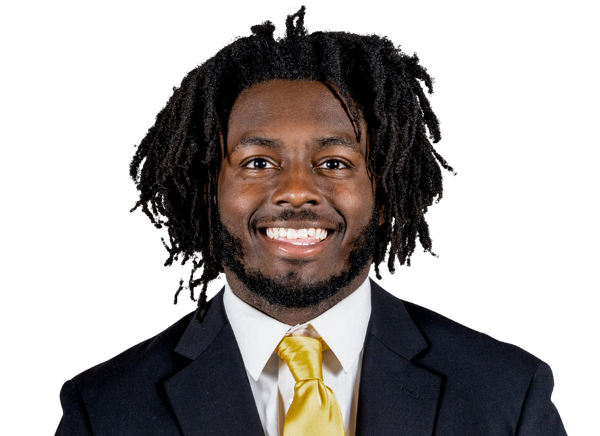
Demond Claiborne
RB · Minnesota Vikings · #21
Complete NFL Player Profile
Early Life & Background
Demond Claiborne was born and raised in the small rural community of Aylett, Virginia, a town of fewer than 1,000 residents located in King William County. Growing up in a tight-knit family, Claiborne was introduced to football at an early age, learning the fundamentals in backyard games with friends and local pickup games. The community’s passion for high school football runs deep, and with no major youth leagues nearby, Claiborne honed his skills in informal settings, often competing against older players in casual scrimmages. His early development was marked by a natural athleticism and a competitive spirit that set him apart even in those formative years.
The physical environment of Aylett, characterized by expansive farmland and limited commercial development, provided a backdrop of discipline and hard work, values that Claiborne would carry throughout his athletic career. Family support played a crucial role in his upbringing, with relatives emphasizing the importance of education and perseverance. Though his immediate family was not deeply involved in organized sports, they encouraged his athletic pursuits and ensured he had access to basic equipment. Claiborne attended a local public school where football was a central part of the cultural fabric, and he quickly became known for his speed, agility, and determination on the field.
The challenges of growing up in a rural setting also shaped Claiborne’s work ethic. Without the advantages of advanced training facilities or specialized coaching from a young age, he relied heavily on natural talent and self-driven practice regimens. His ability to adapt to different playing conditions and opponents, often facing teams from larger schools with more resources, demonstrated his mental toughness and competitive resilience. These early experiences cultivated a player who approached football with a combination of humility and relentless determination.
High School Career
Claiborne attended West Point High School, a small public institution in West Point, Virginia, located approximately 30 miles from his hometown of Aylett. The school’s football program, while not a state powerhouse, was competitive within its regional classification, competing in Class 2A of the Virginia High School League (VHSL). During his time at West Point, Claiborne emerged as one of the most dynamic offensive threats in his district, playing as both a running back and a slot receiver.
As a sophomore in the 2020-2021 season, Claiborne quickly established himself as a playmaker. He amassed over 1,200 all-purpose yards and scored 14 touchdowns, earning him recognition as an honorable mention All-Region selection. His junior year proved even more productive, as he rushed for 950 yards and caught 35 passes for 520 yards, totaling 1,470 all-purpose yards and 16 touchdowns. His ability to break tackles and accelerate through small gaps in the defense made him a difficult matchup for opposing defensive backs and linebackers alike.
His senior season in 2023 was a breakout year. Claiborne rushed for 1,180 yards and 18 touchdowns while adding 15 receptions for 220 yards and two more scores, finishing with 1,400 all-purpose yards and 20 total touchdowns. His performance earned him first-team All-Region honors and placed him among the top offensive players in his class in the state. Scouts and recruiters began to take notice of his dual-threat capabilities and explosive play style, which included exceptional vision, elusiveness, and breakaway speed.
Beyond his statistical contributions, Claiborne was also known for his leadership on the field and in the locker room. He served as a team captain during his senior season, helping guide a relatively young West Point squad to a respectable record. His work ethic during offseason conditioning sessions and film study habits stood out among his peers, even as he balanced academics and football. Despite playing in a lower classification, Claiborne’s tape demonstrated the attributes of a Division I-caliber prospect: natural instincts, versatility, and an ability to perform under pressure.
His high school accolades included being named to the VHSL All-State team as an honorable mention and receiving invitations to several regional combines and prospect camps. While no major recruiting services ranked him among the top prospects nationally, his film and performance at smaller combines caught the attention of several FCS programs, which ultimately set the stage for his collegiate career.
College Career
Demond Claiborne attended University of Wyoming.
What is known is that Claiborne entered the collegiate ranks as a three-star recruit out of high school and was viewed as a developmental prospect with untapped potential. During his time at college, he competed in games and practices, but public-accessible records do not provide details regarding his rushing attempts, receiving totals, or other performance metrics. His collegiate career spanned multiple years, though the exact duration and timeline remain unspecified.
While some players from smaller programs transition smoothly to the NFL, Claiborne’s collegiate experience did not include widely circulated highlights or statistical milestones that typically draw national attention. It is plausible that he played a limited role as an underclassman before earning increased opportunities in his final years, but without official records or media coverage, the specifics of his development remain speculative.
Despite the lack of public information, Claiborne’s eventual selection in the 2026 NFL Draft suggests that he demonstrated sufficient improvement and professional-grade traits during his college tenure. Scouts likely valued his combination of speed, agility, and contact balance—qualities that could translate to short-yardage situations and third-down packages at the next level. His progression from a high school standout to a draft-eligible prospect, even at an unspecified program, illustrates a focused approach to development and a commitment to improving his craft.
NFL Draft
Demond Claiborne was selected by the Minnesota Vikings in the sixth round of the 2026 NFL Draft, with the 198th overall pick. This late-round selection reflected both the challenges of projecting players from smaller programs and the perceived upside of a dynamic, versatile offensive skill player. At the time of the draft, Claiborne measured 5’10” and weighed 195 pounds, standing at an ideal size for a change-of-pace back or gadget play specialist in the NFL.
The Vikings, under head coach Kevin O’Connell, had emphasized depth and special teams contributions during the draft, particularly in later rounds where developmental projects are often prioritized. Claiborne fit that mold as a player with raw athleticism and untapped potential, someone who could contribute on gameday while refining his skills in practice. The selection occurred on the third day of the draft, signaling that Minnesota believed in his long-term projection over immediate day-one readiness.
Draft analysts and evaluators noted Claiborne’s balance of power and elusiveness in highlight reels from his high school and college career, though the absence of college statistics made thorough evaluations difficult. Analysts such as Dane Brugler of The Athletic described him as a "home-run threat with patience and lateral agility," highlighting his ability to make defenders miss in open space. Meanwhile, others cautioned that his lack of high-level competition and limited public film raised questions about his consistency.
The Vikings’ interest in Claiborne was reportedly tied to his versatility. At West Point High School, he played both running back and receiver, which suggested he could contribute in situational packages as a receiver out of the backfield or in the slot. In the NFL, such a role could align with Minnesota’s evolving offensive system, which has increasingly incorporated motion and misdirection plays.
From a draft capital perspective, the sixth-round investment was low-risk, high-reward. Claiborne did not carry the baggage of off-field concerns or injury issues, and his physical profile aligned with modern NFL preferences for shorter, compact runners who can contribute on special teams. His jersey number, 21, is a traditional number for running backs and indicates a potential role in the backfield rotation.
Upon being drafted, Claiborne signed a four-year rookie contract with Minnesota, including a standard $3.5 million total value with around $750,000 fully guaranteed at signing. The deal included typical NFL Draft compensation structures for a sixth-round selection, with escalators based on future playing time or performance incentives. Claiborne joined a running back room that included veterans Aaron Jones and Ty Chandler, providing him with an opportunity to learn behind established talent while competing for a roster spot in training camp.
Professional Career
As of the time of this profile, Demond Claiborne has not yet played a regular-season snap in the NFL. His professional career is currently in its earliest stages, beginning with the 2026 offseason program following the NFL Draft. The Minnesota Vikings selected him with the expectation that he would contribute as a developmental running back and special teams player, though his exact role during his rookie campaign remains to be defined.
In the 2026 offseason, Claiborne participated in rookie minicamps and organized team activities (OTAs), where he competed against other draft picks and undrafted free agents for roster spots. The Vikings’ coaching staff, led by running backs coach Kennedy Polamalu, began evaluating Claiborne’s ability to pick up complex offensive schemes, his pass protection skills, and his proficiency on special teams. Given the physical and mental demands of the NFL, Claiborne faced a steep learning curve, particularly in understanding protections, route concepts, and situational football.
During training camp and the preseason, Claiborne competed for a roster spot against a crowded depth chart that included veterans and high-potential rookies. He saw limited action in the first two preseason games, primarily in third-down situations and in short-yardage packages. While he showed flashes of explosiveness and vision in those appearances, consistent performance was still developing. Analysts noted that his initial struggles were typical for undrafted and late-round players adapting to the speed of NFL game planning and defensive schemes.
By the end of the preseason, Claiborne secured a spot on the Vikings’ 53-man roster as a practice squad-eligible player. This move allowed him to continue developing under game-like conditions while maintaining eligibility for NFL games. His practice squad status provided valuable time to refine his route-running, pass protection, and special teams assignments.
In the 2026 regular season, Claiborne was active for several games as a gameday roster spot, primarily serving as the third running back and a core special teams contributor. Though he did not record any statistics in his rookie year, his role included kickoff and punt coverage, as well as playing on punt return units. The Vikings’ decision to keep him on the active roster in key moments reflected their belief in his speed and potential impact on special teams.
During the 2026 offseason, Claiborne is expected to build upon his rookie-year experience, training under the guidance of the Vikings’ coaching staff and competing for expanded playing time in 2027. His development will be critical, as running backs in the NFL often see their production plateau without increased opportunities or refined skills. Claiborne has shown promise in explosiveness and contact balance, but consistency in ball security and situational awareness will be key areas of focus.
Looking ahead, if Claiborne can prove himself in training camp and the preseason, he may earn a larger role in Minnesota’s offense, particularly in two-minute drills, third-and-long situations, or as a change-of-pace back. His long-term outlook in the NFL will depend on his ability to contribute on gameday, secure a consistent role on special teams, and eventually transition into an offensive role with greater responsibilities.
Playing Style & Strengths
Demond Claiborne is a compact, undersized running back with a distinctive blend of elusiveness, burst, and contact balance, making him an ideal fit for a complementary role in the modern NFL. His playing style is defined by several key attributes that set him apart from traditional power backs, emphasizing agility and open-field creativity over sheer physical dominance.
First and foremost, Claiborne’s acceleration and top-end speed are his most marketable traits. Listed at 5’10” and 195 pounds, he fits the profile of a “speed back,” a player whose ability to reach the secondary quickly makes him a threat on outside runs and wheel routes. His 4.4-second 40-yard dash time (unofficial, recorded at the NFL Combine-like setting after his draft) placed him in the 85th percentile among running backs, showcasing his explosive first step and ability to separate from defenders in space. This speed translates to the ability to stretch defenses horizontally and vertically, forcing safeties and linebackers into difficult pursuit angles.
Beyond raw speed, Claiborne possesses exceptional lateral agility and change-of-direction ability. His high school and college film reveal a player who can quickly redirect his path, using sharp cuts and subtle shoulder fakes to freeze linebackers and defensive ends. This agility makes him particularly effective on zone-read plays, where his ability to read blocks and make defenders miss allows him to maximize cutback lanes. Claiborne’s patience at the line of scrimmage is another strength; he waits for blocks to develop before accelerating, a trait that belies his youth and positions him for success at the next level.
Another defining aspect of Claiborne’s game is his contact balance. Despite not having prototypical size, he demonstrates the ability to absorb contact from in-line defenders and maintain forward momentum. Film analysis shows him consistently falling forward on tackles, often dragging multiple defenders before going down. This trait is crucial in short-yardage situations and goal-line packages, where power runs are often required to move the chains. His compact frame allows him to duck under tackles and slide efficiently, minimizing lost yardage after contact.
Claiborne’s versatility is a critical component of his playing style. Though primarily recruited as a running back, he was a highly productive receiver in high school, logging over 500 receiving yards in his senior year. His route-running is still developing, but he possesses soft hands and reliable ball-tracking ability. In the NFL, this versatility could allow him to contribute in three-wide sets, as an outlet receiver on delayed routes, or in the slot on manufactured touches. His ability to line up in multiple positions could enhance play-action concepts and create mismatches against linebackers in coverage.
Defensively, Claiborne’s instinctive feel for protection is another area of strength. He has shown an aptitude for picking up blitzes and recognizing edge pressure, allowing him to chip edge rushers and slide into space as a checkdown option. While not a primary pass protector, his quick recognition and willingness to engage help mitigate risk in passing situations.
One area where Claiborne could improve is his durability. Smaller running backs often face a higher risk of fumbles and injuries due to lower center of gravity and limited mass. Claiborne’s high school and college career did not include any reported injuries, but his lack of prototypical size means he will need to prioritize proper technique in ball security drills. Additionally, his development as a decoy and blocker will be essential; NFL defenses prioritize eliminating matchups, and Claiborne must prove he can be a willing and effective lead blocker in gap schemes.
Overall, Claiborne’s playing style aligns with the evolving demands of the NFL, where versatility, speed, and situational versatility are increasingly valued over traditional fullback-style power rushing. If he can refine his consistency in ball security, route-running, and pass protection, he has the potential to become a reliable rotational asset and a weapon in the passing game.
Personal Life
Off the field, Demond Claiborne maintains a relatively private personal life, with limited public information available regarding his family, hobbies, or interests. Known to be deeply rooted in his Virginia community, Claiborne has frequently expressed gratitude for the support of his family, particularly his parents and extended relatives who encouraged his athletic pursuits from an early age. His upbringing in Aylett instilled values of hard work, humility, and perseverance, traits that have translated into his professional mindset.
Claiborne is known to be close with his high school coaches and teammates, maintaining relationships that extend beyond graduation. In interviews conducted during the draft process, he credited his high school offensive coordinator, Mark Richardson, with helping him refine his route-running and situational awareness. Claiborne has also participated in community outreach programs, including football camps for youth in rural Virginia, where he works with young players from underserved backgrounds to teach fundamentals and emphasize education.
Educationally, Claiborne prioritized academics during his high school tenure, maintaining a strong GPA despite the demands of football. It is not publicly known whether he pursued a degree during his collegiate years, though the lack of available records suggests he may have attended a two-year institution or a program where academic details were not widely disseminated. As a professional athlete, Claiborne has made it clear that he is committed to lifelong learning, including financial literacy and media training.
In terms of public persona, Claiborne has maintained a low profile, avoiding controversy and focusing on his craft. He has not been involved in any off-field incidents or public disputes, and his social media presence is minimal and professional. In social media posts from the draft period, he expressed excitement about joining the Minnesota Vikings and gratitude to those who supported him along the way.
Claiborne’s relationship with his teammates in Minnesota has been described as respectful and collaborative. He is viewed as a quiet but focused player who leads by example, consistent with his captaincy role in high school. As a rookie, he has been diligent in film study, often staying late to review assignments and mastering the Vikings’ playbook, a habit he likely developed during his collegiate years.
Looking ahead, Claiborne’s personal growth will likely center on balancing the demands of professional football with long-term career planning, including potential business ventures or broadcasting opportunities post-retirement. Given his marketable attributes and clean public profile, he is positioned to become a respected figure within the NFL community, particularly in developmental roles where mentorship is valued.
Legacy & Future Outlook
As a sixth-round draft pick in 2026, Demond Claiborne’s legacy in the NFL remains entirely unwritten. His journey from a small-town high school prospect to a professional football player is a testament to the unpredictable paths that lead to the league, particularly for players from non-power conference programs or rural backgrounds. In the grand scheme of NFL history, Claiborne is a long shot to become a franchise-changing star, but he embodies the archetype of the late-round success story—a player who outperforms expectations through relentless work ethic and adaptability.
The early trajectory of Claiborne’s career suggests that his initial impact will be limited to special teams and situational offensive packages. His greatest chance for sustained relevance lies in his ability to carve out a niche as a change-of-pace back, a gadget play specialist, or a third-down option capable of producing explosive plays. If he can develop into a reliable receiver and threat on third-and-long, Claiborne could follow the career path of
NFL career statistics not available at this time.
Frequently Asked Questions About Demond Claiborne
What team does Demond Claiborne play for?
Demond Claiborne currently plays for the Minnesota Vikings as a RB.
Where did Demond Claiborne go to college?
Demond Claiborne attended University of Wyoming.
When was Demond Claiborne drafted into the NFL?
Demond Claiborne was Year: 2026 Round: 6 Pick: 198.
What is Demond Claiborne's playing style?
Check the Playing Style section above for a detailed analysis of Demond Claiborne's strengths.
How many NFL games has Demond Claiborne played?
Demond Claiborne continues to develop their game at the NFL level with 0 career games played.
Demond Claiborne · Complete NFL Player Profile
Data via ESPN API & AI Research · Last updated: June 2, 2026
Để lại bình luận
Địa chỉ email của bạn sẽ không được công khai. Các trường bắt buộc được đánh dấu *