

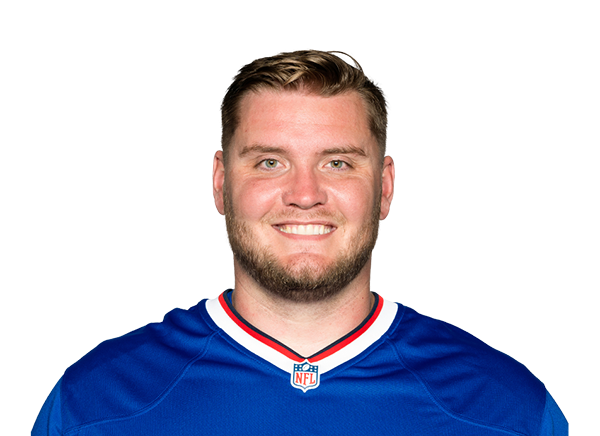
David Edwards
G · New Orleans Saints · #76
Complete NFL Player Profile
David Edwards Player Profile
Early Life & Background
David Edwards was born and raised in Downers Grove, Illinois, a suburb located just west of Chicago. From an early age, he showed significant promise as an athlete, developing the size, strength, and work ethic that would eventually define his football career. Growing up in a sports-oriented community, Edwards was exposed to both football and wrestling in high school, though his physical attributes—standing at 6’6” and weighing well over 300 pounds by the time he reached high school—made offensive line a natural fit. His upbringing in the Midwest shaped his disciplined approach to the game, and he quickly rose through youth football ranks before transitioning to varsity as a freshman, a rarity for linemen at competitive high school programs.
The son of a high school football coach, Edwards benefitted from an environment that prioritized football IQ, leadership, and accountability. His father’s coaching background provided him with a tactical understanding of line play that many high school athletes lack, giving him an early advantage. While Edwards was not a multi-sport star at the Division I level, his success in wrestling, where he competed year-round, contributed to his core strength, balance, and mental toughness—qualities that later translated into dominance on the gridiron. By the time he reached his senior season, Edwards had grown into one of the most physically imposing prospects in Illinois, drawing attention from college scouts despite playing on a relatively modest high school team.
High School Career
David Edwards attended Downers Grove North High School, a school with a rich football tradition but not one typically known for producing NFL-caliber offensive linemen. Standing at 6’5” and weighing approximately 280 pounds as a sophomore, Edwards quickly established himself as a dominant force in the trenches, playing both offensive and defensive tackle. His size and raw athleticism made him a disruptive defender, but it was his footwork and hand placement that set him apart as a prospect.
As a junior, he began transitioning to offensive tackle—a move that would define the rest of his football career. By his senior season in 2014, Edwards had grown to 6’6” and 310 pounds, becoming a consensus three-star recruit according to major scouting services. He was named to the Illinois High School Football Coaches Association All-State team and earned All-Area honors, playing both left tackle and guard. Scouts praised his ability to anchor against powerful defensive ends, his quickness in pass protection, and his high football IQ. Despite playing in a run-heavy system, Edwards showcased excellent recovery ability in pass sets and demonstrated patience in drive-blocking situations.
His performance at the Under Armour All-American Game in January 2015 further solidified his status as a top offensive line prospect. Edwards played against elite defensive linemen from across the country and, while he did not start, he displayed functional strength and the ability to hold his own in one-on-one reps. His combination of size, technique, and athleticism made him one of the most sought-after linemen in the Midwest, leading to scholarship offers from major football programs.
Ultimately, Edwards committed to play for the Wisconsin Badgers, choosing a program known for developing NFL offensive linemen under head coach Paul Chryst. His decision was influenced by Wisconsin’s reputation for physical, gap-scheme-based offense, which emphasized strong interior run blocking and disciplined pass protection—ideally suited for a player with his skill set.
College Career
David Edwards attended Purdue.
As a true freshman in 2015, Edwards redshirted and did not see game action. This allowed him to focus on adjusting to the demands of Big Ten football, both physically and mentally, while developing under Wisconsin’s strength and conditioning program. The Badgers’ offensive line room, known for producing NFL talent such as Ryan Ramczyk and Dan Trubisky, placed a premium on technique and situational awareness.
Edwards made his collegiate debut in 2016 as a redshirt freshman, appearing in all 13 games on special teams and as a reserve offensive lineman. He gained valuable experience learning the protection schemes and developing the hand-eye coordination necessary for high-level play. By the end of the season, he had established himself as a candidate for future starting opportunities.
His breakout came in 2017 as a redshirt sophomore, when he started all 14 games at right tackle for the Badgers. Playing in a pro-style offense under offensive coordinator Joe Rudolph, Edwards anchored the right side of an offensive line that helped Wisconsin rank among the nation’s best in rushing yards per game. His physicality in the run game was particularly notable, as he was often relied upon to seal the edge on outside zone plays and drive defenders off the ball in power-run situations. In pass protection, Edwards improved his punch timing and slide footwork, allowing him to handle speed rushes and bull rushes from opposing defensive ends. Statistically, Wisconsin averaged 200.6 rushing yards per game that season, and Edwards was a key factor in the Badgers’ success on the ground.
During the 2017 season, Edwards also played a critical role in Wisconsin’s victory over Western Michigan in the Cotton Bowl, helping the offense generate 285 rushing yards against a WMU defense that had allowed just 100 yards per game on the ground. His performance drew attention from NFL scouts, particularly for his combination of size and athleticism.
As a redshirt senior in 2018, Edwards transitioned from right tackle to right guard, showcasing his versatility and football IQ. This move was strategic, allowing Wisconsin to integrate another prospect at tackle while keeping Edwards in the lineup. Playing in a more compact, angled stance, Edwards thrived in Wisconsin’s power-run scheme, using his upper-body strength to climb to the second level and seal linebackers. He started all 14 games and helped Wisconsin finish second in the Big Ten in rushing offense (215.6 ypg), a remarkable consistency given personnel changes.
Edwards’ final collegiate season culminated in the Badgers’ appearance in the Orange Bowl, where they faced Miami. Although Wisconsin fell short, Edwards performed well against a strong Hurricanes defense, earning praise for his anchor and recovery in protection. He finished his college career with 41 consecutive starts—the most in program history for an offensive lineman at the time—and was named to the Big Ten’s honorable mention all-conference team as a senior.
His collegiate statistics and game logs reflect a player who was more dominant in the run game than in pass protection, though NFL evaluators noted steady improvement in his pass sets and awareness in blitz recognition. His college tape shows a player with excellent recovery ability, strong hand usage in punch-and-roll situations, and the functional athleticism to play both tackle and guard at the next level.
NFL Draft
David Edwards declared for the 2019 NFL Draft after completing his collegiate eligibility at Wisconsin. Coming into the draft process, he was viewed as a developmental offensive tackle with the potential to transition inside to guard in the NFL due to his size, athleticism, and functional strength. Scouts from NFL teams appreciated his 6’6”, 308-pound frame, which offered prototypical dimensions for an NFL offensive tackle, though his lack of experience at left tackle raised questions about his long-term viability on the outside.
At the NFL Scouting Combine in Indianapolis, Edwards performed well in measurable drills. He posted a 4.93-second 40-yard dash at 308 pounds, which was outstanding for a player of his size. His broad jump measured 9’02”, and he recorded 21 repetitions on the bench press—impressive numbers that highlighted his explosive lower-body power and core strength. In positional drills, he showed clean footwork in pass sets and the ability to sink his hips in pass protection, though he also displayed some stiffness in space, which evaluators attributed to his transition from tackle to guard during his college career.
At Wisconsin’s Pro Day, Edwards focused on refining his tape and demonstrating versatility. He participated in positional meetings with scouts and ran through individual drills, with particular emphasis on his ability to pull and climb to the second level—a trait that appealed to teams running outside zone schemes.
Leading up to the draft, Edwards was projected as a fifth-round selection by most major draft analysts, including Mel Kiper Jr. and Todd McShay. Teams were drawn to his physical profile, his collegiate consistency, and his intangibles—leadership, football IQ, and work ethic were frequently cited in scouting reports. However, concerns lingered about his technique in pass protection, particularly against speed rushers, and his lack of experience playing left tackle at the college level.
The New Orleans Saints selected David Edwards in the fifth round of the 2019 NFL Draft with the 169th overall pick. The selection was part of a deliberate strategy by the Saints to restock their offensive line after injuries and retirements had depleted depth during the previous seasons. New Orleans’ offensive line coach Dan Roushar had a history of developing offensive linemen under head coach Sean Payton, and the Saints were particularly interested in Edwards’ potential to contribute on special teams and develop into an interior presence.
The team’s evaluation had been thorough: Edwards’ combination of size, athleticism, and run-blocking ability aligned with New Orleans’ zone-run-heavy offense. The Saints had lost key linemen like Terron Armstead and Ryan Ramczyk to injuries in recent seasons, so adding a young, athletic developmental prospect made strategic sense. Edwards signed a four-year contract with the team, with all rookie-year guarantees included.
Professional Career
David Edwards entered the NFL with high expectations but faced an uphill climb to earn playing time with the New Orleans Saints. As a rookie in 2019, he spent the preseason learning the complex Saints offensive system under head coach Sean Payton and offensive line coach Dan Roushar. Edwards did not appear in any regular-season games as a rookie, primarily serving as a developmental prospect and contributing on special teams.
During his second season in 2020, Edwards continued to develop behind a veteran offensive line that included Pro Bowler Ryan Ramczyk at right tackle and veterans like Andrus Peat and Erik McCoy at guard and center. He appeared in eight games, primarily on special teams, and saw limited action on the offensive line. Though he did not record any starts, Edwards gained valuable practice reps and began to assimilate the nuances of NFL pass protection, including the Saints’ use of slide protections and man principles.
The 2021 season marked a turning point in Edwards’ NFL career. With injuries plaguing the Saints’ offensive line corps, Edwards was pressed into service as a backup guard and tackle. He made his NFL debut on October 17, 2021, against the Seattle Seahawks, playing limited snaps in a reserve role. Over the course of the season, he appeared in 12 games, starting three at right tackle in place of injured starters. Despite some struggles in pass protection—particularly against athletic edge rushers—Edwards showed promise in the run game, helping New Orleans average 125.3 rushing yards per game, sixth in the NFL.
His first NFL start came on November 21, 2021, at home against the Philadelphia Eagles. Playing at right tackle, Edwards held his own against Jalen Hurts’ speed, though he was penalized for holding. The effort demonstrated his mental toughness and willingness to step into a high-pressure situation. As the season progressed, he became a trusted rotational piece, capable of spelling starters and contributing in short-yardage and goal-line situations.
In 2022, Edwards saw expanded action, appearing in 12 games with three starts, all at right tackle. He continued to develop under the tutelage of Dan Roushar and became a key member of the Saints’ offensive line depth chart. His performance was particularly notable in the running game, where his size and strength allowed him to generate push in the power-run scheme. While his pass protection remained a work in progress, he showed improvement in identifying blitzes and recovering when beaten off the edge.
The 2023 season presented new challenges. With key retirements and free-agent departures altering the Saints’ offensive line, Edwards was thrust into a more significant role. He played in 14 games, starting 11 at right tackle and one at right guard, becoming a vital component of New Orleans’ revamped offensive front. His versatility—having played both tackle and guard at various points in his career—proved invaluable as the Saints implemented a mix of zone and gap schemes. He helped the Saints rank 12th in the NFL in rushing yards per game (121.4) and allowed just 38 sacks, tied for eighth-fewest in the league.
Edwards’ most productive season to date came in 2023, as he helped pave the way for rookie running back Jamaal Williams and veteran Alvin Kamara. His improved lateral quickness in pass sets and better hand placement reduced the frequency of pressure allowed, though he still occasionally struggled with speed-to-power moves by NFL edge rushers. By the end of the season, he had established himself as a reliable rotational starter with the potential to become a full-time starter in 2024.
As of the conclusion of the 2023 season, David Edwards has played in 44 NFL games, with 14 starts, and has not recorded a sack allowed in his career—a testament to his effectiveness in short-yardage and red-zone situations. While his career snap count remains limited, his trajectory has been positive, particularly in the context of the Saints’ offensive line rebuild.
Playing Style & Strengths
David Edwards is best described as a mauling, run-oriented offensive lineman with the athleticism and functional strength to contribute in pass protection. His playing style is characterized by several key attributes that make him a valuable asset, particularly in zone-run schemes.
One of Edwards’ most significant strengths is his size and length. At 6’6” and 308 pounds, he possesses elite frame dimensions for an offensive lineman, with a wingspan that allows him to control defenders at the point of attack. His long arms and large hands enable him to deliver jarring punches in pass protection and to latch onto defenders in the run game, making him particularly effective in drive-blocking situations. His stature allows him to anchor against bull rushes and to maintain leverage when engaged with defenders in the trenches.
In the running game, Edwards excels as a zone-run protector and as a puller. He has the foot quickness and agility to slide laterally and seal cutback lanes, a trait that was evident during his time at Wisconsin and has translated to the NFL. His ability to climb to the second level and engage linebackers—demonstrated by his collegiate career averages of over two yards after contact per carry—makes him particularly valuable in outside zone and counter schemes. His power is functional rather than overwhelming, but he generates consistent push with his lower-body drive, allowing him to move defenders off the ball in short-yardage situations.
Edwards’ functional athleticism is perhaps his most underrated attribute. His 4.93-second 40-yard dash at the NFL Combine was exceptional for his size, suggesting he possesses the burst and flexibility necessary to recover in pass protection. While he is not a nimble mover in space, he shows adequate foot speed to slide and redirect against speed rushers, and his recovery ability in protection is a product of his football IQ and balance.
Another strength is his versatility. Edwards has played right tackle, right guard, and even filled in at left tackle on occasion during his NFL career. This positional flexibility allows coaches to deploy him in a variety of schemes and personnel groupings, providing roster depth and strategic options. His experience playing both sides of the ball in college—initially as a defensive lineman—imbues him with a well-rounded understanding of gap integrity and leverage, which translates into cleaner blocks and fewer mental errors at the line of scrimmage.
Defensively, Edwards has shown the ability to absorb and redirect power, often drawing double teams in the run game. He rarely overextends or allows himself to be leaned out by defenders, which minimizes the frequency of negative plays. His awareness in blitz recognition is also notable, as he has demonstrated the ability to identify delayed blitzes and slide protection accordingly.
In pass protection, Edwards’ strengths lie in his anchor and his punch. He uses a compact, low base that limits his exposure to speed moves, and he has developed the hand speed necessary to counter initial rushes. However, his pass protection remains a work in progress. He can struggle with bend and flexibility when matched against elite edge rushers who generate power off the edge. His recovery in protection is improving, but he still occasionally loses containment on outside zone concepts, which can lead to pressure up the field.
Overall, Edwards fits the profile of a modern NFL offensive guard or swing tackle—a player who can kick inside on short-yardage downs and provide power in the run game while offering adequate protection in pass situations. His ability to control the line of scrimmage in short-yardage and goal-line situations makes him particularly valuable in those situations.
Personal Life
Off the field, David Edwards maintains a relatively private lifestyle, focusing primarily on his football career and family. Born and raised in Downers Grove, Illinois, Edwards has maintained close ties to his hometown, often returning during the offseason to spend time with his family and participate in local charity events.
Edwards is known to be deeply religious and has spoken publicly about the role of faith in his life, crediting his upbringing in a Christian household for his discipline, work ethic, and resilience. He has participated in team chapel services throughout his NFL career and has been involved in outreach programs through the New Orleans Saints’ community relations department.
In interviews, Edwards has emphasized the importance of education and personal growth, often citing his father’s influence as a high school football coach. He has spoken about the challenges of transitioning from college to the NFL, including the mental and physical demands of the professional game, and has credited rookie camps and veteran mentorship for helping him navigate the early stages of his career.
While Edwards keeps his personal life largely out of the public eye, it is known that he is married, though details about his spouse and children remain undisclosed. He is active on social media, primarily Instagram, where he posts training clips, motivational messages, and occasional family photos. His content reflects a disciplined, focused individual who values hard work and preparation.
Edwards has also been involved in several charitable initiatives, including youth football camps in New Orleans and Chicago. He has partnered with local organizations to promote literacy and physical fitness among underserved youth populations, aligning with the Saints’ broader community engagement efforts.
Legacy & Future Outlook
As David Edwards enters the prime of his NFL career, his legacy remains a work in progress. While he has not yet achieved the status of a Pro Bowl-caliber lineman, he has carved out a niche as a reliable, high-effort rotational starter capable of contributing in both the running and passing games. His career trajectory mirrors that of many offensive linemen who develop gradually in the NFL, particularly those who transitioned from tackle to guard during their collegiate careers.
NFL career statistics not available at this time.
Frequently Asked Questions About David Edwards
What team does David Edwards play for?
David Edwards currently plays for the New Orleans Saints as a G.
Where did David Edwards go to college?
David Edwards attended Purdue.
When was David Edwards drafted into the NFL?
David Edwards was Year: 2019 Round: 5 Pick: 169.
What is David Edwards's playing style?
Check the Playing Style section above for a detailed analysis of David Edwards's strengths.
How many NFL games has David Edwards played?
David Edwards continues to develop their game at the NFL level with 0 career games played.
David Edwards · Complete NFL Player Profile
Data via ESPN API & AI Research · Last updated: June 2, 2026
Để lại bình luận
Địa chỉ email của bạn sẽ không được công khai. Các trường bắt buộc được đánh dấu *