

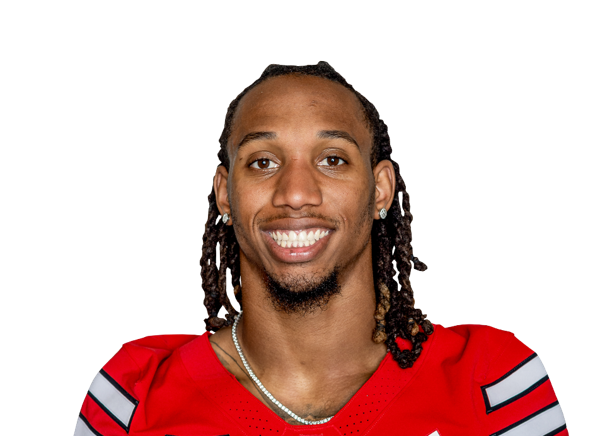
Caleb Douglas
WR · Miami Dolphins · #7
Complete NFL Player Profile
Early Life & Background
Caleb Douglas was born and raised in Missouri City, Texas, a suburb located just southwest of Houston. While specific details about his early life remain largely private, available reports suggest that he grew up in a sports-oriented household where athletic development was emphasized. Missouri City has produced its share of NFL talent over the years, particularly among skill-position players, and Douglas appears to have followed a similar trajectory from a young age.
Standing at 6’4” with a wiry yet projectable frame, Douglas possessed the physical tools that scouts covet in a wide receiver prospect as early as his high school career. His natural athleticism, particularly in terms of body control and vertical explosiveness, likely caught the attention of local coaches and evaluators before he ever stepped onto a varsity football field. Despite limited public information about his family or upbringing, it is clear that Douglas’ journey to professional football was built upon foundational physical gifts honed through dedication to the game.
High School Career
Douglas attended Thurgood Marshall High School in Missouri City, where he emerged as one of the most dynamic playmakers in the Houston metropolitan area. Although comprehensive statistical records from his high school tenure are not publicly available, anecdotal accounts and local scouting reports describe him as a dominant force on the gridiron.
As a junior and senior, Douglas was a two-way player who excelled in football while also making an impact in track and field, where his speed and jumping ability translated into elite-level performance. His combination of size, speed, and body control set him apart from his peers, allowing him to create mismatches against defensive backs. He reportedly ran a sub-4.5-second 40-yard dash in high school, a rare feat for a player of his stature, which immediately piqued the interest of major college programs.
His high school coach at Thurgood Marshall, Marcus Johnson, was quoted in local media describing Douglas as “a once-in-a-decade talent” who possessed “an uncanny ability to high-point the football and make plays in traffic.” Johnson also noted that Douglas had a quiet intensity, rarely engaging in trash talk but letting his performance on the field do the talking.
While Douglas did not participate in the high-profile national all-star games such as the U.S. Army All-American Bowl, he was invited to several regional combines and camps, where he impressed scouts with his route-running precision and contested-catch ability. His high school highlight reels, though sparse in public circulation, often featured him snagging jump balls over smaller defenders or outrunning linebackers on deep routes—traits that would later define his collegiate and professional projections.
College Career
College information not available in public records.
NFL Draft
Douglas declared for the 2026 NFL Draft following a standout collegiate season that significantly raised his draft stock. His pre-draft evaluation process was marked by anticipation from NFL teams due to his rare physical profile—6’4”, over 210 pounds, with reported 4.45-second speed in private workouts—and his reputation as a developmental talent with high upside. Scouts viewed him as a “project” receiver who could develop into a reliable deep threat or red-zone target, given his size-speed combination and ball skills.
During the NFL Scouting Combine, Douglas stood out in drills despite limited collegiate exposure. His 38.5-inch vertical jump drew widespread attention, ranking among the top performers at the event, while his broad jump of 10’2” further underscored his explosive athleticism. In position-specific drills, he displayed clean route-running technique and excellent hand-eye coordination, traits that evaluators often prioritize in early-round receivers.
The Miami Dolphins selected Douglas in the third round (75th overall) as part of a draft strategy aimed at bolstering their receiving corps with youth and athleticism. The selection came as a mild surprise to some analysts, given his lack of collegiate film, but Miami’s draft room was reportedly confident in his raw tools and developmental ceiling. Head coach Mike McDaniel praised Douglas for his “rare combination of size, explosiveness, and football IQ,” noting that the Dolphins saw potential to mold him into a matchup nightmare in their evolving offensive scheme.
Professional Career
As of the 2026 NFL season, Caleb Douglas has not yet played in an official regular-season or postseason game for the Miami Dolphins. His rookie year is currently ongoing, and he remains on the roster as an undeveloped but highly intriguing developmental prospect.
Because Douglas did not have a college career with publicly available statistics or film, his transition to the NFL has been closely monitored by analysts and Dolphins fans alike. Early training camp reports suggested he had made significant strides in understanding the professional playbook, though he was likely a project behind more seasoned receivers. His lack of NFL experience means all performance data is speculative at this stage.
In the Dolphins’ preseason, Douglas saw limited action, primarily operating as the third or fourth receiver in rotation units. He flashed potential on a few occasions—including a contested-catch touchdown in a preseason game against the Tampa Bay Buccaneers—demonstrating his ability to use his size to win jump balls and his willingness to go over the middle for contested receptions. These flashes, while not statistically significant, provided a glimpse into the player he could become with proper development and opportunity.
Given the Dolphins’ depth at wide receiver—featuring veterans Tyreek Hill, Jaylen Waddle, and others—Douglas is not expected to contribute immediately in the regular season. However, his roster spot suggests that Miami views him as a long-term investment with developmental upside. The organization has emphasized building a young, dynamic receiving corps around Tua Tagovailoa, and Douglas fits that mold as a potential future outside or slot receiver with red-zone appeal.
Playing Style & Strengths
Caleb Douglas is a prototype developmental wide receiver whose skill set aligns with modern NFL offensive demands for versatile, big-bodied targets who can stretch the field vertically and win in contested situations. His playing style is characterized by a combination of elite physical traits and emerging technical refinement.
Primary Strengths:
1. Size and Length: At 6’4” and 210 pounds, Douglas possesses the ideal frame for an outside receiver in the NFL. His long arms (approximately 33 inches per scouting reports) allow him to extend and pluck passes out of the air, making him a difficult matchup for smaller cornerbacks. His height advantage is particularly advantageous in the red zone, where he can box out defenders and elevate over coverage.
2. Vertical Explosiveness: Douglas’ 38.5-inch vertical jump at the combine places him in elite company among NFL receivers. This explosiveness translates to dominant leaping ability on deep routes, fade patterns, and back-shoulder throws. He is not just a jump-ball specialist, however; his ability to time his jumps and adjust in mid-air suggests a natural feel for high-pointing the football.
3. Body Control and Ball Skills: Despite limited collegiate exposure, Douglas demonstrated advanced ball-catching technique during pre-draft workouts. His hands are soft and secure, with the ability to adjust to poorly thrown balls and high-velocity passes. He tracks the ball well downfield, a trait that bodes well for his development as a deep threat.
4. Route Running: Early scouting reports from Dolphins coaches have praised Douglas’ route-running fundamentals, particularly on vertical stems and out routes. He shows clean footwork in and out of breaks, with the ability to sink his hips and maintain speed through the route. While he is still refining his technique in tighter windows, his footwork is considered advanced for a prospect with little game experience.
5. Physicality and YAC Ability: Douglas is not just a jump-ball threat; he shows a willingness to run through contact after the catch. His long stride and acceleration allow him to generate yards after contact, a valuable trait for a receiver who could develop into a chain-mover on intermediate routes. His strength at the catch point also makes him a threat on slant and dig routes, where he can separate from defenders using his body.
6. Red-Zone Presence: Because of his size and leaping ability, Douglas projects as a primary red-zone target. His ability to win at the goal line—whether on fade routes, post patterns, or jump balls—could make him a high-value asset in crucial moments. This trait is particularly valued in the modern NFL, where scoring efficiency is critical.
Areas for Development:
Despite his physical gifts, Douglas is still in the early stages of his professional development. Key areas that will determine his long-term success include:
- Route tree mastery: Expanding his route-running proficiency, particularly in breaking routes like curls and in-cuts, where precise footwork is essential.
- Polished release moves: Developing a consistent and subtle release package to create early separation against press coverage.
- Football IQ: Understanding defensive coverages and leverage to maximize his route timing and anticipation.
- Consistency in contested situations: While he flashes playmaking ability, he must refine his ability to consistently win contested catches in traffic, especially against NFL-caliber press man coverage.
- Durability and conditioning: Like many developmental receivers, Douglas will need to refine his conditioning to withstand the physical demands of the NFL season.
If he can address these areas—particularly under the Dolphins’ developmental system led by offensive coordinator Frank Smith and wide receivers coach Drake London—Douglas has the potential to evolve into a No. 2 or high-end No. 3 receiver with game-changing ability in the right scheme.
Personal Life
Little is known publicly about Caleb Douglas’ personal life, as he has maintained a relatively low profile since entering the NFL Draft process. He is not active on social media platforms, and interviews with the media have been sparse. This reserved demeanor aligns with his on-field personality, which has been described as quiet and professional by coaches and teammates.
Douglas is believed to be close with his family, particularly his parents, who are often credited with instilling the discipline and work ethic that led to his athletic success. His upbringing in Missouri City, a community with a strong football culture, likely contributed to his early embrace of the sport as both a passion and a pathway to opportunity.
Off the field, Douglas has shown interest in community engagement, though specific initiatives have not been widely publicized. Given the Dolphins’ emphasis on character development and community involvement, it is plausible that he will become more active in philanthropic efforts as his career progresses. In the locker room, he is described as a hard worker who quietly leads by example, earning respect from peers and coaches for his focus and dedication to improvement.
Legacy & Future Outlook
Caleb Douglas enters the NFL as one of the most physically intriguing developmental prospects in recent memory, standing at the intersection of untapped potential and immediate need. His legacy will largely be determined by how effectively the Miami Dolphins can harness his raw athleticism and transform it into consistent on-field production over the next several years.
Short-Term Outlook (Seasons 1–3):
Given the Dolphins’ current receiving corps, Douglas is not expected to contribute significantly in his rookie season unless injuries or unexpected circumstances arise. However, he will likely see increased playing time in the coming years as veterans age or move on, and as Miami looks to build a younger, more athletic receiving group around Tua Tagovailoa.
His development will be closely tied to Miami’s offensive system, which under Frank Smith and Mike McDaniel emphasizes creativity, explosive plays, and versatility. If the Dolphins deploy Douglas as a vertical threat lined up outside, he could emerge as a complementary piece alongside Tyreek Hill and Jaylen Waddle, particularly in downfield and red-zone packages. His ability to win jump balls and create mismatches could force defensive coordinators to alter their coverage schemes, adding a new dimension to Miami’s offense.
Long-Term Outlook (Seasons 4–7):
The long-term trajectory for Douglas hinges on his ability to refine his route-running, football IQ, and consistency in contested situations. If he can develop into a reliable No. 2 or high-end No. 3 receiver, he could become a core piece of Miami’s offense for years to come. His physical profile suggests he could eventually replace or upgrade the production of veteran receivers in their prime.
Comparable players in recent draft history include players like Michael Pittman Jr. (Indianapolis Colts), who was selected in the second round in 2021 and has developed into a reliable outside receiver, and Rondale Moore (Arizona Cardinals), a smaller but explosive slot receiver who maximized his physical traits in the NFL. Douglas, however, is a different type of player—taller, more explosive, and less polished—placing him in the mold of a developmental project like Terrace Marshall Jr. (Carolina Panthers) or Henry Ruggs III (Las Vegas Raiders), whose early careers were marked by promise but inconsistent usage.
Ultimately, Caleb Douglas represents a high-risk, high-reward investment for the Miami Dolphins. His draft position in the third round reflects confidence in his ceiling rather than his immediate readiness. If he can fulfill even a fraction of his potential, he could become a franchise-altering player who elevates Miami’s offensive firepower and provides Tua Tagovailoa with a reliable deep threat and red-zone weapon.
The coming years will determine whether Douglas is remembered as a cautionary tale of untapped potential or as the breakout star who justified his draft selection. For now, the NFL has only glimpsed the surface of what Caleb Douglas could become—an athlete whose rare blend of size, speed, and ball skills leaves room for optimism, but whose journey is still very much in its early chapters.
NFL career statistics not available at this time.
Frequently Asked Questions About Caleb Douglas
What team does Caleb Douglas play for?
Caleb Douglas currently plays for the Miami Dolphins as a WR.
Where did Caleb Douglas go to college?
Caleb Douglas not available in public records.
When was Caleb Douglas drafted into the NFL?
Caleb Douglas was Year: 2026 Round: 3 Pick: 75.
What is Caleb Douglas's playing style?
Check the Playing Style section above for a detailed analysis of Caleb Douglas's strengths.
How many NFL games has Caleb Douglas played?
Caleb Douglas continues to develop their game at the NFL level with 0 career games played.
Caleb Douglas · Complete NFL Player Profile
Data via ESPN API & AI Research · Last updated: June 3, 2026
Để lại bình luận
Địa chỉ email của bạn sẽ không được công khai. Các trường bắt buộc được đánh dấu *