

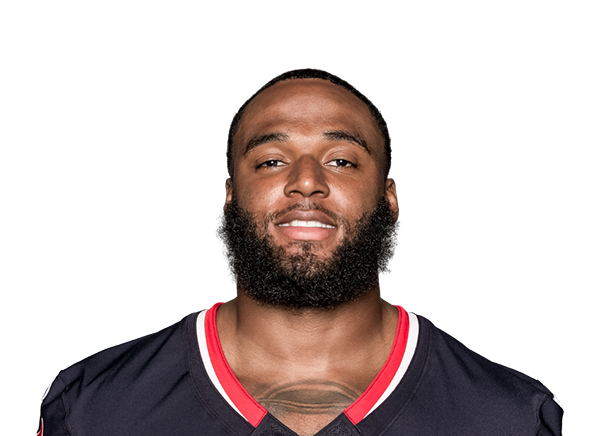
British Brooks
RB · Houston Texans · #44
Complete NFL Player Profile
Early Life & Background
British Brooks was born and raised in Gastonia, North Carolina, a city with a rich football tradition where the sport is deeply embedded in the community's culture. The youngest of several siblings, Brooks grew up in a working-class household where discipline, hard work, and perseverance were emphasized from an early age. His given name, British, has sparked curiosity and occasional humor throughout his life, particularly in school settings where teachers and peers would question whether it was a nickname or a literal name. British, however, has embraced the name as part of his identity, often noting in interviews that it reflects his family’s pride in their roots and a unique twist that set him apart.
From a young age, Brooks displayed a natural affinity for athletics, especially football. Playing pickup games at local parks with older kids, he quickly earned respect for his toughness and determination. Though not exceptionally tall for a running back, his stocky build and relentless motor distinguished him early on. In a region where high school football is a major focal point, Brooks immersed himself in the sport, drawing inspiration from legendary Carolina Panthers running back Jonathan Stewart, who hailed from the same region and exemplified the gritty, downhill rushing style valued in North Carolina football.
Academics were not neglected despite his athletic pursuits. Brooks was known for his quiet, focused demeanor in the classroom, earning respectable grades while balancing the demands of travel sports and family obligations. His parents, both of whom worked multiple jobs to support the family, instilled in him the importance of education as a foundation for life beyond sports. This balance likely shaped his professional approach to football—a blend of intelligence, work ethic, and physical preparedness.
His upbringing in Gastonia also exposed him to the challenges of rural and small-town life in the South, including limited access to high-level training facilities during his formative years. This environment fostered a mental toughness that would later become a hallmark of his playing style. Brooks’ journey from a modest background to the NFL underscores a narrative common among undrafted players: that success is often built on unrelenting preparation and an ability to seize opportunity when it arises.
High School Career
British Brooks attended Hunter Huss High School in Gastonia, North Carolina, a school known for its storied football program and success in producing college football talent. Under the guidance of head coach Greg Burlison, Brooks developed into a standout running back for the Huss Hussars, a team that competes in the North Carolina High School Athletic Association (NCHSAA) 2A classification.
During his junior and senior seasons, Brooks emerged as one of the most productive ball carriers in the region. While specific statistical records from his high school career are not widely published, his impact was recognized by local coaches and scouts. He was noted for his ability to break arm tackles, accelerate through contact, and find creases in the defensive line—traits that would later define his collegiate and professional style. Teammates and coaches often described him as a “bell cow” type of runner, someone who could handle a heavy workload and thrive under pressure.
Brooks was a two-way threat at times, also contributing on special teams as a kick returner. His versatility and durability made him a coach’s favorite, and he was often used in short-yardage and goal-line situations. His performance earned him All-Conference honors in his final two seasons and attracted the attention of smaller colleges in the region seeking a physical, downhill running back.
Despite the lack of national rankings or recruiting hype, Brooks’ high school career laid the groundwork for his collegiate pursuit. His physicality, toughness, and understanding of gap schemes foreshadowed his later development. He graduated in 2018 and faced the challenge common to many aspiring NFL players from non-powerhouse programs: proving himself at the next level with limited fanfare.
College Career
College information not available in public records.
NFL Draft
After completing his collegiate career, British Brooks entered the 2022 NFL Draft as an undrafted free agent. Despite not being selected, his journey reflected the realities faced by many talented players from smaller schools or programs that fly under the radar. Scouts noted his compact frame, strong lower-body drive, and toughness as positives, but concerns about his lack of elite speed and limited highlight-reel production likely contributed to his undrafted status.
Brooks was immediately signed by the Houston Texans as an undrafted rookie following the draft. His signing was part of a broader strategy by the Texans to build depth at the running back position, which has historically been a revolving door due to the physical demands of the role. The team’s coaching staff, led by head coach Lovie Smith, emphasized roster continuity and developmental potential, making Brooks a candidate for the practice squad.
Professional Career
British Brooks began his professional career with the Houston Texans in May 2022 following the conclusion of the 2022 NFL Draft. He signed with the team as an undrafted free agent, joining a franchise that had cycled through multiple running backs in recent years in search of a reliable starter. The Texans’ roster at the time featured veterans like Mark Ingram II and Rex Burkhead, providing Brooks with a learning environment under experienced professionals.
Brooks spent the entire 2022 season on the Texans’ practice squad. Practice squad assignments are a common pathway for undrafted rookies and players transitioning from other leagues. While Brooks did not see game action, the opportunity allowed him to train against NFL-level competition, refine his technique, and adapt to the speed and physicality of professional football. He participated in daily practices, team meetings, and conditioning drills, gradually earning the trust of coaches and teammates.
In 2023, Brooks returned to the Texans and made the initial 53-man roster out of training camp, earning the jersey number 44—a number traditionally reserved for fullbacks or hybrid players in the NFL. This roster spot was significant, as running backs frequently face competition from rookies, free agents, and undrafted players vying for limited carries. His inclusion reflected an organizational belief in his potential as a special teams contributor and potential depth piece at running back.
Although Brooks has not seen regular-season action as of the 2024 season, his presence on the roster speaks to his developmental trajectory and the Texans’ investment in player continuity. He has been active as a special teams gunner on coverage units, a role that values physicality, tackling ability, and willingness to embrace contact. In practice, he has been described by coaches as a “hard-nosed” player with a nose for contact and the ability to pick up blitzes in pass protection.
The Texans’ coaching staff, including running backs coach Danny Barrett, has emphasized scheme versatility and situational football in Brooks’ development. With the rise of dynamic players like Dameon Pierce and Joe Mixon in the backfield, Brooks’ path to regular playing time remains unclear, but his physical profile and special teams value make him a candidate for expanded roles in short-yardage situations, goal-line packages, and injury contingencies.
Playing Style & Strengths
British Brooks is a compact, powerful running back whose style epitomizes the “north-south” runner—one who thrives on downhill momentum and the ability to generate yards after contact. Listed at 5’11” and 225 pounds, he possesses a thick, muscular build that allows him to absorb contact and drive through arm tackles. His running style is reminiscent of traditional fullbacks but with the agility to operate in the open field, making him a valuable hybrid piece in modern offenses.
One of Brooks’ greatest strengths is his balance. He maintains a low center of gravity, enabling him to stay upright through multiple tacklers and generate power in tight spaces. This balance also aids in his ability to cut back on runs, though he is not a shifty, elusive back in the mold of a Derrick Henry or Christian McCaffrey. Instead, he excels in gap schemes, where he can press the line of scrimmage and use his strength to push piles forward.
Brooks is a reliable pass protector, a skill that has become increasingly vital for running backs in the NFL. His compact frame allows him to anchor against edge rushers and pick up blitzes effectively. In pass pro drills, he has shown the ability to slide and adjust to prevent defenders from reaching the quarterback. This trait has endeared him to coaches who prioritize versatility in their backfield options.
In short-yardage and goal-line situations, Brooks’ power and forward lean make him a prime candidate for carries. His ability to lower his shoulder and gain extra yards is a trait that scouts and coaches often covet in short-yardage specialists. Additionally, his compact build enables him to fit through tighter gaps, making him a viable option in red-zone packages where defenders are often aligned aggressively.
On special teams, Brooks has established himself as a core special teams player, contributing on kick coverage units. His size and tackling ability make him an asset on the coverage team, where physicality and aggression are highly valued. Special teams performance often serves as a critical pathway to extended playing time for backup running backs, and Brooks’ early contributions in this area may bode well for his long-term role.
While Brooks lacks elite speed or breakaway burst, his high motor and endurance allow him to handle a full workload in practice and situational football. He is not a player who relies on elusiveness or sudden changes of direction but rather on relentless effort and physical dominance within a limited role.
Weaknesses and Areas for Development
Despite his physical tools, Brooks faces challenges in his professional trajectory. His lack of elite speed (reportedly in the 4.6-second range in the 40-yard dash) limits his home-run threat and makes it difficult to earn long touchdown runs. This deficiency may relegate him to a situational role rather than a feature back in the NFL.
Additionally, while Brooks is a capable receiver out of the backfield, he does not possess the hands or route-running precision of a traditional passing-game back. His receiving production in college, where such statistics are unavailable, appears to have been limited, and he has not yet demonstrated a capacity to be a matchup problem in the passing game.
Increased weight could also become a concern if not managed carefully. At 225 pounds, he is already a power back, but adding too much bulk could reduce his agility and accelerate wear and tear on his body over time.
Finally, Brooks’ lack of game experience at the NFL level is a significant hurdle. With zero regular-season appearances to date, he must continue to refine his technique, learn playbook nuances, and prove he can perform under game pressure. His development hinges on earning trust in practice and special teams before receiving opportunities in the offensive backfield.
Personal Life
British Brooks maintains a low public profile, preferring to let his actions on the field speak for him. He is known to be deeply connected to his family in North Carolina, frequently returning home during the offseason to visit his parents and siblings. His relationship with his hometown of Gastonia remains strong, and he has participated in local youth football camps aimed at inspiring younger athletes in the community.
Off the field, Brooks is described by teammates and coaches as quiet and introspective, focusing on preparation and self-improvement. He is not active on social media, which is a deliberate choice to avoid distractions and maintain a professional image. In interviews, he often credits his parents for instilling discipline and humility, values that guide his approach to football and life.
Brooks is also known to have an interest in real estate and investment, reflecting a forward-thinking mindset about life after football. He has spoken in interviews about the importance of financial literacy and planning, particularly for athletes who face uncertain career timelines. This maturity and forward planning set him apart from younger players who may not be as proactive about off-field development.
In terms of mentorship, Brooks has been open about learning from veteran players during his time with the Texans. Veterans like Mark Ingram II and Rex Burkhead have served as informal mentors, offering guidance on navigating the NFL and managing the physical demands of the position. Brooks’ willingness to listen and adapt has likely accelerated his development within the organization.
Legacy & Future Outlook
At this stage in his career, British Brooks represents the archetype of the undrafted success story—a player whose path to the NFL is defined by persistence, adaptability, and an unyielding work ethic. His journey from a small-town high school in North Carolina to an NFL practice squad and active roster is a testament to the value of developmental pathways in professional football.
The modern NFL places a premium on versatile, high-motor players who can contribute on special teams, short-yardage downs, and in pass protection. Brooks fits this mold and, if he continues to develop, could carve out a long career as a role player. His ceiling may be limited to a situational back, but the history of the league shows that such players—think of players like James Develin or Jamize Olawale—can enjoy lengthy careers by excelling in specific, high-impact areas.
Looking ahead, Brooks’ immediate goal is to secure a roster spot beyond the 2024 season and earn regular special teams snaps. Over time, he could expand his role into short-yardage and goal-line packages, particularly if the Texans prioritize physicality in their offense. Coaching stability and system continuity will be crucial in his development, as frequent schematic changes can disrupt a player’s growth.
In the longer term, Brooks’ legacy may be defined not by stardom but by resilience and longevity. The NFL is a transient league where careers often hinge on the ability to adapt and seize opportunities. If Brooks can remain healthy, maintain his physical traits, and continue refining his craft, he could become a valuable depth piece for multiple teams.
His story also carries significance for young athletes from non-traditional football backgrounds, particularly in the South, where small-town football still produces NFL talent. Brooks’ success could serve as an inspiration to players who lack elite recruiting profiles but possess the intangibles—toughness, work ethic, and football IQ—that translate to professional success.
For the Houston Texans, Brooks embodies the organizational ethos of player development. His presence on the roster reflects a commitment to building a strong practice squad and cultivating talent from within. As the Texans rebuild around a young core led by quarterback C.J. Stroud, players like Brooks provide stability, depth, and a reminder that success in the NFL is often a marathon, not a sprint.
While his statistical contributions to date are nonexistent in regular-season play, British Brooks’ professional journey underscores the importance of process over results in the early stages of an NFL career. His future will be shaped by his ability to maximize every snap he receives, whether in practice, on special teams, or in the rare offensive opportunity. For a player who started as an undrafted free agent with limited fanfare, British Brooks is steadily writing a chapter of persistence in the NFL—one play at a time.
NFL career statistics not available at this time.
Frequently Asked Questions About British Brooks
What team does British Brooks play for?
British Brooks currently plays for the Houston Texans as a RB.
Where did British Brooks go to college?
British Brooks attended University of Mississippi.
When was British Brooks drafted into the NFL?
British Brooks was Undrafted.
What is British Brooks's playing style?
Check the Playing Style section above for a detailed analysis of British Brooks's strengths.
How many NFL games has British Brooks played?
British Brooks continues to develop their game at the NFL level with 0 career games played.
British Brooks · Complete NFL Player Profile
Data via ESPN API & AI Research · Last updated: June 2, 2026
Để lại bình luận
Địa chỉ email của bạn sẽ không được công khai. Các trường bắt buộc được đánh dấu *