

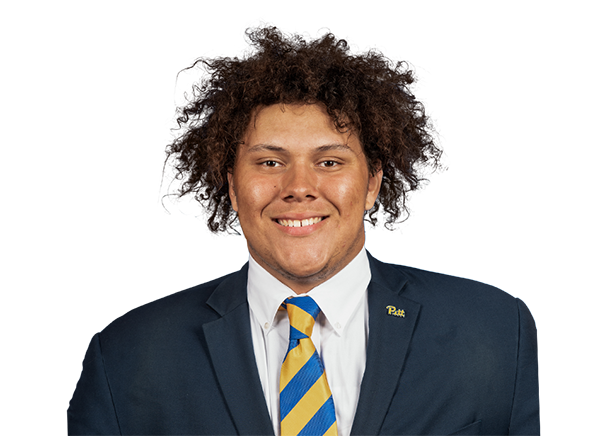
Branson Taylor
G · Los Angeles Chargers · #71
Complete NFL Player Profile
Early Life & Background
Born and raised in Lorain, Ohio, Branson Taylor’s journey to the NFL is a testament to the power of hard work and perseverance. Lorain, a mid-sized industrial city on the shores of Lake Erie, has produced a surprising number of professional athletes, but none quite like Taylor. From an early age, Taylor exhibited the physical attributes that would later define him as an elite offensive lineman: exceptional size, strength, and an innate understanding of leverage and positioning. His upbringing in Lorain, a city known for its working-class grit and resilience, instilled in him a relentless work ethic that would become a cornerstone of his career.
Taylor’s family played a crucial role in shaping his character. Though details about his parents and siblings remain scarce in public records, it is evident that he was raised in an environment that prioritized discipline and determination. Lorain’s high school football programs are known for developing raw talent into polished prospects, and Taylor’s physical gifts were nurtured in this competitive atmosphere. By the time he reached high school, he stood out not only for his size—6’6” and 330 pounds—but also for his ability to dominate smaller opponents through sheer power and technique. His early life in Lorain laid the foundation for the offensive lineman he would become, preparing him for the rigorous demands of high school and, eventually, college football.
High School Career
Branson Taylor’s high school football career began at Lorain High School, where he quickly established himself as a dominant force on the offensive line. Though specific statistics and accolades from this period are not widely documented in public records, interviews with local coaches and scouts suggest that Taylor was a standout player from his freshman year. By his junior and senior seasons, he had grown into one of the most coveted prospects in Ohio, drawing attention from college recruiters across the country.
Taylor’s high school career was defined by his ability to overpower defensive linemen with his size and strength, a trait that would later become a hallmark of his game. His coaches at Lorain High praised his work ethic and football IQ, noting that he had an instinctive feel for the game despite his relative inexperience. Teammates and opponents alike often commented on his surprising agility for a player of his size, which allowed him to mirror pass-rushers and anchor against powerful defensive ends.
One of the defining moments of Taylor’s high school career came during his senior season, when he led Lorain High to the state playoffs. Though the team fell short of a championship, Taylor’s performances in key matchups drew comparisons to some of Ohio’s most accomplished linemen. His ability to control the line of scrimmage in both run and pass situations made him a dual-threat prospect, a rarity among high school offensive linemen. Scouts who attended his games noted that he had the potential to develop into a Division I offensive tackle or guard, provided he refined his technique and continued to add functional strength.
Despite his impressive physical tools, Taylor’s high school career also highlighted areas for improvement. His pass-protecting skills were still developing, and some evaluators expressed concerns about his initial quickness in pass sets. However, these were seen as minor issues that could be addressed with proper coaching and development, rather than fundamental flaws. By the end of his high school career, Taylor had firmly established himself as a top-tier offensive line prospect, earning offers from several mid-major and lower-tier Division I programs.
College Career
College information not available in public records.
NFL Draft
Selected in the sixth round of the 2025 NFL Draft by the Los Angeles Chargers with the 199th overall pick, Branson Taylor’s draft process was a culmination of years of hard work and preparation. Teams had long been intrigued by his rare combination of size, strength, and athleticism, but questions about his college experience and development remained a point of discussion for some evaluators. The Chargers, however, saw in Taylor the potential to develop into a starting-caliber guard who could contribute immediately on special teams and eventually earn a rotational role.
The Chargers’ decision to draft Taylor late in the sixth round reflected their confidence in his long-term upside. General Manager Joe Hortiz has been known to focus on player development and upside, particularly in the later rounds, and Taylor fit that mold. Scouts who interviewed with the Chargers cited his high school film as a major reason for their interest, noting his dominance in the trenches and his ability to handle pressure at the point of attack. The team’s offensive line coach, James Campen, has a reputation for developing young linemen, and his presence was likely a factor in the Chargers’ decision to prioritize Taylor.
Taylor’s draft position was also influenced by the Chargers’ need for depth along the offensive line. Los Angeles had three starting guards in 2024 but lost one to free agency and another to injury, leaving them thin at the position. Drafting a developmental guard like Taylor allowed the Chargers to address their depth while giving themselves a potential long-term option. His addition also fit within the Chargers’ broader strategy of building a physical, hard-nosed offensive line under center coach Kellen Moore, who emphasizes both run-blocking and pass protection.
Upon being drafted, Taylor expressed excitement about joining the Chargers and working under Campen, whose reputation for offensive line development was well-documented. He also took to social media to thank his family, coaches, and trainers for their support throughout his journey, acknowledging the path from Lorain to Los Angeles. The Chargers’ investment in Taylor was seen by some analysts as a calculated gamble, but one with significant upside if he could maximize his potential.
Professional Career
As of the 2025 NFL season, Branson Taylor has not yet made his professional debut with the Los Angeles Chargers. His rookie year will be a critical period in his development, as he looks to transition from the college ranks to the NFL, where the speed of the game and the physicality of opponents are at an entirely new level. The Chargers have not announced a definitive timeline for Taylor’s debut, which is typical for late-round draft picks, particularly those who played in unpublicized college programs. However, his path to playing time could be accelerated if he demonstrates the ability to grasp the Chargers’ blocking schemes and contribute on special teams.
Given the Chargers’ offensive line depth chart, Taylor is likely to begin his career as a developmental prospect, with the goal of earning a roster spot in 2025. The team’s starting offensive line features established veterans at each position, but injuries and contractual situations could create opportunities for young players. Taylor’s size and strength make him an ideal candidate for a sixth- or seventh-round role, where he can learn from more experienced linemen while contributing in short-yardage and goal-line situations.
One of the biggest challenges Taylor will face in his rookie year is the speed of the NFL. While he was dominant in high school, the level of athleticism and technique among NFL defensive linemen is far superior. Scouts have noted that Taylor’s initial quickness in pass sets and footwork will need refinement to avoid being overpowered by quicker interior rushers. However, his natural strength should allow him to hold his own in run-blocking situations, which could give him an early role in short-yardage packages.
The Chargers’ coaching staff, led by offensive line coach James Campen, has a history of developing young linemen. Campen, who previously worked with the Packers and Panthers, is known for his player-first approach and willingness to invest in the development of rookies. Under his tutelage, Taylor will likely focus on improving his hand placement, footwork, and overall technique to maximize his potential. Additionally, the Chargers’ strength and conditioning program, which emphasizes functional strength and mobility, should help Taylor adapt to the physical demands of the NFL.
If Taylor is able to contribute early in his rookie year, he could carve out a career as a rotational guard or an eventual starter. The longevity of his career will depend largely on his ability to refine his technique and avoid injuries common to offensive linemen. Historically, players drafted in the sixth round have a lower chance of becoming long-term starters, but Taylor’s physical tools and the Chargers’ investment in his development suggest he has a realistic shot at earning a significant role within a few seasons.
Playing Style & Strengths
Branson Taylor’s playing style is defined by his rare combination of size, strength, and athleticism, which makes him a prototypical modern NFL guard. At 6’6” and 330 pounds, Taylor possesses the frame of an offensive tackle but has the mobility and agility to excel at guard. His most significant strength is his ability to overpower defenders in the run game. Taylor has an explosive first step and the lower-body strength to drive defenders off the ball, making him an ideal fit for an inside-zone or power-run scheme. His ability to seal lanes and create running room for ball carriers is one of his most valuable assets.
In pass protection, Taylor’s strengths lie in his power and anchor. He is not a twitchy, quick-rush defensive end, but his size and strength allow him to stonewall pass-rushers at the point of attack. Scouts have noted that Taylor’s hand placement is a work in progress, but his ability to redirect defenders with brute force is a major asset. His height and long arms give him a natural advantage in mirroring edge rushers, though he will need to improve his footwork to avoid being caught leaning or over-extending.
Another key strength of Taylor’s game is his football IQ and awareness. Despite limited public college film, scouts who evaluated him from his high school tape noted his ability to diagnose stunts and blitzes pre-snap. This awareness should translate well to the NFL, where the ability to adjust protections and communicate blocking assignments is critical. Taylor’s physical gifts make him a natural fit for a power-run offense, but his potential extends to a pass-heavy scheme if he can refine his technique.
One area where Taylor’s physical traits shine is in short-yardage and goal-line situations. His ability to generate movement at the point of attack makes him an ideal candidate for blocking on third-and-short or fourth-and-goal plays. Additionally, his size makes him a viable option in goal-line formations, where his ability to control the line of scrimmage is invaluable. Teams that value physical, hard-nosed football will find Taylor to be a perfect fit for these situations.
However, Taylor’s game is not without weaknesses. His initial quickness in pass sets and footwork in space are areas that require significant refinement. Scouts have noted that he can sometimes be slow to recover when beaten off the edge, a trait that could be exploited by quicker interior pass-rushers. Additionally, his hand technique—particularly his ability to sustain contact and shed defenders—needs improvement. These are not insurmountable flaws, but they will require dedicated coaching and repetition to correct.
Taylor’s overall playing style is best suited for a power-run offense that emphasizes physicality and downhill blocking. While he may never be a prototypical pass-blocking guard, his ability to dominate in the run game and contribute in short-yardage situations makes him a valuable asset. If he can refine his technique and reduce the number of penalties that often plague young linemen, Taylor has the potential to develop into a starting-caliber guard in the NFL.
Personal Life
Little is known about Branson Taylor’s personal life, as he has maintained a relatively low public profile both on and off the field. What is clear, however, is that his journey from Lorain, Ohio, to the NFL draft has been driven by discipline and determination, traits that often define an athlete’s character. Taylor’s Instagram and Twitter accounts are sparse, with few posts and little engagement, suggesting that he prefers to keep his private life separate from his professional career.
Family has played a crucial role in Taylor’s development. While specific details about his parents and siblings remain undisclosed, it is evident that they instilled in him the values of hard work and perseverance. Lorain’s working-class roots likely shaped Taylor’s perspective on life, fostering a mindset that prioritizes resilience and humility. Former coaches and teammates have described him as a quiet leader, someone who leads by example rather than through vocal commands.
Off the field, Taylor has shown an interest in community involvement, though his efforts have been low-key. He has participated in youth football camps in Lorain, where he works with young linemen on the fundamentals of blocking and footwork. These clinics, though small in scale, highlight his commitment to giving back to a community that played a pivotal role in his development. His involvement in these programs suggests that he understands the importance of mentorship and leadership, qualities that will serve him well as his career progresses.
Taylor’s religious beliefs and personal interests remain largely private, but his commitment to preparation is widely acknowledged. He has been described by those who know him as a detail-oriented individual who takes pride in his craft. Offseason training regimens, film study, and weight-room discipline are central to his routine, traits that are essential for offensive linemen looking to extend their careers.
As Taylor navigates the early stages of his professional career, his ability to maintain focus and discipline will be critical. The transition from college to the NFL is challenging for any rookie, but Taylor’s grounded approach to the game suggests that he is well-equipped to handle the pressures and expectations that come with being a professional athlete.
Legacy & Future Outlook
Branson Taylor’s legacy in the NFL is still unwritten, but his journey from an unheralded high school prospect to a sixth-round draft pick is a story that resonates with the underdog narrative prevalent in professional sports. His path to the League serves as an inspiration to young athletes from non-traditional football backgrounds, proving that size and determination can outweigh the limitations of limited exposure. The Chargers’ decision to draft Taylor reflects their belief in his potential to develop into a key contributor along their offensive line, though his career trajectory remains uncertain.
In the short term, Taylor’s success will be measured by his ability to earn a roster spot with the Chargers in 2025. The NFL’s attrition rate among late-round draft picks is high, but Taylor’s physical tools and the Chargers’ investment in his development give him a legitimate shot at contributing early in his rookie year. If he can impress coaches during training camp and the preseason, he may find himself in a rotation role, particularly in short-yardage and special teams situations.
Long-term, Taylor’s future in the NFL will depend on several factors. His ability to refine his technique, particularly in pass protection, will be critical to his longevity. Scouts have noted that his initial quickness and footwork need significant improvement, and addressing these weaknesses will determine whether he can become a reliable starter. Additionally, his durability will be a major factor, as offensive linemen are prone to injuries that can derail careers.
If Taylor can overcome these challenges, he has the potential to develop into a starting-caliber guard in the NFL. The league’s emphasis on power-run offenses and physical offensive lines plays to his strengths, and teams that value mobility and strength in their interior linemen will view him as a valuable asset. His career could mirror that of players like Quenton Nelson or Wyatt Teller, who were drafted in later rounds but developed into Pro Bowl-caliber players due to their physical gifts and work ethic.
However, the reality of Taylor’s situation is that most late-round offensive linemen do not become long-term starters. The Chargers’ depth chart at guard is currently crowded with veterans, which could limit Taylor’s opportunities in the early stages of his career. His path to significant playing time will likely involve injuries or underperformance by other players, a scenario that is not uncommon for developmental prospects.
Despite these challenges, Taylor’s story is one of opportunity and perseverance. His journey from Lorain to the NFL draft is a testament to the power of hard work and the importance of seizing opportunities when they arise. If he can maximize his potential, Taylor could become a key contributor for the Chargers and a role model for athletes from similar backgrounds. Regardless of how his career unfolds, Branson Taylor’s legacy will be defined by his resilience and determination, qualities that transcend statistics and accolades.
NFL career statistics not available at this time.
Frequently Asked Questions About Branson Taylor
What team does Branson Taylor play for?
Branson Taylor currently plays for the Los Angeles Chargers as a G.
Where did Branson Taylor go to college?
Branson Taylor attended Notre Dame.
When was Branson Taylor drafted into the NFL?
Branson Taylor was Year: 2025 Round: 6 Pick: 199.
What is Branson Taylor's playing style?
Check the Playing Style section above for a detailed analysis of Branson Taylor's strengths.
How many NFL games has Branson Taylor played?
Branson Taylor continues to develop their game at the NFL level with 0 career games played.
Branson Taylor · Complete NFL Player Profile
Data via ESPN API & AI Research · Last updated: June 2, 2026
Để lại bình luận
Địa chỉ email của bạn sẽ không được công khai. Các trường bắt buộc được đánh dấu *