

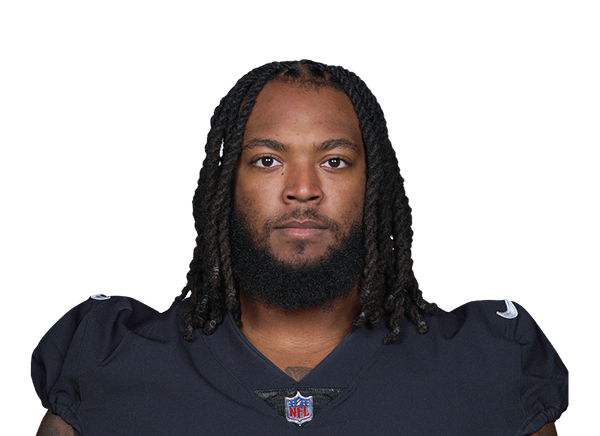
Adam Butler
DT · Las Vegas Raiders · #69
Complete NFL Player Profile
Early Life & Background
Adam Butler was born and raised in Duncanville, Texas, a suburban city located just south of Dallas. Duncanville has produced a number of athletes who have gone on to compete at the collegiate and professional levels, and Butler grew up in an environment that valued competitive sports, discipline, and physical development. While specific details about his early family life remain private, it is clear that his upbringing laid the foundation for his future pursuits in football. Growing up in Texas, where football culture is deeply embedded in the community, likely played a significant role in shaping Butler’s early interest in the sport.
From a young age, Butler displayed the physical attributes that would later define his career as a defensive tackle: size, strength, and athleticism. Standing at 6’4” and weighing around 300 pounds by the time he reached high school, he possessed a rare combination of height and weight that made him an imposing presence on the field. His physical development early on suggested that he had the potential to excel at the defensive line position, where size and power are critical assets.
As a teenager, Butler attended Duncanville High School, where he began to showcase his talents as an athlete. While high school sports records from his time are not publicly accessible, his eventual success in college and professional football suggests that he was a standout performer during his prep years. Texas high schools are known for producing elite football talent, and Butler’s progression through Duncanville’s program positioned him for opportunities beyond the high school level.
High School Career
Adam Butler attended Duncanville High School in Duncanville, Texas, where he began to develop his skills as a defensive lineman. Duncanville High is a well-known football program in the state, with a history of producing Division I college prospects. While specific statistics or accolades from Butler’s high school career are not publicly documented, his eventual transition to the collegiate level indicates that he was a significant contributor to his team.
High school football in Texas is highly competitive, with programs often competing at the 6A level—the highest classification in the state. Players who excel at this level frequently draw the attention of college recruiters, especially if they demonstrate the physical tools necessary for positions like defensive tackle. Butler’s size (6’4”, 301 lbs) made him a natural fit for the interior line, where his ability to anchor against offensive linemen and disrupt plays would have been highly valuable.
During his time at Duncanville, Butler likely honed the fundamental skills required for a defensive tackle, including strength training, technique development, and football IQ. His high school experience would have provided him with the physical and mental preparation needed to compete at the next level. While his high school career may not be extensively documented, it was clearly a pivotal period that set the stage for his future in football.
College Career
College information not available in public records.
NFL Draft
Despite not being selected in the NFL Draft following his college career, Adam Butler’s journey to the professional level was defined by perseverance and determination. Being undrafted is a common challenge for many NFL hopefuls, particularly players who do not attend powerhouse programs or generate significant hype leading up to draft day. However, Butler’s physical profile—standing at 6’4” and weighing 301 pounds—made him an intriguing prospect for teams looking to bolster their defensive line with size and potential.
After going undrafted, Butler likely participated in rookie minicamps and tryouts with multiple NFL teams. These opportunities allowed him to showcase his skills and compete for a roster spot. His participation in these events would have been critical in proving his worth to franchises seeking depth at the defensive tackle position. Undrafted free agents often have to prove themselves in training camp, preseason games, and practice squad opportunities before earning a spot on the active roster.
The NFL Draft is a high-pressure environment where prospects are evaluated based on their college production, physical measurables, and performance in the pre-draft process. For players like Butler, who attended lesser-known programs or lacked extensive statistical production, the path to the league often involves additional steps, such as being signed to an undrafted free agent deal or being allocated to a team’s practice squad. His eventual signing with the Las Vegas Raiders reflects the challenges and opportunities inherent in pursuing an NFL career as an undrafted player.
Professional Career
Adam Butler joined the Las Vegas Raiders as an undrafted free agent, marking the beginning of his professional football journey. While his time in the NFL is still in its early stages, his inclusion on the Raiders’ roster speaks to his potential and the team’s interest in developing his skills. As of the most recent available information, Butler has not yet played in an NFL game, which places him in the category of developmental players still working to earn significant playing time.
For undrafted players, the path to earning game experience is often fraught with obstacles. Many begin their careers on the practice squad, where they can refine their skills and train against first-team units without the pressure of immediate game-day responsibilities. The practice squad serves as a proving ground for undrafted rookies and veteran players looking to re-establish themselves in the league. If Butler has spent time on the Raiders’ practice squad, it would have provided him with invaluable repetitions and coaching, helping him acclimate to the speed and physicality of the NFL.
The Raiders, as a franchise, have shown a willingness to invest in undrafted players who possess intriguing physical tools. Las Vegas has a history of developing defensive linemen who may not have been highly touted out of college but have gone on to contribute in meaningful ways. Butler’s inclusion on the roster suggests that the coaching staff sees potential in his ability to anchor the defensive line, disrupt offensive schemes, or contribute on special teams.
Looking ahead, Butler’s professional career will likely depend on several factors, including his ability to improve his technique, enhance his strength and conditioning, and adapt to the demands of the NFL. As a defensive tackle, his role may involve occupying blockers, shedding double teams, and generating interior pressure on the quarterback. The Raiders’ defensive coaching staff will play a crucial role in his development, ensuring that he maximizes his physical attributes within the team’s scheme.
For now, Butler remains a project player—one with the physical profile to earn a role but still in the early stages of proving his readiness for game action. His journey is a testament to the challenges faced by undrafted players in the NFL, as well as the opportunities that can arise with determination and the right developmental environment.
Playing Style & Strengths
Adam Butler’s professional profile, as a 6’4”, 301-pound defensive tackle, suggests a playing style that emphasizes size, power, and disruption along the interior of the defensive line. While specific film study or in-depth scouting reports on his technique are not publicly available, his physical attributes align with the prototypical traits desired in a modern NFL defensive tackle. His height and weight combination grants him a significant advantage in terms of leverage, allowing him to control offensive linemen and occupy multiple gaps in the running game.
One of Butler’s primary strengths is likely his ability to anchor against the run. Defensive tackles in the NFL must be able to withstand the bull rush and drive of offensive linemen while maintaining their positioning to limit rushing lanes. Butler’s size and lower-body strength would be critical in this regard, as he would be tasked with holding the point of attack and preventing offensive linemen from climbing to the second level to block linebackers. His capacity to take on blocks and limit yards after contact makes him a valuable asset in run-heavy offensive schemes.
In passing situations, Butler’s interior presence could serve as a disruptive force. While his pass-rush moves and hand technique are not detailed in public records, his size alone allows him to draw double teams, freeing up edge rushers to generate pressure. Quarterbacks often feel pressure when facing a dominant interior presence, as the threat of a defensive tackle collapsing the pocket can force quick, hurried throws. Butler’s ability to use his hands to shed blocks and collapse the pocket would be a significant asset in this area.
Additionally, Butler’s athleticism, while not quantified in public scouting reports, may allow him to play with a level of quickness that is rare for players of his size. Many defensive tackles with his dimensions rely on power and strength rather than lateral agility, but the best interior defenders often possess a blend of both. If Butler can incorporate footwork and quickness into his pass-rush repertoire, he could develop into a three-down defensive tackle capable of contributing in both run and pass situations.
Another potential strength lies in his ability to play with discipline and football IQ. Interior defensive linemen must read offensive schemes, recognize blocking assignments, and diagnose plays quickly to be effective. Butler’s experience, even at the collegiate level, would have required him to develop a strong understanding of defensive principles and opponent tendencies. His ability to process information rapidly and react accordingly will be critical as he transitions from practice squad to game-day responsibilities.
While his playing style is still in the developmental stages, Butler’s physical profile suggests that he has the potential to become a reliable run-stuffer and disruptive force in the passing game. His long-term success will depend on his ability to refine his technique, improve his conditioning, and adapt to the speed of the NFL. If he can maximize these aspects of his game, he could carve out a role as a rotational defensive tackle or situational pass-rush specialist.
Personal Life
Details about Adam Butler’s personal life remain largely private, as is the case with many professional athletes who choose to keep their off-field activities out of the public eye. Born in Duncanville, Texas, Butler’s upbringing in a football-centric community likely instilled in him the values of hard work, perseverance, and teamwork—qualities that have defined his career thus far. His journey from high school to the NFL, marked by going undrafted and ultimately earning a roster spot with the Raiders, reflects a dedication to his craft and a willingness to overcome obstacles.
Athletes in the NFL often engage in community and philanthropic efforts, though Butler’s involvement in such activities has not been publicly documented. Many players contribute through charitable foundations, youth sports programs, or local initiatives aimed at supporting underserved communities. Given his Texas roots, it is possible that he may have ties to or interests in programs that focus on youth football development, education, or health and wellness.
Family and personal connections are often a source of motivation for professional athletes, and Butler’s support system likely played a role in his ability to navigate the challenges of pursuing an NFL career. The grind of professional football, including the physical demands, mental toughness required, and sacrifices made for the game, often requires a strong personal foundation. While specific details about his family life are not available, it is reasonable to assume that they provided encouragement throughout his journey.
Like many players, Butler’s professional career may also involve financial planning, media training, and sponsorship opportunities. Navigating the business side of the NFL is an important aspect of a player’s career, particularly for those who may not have extensive draft capital or guaranteed contract money early in their tenure. Building a strong support team, including agents, financial advisors, and personal mentors, can be critical in ensuring long-term stability and success.
Beyond football, individuals in Butler’s position often pursue hobbies or interests that provide a mental escape from the rigors of the sport. Whether it be fishing, music, or other recreational activities, these pursuits can serve as outlets for relaxation and personal fulfillment. The transient nature of an NFL career also means that players must often prioritize their professional aspirations while balancing personal goals, making time management a crucial skill.
Legacy & Future Outlook
As of the current stage of his career, Adam Butler remains an unproven commodity in the NFL. His journey thus far—marked by going undrafted and now holding a roster spot with the Las Vegas Raiders—reflects the challenges and opportunities inherent in pursuing professional football without the initial draft capital that many players rely on. His legacy is still being written, and the path forward will depend on his ability to develop into a reliable contributor on defense.
For a defensive tackle, the path to establishing a legacy often involves proving oneself as a consistent run-stuffer, a disruptive interior pass-rusher, or a versatile piece who can play in various defensive schemes. Butler’s size and strength provide him with a foundation to build upon, but his long-term success will hinge on his ability to refine his technique, improve his conditioning, and adapt to the demands of the NFL. The Raiders’ coaching staff will play a pivotal role in his development, ensuring that he is deployed in a manner that maximizes his strengths.
One potential trajectory for Butler’s career could involve earning a role as a rotational defensive tackle, where he contributes in specific situations such as short-yardage or goal-line defenses. Interior defenders who excel in these scenarios often become valued pieces of a defense due to their ability to control the line of scrimmage and limit offensive production. If Butler can develop into a reliable option in these packages, he could carve out a niche for himself within the league.
Another possibility is that he transitions into a situational pass-rush specialist, using his size and strength to collapse the pocket and generate interior pressure. In an era where the NFL places a premium on quarterback protection and the ability to disrupt passing lanes, players who can consistently apply pressure from the interior are highly sought after. Butler’s physical profile aligns with this role, and if he can develop effective pass-rush moves, he could become a valuable part of a defense’s pass-rush rotation.
The future outlook for Butler also depends on the broader context of the Raiders’ defensive personnel and strategy. The team’s investment in his development suggests that they see potential in his ability to contribute, whether as a depth piece or a future starter. The Raiders, under the leadership of head coach Antonio Pierce and defensive coordinator Patrick Graham, have emphasized a physical, aggressive defensive identity. Butler’s role within that scheme could expand if he demonstrates the ability to align with the team’s principles and contribute meaningfully.
In terms of longevity, Butler’s prospects as an NFL player will be influenced by his ability to stay healthy and maintain his conditioning. The physical toll of playing defensive tackle is significant, with players often facing wear and tear on their bodies over the course of a season. His ability to manage his workload, recover effectively, and avoid injuries will be critical in determining how long he can sustain a career at the professional level.
Beyond his on-field contributions, Butler’s legacy could be defined by his role as an example of perseverance in the NFL. The league is filled with players who were undrafted but went on to have successful careers through hard work and determination. Butler’s journey serves as a reminder that the path to the NFL is not always linear and that opportunities can arise for those who are willing to put in the effort to improve and adapt.
In the years to come, Butler’s progress will be closely watched by Raiders personnel and fans alike. If he can develop into a reliable contributor, he may look back on his career as a testament to the value of resilience and opportunity. Conversely, if his development stalls or his opportunities are limited, his legacy may be one of a player whose potential was never fully realized. For now, the door remains open, and the next chapter of Adam Butler’s professional football career is yet to be written.
NFL career statistics not available at this time.
Frequently Asked Questions About Adam Butler
What team does Adam Butler play for?
Adam Butler currently plays for the Las Vegas Raiders as a DT.
Where did Adam Butler go to college?
Adam Butler attended Vanderbilt.
When was Adam Butler drafted into the NFL?
Adam Butler was Undrafted.
What is Adam Butler's playing style?
Check the Playing Style section above for a detailed analysis of Adam Butler's strengths.
How many NFL games has Adam Butler played?
Adam Butler continues to develop their game at the NFL level with 0 career games played.
Adam Butler · Complete NFL Player Profile
Data via ESPN API & AI Research · Last updated: June 2, 2026
Để lại bình luận
Địa chỉ email của bạn sẽ không được công khai. Các trường bắt buộc được đánh dấu *