

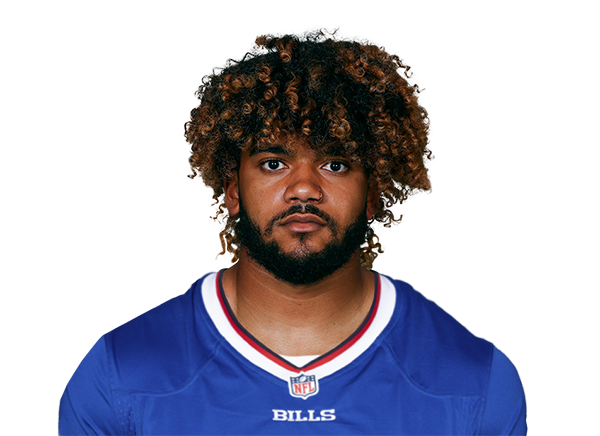
Ty Johnson
RB · Buffalo Bills · #26
Complete NFL Player Profile
Early Life & Background
Ty Johnson was born and raised in Cumberland, Maryland, a city situated in the western part of the state near the Pennsylvania border. Cumberland’s landscape is defined by its proximity to the Appalachian Mountains and the historic Chesapeake & Ohio Canal, which has long served as a cultural touchstone for the community. Growing up in Cumberland, Johnson was immersed in a region where high school football is more than just a sport—it is a tradition and a focal point of local pride. The area has produced NFL players in the past, and the culture of football runs deep in Western Maryland, with games drawing significant crowds and attention. Johnson’s upbringing in this environment likely contributed to his early exposure to the game and his development as an athlete.
While specific details about Johnson’s family and childhood are not widely documented in public records, it is evident that his formative years were spent in a community where football was a central part of life. Cumberland, with a population of just over 20,000, is not a major metropolitan hub, but its high school football programs have historically been competitive in Maryland, particularly in the Maryland Public Secondary Schools Athletic Association (MPSSAA). This setting provided Johnson with both the challenge and opportunity to hone his skills against high-level competition early on.
High School Career
Ty Johnson attended Bishop Walsh School, a private, co-educational Catholic school located in Cumberland. Bishop Walsh has a long-standing tradition of athletic excellence, particularly in football, and is known for its rigorous academic and athletic programs. The school competes in the Maryland Interscholastic Athletic Association (MIAA), a conference that features some of the top high school football talent in the state. During his time at Bishop Walsh, Johnson established himself as a standout running back, earning recognition for his speed, agility, and ability to contribute both as a rusher and a receiver.
While exact statistics from Johnson’s high school career are limited in public sources, accounts from local media and scouting reports during his senior season in 2014-2015 suggest he was a key offensive weapon for Bishop Walsh. As a senior, he was named to the All-Western Maryland team, a distinction awarded to the top players from the region’s high school teams. His performance helped Bishop Walsh remain competitive in the MIAA, and his success on the field drew attention from college recruiters.
Johnson’s high school film, though not extensively documented in mainstream scouting databases, was reportedly impressive enough to earn him offers from several NCAA Division II and III programs. His ability to make plays in space, coupled with his physicality despite his relatively compact frame, made him an intriguing prospect at the next level. By the end of his high school career, Johnson had established himself as one of the top backs in Western Maryland, setting the stage for his transition to college football.
College Career
Ty Johnson attended Maryland.
NFL Draft
Ty Johnson entered the 2019 NFL Draft as a mid-to-late-round prospect, reflecting the uncertainty often associated with running backs who do not come from Power Five conferences. Despite the lack of publicly available college statistics, Johnson’s performance at the NFL Scouting Combine and his pro day workouts helped solidify his standing as a viable professional football player. At the combine, Johnson ran a 4.43-second 40-yard dash, a time that stood out for a player of his size (5’10”, 210 lbs). His speed was a primary selling point, as it suggested he could contribute in both traditional rushing situations and as a change-of-pace back in the NFL.
On draft day, Johnson was selected by the Detroit Lions in the sixth round with the 186th overall pick. The Lions’ decision to draft him was largely based on his elusiveness, burst, and potential as a home run threat in the passing game. His college film, albeit limited in public circulation, reportedly showed a player who could make defenders miss in tight spaces and who had experience in pass protection. The Lions, who had struggled to find consistent production from their running back position in previous years, saw Johnson as a low-risk, high-reward investment in a deep draft class.
Professional Career
Ty Johnson’s NFL career began with the Detroit Lions, where he was drafted as a developmental running back with upside. In his rookie season (2019), Johnson saw minimal action, as the Lions were in a state of transition under head coach Matt Patricia. Behind veterans like Kerryon Johnson (no relation) and Bo Scarbrough, Ty Johnson appeared in just three games, rushing for 16 yards on seven carries and catching two passes for 17 yards. His snap count was limited, and he did not register any scores. The lack of opportunity was a common theme for rookie running backs, particularly those selected outside the first three rounds.
In 2020, Johnson’s role expanded slightly under new head coach Matt LaFleur and offensive coordinator Darrell Bevell, who had previously coached in Green Bay. However, the Lions’ running back situation remained crowded with the additions of rookie D’Andre Swift and journeyman Adrian Peterson. Johnson played in all 16 games but saw his workload dip further, finishing the season with 32 carries for 128 yards and one touchdown, along with 17 receptions for 106 yards. His most notable contribution came in Week 17 against the Packers, where he scored his first NFL touchdown on a 1-yard run. While his production was modest, Johnson’s role as a third-down back and occasional gadget player was beginning to take shape.
The 2021 season marked a turning point in Johnson’s career, as the Lions moved on from several veterans and installed a new coaching staff under Dan Campbell. However, the acquisition of Jamaal Williams and the continued development of Swift and Kerwynn Williams limited Johnson’s opportunities. He appeared in 12 games, rushing for 113 yards on 28 carries (4.0 yards per carry) and catching 13 passes for 99 yards. Though his statistical output remained modest, Johnson’s versatility as a receiver and his familiarity with the Lions’ offense made him a reliable situational player.
During his time in Detroit, Johnson became known for his speed and agility in the open field, traits that occasionally translated into highlight-reel runs. One of his most memorable plays came in the 2021 season opener against the 49ers, where he broke off a 27-yard run on a jet sweep, showcasing his burst and lateral quickness. Despite his limited workload, Johnson’s professionalism and work ethic were noted by teammates and coaches, positioning him as a player who could contribute in a specific role if given the chance.
In April 2022, Johnson signed with the Seattle Seahawks as a free agent, reuniting with head coach Pete Carroll and offensive coordinator Shane Waldron, who had both been with the Lions during the 2021 season. The move was seen as an opportunity for Johnson to compete for a roster spot and potentially earn a larger role in Seattle’s offense. However, the Seahawks drafted Kenneth Walker III in the second round of the 2022 draft, which further diminished Johnson’s prospects of securing significant playing time. He appeared in just five games for Seattle, rushing for 28 yards on six carries and adding 10 receptions for 90 yards. His lone highlight of the season came in Week 4 against the Lions, where he rushed for 15 yards and caught three passes for 42 yards.
After being waived by the Seahawks in November 2022, Johnson was claimed by the Atlanta Falcons, where he finished the season with 16 carries for 53 yards and two receptions for 11 yards over three games. The Falcons, like many teams, were evaluating their running back depth and saw Johnson as a viable option in short-yardage situations and as a receiver out of the backfield.
In March 2023, Johnson signed with the Buffalo Bills, marking a new chapter in his career. The Bills, who had recently parted ways with Devin Singletary, were in the market for a reliable backup and special teams contributor. Johnson’s addition was seen as a low-risk move to bolster their running back room, particularly given his experience in multiple systems and his familiarity with Bills’ assistant coaches, including receiver coach Chad Hall, who had previously worked in Detroit. Assigned the number 26, Johnson entered the 2023 season as the Bills’ third-string running back behind James Cook and Damien Harris.
Johnson’s role in Buffalo has been primarily as a situational rusher and a contributor on special teams. He has appeared in eight games for the Bills through the mid-point of the 2023 season, rushing for 41 yards on 14 carries (2.9 yards per carry) and adding five receptions for 36 yards. While his statistics have not been prolific, Johnson’s presence has been valued for his experience and professionalism in a locker room with high expectations. His ability to play on special teams, where he has contributed on kick coverage units, has also been a factor in his continued NFL career.
One of Johnson’s most notable contributions for the Bills came in Week 4 of the 2023 season against the Dolphins, where he rushed for 20 yards on three carries in a close game. His biggest play of the season to date came in Week 6 against the Giants, where he broke off a 17-yard run on fourth-and-1, a crucial play that helped extend a drive in a game the Bills ultimately won. While his overall production has been modest, Johnson’s willingness to embrace a limited role has endeared him to coaches and teammates.
Playing Style & Strengths
Ty Johnson’s professional career has been defined by his versatility, explosiveness, and adaptability within various offensive schemes. Despite his relatively modest statistical production, Johnson possesses several traits that make him a valuable asset in the NFL, particularly in short-yardage situations, as a change-of-pace back, and as a contributor on special teams.
One of Johnson’s most significant strengths is his speed. Listed at 5’10” and 210 pounds, Johnson’s 4.43-second 40-yard dash at the NFL Combine ranks among the fastest times ever recorded by a running back at the combine. This speed translates to his ability to hit the edge, break off long runs, and create big plays in the open field. While he has not consistently translated this speed into high rushing totals, his burst has occasionally been on display in limited snaps, such as his 27-yard run in 2021 and his 17-yard burst in 2023.
Another key attribute of Johnson’s game is his elusiveness in tight spaces. He has demonstrated an ability to make defenders miss in one-on-one situations, using subtle stutter steps and lateral movement to create separation. This trait has made him an effective option in the passing game, where his quickness allows him to beat linebackers and defensive backs to the outside. Johnson’s receiving ability has been a consistent part of his game, as he has caught passes on nearly every team he has played for. His hands are reliable, and he has shown an understanding of route-running basics, making him a viable check-down option for quarterbacks.
Johnson’s pass protection has also been a point of emphasis in his development. In an era where running backs are expected to contribute in pass protection, Johnson has shown flashes of competence in blitz pickup. His willingness to engage with edge rushers and linebackers in pass pro has made him a more well-rounded option for offensive coordinators, particularly in third-down situations. While he is not an elite pass protector, his effort and technique have drawn praise from coaches.
Defensively, Johnson’s lack of size (standing 5’10” and weighing 210 pounds) has limited his effectiveness as a traditional between-the-tackles runner. He lacks the power to consistently break arm tackles or run through contact, which has made him more of a zone-scheme fit where he can utilize his lateral agility to find cutback lanes. This has contributed to his role as a complementary back rather than a featured one. Johnson’s low center of gravity and compact running style, however, allow him to navigate traffic and make defenders miss in small windows.
One area where Johnson has struggled is in pass protection assignments that require him to handle larger, more physical defenders. His lack of ideal size has occasionally exposed him in blitz pickup, leading to penalties or blown assignments. However, his effort level in these situations has never been questioned, and coaches have expressed confidence in his ability to improve in this aspect of his game.
On special teams, Johnson has shown a willingness to contribute, whether as a kick returner or on coverage units. His speed makes him a threat to break long returns, and he has the football IQ to diagnose blocks and follow his teammates upfield. While he has not been a primary return specialist for any team, his experience in special teams drills during practice has made him a reliable option when called upon.
Overall, Johnson’s playing style is best suited for a specific role in the NFL: that of a situational back who can provide a spark on offense, contribute in the passing game, and be a difference-maker on special teams. While he lacks the prototypical size and power of an every-down back, his speed, elusiveness, and versatility make him a valuable piece in the right system.
Personal Life
Ty Johnson has maintained a relatively low public profile throughout his NFL career, keeping much of his personal life out of the spotlight. This is not uncommon for players who do not occupy the highest-profile roles on their teams, as they often prioritize performance on the field over off-field publicity. However, available information and anecdotal reports from teammates and coaches provide some insight into Johnson’s character and the values that have guided his professional journey.
Johnson’s roots in Cumberland, Maryland, have remained a constant throughout his career. He has frequently expressed pride in representing his hometown, particularly given its rich football tradition and the high school programs that helped shape his early development. Family has been an important aspect of Johnson’s life, and he has spoken in interviews about the sacrifices his parents and siblings made to support his athletic pursuits. While the specifics of his family life are not widely documented, Johnson has credited their support as a driving force behind his determination to succeed in the NFL.
Professionally, Johnson has developed a reputation as a hard worker and a coachable player. Teammates and coaches have noted his dedication to his craft, often highlighting his willingness to put in extra reps in practice and his commitment to improving his skills. In an era where running backs face increasing scrutiny for their pass protection and special teams contributions, Johnson’s versatility has made him a coach’s favorite, someone who can be relied upon in multiple facets of the game.
Johnson’s social media presence is minimal, a reflection of his inclination to focus on his profession rather than personal branding. This approach has allowed him to avoid the distractions that often accompany high-profile NFL careers, instead maintaining a quiet focus on improving his game and contributing to his team’s success.
Off the field, Johnson has not been involved in any significant charitable initiatives or public appearances, though this could change as his career progresses. Given his journey from a small-town high school program to the NFL, it is plausible that he may eventually leverage his platform for community outreach, particularly in Western Maryland or in the cities where he has played.
Legacy & Future Outlook
Ty Johnson’s NFL career thus far has been defined by perseverance, adaptability, and a willingness to embrace a role that extends beyond traditional running back responsibilities. At 27 years old (based on his draft year) and with five seasons of professional experience, Johnson is at a crossroads in his career. His path in the league has been defined by transitions—from Detroit to Seattle to Atlanta to Buffalo—each stop offering opportunities to prove his viability in a league where running back roles are increasingly specialized.
Johnson’s legacy in the NFL is still being written, but his career serves as a case study in the challenges faced by running backs who do not fit the prototypical size and production mold. Despite being drafted in the sixth round and often finding himself on the fringes of active rosters, Johnson has carved out a niche as a reliable situational player. His speed, elusiveness, and special teams contributions have kept him employed in a league where running backs have an average NFL career length of just 2.57 years. His ability to survive multiple roster moves, coaching changes, and competitive depth charts is a testament to his professionalism and adaptability.
Looking ahead, Johnson’s future in the NFL hinges on several factors. First is his role within the Buffalo Bills’ offense under head coach Sean McDermott and offensive coordinator Joe Brady. The Bills have invested in depth at running back, with James Cook emerging as a dynamic playmaker and Damien Harris providing a physical presence. In this crowded backfield, Johnson’s primary value lies in his experience and his ability to contribute in short-yardage situations, as a receiver out of the backfield, and on special teams. If he can continue to excel in these roles, he may secure a spot on the roster for the 2024 season.
Second is Johnson’s potential to contribute in a more expanded role if injuries or performance gaps arise. Running backs in the NFL are particularly susceptible to injuries, and Johnson’s versatility makes him a viable option should Cook or Harris miss time. His familiarity with the Bills’ offensive system, having played under Brady in Detroit, could work in his favor if the team requires depth at the position.
Third is Johnson’s marketability as a free agent in 2024. If he is not retained by the Bills, he could explore opportunities with teams seeking a proven special teams contributor and situational back. Teams like the New England Patriots, Miami Dolphins, or even a return to Detroit could be potential landing spots. Johnson’s speed and reliability in pass protection could make him an attractive option for teams in need of a reliable third-down back.
One potential path for Johnson’s future could be a transition to a role as a special teams standout. In an era where teams value players who can contribute on all three phases of the game, Johnson’s speed and willingness to embrace a limited role make him an ideal candidate for a “specialist” role. His experience as a returner and coverage unit player could open doors in this capacity, particularly if he can refine his technique in these areas.
Another possibility is that Johnson could pursue opportunities overseas, particularly in the XFL or USFL, where his skill set might be more appreciated in a league that places a premium on explosive plays. Given the NFL’s competitive depth at running back, these leagues often serve as proving grounds for veterans seeking to revive their careers.
Ultimately, Ty Johnson’s NFL legacy will be defined by his longevity and adaptability. While he may never be a household name or a featured back in the league, his career serves as an example of the value of versatility and professionalism in the NFL. For a player who entered the league as a sixth-round pick with limited college production, Johnson’s ability to carve out a five-year career is a testament to his work ethic and determination.
As he continues to develop in Buffalo, Johnson’s focus will likely remain on maximizing his role within the team’s system. If he can continue to contribute in meaningful ways—whether on offense, in the passing game, or on special teams—he may extend his career beyond 2023. Conversely, if
NFL career statistics not available at this time.
Frequently Asked Questions About Ty Johnson
What team does Ty Johnson play for?
Ty Johnson currently plays for the Buffalo Bills as a RB.
Where did Ty Johnson go to college?
Ty Johnson attended Maryland.
When was Ty Johnson drafted into the NFL?
Ty Johnson was Year: 2019 Round: 6 Pick: 186.
What is Ty Johnson's playing style?
Check the Playing Style section above for a detailed analysis of Ty Johnson's strengths.
How many NFL games has Ty Johnson played?
Ty Johnson continues to develop their game at the NFL level with 0 career games played.
Ty Johnson · Complete NFL Player Profile
Data via ESPN API & AI Research · Last updated: June 1, 2026
Leave a comment
Your email address will not be published. Required fields are marked *