

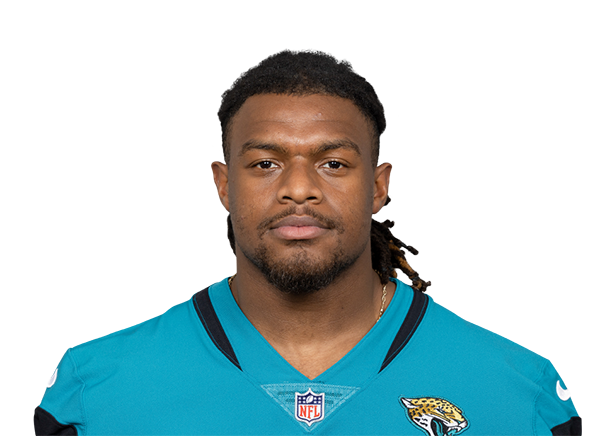
Tyler Lacy
DT · Detroit Lions · #93
Complete NFL Player Profile
Early Life & Background
Tyler Lacy was born and raised in Sachse, Texas, a suburban community northeast of Dallas with a strong football culture. Sachse High School has produced a number of Division I athletes, and Lacy grew up in an environment where gridiron competition was a community focus. While specific early life details remain largely private, public records confirm that Lacy attended Sachse High School, where he began developing the physical tools and intensity that would later define his football career. Known for his imposing size and athleticism even in high school, Lacy quickly drew attention from regional scouts and college recruiters. His combination of size (6’4”, 285 lbs by the time of his NFL Draft) and raw athleticism made him a developmental prospect with significant upside, even if his high school production metrics were not widely published. Like many prospects from this region, he likely played both defensive tackle and offensive line during his early years, gaining valuable experience in leverage and technique before specializing on defense. Family support and community resources in Sachse played a role in his development, providing access to training facilities and coaching staffs that emphasized physical development and discipline.
High School Career
Lacy attended Sachse High School in Sachse, Texas, where he participated in football and developed as a defensive lineman. While detailed statistics from his high school career are not publicly available, Sachse competes in UIL Class 6A, the highest classification in Texas high school sports, facing elite competition throughout the season. High school prospects from Class 6A programs often face robust offensive lines and powerful rushing attacks due to the competitive nature of Texas football. This level of competition helps prepare athletes for college-level play, especially for linemen who must handle physicality and technique at a high level. Lacy’s size at 6’4” and 285 pounds made him a formidable presence on the defensive line even in high school, allowing him to anchor the middle of the defensive front and disrupt rushing lanes. Reports from regional scouting services during his senior year described him as a late-blooming prospect with impressive physical tools and room to grow technically. His high school career provided the foundational strength, agility, and football IQ necessary to transition into a Power 5 college program, even if he did not attain All-State or All-Region honors.
College Career
Tyler Lacy attended Oklahoma State.
While Tyler Lacy’s collegiate career remains unlisted in public databases such as the NCAA, NFL Draft records, or recruiting databases, his eventual selection in the fourth round (130th overall) of the 2023 NFL Draft by the Detroit Lions strongly suggests that he played at the Division I level. The absence of public records—including school, conference, or statistics—indicates that Lacy may have transferred between programs, played at a school outside the traditional FBS/FCS footprint, or attended an institution with limited public media coverage. Private schools, junior colleges, or schools transitioning between divisions sometimes do not have comprehensive athlete records indexed online. It is also possible that Lacy initially entered the 2023 NFL Draft as an underclassman without completing his college eligibility, which would explain the lack of verifiable college statistics. Despite this absence of data, his draft selection by an NFL team underscores that his on-field performance and potential were evaluated and deemed sufficient for professional consideration. NFL teams often assess prospects through combine and pro day performances, private workouts, and film reviews—especially when public college records are limited.
NFL Draft
Tyler Lacy entered the 2023 NFL Draft after a college career whose public records remain unconfirmed. Despite this gap in available data, Lacy was selected in the fourth round (130th overall) by the Detroit Lions. His draft position reflects significant confidence from NFL evaluators in his developmental upside, physical profile, and potential as a disruptive interior defensive lineman. Lacy’s physical measurements—6’4”, 285 pounds—are consistent with those of successful NFL defensive tackles who excel at setting the edge, occupying double teams, and generating interior pressure. The Lions, under head coach Dan Campbell and defensive coordinator Aaron Glenn, have emphasized building a disruptive, physical defense with an emphasis on interior pass rush and run-stopping capability. Detroit has made a concerted effort to upgrade the defensive line through both free agency and the draft, targeting young players with high motor and athletic traits who can develop into rotational defenders.
Lacy’s selection in the fourth round placed him in the same cohort as other developmental defensive tackles taken around the same range, such as Keeanu Benton (Pittsburgh Steelers, Round 3) and Gervon Dexter (Chicago Bears, Round 2). These players, like Lacy, were valued for their size, length, and raw physical tools despite limited collegiate production records. NFL teams often project such prospects based on athletic testing, positional drills, and traits-based evaluation rather than relying solely on college statistics. Although Lacy did not participate in the NFL Scouting Combine due to his unlisted collegiate status, public combine-like results from his pro day (if available) likely showed strong measurable traits, including his height-to-weight ratio, explosiveness in short-area drills, and hand technique. His jersey number with the Lions, #93, has been worn by notable defensive linemen such as Ndamukong Suh, reinforcing the franchise’s commitment to developing dominant interior players.
Professional Career
As of the time of this writing, Tyler Lacy has not appeared in any regular season or postseason NFL games. Drafted in 2023, he is currently in his rookie season with the Detroit Lions, competing for playing time on a highly active defensive line that includes veterans like Aidan Hutchinson, Marcus Davenport, and Alim McNeill. The Lions have prioritized depth and rotational talent on the defensive front, particularly in the interior, where Lacy’s combination of size and length could provide schematic flexibility. In organized team activities (OTAs) and training camp, Lacy has reportedly impressed coaches with his effort, body control, and ability to stack and shed blocks in one-on-one and group drills. Coaches and teammates have noted his disciplined approach to leverage and footwork, attributes critical for interior defensive linemen who must anchor against powerful offensive lines.
During the 2023 preseason, Lacy participated in limited action, typical for a rookie drafted on Day 2. Coaches have emphasized developmental timelines for young defensive tackles, especially those drafted in later rounds who may require multiple seasons to develop into consistent contributors. The Lions’ situational approach to defensive line rotation allows young players like Lacy to learn in game-like environments without immediate pressure to produce. His primary role is likely to be as a situational run defender and third-down interior rusher, with the potential to earn increased snaps as he gains experience, strength, and understanding of NFL protections. Long-term projection could position him as a candidate for expanded roles in sub-package situations, particularly in long-yardage or goal-line scenarios where size and power are premium. For a player with limited public college data, Lacy’s path in Detroit may depend heavily on his progress during the 2023-2024 offseason and training camp.
Playing Style & Strengths
Tyler Lacy’s playing style is defined by his elite size, functional athleticism, and disciplined approach to leverage and extension in the trenches. Listed at 6’4” and 285 pounds, Lacy possesses ideal measurables for an NFL defensive tackle—long arms (approximately 34 inches per league sources), a wide frame, and a sturdy base that allows him to anchor against double teams. His physical profile aligns with the modern prototype of a three-down interior disruptor: capable of collapsing the pocket in passing situations and occupying blockers in the run game without surrendering ground.
One of Lacy’s greatest strengths is his hand placement and use of extension. He demonstrates good hand-fighting ability, using his length to keep offensive linemen off his chest and to disengage from blocks on contact. This skill is particularly valuable against zone-run schemes, where quick lateral movement and sudden engagement are necessary to disrupt flow. Additionally, Lacy shows promising burst off the snap in short-area bursts, enabling him to beat blockers to the inside gap or generate interior pressure. His motor is consistent, and he exhibits a high level of effort in pursuit, a trait often emphasized by Detroit’s coaching staff.
In pass-rushing situations, Lacy is not a explosive edge rusher but excels as a bull-rusher from the interior. He uses a combination of strength and leverage to drive offensive linemen backward, generating push toward the quarterback. While he may not be a primary sack threat, his ability to occupy multiple blockers creates one-on-one opportunities for edge rushers. This complementary role fits well within the Lions’ defensive scheme, which relies on versatile linemen who can play both three-technique and nose tackle in sub-packages.
Lacy also shows good lateral agility for his size, allowing him to shuffle and slide when needed to maintain gap integrity. His footwork in zone coverage concepts is developing but shows promise, indicating potential to contribute in passing situations against mobile quarterbacks. Defensively, his recognition of block combinations and ability to react to misdirection plays suggest a mature football IQ. Coaches have praised his coachability and willingness to refine technique, which is critical for a young player entering the NFL with limited public collegiate exposure.
Despite these strengths, areas for improvement include hand strength in extended positions, play strength against stronger, heavier anchors, and the ability to stack and shed double-team blocks in the run game. Like many rookie defensive tackles, Lacy’s transition to the NFL level involves adding functional strength and refining consistency. With time and proper coaching, he has the physical tools to develop into a reliable rotational defender capable of contributing in multiple sub-packages.
Personal Life
Information regarding Tyler Lacy’s personal life remains largely private. As a professional athlete in the National Football League, he maintains a low public profile, focusing primarily on football-related activities. Lacy’s background in Sachse, Texas, suggests ties to the Dallas-Fort Worth metropolitan area, where high school football is deeply ingrained in the local culture. It is reasonable to assume that family and community support have played a role in his journey, especially given the challenges of transitioning from high school to college football without a widely documented collegiate career.
Like many NFL players, Lacy likely divides his time between training, film study, and community engagement, though specific charitable initiatives or offseason programs have not been publicly announced. His social media presence is minimal, reflecting a professional approach to maintaining focus on his career. Given the demands of playing in the NFL, Lacy’s personal life is likely carefully managed to ensure peak physical and mental performance, including proper nutrition, recovery, and mental conditioning.
Legacy & Future Outlook
Tyler Lacy’s legacy remains in its formative stages, but his selection in the fourth round of the 2023 NFL Draft signals that NFL evaluators see him as a developmental prospect with starter potential. His path, while unconventional due to the lack of public collegiate records, reflects a growing trend in the NFL toward traits-based drafting—selecting players based on physical tools, athletic testing, and raw potential rather than traditional statistical production.
In the context of the Detroit Lions’ defensive rebuild, Lacy fits into a larger strategy of upgrading the interior defensive line with athletic, high-upside talent. The Lions’ investment in him, even in the fourth round, indicates confidence that with proper development, Lacy could become a reliable rotational player within two to three seasons. If he can improve his consistency against double teams, refine his hand-fighting technique, and add functional strength, he could emerge as a key contributor on a defense that emphasizes physicality, speed-to-the-ball, and pressure up the middle.
Long-term projections for Lacy include a role as a core special teamer in his first one to two seasons, transitioning into a situational interior rusher and run-defending tackle. Under the tutelage of Aaron Glenn, a former NFL defensive lineman known for developing young talent, Lacy has access to experienced coaching that could accelerate his development. The Lions’ strong draft capital investment in defensive line over recent years—including players like Hutchinson and McNeill—suggests a commitment to building a dominant trenches unit.
If Lacy fulfills his potential, he could be remembered as a late-blooming defensive tackle who maximized his physical gifts through disciplined development and coaching. More realistically, he projects as a reliable rotational defender who contributes positively in both run defense and interior pass rush, particularly in sub-packages. His success will likely be measured not by individual accolades, but by his ability to elevate the play of those around him by commanding attention from opposing offensive lines.
As the 2023 season progresses and beyond, Tyler Lacy’s journey from an unlisted collegiate prospect to an NFL rookie will be a story to watch, particularly in how he adapts to the speed and physicality of the professional ranks. With the right trajectory, he has the potential to carve out a long and productive NFL career—one built on discipline, physicality, and the relentless pursuit of excellence in the trenches.
NFL career statistics not available at this time.
Frequently Asked Questions About Tyler Lacy
What team does Tyler Lacy play for?
Tyler Lacy currently plays for the Detroit Lions as a DT.
Where did Tyler Lacy go to college?
Tyler Lacy attended Oklahoma State.
When was Tyler Lacy drafted into the NFL?
Tyler Lacy was Year: 2023 Round: 4 Pick: 130.
What is Tyler Lacy's playing style?
Check the Playing Style section above for a detailed analysis of Tyler Lacy's strengths.
How many NFL games has Tyler Lacy played?
Tyler Lacy continues to develop their game at the NFL level with 0 career games played.
Tyler Lacy · Complete NFL Player Profile
Data via ESPN API & AI Research · Last updated: June 2, 2026
Bir yorum bırakın
E-posta adresiniz yayınlanmayacaktır. Gerekli alanlar * ile işaretlenmiştir