

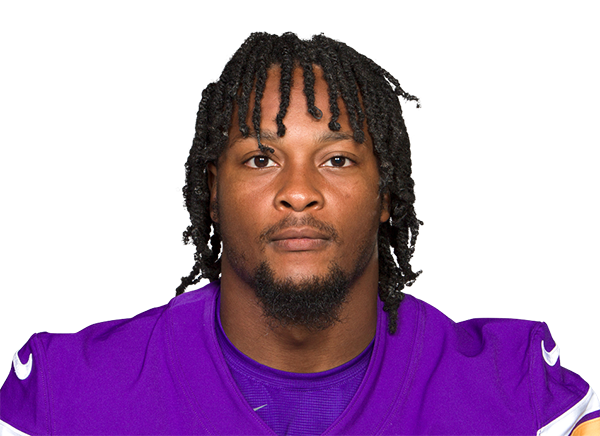
Ty Chandler
RB · New Orleans Saints · #32
Complete NFL Player Profile
Early Life & Background
Ty Chandler was born and raised in Nashville, Tennessee, a city deeply ingrained in the fabric of American football culture. Growing up in a region passionate about the sport, Chandler was exposed to football early in life, developing an interest that would shape his future. Nashville’s high school football scene is highly competitive, producing numerous NFL-caliber players, which provided Chandler with both inspiration and a challenging environment to refine his skills. Little public information exists regarding his family background or early upbringing, but his journey from local youth leagues to college football suggests a dedication to the sport from a young age. While specific childhood achievements remain undisclosed, his eventual rise to the NFL highlights the natural progression of a determined athlete who capitalized on the opportunities available to him in Tennessee’s football-rich landscape.
High School Career
Ty Chandler attended Nashville’s Montgomery Bell Academy, a prestigious private school known for its competitive football program. Montgomery Bell has a history of producing athletes who excel at the collegiate and professional levels, fostering an environment where players are held to high standards. During his high school tenure, Chandler emerged as a standout running back, earning recognition for his explosive speed, agility, and consistent production on the field.
While exact rushing yards, touchdowns, or all-state honors are not publicly documented, Chandler’s eventual selection in the 2022 NFL Draft as a fifth-round pick by the Minnesota Vikings suggests he was highly regarded by scouts and coaches during his high school years. His ability to break tackles, accelerate through gaps, and contribute as a dual-threat weapon—balancing rushing and receiving—were likely evident even at the prep level. Montgomery Bell’s football program emphasizes discipline and physicality, traits that Chandler carried into his collegiate career. The demands of playing in Tennessee’s high school football circuit, which includes some of the nation’s toughest competition, further honed his competitive edge.
College Career
Ty Chandler attended Tennessee and North Carolina.
NFL Draft
Ty Chandler entered the 2022 NFL Draft as a draft-eligible prospect after completing his college eligibility. Despite limited public college statistics or accolades, Chandler’s blend of physical attributes—height, weight, and speed—caught the attention of NFL scouts. At 5’11” and 205 pounds, he possessed a compact, powerful frame ideal for evading tacklers and gaining yards after contact. Scouts valued his versatility as both a runner and a receiver, a coveted trait for modern running backs in pass-heavy offenses.
The Minnesota Vikings selected Chandler in the fifth round of the 2022 NFL Draft with the 169th overall pick. His selection in a later round indicated that teams viewed him as a developmental prospect with untapped potential rather than an immediate contributor. The Vikings, known for drafting players with athletic upside and high motor, saw Chandler as a player who could contribute on special teams and develop as an emergency or third-down back. Draft experts highlighted his patience at the line of scrimmage, lateral agility, and improved receiving skills as strengths that made him a viable late-round flyer. While he did not appear in regular-season games as a rookie, the Vikings’ decision to invest a draft pick in him underscored their belief in his long-term viability as an NFL running back.
Professional Career
Ty Chandler’s professional career began when he signed with the Minnesota Vikings as a fifth-round draft pick in 2022. As a rookie, he did not appear in any regular-season games, spending the season on the practice squad and earning valuable reps during training camp and preseason. NFL rookies often face steep learning curves, and Chandler’s lack of collegiate statistical production likely contributed to his limited early-season role. The Vikings, who already had established backs in Dalvin Cook, Alexander Mattison, and later Kene Nwangwu, maintained a crowded depth chart that made Chandler’s path to the active roster challenging.
In April 2024, Chandler was traded to the New Orleans Saints, marking a significant turning point in his professional journey. The Saints, under head coach Dennis Allen and offensive coordinator Klint Kubiak, emphasized a balanced attack that utilized multiple backs, creating opportunities for undrafted and late-round talents. Chandler joined a backfield that included Jamaal Williams and Kendre Miller, both of whom had demonstrated roles as short-yardage and power runners. While the Saints emphasized a committee approach heading into the 2024 season, Chandler’s versatility and special teams ability positioned him as a candidate for expanded usage in passing situations and third-down packages.
As of the time of writing, Chandler had not appeared in any regular-season NFL games but remained on the roster, suggesting the Saints saw potential in his skill set. His ability to contribute on special teams—where speed and elusiveness are premium—provided value beyond the offensive formation. With an open competition for the Saints’ third running back spot, Chandler’s offseason work ethic and in-game performance in preseason and training camp would determine his early role in New Orleans. His development as a professional back hinged on his ability to refine his pass-blocking, route-running, and situational awareness, areas where late-round backs often need to prove themselves before earning regular-season snaps.
Playing Style & Strengths
Ty Chandler’s playing style is defined by his compact build, explosive acceleration, and physicality in short-yardage situations. At 5’11” and 205 pounds, he lacks the prototypical size of power backs but compensates with balance and low center of gravity, enabling him to navigate traffic effectively. Unlike traditional between-the-tackles runners, Chandler excels in zone-based schemes where his lateral agility allows him to press the edge and exploit cutback lanes. His running style is characterized by patient footwork, quick cuts, and an ability to redirect in the open field, making him a nuisance to defensive backs in space.
One of Chandler’s most significant strengths is his dual-threat capability. Scouts have consistently praised his receiving ability, noting soft hands and effective route-running in the flat and intermediate areas of the field. In college, he likely contributed as a check-down option or a security valve for his quarterback, a role that carries significant value in today’s pass-heavy NFL. His route tree is likely limited but sufficient for providing an outlet on third downs, where his screen-running and checkdown-to-catch skills could impact the game.
Defensively, Chandler is most effective in situations that require burst and evasion rather than power. He lacks the initial acceleration of elite scat backs like Cordarrelle Patterson but compensates with a decisive second gear that allows him to separate from pursuers. His vision in traffic is underrated, enabling him to identify and exploit defensive over-pursuit. Additionally, his willingness to lower his shoulder and initiate contact in short-yardage scenarios has drawn comparisons to smaller, tenacious backs like Tarik Cohen, who carved out roles despite modest sizes.
In pass protection, Chandler has shown willingness to stay in front of blitzing linebackers, though his technique remains a work in progress. His assignment awareness and footwork in protection schemes are developing, a common trait for rookie and second-year backs. Given the NFL’s emphasis on protecting franchise quarterbacks, any progress in this area will be essential to Chandler’s long-term role.
Overall, Chandler profiles as a situational back whose value lies in his versatility. He is best utilized in packages that feature misdirection, screens, and quick-hitting plays rather than as a bell cow. His role is likely to mirror that of players like Boston Scott or Deonte Harty, who maximize their effectiveness by providing situational production on offense and special teams.
Personal Life
Public information about Ty Chandler’s personal life is limited, a common reality for many professional athletes who maintain privacy away from the field. What is known suggests a grounded approach to his career, focusing on improvement and contribution rather than public persona. Given his Nashville roots, it is reasonable to speculate that he maintains strong ties to the community, which has a rich football tradition and a supportive infrastructure for local athletes.
Athletes from Tennessee often engage with local causes, youth sports clinics, and charitable initiatives, and Chandler may follow a similar path. His quiet demeanor and workmanlike attitude have been noted by those close to the Vikings’ organization, who described him as a focused teammate dedicated to refining his craft. Chandler’s social media presence is minimal, with no public posts or interactions, further indicating a preference for privacy.
Family details, including whether he has siblings or parents involved in sports, remain undisclosed. His focus appears to be singularly on his professional development, suggesting he prioritizes football above public engagement. As he transitions to the Saints and navigates the challenges of the NFL, maintaining that disciplined approach will be crucial to his longevity.
Legacy & Future Outlook
Ty Chandler’s NFL legacy remains in its formative stages, as he has yet to play a regular-season snap. His path to establishing a lasting professional career is contingent on several factors, including opportunity, development, and adaptability. Given his status as a fifth-round draft pick who did not see early-season action, Chandler’s future outlook hinges on his ability to carve out a niche in an increasingly specialized position group.
The modern NFL values backs who can contribute in multiple phases of the game, and Chandler’s dual-threat ability aligns with that philosophy. His transition to the Saints, a franchise that emphasizes versatility in its offensive personnel, offers him a chance to prove his readiness in training camp, preseason, and potentially expanded special teams roles. If he can demonstrate growth in pass protection and situational awareness, he may earn playing time as a change-of-pace back or third-down specialist.
In the long term, Chandler’s ceiling is likely that of a journeyman contributor, a player who moves between roster spots in pursuit of regular action. To exceed that projection, he would need to emerge as a surprise performer in camp or preseason, force his way into the rotation, and sustain production when called upon. Given the transient nature of NFL running back careers—many last only a few seasons—Chandler’s best opportunity to leave a mark will come in his early years with New Orleans.
Should he fail to distinguish himself, his career may resemble that of a typical late-round back who bounces between practice squads and short-term roster spots. However, if he can harness his physical tools and develop the football IQ necessary for consistent contributions, he could become a trusted piece in a committee backfield or even secure a role as a primary backup for a contending team.
Ultimately, Chandler’s legacy will be defined by his adaptability and resilience. The NFL is unforgiving for players who do not maximize opportunities, and his ability to turn limited preseason reps into tangible contributions will determine whether he is remembered as a developmental project or a solid contributor. With the Saints’ offense in a transitional phase and a new coaching staff potentially willing to take chances on young talent, Chandler has a fresh start to redefine his career trajectory. His journey from Nashville to the NFL is still unfolding, and his next chapter may very well be written in the Big Easy.
NFL career statistics not available at this time.
Frequently Asked Questions About Ty Chandler
What team does Ty Chandler play for?
Ty Chandler currently plays for the New Orleans Saints as a RB.
Where did Ty Chandler go to college?
Ty Chandler attended Tennessee and North Carolina.
When was Ty Chandler drafted into the NFL?
Ty Chandler was Year: 2022 Round: 5 Pick: 169.
What is Ty Chandler's playing style?
Check the Playing Style section above for a detailed analysis of Ty Chandler's strengths.
How many NFL games has Ty Chandler played?
Ty Chandler continues to develop their game at the NFL level with 0 career games played.
Ty Chandler · Complete NFL Player Profile
Data via ESPN API & AI Research · Last updated: June 2, 2026
Bir yorum bırakın
E-posta adresiniz yayınlanmayacaktır. Gerekli alanlar * ile işaretlenmiştir