

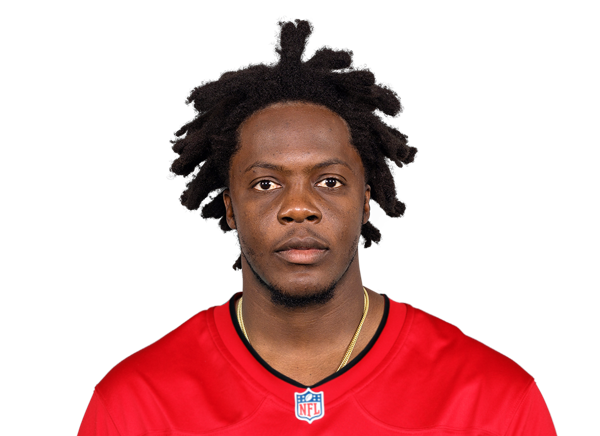
Teddy Bridgewater
QB · Detroit Lions · #5
Complete NFL Player Profile
Early Life & Background
Theodore "Teddy" Edwin Bridgewater Jr. was born on November 10, 1992, in Miami, Florida, to Teddy Bridgewater Sr. and Rose Murphy. Raised in the Liberty City neighborhood, a community known for its challenges but also its resilience, Bridgewater’s upbringing was shaped by the values of hard work, perseverance, and family. His father, Teddy Sr., worked multiple jobs to provide for the family, while his mother emphasized the importance of education and personal responsibility. These early lessons would later become the foundation of Bridgewater’s professional demeanor and leadership style on the football field.
Bridgewater’s athletic journey began at Miami Northwestern Senior High School, where he quickly established himself as one of Florida’s most highly recruited quarterbacks. His high school career was marked by success, both in the classroom and on the gridiron, setting the stage for his eventual rise to the collegiate level. The competitive environment of Liberty City, combined with the mentorship of coaches who recognized his potential, helped him develop the discipline and work ethic that would define his career.
Beyond football, Bridgewater’s upbringing instilled in him a deep sense of community. He frequently credits his family and the support of his neighborhood for keeping him grounded throughout his rise to professional football. This grounding has been evident in his professional career, where he has consistently positioned himself as a team-first player, regardless of his role.
High School Career
Teddy Bridgewater attended Miami Northwestern Senior High School, a powerhouse in Florida high school football. Under the guidance of head coach Billy Rolle, Bridgewater flourished as a dual-threat quarterback, excelling in both passing and rushing. During his junior and senior seasons, he led the Rockets to consecutive Class 6A state championships in 2009 and 2010, solidifying his reputation as one of the top prospects in the nation.
In his senior year, Bridgewater threw for 2,543 yards and 25 touchdowns while rushing for an additional 691 yards and 12 scores. His performance earned him numerous accolades, including being named the 2010 Florida Class 6A Player of the Year by the Florida Association of Coaches. He was also selected to play in the 2011 U.S. Army All-American Bowl, a prestigious honor that showcased his elite status among high school prospects.
Bridgewater’s high school success was not just statistical; it was marked by his ability to perform under pressure. His poise in the pocket, accuracy downfield, and clutch decision-making were evident even at this stage, traits that would become hallmarks of his collegiate and professional career. Recruiters from top college programs took notice, and by the end of his high school tenure, Bridgewater was ranked among the top quarterback prospects in the country.
His recruitment process was highly competitive, with offers from major programs like Alabama, Florida, and Miami. Ultimately, Bridgewater chose the University of Louisville, drawn by its tradition of developing quarterbacks and its offensive system that aligned with his strengths.
College Career
Teddy Bridgewater attended University of Louisville.
NFL Draft
Teddy Bridgewater declared for the 2014 NFL Draft following his junior season at Louisville, where he had established himself as one of the most polished and consistent passers in college football. His decision to forgo his senior year was met with both praise and criticism, but Bridgewater entered the draft confident in his readiness for the professional level.
At the 2014 NFL Combine, Bridgewater performed exceptionally well, posting a 4.79-second 40-yard dash and a 33.5-inch vertical leap, numbers that showcased his athleticism. His pro day workout further solidified his standing, with impressive throws that drew positive reviews from scouts and executives. Bridgewater’s draft stock was bolstered by his accuracy, football IQ, and leadership qualities, which made him an attractive prospect for teams seeking a franchise quarterback.
The Minnesota Vikings selected Bridgewater with the 32nd overall pick in the first round, trading up from their original second-round position to secure him. The Vikings, coming off a disappointing 5-10-1 season, saw Bridgewater as a long-term solution at quarterback. His arrival was met with optimism, as he became the first quarterback taken in the draft and was expected to compete for the starting job immediately.
Professional Career
Teddy Bridgewater’s NFL career has been defined by resilience, adaptability, and a journey that has taken him from a high-profile rookie to a journeyman who has found success in various roles across the league. His professional career can be divided into distinct phases, each reflecting his growth as a player and his ability to contribute to different teams in different capacities.
**Minnesota Vikings (2014–2017)**
Bridgewater’s rookie season in 2014 was spent primarily as a backup to starter Matt Cassel and later Shaun Hill. Though he saw limited action, he gained valuable experience and demonstrated his poise in limited game time. His development continued in 2015, but it was the 2016 season that marked his breakout moment. After a preseason injury to starter Sam Bradford, Bridgewater was thrust into the starting role. In his first full season as a starter, he led the Vikings to a 5-0 record before suffering a devastating non-contact knee injury in Week 6 against the Chiefs. The injury, which resulted in a torn ACL and dislocated ankle, sidelined him for the remainder of the season and forced the Vikings to trade Bradford to the Eagles. The team’s reliance on Bridgewater highlighted his potential but also left his future uncertain.
Bridgewater’s recovery from the injury was arduous, and by the start of the 2017 season, he was not ready to return. The Vikings had drafted quarterback Deshaun Watson in the first round of the 2017 NFL Draft, signaling their long-term commitment to the position. Bridgewater entered the season as a backup to Case Keenum and played in only three games, throwing for 393 yards and two touchdowns with no interceptions. Despite the adversity, Bridgewater remained a respected member of the locker room, and his leadership was noted by teammates and coaches alike.
**New York Jets (2018)**
After the 2017 season, Bridgewater was set to become an unrestricted free agent, and the Vikings made it clear they would move on from him. The New York Jets signed him to a one-year contract worth $6 million in March 2018, hoping he could compete for the starting job with young quarterback Sam Darnold. Bridgewater entered training camp as the frontrunner but ultimately lost the job to Darnold. He played in just two games, completing 39 of 57 passes for 376 yards, two touchdowns, and no interceptions, while also rushing for 12 yards. His brief tenure in New York was unremarkable, and he became a free agent once again at the end of the season.
**New Orleans Saints (2018–2020)**
The New Orleans Saints signed Bridgewater to a one-year, $1.1 million contract in March 2018, reuniting him with head coach Sean Payton, who had been his offensive coordinator at Louisville. Bridgewater served as a backup to Drew Brees during his time in New Orleans, playing in six games over two seasons. His most notable appearance came in Week 17 of the 2019 season against the Panthers, where he replaced an injured Brees and led the Saints to a 42-10 victory, throwing for 215 yards and three touchdowns. The performance was a reminder of his potential, but his role remained limited, and he was not re-signed after the 2020 season.
**Carolina Panthers (2020–2022)**
Bridgewater’s career took a significant turn when the Carolina Panthers acquired him in a trade with the Saints in exchange for a sixth-round draft pick. The Panthers, searching for a veteran presence to stabilize their offense under head coach Matt Rhule, saw Bridgewater as the ideal bridge quarterback. In 2020, he started all 15 games he played (missing one due to a concussion) and threw for 3,733 yards, 15 touchdowns, and 10 interceptions, guiding the Panthers to an 11-4 record and a division title. His 2020 season was the most productive of his career, as he completed 69.6% of his passes for a 95.6 passer rating, both career highs.
The 2021 season, however, was rocky for Bridgewater and the Panthers. The team regressed to a 5-12 record, and Bridgewater threw for 3,364 yards, 15 touchdowns, and 13 interceptions, struggling with consistency under a new coaching staff. Despite the downturn, he remained a reliable veteran presence, and his leadership was valued by both teammates and the organization.
Bridgewater’s tenure in Carolina ended in 2022, as the Panthers moved on from him in favor of younger quarterbacks. He was released in March 2022 and became a free agent for the third consecutive offseason.
**Denver Broncos (2022–2023)**
In August 2022, the Denver Broncos signed Bridgewater to a one-year, $3.5 million contract to serve as a mentor to second-year quarterback Russell Wilson and provide veteran depth. The move reunited him with head coach Nathaniel Hackett, who had previously served as the offensive coordinator with the Vikings. Bridgewater’s role in Denver was primarily as a backup, but he saw action in six games, throwing for 703 yards, three touchdowns, and no interceptions. His most notable contribution came in Week 16 against the Cincinnati Bengals, where he replaced an injured Wilson and led the Broncos to a 34-32 victory, completing 12 of 18 passes for 113 yards and a touchdown.
Bridgewater’s tenure in Denver was short but impactful, as he provided stability and experience for a young franchise in transition. His professionalism and ability to step in during critical moments were assets to the team, even if his statistical contributions were modest.
**Detroit Lions (2024–Present)**
In March 2024, Teddy Bridgewater signed a one-year contract with the Detroit Lions, reuniting him with head coach Dan Campbell and offensive coordinator Ben Johnson. The move was seen as a strategic addition to a Lions team that had reached the NFC Championship Game in the 2023 season but was searching for a veteran presence to support Jared Goff, who was set to enter a contract year. Bridgewater’s role with the Lions is expected to be as a high-level backup and mentor, leveraging his extensive experience to guide Detroit’s young offense and provide Goff with a reliable veteran alternative.
Entering the 2024 season, Bridgewater brings a wealth of knowledge to the Lions’ locker room. His career completion percentage of 65.1% and passer rating of 88.3 are respectable figures for a journeyman quarterback, but his intangibles—leadership, football IQ, and clutch performance—are what make him valuable to his teams. The Lions, a franchise on the rise, will look to Bridgewater to provide stability and guidance as they aim to contend for a Super Bowl.
Playing Style & Strengths
Teddy Bridgewater’s playing style is characterized by precision, decision-making, and a cerebral approach to the quarterback position. While he lacks the elite arm talent of some of the NFL’s top passers, his ability to manage games, read defenses, and make accurate throws has allowed him to carve out a sustainable career in the league.
One of Bridgewater’s greatest strengths is his accuracy. Throughout his career, he has consistently ranked among the league leaders in completion percentage for qualified passers. His career completion percentage of 65.1% places him in the top half of starting quarterbacks since 2014, a testament to his ability to put the ball in the right spot. Bridgewater thrives in short-to-intermediate passing situations, where his quick release and anticipation allow him to exploit windows in coverage. His ability to throw receivers open with touch and timing has been a valuable asset in West Coast and timing-based offensive systems, which he has thrived in throughout his career.
Another key strength is Bridgewater’s football IQ. He has always been a student of the game, with a deep understanding of defensive schemes and tendencies. This intelligence allows him to diagnose blitzes, recognize coverage looks, and make pre-snap adjustments to put his offense in advantageous positions. His ability to process information quickly and make the right decision—whether it’s throwing the hot route, taking the checkdown, or avoiding pressure—has been a hallmark of his play. This trait has made him a coach’s favorite, as he consistently puts his team in a position to succeed, regardless of the situation.
Bridgewater’s pocket presence is another area of strength. While he is not known for being a scrambler, he maintains a calm demeanor in the pocket, keeping his eyes downfield and delivering the ball with confidence. His ability to slide within the pocket and avoid negative plays has helped limit turnovers and maximize his offensive output. In situations where he must evade pressure, Bridgewater has shown the ability to extend plays and make off-scheme throws, though these are not his preferred methods of operation.
Defensively, Bridgewater has been relatively efficient, boasting a career interception rate of 2.0%. His ability to protect the football, combined with his accuracy, has resulted in a career touchdown-to-interception ratio of 1.74, which is slightly above the league average for quarterbacks with significant starting experience. While he has not been a high-volume passer in terms of big-play ability, his efficiency has allowed him to remain productive in systems that prioritize ball control and methodical execution.
One of Bridgewater’s most underrated traits is his leadership. Throughout his career, he has been regarded as a high-character player who leads by example. His professionalism, work ethic, and willingness to mentor younger players have earned him respect in every locker room he has visited. This intangible quality is perhaps the most valuable aspect of his game, as it allows him to contribute to winning football, even when his role is limited.
Bridgewater’s physical tools are average for an NFL quarterback. He stands at 6’2” and weighs 212 pounds, with a compact frame that has allowed him to withstand the rigors of the position. While he lacks elite athleticism, his mobility within the pocket and ability to extend plays with his legs have been useful in certain situations. His arm strength is adequate but not exceptional; he is most effective when throwing on the move or from off-platform, where he can generate velocity without needing to set his feet perfectly.
Defensively, Bridgewater is not known for making explosive plays or big hits, but he has shown the ability to contribute in blitz pickup and screen passes. His career average of 3.9 yards per carry is unremarkable, but it reflects his willingness to tuck and run when necessary to avoid sacks or extend plays.
In summary, Teddy Bridgewater’s playing style is that of a game-manager with elite-level decision-making and accuracy. He is not a flashy quarterback, nor is he known for making jaw-dropping throws. Instead, he thrives in systems that emphasize efficiency, ball security, and situational football. His career longevity is a testament to his adaptability and ability to meet the demands of various offensive schemes and coaching philosophies.
Personal Life
Off the field, Teddy Bridgewater is known for his quiet professionalism and dedication to his family. He is married to Haylee Bridgewater, whom he wed in 2019. The couple has two children, a son named Teddy III and a daughter named Sienna. Bridgewater’s commitment to his family has been a constant throughout his career, and he has often spoken about the importance of balancing football with his responsibilities as a husband and father.
Bridgewater is also actively involved in charitable work, focusing on initiatives that support underserved communities. Through his foundation, the Teddy Bridgewater Foundation, he has partnered with organizations that provide resources for youth sports, education, and mentorship programs. His work in the community is a reflection of his upbringing in Liberty City, where he witnessed firsthand the challenges facing underserved neighborhoods. By giving back, Bridgewater aims to create opportunities for young people in similar environments, emphasizing the importance of education and perseverance.
In terms of public persona, Bridgewater has maintained a low-key presence relative to some of his more outspoken peers. He is active on social media but does so in a measured and professional manner, often sharing content related to his family, football, and community service. His interviews are typically substantive, with Bridgewater focusing on football and his responsibilities rather than seeking the spotlight.
Bridgewater is also a devout Christian, a faith that has guided him through the highs and lows of his career. He has spoken openly about the role of his faith in his life, often attributing his resilience and perspective to his spiritual beliefs. This grounding has been evident in his professional demeanor, where he is known for his calmness under pressure and ability to remain composed in high-stress situations.
Legacy & Future Outlook
Teddy Bridgewater’s NFL career is a study in perseverance and adaptability. From a high-profile draft selection to a journeyman role, his journey has been marked by challenges, setbacks, and ultimately, a determination to contribute to winning football. While his career may not boast the statistical dominance of some of his peers, his legacy is defined by his professionalism, leadership, and ability to thrive in roles that many quarterbacks would consider beneath them.
At this stage of his career, Bridgewater is no longer viewed as a franchise quarterback, but as a veteran presence capable of elevating the play of those around him. His role with the Detroit Lions in 2024 is emblematic of this phase of his career, where he serves as a mentor to Jared Goff and a reliable backup who can step in and provide stability when needed. For a Lions team on the precipice of contention, Bridgewater’s experience and leadership are invaluable assets as they aim to take the next step in their development.
Bridgewater’s career statistics underscore his consistency and efficiency. In 89 career starts, he has thrown for 19,917 yards, 115 touchdowns, and 69 interceptions, with a passer rating of 88.3. His completion percentage of 65.1% is well above the league average for quarterbacks with significant playing time since 2014, and his interception rate of 2.0% is indicative of his ball security. While these numbers may not place him among the elite quarterbacks of his era, they reflect a career that has been defined by stability and reliability.
Looking ahead, Bridgewater’s future in the NFL is likely to be as a veteran mentor and bridge quarterback. His ability to contribute to winning football, even in limited roles, makes him an attractive option for teams in transition or those seeking a quarterback with a proven track record of professionalism. Whether he continues to play beyond the 2024 season depends on his performance in Detroit and the opportunities that arise for him
NFL career statistics not available at this time.
Frequently Asked Questions About Teddy Bridgewater
What team does Teddy Bridgewater play for?
Teddy Bridgewater currently plays for the Detroit Lions as a QB.
Where did Teddy Bridgewater go to college?
Teddy Bridgewater attended University of Louisville.
When was Teddy Bridgewater drafted into the NFL?
Teddy Bridgewater was Year: 2014 Round: 1 Pick: 32.
What is Teddy Bridgewater's playing style?
Check the Playing Style section above for a detailed analysis of Teddy Bridgewater's strengths.
How many NFL games has Teddy Bridgewater played?
Teddy Bridgewater continues to develop their game at the NFL level with 0 career games played.
Teddy Bridgewater · Complete NFL Player Profile
Data via ESPN API & AI Research · Last updated: June 2, 2026
Bir yorum bırakın
E-posta adresiniz yayınlanmayacaktır. Gerekli alanlar * ile işaretlenmiştir