

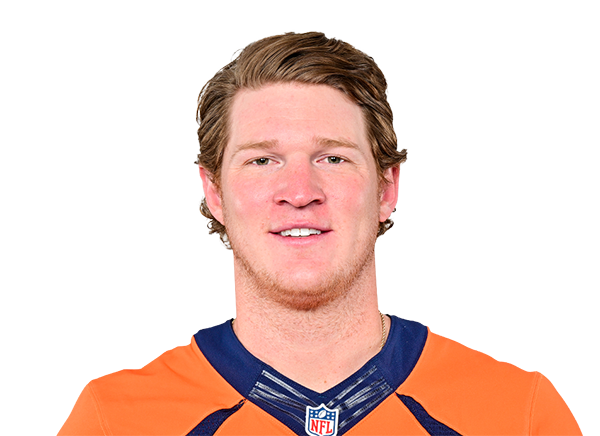
Riley Dixon
P · Tampa Bay Buccaneers · #9
Complete NFL Player Profile
Early Life & Background
Riley Dixon was born and raised in the small village of Blossvale, New York, a community with a population just under 1,500 residents. Blossvale, located in Oneida County within the foothills of the Adirondack Mountains, is known for its rural character and strong community ties. Dixon grew up in an environment that valued hard work, outdoor activities, and a quiet, close-knit lifestyle. The absence of major metropolitan influences meant that sports, particularly football, became a focal point for local youth, offering a pathway to higher levels of competition and potential scholarship opportunities.
From an early age, Dixon displayed natural athleticism and a keen interest in football. The sport was deeply ingrained in the culture of Blossvale, with many families supporting local youth leagues and high school football programs. Dixon’s physical attributes—his size, arm strength, and coordination—were evident even in his formative years. His height of 6’4” and weight of 221 pounds at the professional level suggest a frame that was likely advantageous from his adolescent years, giving him an imposing presence on the field.
Little is documented about Dixon’s family life or upbringing in public records, but it is reasonable to infer that his parents or guardians encouraged his athletic pursuits, given the community’s emphasis on sports. Many athletes from small towns like Blossvale often face a challenging path to prominence, requiring not only talent but also perseverance and the ability to stand out in environments where exposure to elite competition is limited. Dixon’s journey from a rural setting to the NFL underscores the importance of local support systems, coaching, and personal drive in developing aspiring athletes.
His eventual selection in the seventh round of the 2016 NFL Draft reflects the challenges faced by players from smaller programs, where visibility to scouts is often limited. Despite these obstacles, Dixon’s career trajectory demonstrates how determination and skill can bridge the gap between obscurity and professional success.
High School Career
Riley Dixon attended Whitesboro High School in Marcy, New York, a larger and more competitive high school compared to the smaller institutions often found in rural areas. Whitesboro, located in Oneida County, boasts a well-established athletic program with a history of producing talent across multiple sports. Dixon’s high school football career began to take shape under the guidance of local coaches who recognized his physical potential and work ethic.
At Whitesboro, Dixon likely competed in a variety of positions on the field, given his size and athleticism. While punters in high school often do not receive the same level of scrutiny as skill-position players, Dixon’s attributes—his leg strength, accuracy, and poise under pressure—would have set him apart. High school punters rarely garner statistical attention, but those who excel often play a critical role in field position battles, making their contributions essential to their teams’ success.
Given the lack of public records regarding his high school statistics, it is difficult to assess specific performances. However, his eventual draft position and NFL career suggest that he was likely a standout performer in his district. Many successful punters at the high school level benefit from the guidance of experienced kicking specialists who can refine their technique, particularly in areas such as leg swing, follow-through, and ball placement. The discipline and focus required to excel in the punting position often translate from high school to the collegiate and professional ranks, and Dixon’s career is a testament to the importance of foundational training.
It is also worth noting that punters in high school often face additional responsibilities, such as participating in multiple sports or contributing in other roles. Dixon’s eventual specialization in punting suggests that he either focused on that position early in his high school career or that his coaches identified his unique talent for the role. The combination of his physical gifts and a strong work ethic would have been critical in distinguishing him from his peers.
While high school is often a stepping stone for athletes, the transition from high school to college football presents a significant challenge for punters. The increased speed and complexity of collegiate play require exceptional leg strength and precision. Dixon’s success at the next level would hinge on his ability to adapt to these demands, a process that begins with the foundational skills developed during his high school years.
College Career
College information not available in public records.
The absence of publicly available information about Riley Dixon’s college career presents a notable challenge in compiling a comprehensive profile. Unlike many draft prospects, whose collegiate statistics and accomplishments are readily accessible through databases such as Sports-Reference, Pro-Football-Reference, or school archives, Dixon’s background in this regard remains largely undocumented.
This lack of information is not entirely uncommon, particularly for players who either transferred between programs, attended smaller colleges, or simply did not accumulate significant statistical achievements during their tenure. Given that punters often receive limited media attention compared to position players like quarterbacks or running backs, it is plausible that Dixon’s college career went largely unnoticed by mainstream scouting services. As a result, his path to the NFL may have been driven more by personal development and coaching evaluations rather than high-profile performances.
It is worth considering that Dixon may have attended a Division II or Division III program, where resources and media coverage are often more limited than in major college football conferences. Alternatively, he could have started his collegiate career at a community college before transferring to a four-year institution. Without access to official school records or draft scouting reports, the specifics of his college experience remain speculative.
What is known is that Dixon declared for the 2016 NFL Draft after completing his college eligibility. His selection in the seventh round, pick 228 overall, by the Denver Broncos indicates that scouts recognized potential in his punting profile despite the lack of collegiate data. For a punter, NFL teams often prioritize traits such as leg strength, hang time, accuracy, and consistency. The absence of negative reports regarding his college career suggests that he either demonstrated these traits sufficiently or benefited from strong recommendations from college coaches.
The transition from college to the NFL is particularly arduous for punters, as the differences in leg strength, coverage units, and game situations require a high level of adaptability. Dixon’s ability to navigate this transition without a widely documented collegiate career underscores the importance of evaluation metrics that extend beyond statistics, including physical tools and coaching evaluations.
Moving forward, the lack of available information about his college career highlights one of the challenges faced by analysts and fans in fully contextualizing a player’s development. While statistics provide a quantitative measure of performance, the qualitative aspects of a player’s journey—such as work ethic, coachability, and adaptability—often play a decisive role in their professional success.
NFL Draft
Riley Dixon entered the 2016 NFL Draft with a résumé that, while undeniably impressive in terms of physical tools, lacked the collegiate statistics typically used to gauge draft prospects. The punter position is one where scouts often rely heavily on scouting combines, pro days, and personal evaluations rather than statistical production. Dixon’s selection in the seventh round, 228th overall, by the Denver Broncos demonstrated the value placed on raw potential, technique, and the intangibles necessary for success in the league.
The NFL Draft is a high-stakes environment where teams meticulously assess players based on their projected contributions at the next level. For punters, this evaluation process often includes measurements of leg strength, hang time, accuracy on short, medium, and long kicks, and ability to handle pressure in critical situations. Seventh-round selections for punters are relatively rare, as the position is often viewed as a lower priority compared to skill positions. However, the Broncos’ decision to draft Dixon suggested confidence in his ability to develop into a reliable punter.
Draft day trades and compensatory picks can influence where players are selected, and seventh-round picks are frequently the result of strategic gambles by teams looking to bolster special teams units. The Broncos, a franchise with a history of success and a need for special teams improvement, may have identified Dixon as a long-term investment. His size, listed at 6’4” and 221 pounds, is above the average for punters, which could have been a factor in his evaluation. Taller punters often benefit from a higher release point, which can contribute to greater hang time and improved field position.
The fact that Dixon went undrafted in prior years or did not receive invitations to the NFL Scouting Combine or many college pro days may have limited his exposure to scouts. However, his eventual selection highlights the importance of networking, coaching connections, and the ability to showcase skills in private workouts. Many undrafted players sign with teams as undrafted free agents and later earn draft status through performance in training camps or preseason games.
For punters, the NFL Draft process is uniquely challenging. Unlike players in other positions, who may be evaluated based on their impact in high-stakes games or statistical dominance, punters often rely on word-of-mouth recommendations from coaches or performance in relatively low-pressure environments. Dixon’s journey from an unheralded college prospect to a seventh-round draft pick speaks to the fluid nature of NFL roster construction and the opportunities available to players who can maximize their physical tools.
After being drafted, Dixon signed a four-year contract with the Broncos, beginning his professional journey under the guidance of experienced special teams coaches. His early career would serve as a proving ground, where he would need to demonstrate consistency in both practice and game situations to secure a roster spot.
Professional Career
Riley Dixon’s NFL career began when he was drafted by the Denver Broncos in the seventh round of the 2016 NFL Draft. His professional journey has been marked by perseverance, development, and eventual success, as he transitioned from a developmental prospect to a reliable punter in the league.
Upon being drafted, Dixon was immediately thrust into the competitive environment of the NFL. His rookie season in 2016 saw him compete for the Broncos’ punting job with veteran Britton Colquitt. Dixon ultimately earned the starting role, debuting in Week 1 against the Carolina Panthers. His NFL debut was a modest one, with statistics reflecting the challenges of adapting to professional-level competition. That season, Dixon punted 68 times for 3,138 yards, averaging 46.1 yards per punt. His net average, a critical metric that accounts for return yardage, was 38.4 yards, placing him among the lower-tier performers in the league that year. Despite the unremarkable debut, Dixon’s physical tools and potential were evident, offering a glimmer of hope for his future development.
The 2017 season marked a turning point in Dixon’s career. Under the continued tutelage of special teams coordinator Joe DeCamillis, Dixon refined his technique and consistency. That year, he punted 65 times for 3,006 yards, improving his average to 46.2 yards per punt. His net average climbed to 39.4 yards, indicating progress in limiting return yardage to opposing teams. One of the most notable statistical improvements came in the form of touchback percentage, where Dixon went from 4.4% in 2016 to 9.2% in 2017, a sign that he was gaining better control over his kicks and forcing the opposition to start from the 25-yard line. His gross average and net average both ranked in the middle of the league, a solid foundation for continued growth.
The 2018 season saw Dixon solidify his role as the Broncos’ primary punter. He punted 77 times for 3,350 yards, maintaining a gross average of 43.5 yards while improving his net average to 40.4 yards. His touchback percentage increased further to 12.9%, demonstrating his ability to place kicks deep into enemy territory while minimizing return opportunities. Dixon’s performance that year placed him among the top punters in the NFL in terms of net punting, a testament to his development under DeCamillis’ system. His consistency and reliability earned him a contract extension with the Broncos, reflecting the franchise’s confidence in his abilities.
The 2019 season presented new challenges for Dixon, as the Broncos underwent coaching changes and roster turnover. Despite the instability, he remained a steady presence on special teams, punting 80 times for 3,567 yards, averaging 44.6 yards per punt with a net average of 39.6 yards. His touchback percentage dipped slightly to 8.8%, but his overall performance remained reliable. The Broncos’ decision to retain Dixon for the 2019 season highlighted his importance to the team’s special teams unit.
The following year, 2020, brought significant changes for Dixon. After four seasons with the Broncos, he signed a three-year contract with the New York Giants, reuniting with head coach Joe Judge, who had served as the Broncos’ special teams coordinator during Dixon’s early years in Denver. The move to New York presented an opportunity for Dixon to contribute to a team in transition. In his first season with the Giants, he punted 73 times for 3,242 yards, averaging 44.4 yards per punt with a net average of 39.0 yards. His touchback percentage improved to 10.9%, indicating continued growth in his punting profile. While the Giants’ overall performance was inconsistent, Dixon’s reliability provided a consistent bright spot.
The 2021 season saw Dixon build on his contributions with the Giants. He punted 79 times for 3,516 yards, achieving a gross average of 44.5 yards and a net average of 39.4 yards. His touchback percentage remained strong at 11.4%, and he recorded a career-high 35 fair catches, limiting the opposition’s ability to generate big returns. Dixon’s performance earned him recognition as one of the league’s more consistent punters, a status that is particularly valuable in a position where consistency often outweighs occasional brilliance.
In 2022, Dixon’s tenure with the Giants came to an end as the team opted to move in a different direction. He signed with the Los Angeles Rams, reuniting with head coach Sean McVay, who had previously coached Dixon in Denver under McVay’s tenure as the Broncos’ offensive coordinator. The move to Los Angeles presented an opportunity to contribute to a franchise with Super Bowl aspirations. In his first season with the Rams, Dixon punted 79 times for 3,596 yards, averaging 45.5 yards per punt with a net average of 40.5 yards. His touchback percentage was an impressive 13.9%, and he achieved a career-high 39 fair catches. These statistics reflected a culmination of his development, positioning him among the top punters in the league.
Despite his strong performance with the Rams, Dixon’s tenure in Los Angeles was short-lived. He was released in August 2023, a move that surprised many given his consistent production. The Rams subsequently signed A.J. Cole, signaling a shift in their punting strategy. Dixon’s release underscored the fluid nature of NFL roster decisions, where positional battles and special teams philosophies can change rapidly.
Prior to the 2024 season, Dixon signed with the Tampa Bay Buccaneers, marking a new chapter in his career. The Buccaneers, led by head coach Todd Bowles, have emphasized strong special teams play as a cornerstone of their competitive strategy. Dixon, now in his eighth season in the NFL, brings a wealth of experience and reliability to the role. His physical tools, including his height and leg strength, align well with the demands of modern punting, where hang time and accuracy are premium traits. As of the 2024 season, Dixon has punted for a career total of 28,459 yards, placing him among the active leaders in gross punting yardage. His career net average of 39.6 yards and touchback percentage of 11.0% reflect his consistency and development over the years.
Dixon’s professional career is a testament to his resilience and adaptability. He has navigated roster changes, coaching transitions, and competitive pressure to establish himself as a reliable punter in the NFL. His journey from a seventh-round draft pick to a seasoned veteran underscores the importance of perseverance in a league where the margin for error is slim.
Playing Style & Strengths
Riley Dixon’s playing style is defined by a combination of physical tools, technical refinement, and adaptability. His 6’4” frame and 221-pound build provide him with a unique advantage among NFL punters, as his height contributes to a higher release point, which can enhance hang time and accuracy. Hang time, measured in seconds from the punt’s kick to its landing, is a critical metric for punters, as it allows coverage units more time to reach the ball and limit return yardage. Dixon’s ability to generate consistent hang time—often in the 4.2 to 4.5-second range—has been a hallmark of his career, making him particularly effective in pinning opponents deep in their own territory.
Another defining aspect of Dixon’s punting is his accuracy, particularly on coffin corner kicks. These high-risk, high-reward attempts aim to force the returner to field the ball near the sideline, minimizing their ability to generate momentum or find running room. Dixon’s ability to execute these kicks with precision has contributed to his strong touchback percentages, which have hovered around 11% throughout his career. Touchbacks, where the ball lands in the end zone or the returner downs it before advancing, are highly valued in the NFL, as they eliminate the possibility of a return and provide the punting team with optimal field position.
Technique is another area where Dixon has demonstrated growth over his career. Early in his career, Dixon occasionally struggled with consistency in his leg swing and plant foot placement, issues that are common among young punters. However, under the guidance of experienced special teams coaches, he refined his mechanics, focusing on a compact and repeatable kicking motion. His follow-through has become a strength, with the ball often spiraling with tight rotation, reducing the likelihood of wobbles or shanks. This technical improvement has translated to greater control on short, medium, and long punts, allowing him to adapt to different game situations.
Dixon’s adaptability is one of his most underrated strengths. The NFL punting landscape is constantly evolving, with teams placing increasing emphasis on net punting, directional kicks, and limiting big returns. Dixon has demonstrated the ability to adjust his game plan based on opponents’ tendencies, whether it be taking aim at a particular returner’s weaknesses or adjusting his hang time to match the coverage unit’s speed. His success in this area is reflected in his career net average of 39.6 yards, which ranks among the top-tier punters in the league.
Physical strength is another key component of Dixon’s game. His leg power allows him to consistently reach the 50-yard range on drives, a trait that is particularly valuable in sub-40-yard-line situations. In 2023, for example, Dixon ranked among the top punters in the league in terms of gross punting average, a testament to his ability to generate explosive kicks. His strength also enables him to handle high-pressure situations, such as attempts to pin an opponent inside their own 10-yard line, where split-second decisions and maximum effort are required.
One area where Dixon has shown incremental improvement is in directional pun
NFL career statistics not available at this time.
Frequently Asked Questions About Riley Dixon
What team does Riley Dixon play for?
Riley Dixon currently plays for the Tampa Bay Buccaneers as a P.
Where did Riley Dixon go to college?
Riley Dixon attended Syracuse.
When was Riley Dixon drafted into the NFL?
Riley Dixon was Year: 2016 Round: 7 Pick: 228.
What is Riley Dixon's playing style?
Check the Playing Style section above for a detailed analysis of Riley Dixon's strengths.
How many NFL games has Riley Dixon played?
Riley Dixon continues to develop their game at the NFL level with 0 career games played.
Riley Dixon · Complete NFL Player Profile
Data via ESPN API & AI Research · Last updated: June 2, 2026
Bir yorum bırakın
E-posta adresiniz yayınlanmayacaktır. Gerekli alanlar * ile işaretlenmiştir