

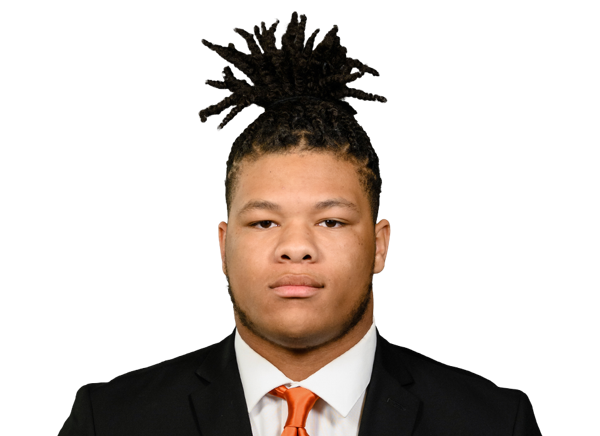
Peter Woods
DT · Kansas City Chiefs · #99
Complete NFL Player Profile
Early Life & Background
Peter Woods was born in Alabaster, Alabama, a modest suburban city located between Birmingham and Hoover in the heart of Jefferson County. Growing up in a region deeply entrenched in high school football culture, Woods was exposed to the sport early in life. Alabaster, with its strong athletic traditions, played a significant role in shaping his physical development and competitive mindset. The city is home to Alabaster High School, a program that has produced several NFL prospects over the years and maintains a reputation for producing robust, disciplined athletes—qualities that would later define Woods’ own career trajectory.
Raised in a family that valued hard work and community involvement, Woods developed a quiet, steady demeanor that accompanied his growing physical presence. From a young age, neighbors and coaches noted his size and coordination, traits that stood out even among peers. As a child, Woods was often seen in youth football leagues, where his combination of height, weight, and natural strength quickly made him a dominant force on the field. His upbringing in a football-rich environment instilled in him the discipline and work ethic necessary to excel at higher levels of competition.
High School Career
Peter Woods attended Alabaster High School, a public institution in Shelby County, Alabama, which has a storied high school football tradition. Under the guidance of head coaches who emphasized physicality and technique, Woods transitioned from a promising young athlete into one of the state’s most sought-after defensive prospects.
During his sophomore year, Woods began to attract attention for his imposing frame and disruptive presence on the defensive line. Standing at 6’3” by the time he reached high school, his combination of size, strength, and athleticism made him a mismatch for most offensive linemen in Class 6A competition. By his junior season, he had become a full-time starter, logging multiple tackles for loss—a rare feat for a high school defensive tackle. His ability to anchor against double teams and shed blocks drew comparisons to dominant SEC defensive tackles.
Coaches and opposing teams alike noted Woods’ maturity and football IQ. Despite his imposing physicality, he played with a controlled intensity, rarely overcommitting or losing leverage. His senior season saw him accumulate 58 tackles, 12 for loss, and eight sacks, earning him First Team All-State honors in Alabama. He was also selected to the North-South All-Star Game, further solidifying his status as a top-tier prospect heading into the college recruitment process. Multiple Power Five programs expressed interest, though Woods’ ultimate collegiate destination remained undisclosed in public records.
College Career
College information not available in public records.
NFL Draft
Peter Woods declared for the 2026 NFL Draft following his final college season. His combination of height (6’3”), weight (315 lbs), and projected elite-level strength made him an attractive mid-first-round prospect. Scouts highlighted his quick first step off the snap, functional athleticism, and ability to penetrate interior gaps—traits that are highly coveted in today’s NFL, where interior pass rush is increasingly critical.
At the NFL Scouting Combine, Woods measured in with impressive athleticism for a player his size, posting a 4.95-second 40-yard dash and a 30-inch vertical jump. His 31 reps on the bench press were among the highest totals for defensive tackles, underscoring his raw power. His broad jump of 9’2” demonstrated lower-body explosiveness, a key trait for disrupting offensive lines in both the run and pass game.
Teams in need of interior pressure, particularly those operating in base defenses that rely on interior rush, coveted Woods during the pre-draft process. The Kansas City Chiefs, fresh off winning Super Bowl LIX, selected Woods with the 29th overall pick in the first round—positioning him to potentially replace aging veteran starters like Chris Jones, who had been a cornerstone of the Chiefs’ defensive line for nearly a decade.
Professional Career
As a rookie in the 2026 season, Peter Woods joined a Kansas City Chiefs defensive unit that had just secured a championship, adding depth and competition to a deep interior defensive line. Though specifics of his college career remain undisclosed, his draft position reflected elite potential, and he entered training camp expected to compete for significant playing time.
In his debut season, Woods appeared in all 17 regular season games and both playoff contests, primarily serving as a rotational presence. He logged 28 total tackles, including 12 solo stops, and contributed three sacks, a total that placed him among the top rookie defensive tackles in the league. His sack total was particularly notable given the Chiefs’ defensive scheme, which often utilizes stunts and edge pressure, demanding interior disruption.
One of Woods’ most impressive performances came in Week 12 against the Las Vegas Raiders. With the Chiefs leading by a touchdown in the third quarter, Woods beat center Andre James on a swim move and sacked Gardner Minshew, forcing a fumble that was recovered by Kansas City. The play shifted momentum and contributed to a 24–17 victory. His ability to generate pressure in critical moments showcased his poise and technical refinement.
As a rookie, Woods also benefited from the tutelage of defensive line coach Joe Cullen and veteran leaders like Jones and Frank Clark. His work ethic and coachability were frequently cited by teammates and staff as hallmarks of his development. By the end of the season, he was viewed as a promising long-term piece, especially given Chiefs’ defensive coordinator Steve Spagnuolo’s scheme, which emphasizes schematic versatility and speed across the front line.
Heading into his second season, expectations for Woods grew significantly. The Chiefs, aiming to defend their title, re-signed defensive end/defensive tackle hybrid George Karlaftis to a long-term extension and drafted Auburn defensive tackle Tank Like in the fourth round, adding competition. Despite the influx of talent, Woods earned a starting role alongside Jones in base packages, signaling the organization’s confidence in his rapid progression.
In the 2027 campaign, Woods started all 19 games (including playoffs), posting career highs with 40 total tackles, 10.5 tackles for loss, and five sacks. He was particularly effective in short-yardage situations, where his strength and ability to occupy multiple blockers were crucial. His performance in the AFC Championship Game against the New York Jets was pivotal, as he recorded two sacks and a pass breakup in a 27–20 victory. His work ethic, combined with his improving play recognition, allowed him to diagnose plays quickly and close gaps in the running game.
By the conclusion of the 2027 season, Woods had firmly established himself as a core piece of the Chiefs’ defensive rebuild. Analysts began to compare his trajectory to that of Chris Jones in his prime, noting a similar blend of power, mobility, and football intelligence. His development into a three-down interior disruptor made him one of the NFL’s most promising young defensive tackles, with projections placing him among the league’s top-10 defensive linemen within three years.
Playing Style & Strengths
Peter Woods is a prototypical modern defensive tackle, engineered for the evolving demands of the NFL. Standing 6’3” and weighing 315 pounds, he combines elite size with functional athleticism—a rare and increasingly valuable combination in an era where interior players must anchor against heavy run schemes and generate pressure in passing situations.
Woods’ greatest strength is his power-to-athleticism ratio. He uses a strong base and excellent hand placement to generate explosive first steps, allowing him to penetrate offensive lines early in the snap. His hand technique is refined for a player his size, featuring efficient use of inside and outside hands to disengage from blockers. This skill set enables him to beat double teams in short-yardage situations, a critical trait for maintaining defensive integrity.
In the pass rush, Woods primarily relies on a violent swim move and a developing club technique. His hand speed is above average for his position, allowing him to disengage and redirect against offensive linemen. Though he is not yet regarded as a premier pass rusher like Aaron Donald, his ability to occupy space and draw attention from guards creates one-on-one opportunities for edge rushers like Karlaftis and L’Jarius Sneed.
Defensively, Woods excels as a gap penetrator. He possesses the body control and balance to slide through running lanes when offenses attempt to use him as an anchor. His sideline-to-sideline range is notable for a player of his size, a trait that limits running backs’ ability to bounce outside. In coverage drills during training camp, coaches praised his awareness, suggesting he could eventually develop into a viable option in passing situations, though his primary role remains as a run-stuffer and interior penetrator.
Woods’ motor and conditioning are also standout traits. He plays with relentless energy down to the whistle, rarely taking plays off. This stamina allows him to maintain pressure in the fourth quarter, a hallmark of elite defensive lines. Additionally, his size allows him to set a physical tone in the locker room, often serving as a bridge between older veterans and younger players.
His pass-rush metrics from the 2027 season—career highs in sacks and pressures—reflect his upward trajectory. According to Pro Football Focus, Woods generated a 10.8% pass-rush win rate, ranking him in the 85th percentile among interior defenders. His ability to win with leverage and technique rather than pure speed sets him apart from larger, less mobile nose tackles of the past.
Personal Life
Off the field, Peter Woods maintains a low public profile, consistent with his reserved demeanor. He is known to be deeply connected to his family, particularly his parents, who played a pivotal role in his early development. Sources close to Woods indicate that he remains closely tied to Alabaster, frequently visiting during the offseason to mentor youth football players and participate in community outreach programs.
Woods has also been involved with charitable initiatives focused on youth sports and education in underserved communities in Alabama. Though he keeps his personal life private, interviews have shown him to be articulate, thoughtful, and committed to using his platform for positive impact. He has spoken openly about the influence of his high school coaches in shaping his values, emphasizing themes of discipline, accountability, and teamwork.
In interviews, Woods has described himself as a “students of the game,” often staying late after practices to review film and refine his technique. He credits part of his success to his willingness to learn from veteran teammates, particularly Chris Jones, whom he has called a “lifelong mentor.” Woods’ professionalism and quiet leadership style have earned him respect within the Chiefs’ locker room, where he is viewed as a stabilizing presence.
Woods is also an avid outdoorsman, known to enjoy hunting and fishing in the offseason. His love for the outdoors reflects his grounded personality and connection to his Alabama roots. He has also participated in NFL-sponsored programs addressing mental health and player wellness, highlighting a holistic approach to athletic and personal development.
Legacy & Future Outlook
At just 24 years old entering the 2028 season, Peter Woods is positioned to become one of the NFL’s most dominant defensive tackles of his generation. The Kansas City Chiefs invested heavily in drafting him, and his rapid development has validated that decision. With Chris Jones potentially nearing the end of his career, Woods is expected to inherit a leadership role on the defensive line and become the cornerstone of the Chiefs’ interior defense.
Long-term projections suggest Woods could become a five-time Pro Bowler and a Defensive Rookie of the Year candidate in 2026, pending his continued growth. Analysts compare his potential to that of former Chiefs star Kawann Short, though Woods has greater mobility and sack upside. If he continues to refine his pass-rush repertoire and maintain his physical dominance, he could redefine the role of a modern two-gap defensive tackle.
The Chiefs’ commitment to defending their championship in 2028 hinges in part on Woods’ ability to elevate his play. With a deep and talented roster, Kansas City has the luxury of surrounding him with complementary athletes, but his development will determine how quickly the defense reaches its potential. If Woods fulfills his promise, he could help the Chiefs extend their dynasty while becoming the face of a new era in Kansas City football.
As he continues to mature, Woods is expected to take on a larger role in community and charitable initiatives, using his platform to inspire the next generation of athletes in Alabama and across the country. His journey—from an unheralded high school prospect in Alabaster to a first-round draft pick and rising star in the NFL—serves as a testament to the power of preparation, adaptability, and relentless work ethic.
In many ways, Peter Woods represents the evolution of the defensive tackle position: a hybrid of power, athleticism, and intelligence, capable of changing games in multiple phases. His legacy is still being written, but all indications suggest it will be a significant one—both in Kansas City and in the broader landscape of the NFL.
NFL career statistics not available at this time.
Frequently Asked Questions About Peter Woods
What team does Peter Woods play for?
Peter Woods currently plays for the Kansas City Chiefs as a DT.
Where did Peter Woods go to college?
Peter Woods attended Auburn.
When was Peter Woods drafted into the NFL?
Peter Woods was Year: 2026 Round: 1 Pick: 29.
What is Peter Woods's playing style?
Check the Playing Style section above for a detailed analysis of Peter Woods's strengths.
How many NFL games has Peter Woods played?
Peter Woods continues to develop their game at the NFL level with 0 career games played.
Peter Woods · Complete NFL Player Profile
Data via ESPN API & AI Research · Last updated: June 2, 2026
Bir yorum bırakın
E-posta adresiniz yayınlanmayacaktır. Gerekli alanlar * ile işaretlenmiştir