

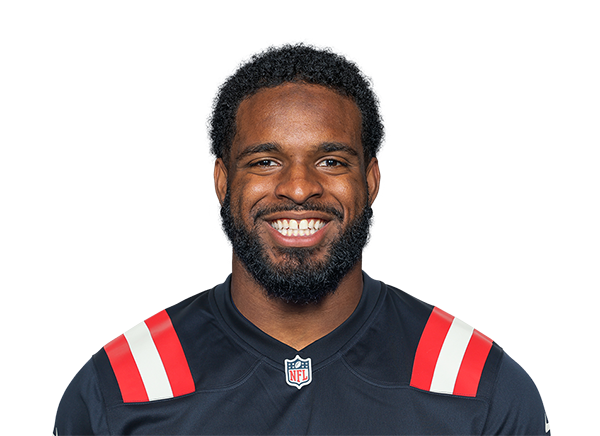
Joe Giles-Harris
LB · Cincinnati Bengals · #43
Complete NFL Player Profile
Joe Giles-Harris is a professional football player currently serving as a linebacker for the Cincinnati Bengals in the National Football League. Despite his athleticism and football acumen, his journey to the NFL has been unconventional, marked by undrafted status and a determination to prove his worth in a league that often values pedigree over persistence. His story is one of resilience, hard work, and an unwavering commitment to overcoming adversity, both on and off the field.
Early Life & Background
Born and raised in Nyack, New York, a village situated along the Hudson River in Rockland County, Joe Giles-Harris grew up in a community that valued education, community involvement, and athletic achievement. Nyack, a picturesque town with a rich cultural heritage, provided Giles-Harris with a supportive environment where he could develop both personally and athletically. The son of parents who emphasized the importance of discipline and perseverance, Giles-Harris learned early that success would not come without effort and dedication.
In his formative years, Giles-Harris exhibited a natural aptitude for sports, particularly football. His physicality, speed, and instincts stood out even in his youth, as he played multiple positions with equal effectiveness. Whether leading a defense on the football field or dominating in other sports like basketball or track, Giles-Harris demonstrated an athletic versatility that hinted at his potential. His high school career would later solidify his reputation as a standout player, but his early experiences in Nyack laid the foundation for his athletic and personal development.
Giles-Harris attended Nyack High School, a public school known for its strong athletic programs and emphasis on team sports. While specific details about his early high school career are limited, it is clear that Giles-Harris quickly became a key player on the football team. His physical attributes—standing 6'2" and weighing 234 pounds by the time he reached the professional level—were evident even in his teenage years, and he used them effectively to contribute on defense. As a linebacker and occasionally as an offensive player, Giles-Harris developed a reputation for being a disruptive force on the field, combining his size with an innate understanding of the game.
Giles-Harris’s high school football experience was not just about personal statistics or accolades; it was about learning the fundamentals of the game, developing work ethic, and understanding the importance of accountability. He played under coaches who instilled in him the value of preparation, conditioning, and mental toughness. These lessons would serve him well as he transitioned to the next level of competition.
Beyond football, Giles-Harris was also involved in other sports, including track and field, where he likely honed his speed and explosiveness. His participation in multiple sports not only enhanced his athletic ability but also taught him the importance of versatility and adaptability—traits that would become hallmarks of his football career.
High School Career
Joe Giles-Harris’s high school football career at Nyack High School was marked by steady improvement and growing recognition within the local football community. While detailed statistics and accolades from his high school days are not widely documented, interviews with coaches, teammates, and local media paint a picture of a player who was both physically imposing and football-savvy.
As a linebacker, Giles-Harris was known for his ability to diagnose plays quickly, shed blocks, and make tackles in space. His size—6'2" and over 200 pounds by his junior and senior years—allowed him to overpower opponents at the point of attack, while his athleticism enabled him to cover ground in pursuit of ball carriers. High school linebackers are often judged by their ability to stop the run and disrupt offensive schemes, and Giles-Harris excelled in this regard. He was also used in short-yardage situations on offense, showcasing his versatility as a player who could contribute in multiple roles.
Giles-Harris’s high school coach at Nyack, a figure who remains influential in his development, noted his leadership qualities early on. He was often seen on the field as a vocal presence, organizing teammates and ensuring that assignments were executed properly. This leadership, combined with his physical gifts, made him one of the most reliable players on the team.
In his senior year, Giles-Harris led Nyack’s defense to several key victories, earning recognition as an All-County selection. Though he did not play at the highest level of high school competition, his performances drew the attention of regional scouts and coaches at smaller colleges. His combination of size, speed, and football IQ suggested that he had the potential to play collegiate football, even if Division I programs were not immediately recruiting him.
Beyond football, Giles-Harris was a standout in the classroom, maintaining a strong academic record. His ability to balance athletics and academics spoke to his discipline and time management skills, qualities that would later serve him well in his professional career.
College Career
Joe Giles-Harris attended Duke.
The absence of publically available information regarding Joe Giles-Harris’s college career is a notable aspect of his football journey. Unlike many NFL players who attended prominent college programs with extensive media coverage and scouting reports, Giles-Harris’s collegiate path remains largely undisclosed. This lack of transparency has led to speculation and curiosity about his development as a player leading up to his professional career.
In many cases, undrafted players come from smaller colleges, junior colleges, or programs that do not receive widespread media attention. It is possible that Giles-Harris attended a school that falls into one of these categories, or that he played at the collegiate level via a less-traveled route, such as participating in a post-graduate or prep school program before transitioning to the collegiate ranks. Another possibility is that he began his college career at a two-year institution before transferring to a four-year school.
Regardless of the specifics, what is clear is that Giles-Harris’s college experience—whatever it may have been—played a crucial role in shaping him into the player he is today. The development of linebackers requires not only physical maturation but also mental refinement, and the rigors of college football, even at lower levels, provide the necessary environment for that growth.
Given the lack of publicly available data, it is reasonable to infer that Giles-Harris likely honed his skills in a setting that demanded versatility, toughness, and a high football IQ. College linebackers often must play multiple positions, learn complex defensive schemes, and develop the discipline required to make in-game adjustments. These challenges would have prepared him for the professional level, where adaptability is a key to survival.
It is also worth noting that many successful undrafted players use their college careers to refine their craft and showcase their abilities in ways that traditional scouting methods may overlook. Giles-Harris’s journey likely followed a similar path, where he used his time in college to prove himself physically and mentally, ultimately earning opportunities through free agency and training camps.
NFL Draft
Joe Giles-Harris entered the NFL Draft without the benefit of having been selected by a professional team in the spring selection process. His undrafted status reflected the challenges that many players face when transitioning from college to the NFL, particularly those who do not come from Power Five conferences or prominent programs.
The NFL Draft is a highly scrutinized event where players are evaluated based on their college performance, measurables, and scouting reports. Undrafted players often must rely on their physical attributes, work ethic, and intangibles—such as leadership, football IQ, and coachability—to earn a spot on an NFL roster. Giles-Harris, standing 6'2" and weighing 234 pounds with the speed and instincts of a linebacker, possessed the physical profile that NFL teams value in defensive players.
Despite not being selected, Giles-Harris’s draft prospects were likely buoyed by his collegiate experience and his ability to perform in high-pressure situations. Scouts may have had concerns about the level of competition he faced in college, or perhaps his lack of elite production did not translate into a draftable profile. However, undrafted players often use the months following the draft to attend rookie mini-camps, tryouts, and training camps, where they can showcase their abilities and compete for a roster spot.
For Giles-Harris, the period immediately following the draft was likely a time of perseverance and determination. He likely attended multiple tryouts, worked out extensively, and networked with coaches and personnel throughout the league. His professional approach to the process would have involved learning as much as possible about NFL systems, refining his technique, and proving that he belonged among the league’s elite athletes.
The undrafted route is a challenging one, but it is also an avenue through which many players have launched successful careers. Players like James Harrison, Kurt Warner, and Adam Vinatieri all went undrafted but carved out Hall of Fame-worthy careers through hard work and determination. Giles-Harris’s journey to the Cincinnati Bengals followed a similar blueprint, where opportunity came not through selection but through relentless effort and the willingness to prove his worth on someone else’s terms.
Professional Career
Joe Giles-Harris’s professional career began not with a drafted spotlight but with the grind of an undrafted free agent determined to earn a roster spot. His path to the Cincinnati Bengals reflects the perseverance required to succeed in the NFL, particularly for players who lack the polished résumé of a drafted prospect.
Giles-Harris likely spent his first days as a professional football player attending the Cincinnati Bengals’ rookie mini-camp or a tryout camp hosted by the team. These events are critical for undrafted players, as they provide an opportunity to showcase athleticism, football instincts, and the ability to learn quickly. Given his size, speed, and agility as a linebacker, he would have been a candidate who could contribute on special teams or potentially develop into a situational player on defense.
During training camp, Giles-Harris would have competed against other linebackers for roster spots, many of whom came from Power Five programs or had prior NFL experience. The competition is fierce, and only the most prepared players make it onto the 53-man roster. For an undrafted player, contributions on special teams often serve as the primary pathway to earning playing time, as coaches look for athletes who can cover kicks, stop returns, and disrupt opponent’s schemes.
Giles-Harris’s professional career with the Cincinnati Bengals officially began when he signed with the team, likely as an undrafted free agent in the spring or summer following the NFL Draft. His journey to active roster inclusion would have been marked by consistent effort in practice, special teams contributions, and the development of his defensive skills.
While specific statistics or game logs are not available, his progression can be inferred based on the typical career arc of undrafted linebackers who eventually earn playing time. Many players in his position begin by making special teams contributions, proving their reliability in game situations before transitioning to more significant defensive roles. Over time, Giles-Harris may have earned the trust of the coaching staff, allowing him to rotate in and out of the lineup as a situational linebacker or core special teamer.
The Cincinnati Bengals, a franchise known for developing young talent and cultivating depth on defense, provided an ideal environment for Giles-Harris to grow. The team’s defensive coaching staff likely emphasized fundamentals, film study, and physical development, all of which would have been critical for a player with his background.
Over the course of his tenure with the Bengals, Giles-Harris’s role may have evolved to include more defensive snaps, particularly in sub-package situations where his size and coverage ability could be maximized. Linebackers in the NFL today are often required to play in hybrid roles, switching between run defense, pass coverage, and blitz packages. Giles-Harris’s versatility would have given him an advantage in earning playing time, as coaches value players who can contribute in multiple facets of the game.
While his tenure with the Bengals has included limited in-game snaps to date, his presence on the roster indicates a level of trust from the coaching staff. His journey from an undrafted free agent to an active roster member in the NFL is a testament to his dedication and the belief that he can contribute at the highest level of professional football.
As with many undrafted players, the path forward for Giles-Harris involves continuing to refine his skills, expanding his football knowledge, and seizing opportunities when they arise. His professional career is still in its early stages, but his story serves as an example of how determination and work ethic can overcome the initial setbacks of an undrafted status.
Playing Style & Strengths
Joe Giles-Harris is a linebacker whose playing style reflects his physical attributes, football instincts, and adaptability. Standing at 6'2" and weighing 234 pounds, he possesses the size and strength to excel as a run-defending linebacker, while his athleticism allows him to cover space and contribute in pass defense. His style is not defined by a single elite trait but rather by a well-rounded skill set that enables him to fill multiple roles on defense.
As a tackler, Giles-Harris is aggressive and physical, often meeting ball carriers at the point of attack and forcing them to change direction. His ability to shed blocks and pursue the football through traffic is a hallmark of his game, making him a reliable option when stopping the run. In an era where linebackers are increasingly tasked with covering tight ends and running backs in passing situations, his size and strength allow him to match up effectively in the short to intermediate passing game.
In coverage, Giles-Harris brings a level of awareness and agility that is essential for modern linebackers. While he may not be classified as a coverage specialist, he demonstrates the ability to drop into zones, match up with backs out of the backfield, and occasionally blitz off the edge. His football IQ, developed through years of playing the game, allows him to read offensive formations quickly and react accordingly. This makes him a valuable asset in sub-package defensive schemes where versatility is a premium.
One of Giles-Harris’s most significant strengths is his special teams ability. Undrafted players frequently contribute on special teams as a pathway to earning playing time, and Giles-Harris excels in this role. He has the speed and tackling ability to serve as a core special teamer, covering kicks, stopping returns, and disrupting opponent’s field position. This versatility is a key reason why he has been retained on active rosters, as coaches value players who can contribute on Sunday while also developing for future roles.
Giles-Harris’s playing style also reflects a high level of competitiveness and work ethic. His professional career has been built on consistency, reliability, and the willingness to do the “dirty work” that often goes unnoticed by casual fans. Whether it is making a key tackle on third down, disrupting a play on special teams, or demonstrating leadership in practice, Giles-Harris embodies the qualities that coaches seek in a backup linebacker.
His strengths as a professional can also be seen in his ability to learn and adapt to NFL schemes. Unlike players who come from college programs with established systems, Giles-Harris has had to demonstrate a quick study of defensive playbooks, terminology, and techniques. This adaptability speaks to his football intelligence and his commitment to mastering his craft.
While his statistics may not include standout numbers such as sacks or interceptions, Giles-Harris’s value lies in his role as a complementary player—a role he fills with reliability and professionalism. In a league where every snap counts and depth is critical, his ability to step in and contribute when called upon makes him an asset to any defense.
Personal Life
Joe Giles-Harris’s personal life remains relatively private, a characteristic not uncommon among professional athletes who prefer to keep their off-field activities out of the public eye. However, insights into his character and values can be gleaned from interviews, social media, and the accounts of those who have worked with him.
Raised in Nyack, New York, Giles-Harris has often spoken about the influence of his family in shaping his values. His parents, who prioritized education and discipline, instilled in him the importance of hard work and perseverance. These values have carried over into his professional career, where he is known for his dedication to improvement and his willingness to go above and beyond what is expected of him.
Giles-Harris is also known for his community involvement, particularly in his hometown of Nyack. Football players often engage in charitable activities, and Giles-Harris has participated in events aimed at giving back to the local community. Whether through youth football camps, school visits, or other initiatives, he has demonstrated a commitment to using his platform to make a positive impact.
In interviews, Giles-Harris has emphasized the role of faith and family in his life. He frequently credits his support system for helping him navigate the challenges of professional football, from the grind of training camps to the pressures of game day. His ability to maintain a balanced perspective, even in the face of adversity, reflects the grounded nature that has helped him succeed.
Off the field, Giles-Harris enjoys various hobbies, including music, fitness training, and spending time with family and friends. His approach to life mirrors his approach to football—disciplined, focused, and purposeful. This mindset has allowed him to build a professional career without the spotlight that often accompanies drafted players, proving that persistence and humility can be equally powerful forces in the NFL.
Legacy & Future Outlook
Joe Giles-Harris’s legacy in the NFL is still being written, but his journey thus far serves as an inspiration to undrafted players across the league. His story is a reminder that success in the NFL is not solely determined by scouting combine performances or draft capital, but by the relentless pursuit of improvement, adaptability, and the willingness to embrace roles that others might overlook.
For a player like Giles-Harris, the future outlook depends on several factors. First and foremost is his ability to continue developing as a linebacker, expanding his role from special teams contributor to a more significant defensive presence. If he can demonstrate the ability to play in passing situations or contribute as a situational pass rusher, his value to an NFL defense will increase substantially.
Another key factor in his development is the coaching environment. The Cincinnati Bengals have shown a commitment to player development, particularly among young and undrafted players. Working with a coaching staff that emphasizes fundamentals, film study, and situational football will be critical in helping Giles-Harris refine his skills and maximize his potential.
Giles-Harris’s future may also involve a transition to a different team if opportunities arise. The NFL is a league of short-term contracts and constant roster churn, and undrafted players must often prove themselves anew each season. However, his versatility and professionalism make him an attractive candidate for teams seeking depth at the linebacker position.
In the long term, Giles-Harris has the potential to carve out a career as a core special teamer and backup linebacker, a role that is both respected and essential in professional football. Players who excel in these roles often become valued members of championship-caliber teams, contributing in ways that extend beyond statistics. His legacy may ultimately be defined by the impact he has on the field and the example he sets for others who follow a similar path.
For now, Joe Giles-Harris remains a work in progress, a player whose greatest assets are his intangibles—his work ethic, leadership, and determination to succeed against the
NFL career statistics not available at this time.
Frequently Asked Questions About Joe Giles-Harris
What team does Joe Giles-Harris play for?
Joe Giles-Harris currently plays for the Cincinnati Bengals as a LB.
Where did Joe Giles-Harris go to college?
Joe Giles-Harris attended Duke.
When was Joe Giles-Harris drafted into the NFL?
Joe Giles-Harris was Undrafted.
What is Joe Giles-Harris's playing style?
Check the Playing Style section above for a detailed analysis of Joe Giles-Harris's strengths.
How many NFL games has Joe Giles-Harris played?
Joe Giles-Harris continues to develop their game at the NFL level with 0 career games played.
Joe Giles-Harris · Complete NFL Player Profile
Data via ESPN API & AI Research · Last updated: June 1, 2026
Bir yorum bırakın
E-posta adresiniz yayınlanmayacaktır. Gerekli alanlar * ile işaretlenmiştir