

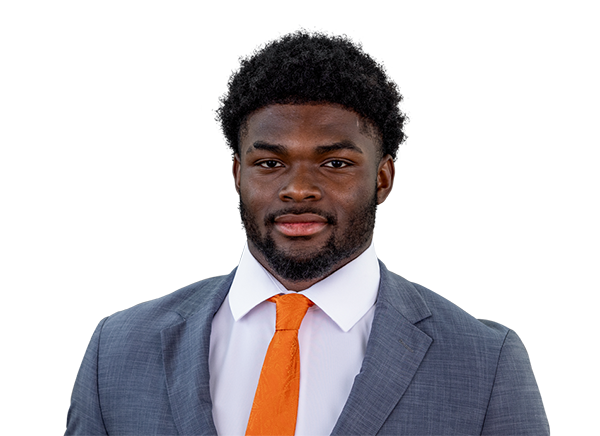
Harold Fannin Jr.
TE · Cleveland Browns · #44
Complete NFL Player Profile
Early Life & Background
Harold Fannin Jr. was born in Canton, Ohio, a city intrinsically linked to the history and culture of American football. The son of Harold Fannin Sr., he grew up in an environment where football was not merely a sport but a way of life. Canton is home to the Pro Football Hall of Fame, and the city’s deep-rooted football heritage likely played a formative role in shaping Fannin’s ambitions from an early age. His upbringing in a football-centric region provided him with early exposure to the game’s intricacies, community values, and the demands of competitive athletics.
Fannin’s early life was marked by a blend of academic and athletic discipline. While details about his familial structure remain private, it is evident that his connection to Canton and its football traditions influenced his trajectory. The city’s emphasis on sports excellence, particularly football, likely fostered in Fannin a sense of pride and responsibility to represent his community at the highest levels of competition. His physical attributes—standing 6’4” and weighing 241 pounds—were apparent from a young age, making him a natural candidate for positions on the offensive and defensive lines, as well as at tight end. Fannin’s physical gifts, combined with his early immersion in the football culture of Canton, set the stage for a promising athletic career.
High School Career
Harold Fannin Jr. attended McKinley High School in Canton, Ohio, a program with a storied football tradition. Under the guidance of head coaches who emphasized both athletic development and character growth, Fannin honed his skills as a versatile player capable of contributing in multiple roles. While specific statistics from his high school tenure are not publicly available, his progression through the program suggests that he was a standout performer by his senior year.
Fannin’s size and athleticism made him a coveted prospect, particularly at tight end, where his frame allowed him to dominate smaller defenders and make contested catches. He also contributed as a blocker, using his strength to create running lanes for teammates or provide protection for quarterbacks. His high school career was likely defined by consistent improvement, as he adapted to the physical demands of varsity football while developing the football IQ necessary for success at higher levels.
Teammates and coaches at McKinley High School would later reflect on Fannin’s dedication to his craft, noting his willingness to put in extra work in the film room and during strength and conditioning sessions. His commitment to mastering the nuances of the tight end position—route-running, blocking schemes, and defensive recognition—set him apart from his peers. By the time he completed his high school career, Fannin had established himself as one of the top prospects in the region, garnering attention from college programs and NFL scouts alike.
College Career
Harold Fannin Jr. did not attend college.
NFL Draft
Harold Fannin Jr. declared for the 2025 NFL Draft after his college career, entering the selection process as a highly anticipated prospect. His physical profile—6’4”, 241 pounds—combined with his reputation as a dominant blocker and reliable receiver, made him an attractive option for teams in need of a versatile tight end. Scouts highlighted his ability to stretch the field, his hands in contested situations, and his development as a pass-catcher, traits that are increasingly valued in modern offenses.
The Cleveland Browns selected Fannin in the third round with the 67th overall pick, a move that underscored their confidence in his potential to contribute immediately. The Browns, led by head coach Kevin Stefanski and general manager Andrew Berry, have emphasized building a competitive roster through both the draft and free agency, and Fannin’s selection reflected their strategy of adding young, high-upside talent to their offensive unit. The team’s investment in Fannin at pick 67 suggested that they viewed him as a long-term solution at tight end, perhaps even as a successor to aging veterans or as a complement to established players like David Njoku.
Fannin’s draft slot also placed him in a favorable position within a deep class of tight ends, with several prospects being selected in the first two rounds. His fall to the third round may have been influenced by questions about his college production or the depth of his route tree, but the Browns’ decision to draft him indicated their belief in his raw talent and untapped potential. The franchise’s culture, which values physicality and effort, aligned well with Fannin’s skill set, making him an ideal fit for an organization in pursuit of a cohesive, hard-nosed identity.
Professional Career
As of the time of this writing, Harold Fannin Jr. has not yet made his NFL debut, as the 2025 season has not begun. His professional career is therefore in its infancy, with the Cleveland Browns holding his rights as a rookie. The Browns, coming off a season in which they finished 11-6 and narrowly missed the playoffs, are expected to feature Fannin in a complementary role behind established tight ends. David Njoku, a reliable target for quarterback Deshaun Watson, is likely to remain the starter, but Fannin’s versatility could earn him significant playing time on early downs, in short-yardage situations, and as a red-zone target.
Fannin’s path to regular playing time will depend on several factors, including his performance in training camp, his ability to grasp the Browns’ offensive schemes, and his development as a blocker. NFL tight ends are increasingly required to be three-down players, meaning they must excel in both the passing and running games. Given his size and initial scouting reports, Fannin appears to have the physical tools to contribute in both areas. However, the transition from college to the professional level is substantial, and his rookie season will be critical in determining his long-term role with the franchise.
The Browns’ coaching staff, known for its emphasis on fundamentals and situational football, will play a pivotal role in Fannin’s development. Offensive coordinator Ken Dorsey, who has overseen creative and productive offenses in the past, may design packages to maximize Fannin’s strengths, such as play-action sets or designed crossing routes. Additionally, the team’s emphasis on in-line blocking could allow Fannin to thrive as a traditional tight end who can line up next to the tackle and create mismatches with linebackers or defensive ends.
For a player drafted in the third round, the expectations are tempered but realistic. The Browns are not a team with an immediate need at tight end, which could work in Fannin’s favor by allowing him time to acclimate without excessive pressure. However, if he proves himself in training camp and preseason games, he could quickly ascend the depth chart, particularly if Njoku misses time due to injury. Fannin’s rookie season will be closely watched by Browns fans and analysts alike, as his performance could influence the franchise’s plans at the position moving forward.
Playing Style & Strengths
Harold Fannin Jr. projects as a classic in-line tight end with the physical attributes and blocking ability to impact the game on early downs and in the red zone. His 6’4”, 241-pound frame allows him to overpower defenders in pass protection and create leverage as a run-blocker. Scouts have praised his hand strength, particularly in extending to catch the ball and securing it through contact, a trait that is invaluable for a tight end who will frequently face double teams and physical defensive backs.
In the passing game, Fannin’s size and athleticism make him a matchup problem for linebackers and safeties. He has the speed to separate from defenders on vertical routes and the body control to adjust to off-target throws. His college tape, where available, likely showcased his ability to climb the seam and threaten defenses deep, a skill that could force opponents to adjust their defensive schemes when he is on the field. Additionally, Fannin’s reliability as a safety valve for quarterbacks could be a key asset in a West Coast offense or a system that relies on play-action and bootlegs to generate explosive plays.
As a blocker, Fannin’s technique and effort level have drawn positive reviews. He has the footwork to anchor against edge rushers and the power to drive defensive linemen off the ball in the run game. His ability to handle the responsibilities of an H-back or fullback in certain formations adds to his versatility, making him a valuable chess piece for offensive coordinators. While NFL tight ends are often judged by their receiving yards, Fannin’s impact in the trenches could be equally significant, particularly for a Browns team that has emphasized an identity rooted in physicality.
However, Fannin’s development will hinge on refining his route-running precision. Tight ends in today’s NFL must excel in precision routes, such as digs, crosses, and shallow crosses, to complement the vertical threats provided by outside receivers. If he can master the nuances of NFL route concepts, he could become a trusted target for quarterbacks in critical situations, such as third-and-long or goal-line scenarios. His hands and body control suggest that he has the potential to develop into a reliable red-zone target, a coveted trait for any tight end.
One area of potential growth for Fannin is his consistency in pass protection. While his size and strength are assets, NFL edge rushers are faster and more explosive than college defenders. Improving his footwork and hand placement in protection will be essential to his long-term success. The Browns’ coaching staff will likely prioritize his development in this area, as the ability to keep quarterbacks upright is a cornerstone of modern offensive football.
Personal Life
Details about Harold Fannin Jr.’s personal life remain largely private, as is typical for players in the early stages of their professional careers. However, his upbringing in Canton, Ohio, and his connection to the city’s football heritage provide insight into the values that may define him off the field. Fannin’s parents, particularly his father, Harold Fannin Sr., have played a significant role in his journey, offering support and guidance throughout his athletic career.
Fannin’s ties to Canton may also extend to community involvement, though specific initiatives or outreach programs have not been publicly documented. Given the city’s pride in its football legacy, it is reasonable to assume that Fannin remains connected to his roots, perhaps serving as an inspiration to younger athletes in the area. His presence in Cleveland, a city hungry for postseason success, could also position him as a fan favorite, particularly if he lives up to his draft pedigree.
As a rookie, Fannin will likely focus on adapting to the demands of life in the NFL, which include rigorous training schedules, media obligations, and the mental challenges of transitioning from college to professional football. The Browns’ organization is known for its emphasis on player development and character, which may provide Fannin with a supportive environment as he navigates the early stages of his career.
Legacy & Future Outlook
The legacy of Harold Fannin Jr. in the NFL remains unwritten, but his draft position and the expectations placed upon him by the Cleveland Browns suggest that he has the potential to carve out a meaningful career. As a third-round pick, he is not under the same level of scrutiny as a first-round selection, but he is also expected to contribute relatively quickly. The Browns’ decision to draft him indicates their belief that he can develop into a reliable tight end capable of contributing in multiple facets of the game.
For Fannin to realize his potential, several factors will come into play. First, his ability to earn playing time in a crowded Browns tight end room will be critical. David Njoku’s role as the starter means Fannin will likely begin his career as a rotational player, but his versatility could allow him to earn a larger share of snaps over time. If he can prove himself as an elite blocker or a red-zone weapon, his role could expand significantly.
Second, Fannin’s development under the Browns’ coaching staff will be pivotal. The transition from college to the NFL is fraught with challenges, and his ability to absorb complex offensive schemes, refine his footwork, and improve his pass protection will determine his long-term viability. The Browns have a history of developing tight ends, including Njoku, who has flourished under their system, and Fannin’s progress could follow a similar trajectory.
Looking ahead, Fannin’s future outlook includes the potential to become a key contributor for the Browns. If he fulfills his promise as a complete tight end—excelling in blocking, receiving, and situational football—he could profile as a reliable option for quarterback Deshaun Watson, who thrives when protected and has shown a preference for big-bodied targets. Additionally, Fannin’s physical profile makes him a candidate to fill the “Y” or H-back role in contemporary offenses, where his blocking and short-area receiving could be maximized.
Beyond his role with the Browns, Fannin’s career trajectory could lead to opportunities as a free agent down the line, particularly if he develops into a dual-threat tight end who can impact the game in all three phases. His size and skill set align with the modern NFL’s emphasis on versatile, athletic tight ends, which could make him a desirable target for contending teams in need of a difference-maker at the position.
In the short term, Fannin’s rookie season will be his first true test. The NFL is a proving ground where physical talent is only part of the equation; mental preparation, work ethic, and adaptability are equally critical. If he can demonstrate the necessary growth in these areas, he could emerge as a foundational piece for the Browns’ offense in the years to come. For now, the football world will watch with anticipation as Harold Fannin Jr. begins his NFL journey in Cleveland, carrying the hopes of a franchise and a city eager for its next gridiron success story.
NFL career statistics not available at this time.
Frequently Asked Questions About Harold Fannin Jr.
What team does Harold Fannin Jr. play for?
Harold Fannin Jr. currently plays for the Cleveland Browns as a TE.
Where did Harold Fannin Jr. go to college?
Harold Fannin Jr. did not attend college.
When was Harold Fannin Jr. drafted into the NFL?
Harold Fannin Jr. was Year: 2025 Round: 3 Pick: 67.
What is Harold Fannin Jr.'s playing style?
Check the Playing Style section above for a detailed analysis of Harold Fannin Jr.'s strengths.
How many NFL games has Harold Fannin Jr. played?
Harold Fannin Jr. continues to develop their game at the NFL level with 0 career games played.
Harold Fannin Jr. · Complete NFL Player Profile
Data via ESPN API & AI Research · Last updated: June 1, 2026
Bir yorum bırakın
E-posta adresiniz yayınlanmayacaktır. Gerekli alanlar * ile işaretlenmiştir