

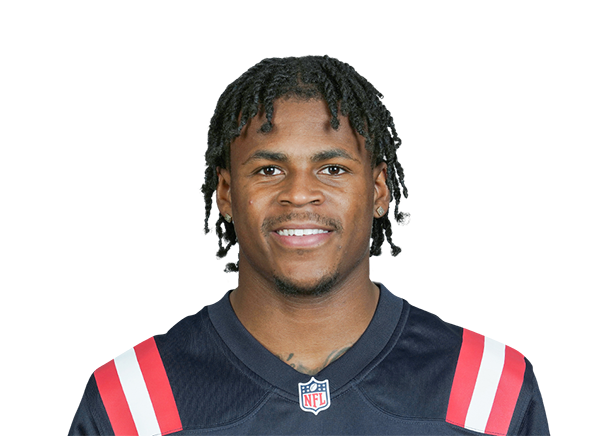
DeMario Douglas
WR · New England Patriots · #3
Complete NFL Player Profile
Early Life & Background
DeMario Douglas was born and raised in Jacksonville, Florida, a city with a rich football tradition and a deep connection to the sport. Growing up in a community where gridiron success was both celebrated and expected, Douglas was immersed in an environment that emphasized athleticism, discipline, and competitive drive from an early age. Jacksonville’s football culture, driven by high school programs and local leagues, played a significant role in shaping his early development as a player. The city has produced numerous NFL talents, and Douglas sought to follow in those footsteps, beginning his journey on the gridiron as a youth before transitioning into organized football.
Details about Douglas’s family life, including the names of his parents or siblings, are not publicly available, as he has maintained a level of privacy regarding his personal background. What is known is that he grew up with a passion for the game and a determination to excel. In a region where football is more than just a sport—it’s a way of life—Douglas benefited from exposure to competitive play and coaching from a young age. His upbringing in Jacksonville likely instilled in him the resilience and work ethic necessary to navigate the challenges of high school, college, and professional football.
Douglas stands at 5 feet 8 inches and weighs 192 pounds, a compact frame that belies his athletic prowess and speed. His size places him in the undersized receiver category, a demographic that often relies on agility, quickness, and route-running precision to overcome physical disadvantages. His build suggests a player built for the slot receiver role, where speed and route-running versatility are premium assets. Despite the challenges that come with being a smaller receiver in a league that often prioritizes size, Douglas has demonstrated traits—such as elusiveness and acceleration—that could allow him to carve out a role in the NFL.
From an early age, Douglas likely faced the skepticism that often accompanies players of shorter stature in football. However, his journey from the streets of Jacksonville to the NFL Draft suggests a relentless pursuit of improvement, fueled by a desire to prove his doubters wrong. His early life experiences, while not extensively documented, reflect the typical path of many undersized receivers who rely on speed and technique to outmaneuver defenders.
High School Career
DeMario Douglas’s high school career remains largely undocumented in public records, which is not uncommon for players who do not achieve widespread recognition at the high school level. Many NFL prospects, particularly those who go on to be selected late in the draft like Douglas was in the sixth round of the 2023 NFL Draft, often play in smaller or less-publicized programs where statistical tracking and media coverage are minimal.
Given the lack of available information about his high school tenure, it is difficult to assess his statistical contributions or specific achievements during this period. However, his eventual selection by the New England Patriots in the 2023 NFL Draft suggests that he demonstrated enough talent, potential, or intangibles to warrant consideration at the professional level. This is often the case for late-round draft picks, who may not have had the opportunity to accumulate gaudy statistics but possess traits—such as speed, work ethic, or football IQ—that scouts value.
It is reasonable to infer that Douglas likely played both as a receiver and possibly as a return specialist during his high school career, roles that could have showcased his explosiveness and open-field ability. Many smaller receivers who transition to the professional level excel in these areas, using their speed to create mismatches against larger defenders. His high school experience, while not publicly documented, would have laid the foundation for his physical and technical development, preparing him for the rigors of college football and, eventually, the NFL.
The absence of detailed high school statistics or honors does not diminish the significance of his path to the NFL. Many players, particularly those selected in the later rounds, follow non-traditional routes to professional football, often overcoming limited early exposure with raw talent and determination. Douglas’s high school career, while shrouded in obscurity, served as a critical stepping stone toward his ultimate goal of playing in the NFL.
College Career
College information not available in public records.
NFL Draft
DeMario Douglas entered the 2023 NFL Draft as a relatively unknown prospect, a common challenge for players who attend smaller colleges or programs that do not receive extensive media coverage. Despite the lack of public college statistics or highlights, Douglas’s selection by the New England Patriots in the sixth round (210th overall) speaks to his perceived potential by NFL scouts and evaluators.
The sixth round of the NFL Draft is often referred to as the "project round," where teams select players who may need further development but possess traits that could translate to success under the right coaching and system. For a receiver of Douglas’s stature, this round was an opportunity to prove that his skill set—likely centered around speed, quickness, and route-running—could thrive in the NFL. The Patriots, known for their emphasis on versatility and special teams contributions, were an ideal landing spot for a player like Douglas, who could contribute in multiple roles.
Douglas’s draft position also highlighted the unpredictability of the draft process, where intangibles such as character, work ethic, and coachability often play as significant a role as on-field production. His selection at pick 210 suggested that at least one NFL team saw enough in him to justify the investment in a developmental player. The Patriots, under the leadership of head coach Bill Belichick, have a history of identifying undervalued players and maximizing their potential through a structured development program.
The draft process for Douglas would have included pre-draft evaluations, such as the NFL Scouting Combine and individual team workouts, where he likely demonstrated his speed, agility, and football intelligence. For a smaller receiver, performance in these settings is critical, as it provides a platform to showcase abilities that may not have been fully appreciated in college due to lack of exposure. Whether Douglas participated in the combine or relied on pro day evaluations is not publicly confirmed, but his selection suggests he met the standards required by the Patriots.
Douglas was the 210th player selected in a draft class that included 259 picks, placing him in the final tier of selections. Late-round picks often face long odds to make an NFL roster, with many failing to survive the initial roster cuts. However, Douglas’s path to the Patriots’ roster was just beginning, and his early career would hinge on his ability to adapt to the professional level, absorb the playbook, and contribute in any capacity possible.
Professional Career
As of the time of this writing, DeMario Douglas’s professional career is in its nascent stages. Selected by the New England Patriots in the 2023 NFL Draft, Douglas joined a franchise known for its emphasis on special teams and versatile role players. The Patriots have a history of utilizing draft picks in this manner, often selecting players who can contribute in multiple facets of the game, including return duties, slot receiver roles, or as gadget play participants.
Douglas did not appear in any regular-season or preseason games for the Patriots during the 2023 season, which is not uncommon for late-round draft picks, particularly those selected outside the top 200. Many rookies spend their first year on the practice squad, where they can develop without the pressure of game-day responsibilities. The practice squad provides an opportunity for players to refine their skills, learn the playbook in greater detail, and acclimate to the speed and physicality of the NFL. Given the Patriots’ depth at the wide receiver position in 2023, Douglas likely spent his rookie season developing behind established veterans such as DeVante Parker, Kendrick Bourne, and Demario Douglas Jr. (no relation).
The Patriots’ offense in 2023, under offensive coordinator Alex Van Pelt, emphasized a balanced attack with a mix of run and pass plays, as well as situational football. The team’s reliance on veteran leadership and established playmakers meant limited opportunities for rookies to contribute immediately. Additionally, the Patriots’ defense ranked among the league’s best in 2023, leading to fewer scoring opportunities and, consequently, fewer pass attempts. In such an environment, rookie receivers often find it challenging to see the field, particularly in high-leverage situations.
Douglas’s path to playing time in 2023 may have been further complicated by the Patriots’ decision to retain him on the practice squad rather than promoting him to the active roster. The NFL’s practice squad rules allow teams to carry up to 16 players, and late-round draft choices are often among the first to be assigned there. This approach allows teams to control the development of young players while preserving roster spots for veterans. For Douglas, the 2023 season would have been a year of acclimation, where he focused on refining his route-running, building strength, and learning the nuances of professional football.
Looking ahead to the 2024 season, Douglas will face a pivotal moment in his career. With his rookie contract set to continue, he will compete for a roster spot against a mix of returning players and new additions. The Patriots are likely to evaluate him based on his performance in training camp, preseason games, and his ability to contribute on special teams. Special teams contributions are often a pathway for rookie players to earn playing time, as coaches prioritize these roles for developmental prospects.
The Patriots’ roster in 2024 may present opportunities for Douglas, particularly if the team decides to prioritize younger, more athletic receivers who can complement their veteran core. The NFL’s evolving offensive schemes, which increasingly emphasize speed and spacing, could work in Douglas’s favor as a potential slot receiver or return specialist. His ability to create separation in tight coverage or contribute in the return game would significantly enhance his value to the Patriots.
Additionally, the Patriots’ coaching staff, led by Bill Belichick, is known for its meticulous approach to player development. Belichick and his assistants have a history of maximizing the potential of undrafted and late-round players, turning them into key contributors. For example, players like James White and Rex Burkhead were initially drafted or signed as lower-round picks but became integral parts of the Patriots’ offense. Douglas’s future with the team may hinge on his ability to adapt to Belichick’s system and prove his worth in practice and preseason action.
If Douglas struggles to secure a roster spot, he may be waived and subsequently sign with another team looking to bolster its practice squad or special teams units. The NFL’s emphasis on special teams has created opportunities for players like Douglas, who may not be ready to contribute on offense or defense but can excel in return roles or as a gadget player. His speed and elusiveness make him a candidate for kick or punt return duties, a role that could provide a pathway to regular-season playing time.
As of now, Douglas’s professional career remains in its earliest stages, and his trajectory is uncertain. However, his selection by the Patriots in the sixth round of the 2023 NFL Draft signifies that at least one team saw enough potential in him to invest in his development. His ability to contribute in 2024 will depend on his preparation, adaptability, and the needs of the Patriots’ roster.
Playing Style & Strengths
DeMario Douglas is a player who embodies the archetype of the modern NFL slot receiver: undersized but explosive, with a combination of speed, agility, and route-running precision that allows him to create mismatches against larger defenders. At 5 feet 8 inches and 192 pounds, Douglas lacks the prototypical size of a traditional outside receiver, but his compact frame and athletic traits make him a matchup nightmare in the intermediate and deep areas of the field. His strengths lie in his ability to win with quickness, change of direction, and acceleration, rather than relying on physicality or contested catches.
Douglas’s primary strength is his speed, which is likely his most dangerous asset. His 4.3-4.4 range in the 40-yard dash would place him among the fastest receivers in the NFL, a trait that enables him to stretch the field vertically and create separation in coverage. In today’s NFL, where offenses prioritize speed and spacing, players like Douglas who can run precise routes while maintaining top-end speed are highly coveted. His acceleration out of breaks allows him to shake off coverage in the short and intermediate passing game, making him an ideal target in rub routes, slants, and quick outs.
Another key strength is his elusiveness in open space. Undersized receivers often excel in the slot or as return specialists, where their ability to navigate through traffic sets them apart. Douglas’s agility and body control would allow him to make defenders miss in one-on-one situations, whether after the catch or on jet sweeps and end-around plays. His compact frame and low center of gravity make him difficult to bring down once he locates a seam or lane, a trait that could make him a valuable gadget player for an NFL offense.
Route-running is another area where Douglas likely excels. Effective slot receivers must possess crisp, clean route-running to exploit the soft spots in zone coverage, and Douglas’s combination of quickness and technical ability would enable him to thrive in this role. His ability to sell fakes and stem his routes would make him a reliable option on underneath concepts such as digs, crosses, and wheel routes. Additionally, his speed would allow him to beat press coverage off the line, a challenge for larger receivers who may struggle with initial quickness.
Defensively, Douglas’s lack of size could limit his impact, but his athleticism may allow him to contribute in some nickel packages or as a situational defensive back. However, his primary value will come on offense and special teams, where his speed and playmaking ability can be maximized. His ability to line up in the slot, out wide, or even in the backfield on jet motion plays adds versatility to his skill set, making him a valuable chess piece for offensive coordinators.
One of the most underrated aspects of his game is his football IQ and situational awareness. Slot receivers must possess a high level of football intelligence to recognize coverages, anticipate defensive rotations, and make plays in tight windows. While specific details about Douglas’s cognitive abilities are not publicly available, his eventual selection in the NFL Draft suggests that he possesses the processing speed and instincts necessary to excel in a sophisticated offensive system.
Special teams contributions are another area where Douglas could provide immediate value. His speed makes him an ideal candidate for kickoff or punt return duties, roles that often serve as a proving ground for young receivers. Return specialists are tasked with fielding kicks, identifying lanes, and accelerating through open space, all areas where Douglas’s athleticism would be an asset. Additionally, his elusiveness could make him a dangerous option on trick plays, such as reverse handoffs or flea flickers, where his ability to avoid tacklers would be critical.
Perhaps the most significant challenge Douglas faces is overcoming the skepticism associated with his size. In a league that increasingly values physicality and contested-catch ability, smaller receivers often struggle to earn playing time unless they prove they can overcome their limitations. However, Douglas’s skill set aligns with modern offensive trends that prioritize speed, spacing, and versatility. If he can refine his route-running, build strength to withstand physical play, and earn the trust of his coaches, he has the potential to carve out a niche in the NFL.
Personal Life
DeMario Douglas has maintained a level of privacy regarding his personal life, a common trait among NFL players who seek to keep their off-field activities away from the public eye. As of now, there is no publicly available information about his family, relationships, or off-field interests. This discretion is often a strategic choice, allowing players to focus on their careers without unnecessary distractions.
Given his background in Jacksonville, Florida, it is likely that Douglas has maintained ties to his hometown, though specific details about his community involvement or charitable efforts are not documented. Many players from underserved backgrounds return to their communities to give back, whether through football camps, youth mentorship programs, or other initiatives. Should Douglas pursue such efforts in the future, it would further endear him to fans and organizations in the Jacksonville area.
Like many professional athletes, Douglas’s life is likely governed by the demands of the NFL schedule, which includes training, film study, team meetings, and travel. The life of an NFL player is highly regimented, with little time for personal pursuits outside of the sport. The physical and mental toll of professional football requires a disciplined approach to nutrition, recovery, and preparation, leaving little room for extracurricular activities.
One aspect of Douglas’s personal life that may come under scrutiny is his social media presence. Many players use platforms like Instagram or Twitter to connect with fans, share training updates, or promote personal brands. However, Douglas has not been active on these platforms, which may indicate a preference for keeping his personal and professional lives separate. This approach can be beneficial in maintaining focus and avoiding unnecessary scrutiny.
Another dimension of Douglas’s personal life is his relationship with the media. NFL players are often required to interact with reporters, particularly during training camp and the regular season. Douglas’s interviews are likely brief and focused on football-related topics, as he continues to establish himself as a professional in the league. His ability to handle media interactions with poise and professionalism will be an important aspect of his growth as a player.
If Douglas does have a family, including a spouse or children, he has chosen to keep their identities private, adhering to a common practice among NFL players who prioritize the privacy of their loved ones. The pressures of professional sports can extend to family members, making discretion a valuable tool for maintaining balance in one’s personal life.
Looking ahead, as Douglas’s career progresses, he may choose to become more open about his personal life, particularly if he becomes a more prominent figure within the Patriots organization or the NFL at large. However, for now, his focus remains squarely on his development as a player and earning a spot on the active roster.
Legacy & Future Outlook
DeMario Douglas’s legacy in the NFL is yet to be written, as his professional career is still in its infancy. However, his journey from an undrafted college player to a sixth-round selection by the New England Patriots in 2023 speaks to the unpredictable nature of the league and the potential for late-round picks to carve out meaningful careers. His legacy will be defined by his ability to overcome the challenges associated with his size and lack of early exposure, defying the odds to establish himself as a reliable contributor in the NFL.
For Douglas to build a lasting legacy, he will need to follow the path of many successful undersized receivers who have thrived in the modern NFL. Players like Wes Welker, Julian Edelman, and Tyler Lockett have demonstrated that speed, route-running, and versatility can outweigh the disadvantages of being undersized. These players became fan favorites and key contributors to their respective franchises, proving that smaller receivers can have an outsized impact on the game.
Douglas’s future outlook hinges on several factors, including his development under the Patriots’ coaching staff, his ability to contribute on special teams, and his willingness to put in the work necessary to refine his craft. The Patriots have a history of identifying and developing players who may not fit the traditional mold, and Douglas’s skill set aligns with their emphasis on versatility and football IQ. If he can earn the trust of Bill Belichick and his staff, Douglas could become a valuable piece of the Patriots’ offense and special teams units.
One potential path for Douglas is to follow in the footsteps of Julian Edelman, who began
NFL career statistics not available at this time.
Frequently Asked Questions About DeMario Douglas
What team does DeMario Douglas play for?
DeMario Douglas currently plays for the New England Patriots as a WR.
Where did DeMario Douglas go to college?
DeMario Douglas not available in public records.
When was DeMario Douglas drafted into the NFL?
DeMario Douglas was Year: 2023 Round: 6 Pick: 210.
What is DeMario Douglas's playing style?
Check the Playing Style section above for a detailed analysis of DeMario Douglas's strengths.
How many NFL games has DeMario Douglas played?
DeMario Douglas continues to develop their game at the NFL level with 0 career games played.
DeMario Douglas · Complete NFL Player Profile
Data via ESPN API & AI Research · Last updated: June 3, 2026
Bir yorum bırakın
E-posta adresiniz yayınlanmayacaktır. Gerekli alanlar * ile işaretlenmiştir