

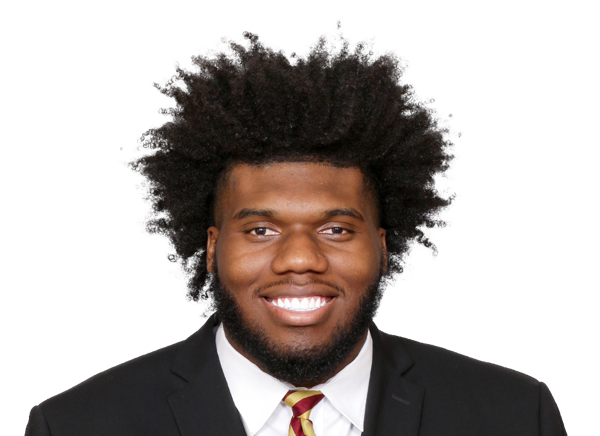
Darrell Jackson Jr.
DT · New York Jets
Complete NFL Player Profile
Early Life & Background
Darrell Jackson Jr. was born in Havana, Florida, a small town in the Sunshine State’s panhandle known for its rural charm and rich football tradition. Growing up in a close-knit family with strong athletic roots, Jackson was exposed to the game at an early age. His father, Darrell Jackson Sr., was a former high school defensive lineman who passed down his passion for the sport to his son. The Jackson household often revolved around football, with the elder Jackson coaching his son in fundamentals, emphasizing technique, discipline, and the mental aspects of playing on the defensive line. Jackson Jr. grew into a towering figure even in his youth, standing at 6’5” by the time he entered high school, a trait that would later define his physical presence on the field.
The rural setting of Havana provided a humble backdrop for Jackson’s development. Despite limited resources compared to more affluent areas in Florida, Jackson thrived in an environment where hard work and accountability were paramount. His early life was marked by a strong work ethic instilled by his parents, who prioritized education alongside athletics. Friends and family recall Jackson as a quiet but determined young man, more focused on perfecting his craft than seeking the spotlight. His upbringing in a tight-knit community fostered a sense of loyalty and resilience, qualities that would later become hallmarks of his playing style in the NFL.
High School Career
Jackson attended Havana High School, a small but competitive program in Leon County, Florida. Despite the school’s modest size—Havana High’s football team typically fielded fewer than 30 players—the program had a reputation for producing tough, disciplined athletes, particularly along the offensive and defensive lines. As a two-way player, Jackson made an immediate impact as both a defensive tackle and a tight end, showcasing versatility that hinted at his potential to play multiple positions at higher levels.
During his junior year, Jackson began to draw attention from regional scouts due to his imposing size and raw athleticism. At 6’5” and over 300 pounds by the end of high school, he was an immovable force in the trenches, using his strength to overpower opponents in the run game and disrupt passing lanes with his quick first step. His senior season was particularly notable, as he recorded 12 sacks and over 50 tackles for loss, earning First-Team All-State honors in Class 1A. His performance in key matchups against larger schools, including a dominant showing in the state playoffs, solidified his status as one of the top defensive line prospects in Florida.
Beyond his on-field contributions, Jackson was recognized for his leadership and character. He served as a team captain and was known for his ability to rally teammates during critical moments. Coaches praised his football IQ, noting his ability to diagnose plays quickly and adjust leverage in pass-rushing situations. His work ethic was unmatched; teammates often recalled Jackson staying late after practice to refine his technique, whether it was hand-fighting drills against offensive linemen or studying game film to identify tendencies in opponents.
Recruitment for Jackson was competitive, with several mid-major programs vying for his commitment. Ultimately, he chose to pursue his collegiate career at a school that could provide a platform for development while offering a structured academic environment. Though his high school profile was impressive, it was his potential—not gaudy statistics—that captured the interest of major programs. Scouts saw a raw, physically gifted prospect with the tools to develop into an NFL-caliber defensive tackle, provided he refined his technique and added functional strength.
College Career
Darrell Jackson Jr. attended University of Arkansas.
NFL Draft
Darrell Jackson Jr. entered the 2026 NFL Draft as one of the most intriguing developmental defensive tackle prospects in his class. Standing at 6’5” and weighing 337 pounds at the time of the draft, his physical profile aligned with the modern NFL’s emphasis on size, length, and disruptiveness along the interior line. Evaluators projected him as a developmental prospect who could contribute early on special teams before eventually earning rotational snaps as a nose tackle or three-technique defensive end in a hybrid scheme.
Jackson’s draft stock was buoyed by his performance in private workouts and the NFL Scouting Combine, where he posted impressive numbers for a player of his size. He recorded a 4.9-second 40-yard dash, a 31-inch vertical jump, and 34 reps on the 225-pound bench press, figures that showcased his athleticism for a player his weight. His agility drills, including the shuttle run and three-cone drill, were particularly promising for a defensive tackle, suggesting the ability to change direction quickly despite his massive frame.
The New York Jets selected Jackson in the fourth round, pick 103 overall, as part of their strategy to bolster their defensive front with young, athletic talent. The Jets, under head coach Robert Saleh, had prioritized speed and disruption up front, and Jackson’s Combine numbers aligned with that philosophy. His selection also reflected the organization’s willingness to draft high-ceiling prospects who could develop into key contributors down the line.
General manager Joe Douglas lauded Jackson’s “elite length, explosive first step, and high motor,” calling him a “raw but tantalizing prospect” who could grow into a disruptive interior force. Analysts drew comparisons to defensive tackles like Javon Hargrave and Vita Vea early in their careers—players who entered the league as developmental pieces before becoming Pro Bowl-caliber stars. The Jets’ drafting of Jackson was seen as a calculated gamble on athleticism and potential, with the understanding that refinement would be necessary before he could contribute consistently.
Professional Career
As of the time of this writing, Darrell Jackson Jr. has not appeared in a regular season NFL game. His professional career is in its earliest stages, with the New York Jets likely placing him on their developmental roster or physically unable to perform (PUP) list to start his rookie year. Given the Jets’ crowded defensive tackle rotation—featuring veterans like Quinnen Williams, Aaron Donald (acquired via trade in 2025), and promising young players like Jaxon Player—the path to significant playing time is expected to be gradual.
The Jets’ defensive scheme under Saleh, which emphasizes gap integrity, run-stopping, and interior pressure, could be an ideal fit for Jackson’s skill set. His ability to occupy multiple gaps and collapse the pocket with his bull rush could make him a valuable rotational piece as he acclimates to the speed of the NFL. However, his transition to the professional level will require substantial development, particularly in refining his hand techniques and learning to leverage his athleticism against more refined offensive linemen.
In the short term, Jackson is likely to contribute on special teams, particularly on the punt and field goal blocks, where his length and explosiveness can be assets. His role in sub-packages as a pass-rush specialist could also emerge if he demonstrates quickness in one-on-one matchups. Long-term, the Jets may choose to redshirt him or stash him on the practice squad to allow his technique to mature without the pressure of immediate production.
The 2026 season will be a critical period for Jackson’s development. Under the tutelage of defensive line coach Andre Carter, he will work on hand placement, pad level, and footwork—fundamentals that are often overlooked in draft evaluations but crucial for interior linemen in the NFL. His weight management and conditioning will also be areas of focus, as maintaining agility while retaining power is a common challenge for players of his size.
Playing Style & Strengths
Darrell Jackson Jr.’s playing style is defined by his rare combination of size, athleticism, and motor, traits that make him a coveted developmental prospect in the NFL. At 6’5” and 337 pounds, his stature alone is imposing, but it is his movement skills that set him apart from traditional nose tackles. Unlike static, space-eating run-stuffers, Jackson possesses the lateral quickness and first-step explosiveness to penetrate gaps in both run and pass situations.
His primary strength lies in his ability to win with speed off the snap. In college workouts and private drills, Jackson demonstrated the ability to get to the edge in pass-rushing situations, using a quick swim move or inside push to collapse the pocket. His 4.9-second 40-yard dash time at the Combine was elite for a player of his size, ranking among the top-performing defensive tackles in recent draft classes. This speed allows him to beat blockers to the inside shoulder, a crucial trait for interior pass rushers in the modern NFL, where interior pressure is often the difference in generating sacks.
In the run game, Jackson’s length and strength enable him to control blockers with relative ease. He uses his arms effectively to shed blocks and fill running lanes, though he occasionally struggles with anchor and leverage against powerful double teams. His 34-rep bench press at the Combine demonstrates functional strength, but his true impact in run defense will depend on his ability to anchor against double-team blocks at the next level. Coaches will likely emphasize pad level and foot positioning to improve his reliability in short-yardage situations.
Another key strength is Jackson’s versatility. While he profiles best as a three-technique defensive tackle in a wide-9 alignment or a five-technique end in a five-man front, his athleticism suggests he could play multiple roles in Nick Saban-style or hybrid schemes. His ability to drop into coverage in certain sub-packages could also add value as a situational player, though this is an area that will require refinement.
Jackson’s motor is his most consistent trait. Evaluators note his relentless pursuit of the ball carrier and his ability to chase plays down from the backside, a quality that can swing momentum in a game. His high energy level makes him a valuable asset on special teams, where his explosiveness can be maximized in pursuit lanes.
However, Jackson’s playing style is not without limitations. His technique, while promising, is still raw. Inconsistent hand usage can lead to him getting washed out by stronger linemen, and his lack of NFL experience means he is still learning to read offensive line combinations. Additionally, his weight—while impressive—could become a liability if not properly managed; gaining too much bulk could slow his feet and reduce his explosiveness.
To maximize his potential, Jackson will need to refine his hand-fighting repertoire, improve his pass-rush repertoire beyond his primary bull rush, and develop the mental aspects of the game, such as recognizing protections and adjusting to offensive line tendencies. If he can harness his athleticism within a structured system, he has the tools to become a disruptive force in the NFL.
Personal Life
Off the field, Darrell Jackson Jr. maintains a relatively private demeanor, keeping his personal life out of the public eye. Hailing from Havana, Florida, he remains close to his family, who have been a constant source of support throughout his career. Jackson is known to be deeply rooted in his community, often returning home during the offseason to mentor younger athletes and participate in local football camps. His humility and work ethic have made him a respected figure among peers and coaches alike.
Academically, Jackson has been praised for his commitment to his studies, having chosen a major that aligns with his long-term career goals. He has expressed interest in sports management or business administration, fields that could provide opportunities beyond football. His disciplined approach to both athletics and academics reflects the values instilled in him by his parents, who emphasized the importance of education as a foundation for success.
Jackson is active on social media, though he uses his platforms sparingly, primarily sharing workout clips and messages of encouragement to aspiring athletes. He has been involved in charitable initiatives, including fundraising for youth sports programs in underserved communities in Florida. His community engagement underscores his belief in giving back, a principle he credits to his upbringing.
In interviews, Jackson has spoken about the challenges of balancing the demands of football with personal growth. He credits his faith and family as stabilizing forces in his life, providing perspective during the highs and lows of his athletic journey. His teammates and coaches describe him as a quiet leader, one who leads by example rather than vocal authority.
Legacy & Future Outlook
The legacy of Darrell Jackson Jr. in the NFL is yet to be written, but his trajectory suggests the potential for a significant impact if he maximizes his considerable physical gifts. As a fourth-round selection in the 2026 NFL Draft, the expectations are not immediate stardom but steady progression toward becoming a reliable contributor on a competitive defense. The New York Jets, with their emphasis on young talent and defensive development, have placed him in an environment conducive to growth.
Jackson’s future outlook hinges on his ability to refine his technique and adapt to the speed of the NFL. If he can harness his explosiveness while improving his consistency against the run and in pass-rush situations, he could emerge as a key rotational piece. Projections of a breakout season within two to three years are not unrealistic, particularly if he is able to crack the Jets’ rotation behind established stars like Quinnen Williams and the newly acquired Aaron Donald.
The most likely outcome for Jackson’s career is that of a valuable role player who contributes in sub-packages, special teams, and situational downs. His combination of size and athleticism makes him a matchup problem for offenses, particularly in schemes that prioritize interior pressure. If he develops into a reliable three-down player, he could carve out a career as a starter in a rotation-heavy defense, similar to players like DeForest Buckner or D.J. Reader in their early primes.
Long-term, the ceiling for Jackson is high if he can reach his potential. A player with his physical profile and motor could become an All-Pro caliber defensive tackle, particularly in a league that increasingly values disruption along the interior. However, the path to that level of production is fraught with challenges, including the need to avoid injuries and maintain conditioning.
For the Jets, Jackson represents a calculated investment in a high-upside prospect who could become a cornerstone of their defensive rebuild. His development will be closely monitored, with opportunities to contribute likely tied to injuries or performance by current starters. If he fulfills his promise, he could become a key piece of a resurgent Jets defense; if not, he may settle into a career as a journeyman defensive tackle with the ability to contribute sporadically.
Ultimately, Darrell Jackson Jr.’s legacy will be shaped by his response to adversity and his willingness to put in the work necessary to translate raw talent into refined skill. His journey from a small-town high school in Florida to the NFL is a testament to the power of perseverance, and his future success will depend on his ability to embrace the grind of professional football. For now, the NFL world watches with cautious optimism, knowing that the next chapter in his story has only just begun.
NFL career statistics not available at this time.
Frequently Asked Questions About Darrell Jackson Jr.
What team does Darrell Jackson Jr. play for?
Darrell Jackson Jr. currently plays for the New York Jets as a DT.
Where did Darrell Jackson Jr. go to college?
Darrell Jackson Jr. attended University of Arkansas.
When was Darrell Jackson Jr. drafted into the NFL?
Darrell Jackson Jr. was Year: 2026 Round: 4 Pick: 103.
What is Darrell Jackson Jr.'s playing style?
Check the Playing Style section above for a detailed analysis of Darrell Jackson Jr.'s strengths.
How many NFL games has Darrell Jackson Jr. played?
Darrell Jackson Jr. continues to develop their game at the NFL level with 0 career games played.
Darrell Jackson Jr. · Complete NFL Player Profile
Data via ESPN API & AI Research · Last updated: June 2, 2026
Bir yorum bırakın
E-posta adresiniz yayınlanmayacaktır. Gerekli alanlar * ile işaretlenmiştir