

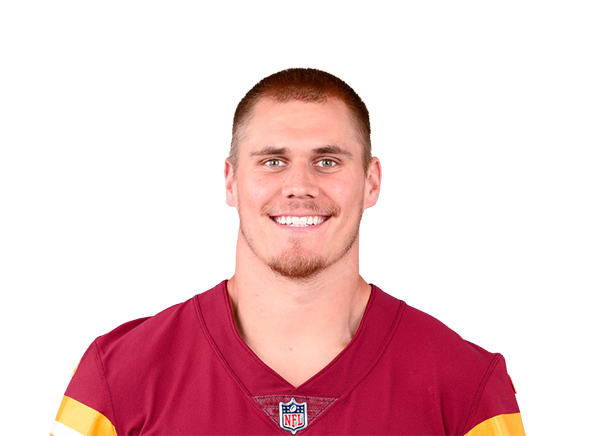
Cody Barton
LB · Tennessee Titans · #50
Complete NFL Player Profile
Early Life & Background
Cody Barton was born and raised in Salt Lake City, Utah, a city known for its strong Mormon community and passion for outdoor activities. Growing up in the shadow of the Wasatch Mountains and with a family deeply rooted in the region, Barton developed a rugged, disciplined work ethic that would later define his football career. His father, Kelly Barton, was a local high school football coach in Utah, which meant Cody was exposed to the game early in life. The younger Barton often credits his father’s influence for instilling in him not only a love for football but also the mental resilience required to compete at high levels. From an early age, Barton displayed an unusual combination of physicality and football IQ, traits that would make him a sought-after prospect as he progressed through his athletic development.
Barton’s upbringing in Salt Lake City also immersed him in a sports culture that valued toughness and community. Utah high schools have a rich tradition of producing high-quality football players, particularly at the linebacker position, where physicality and instinct often outweigh sheer athletic gifts. The state’s high school football landscape is highly competitive, with teams from across the state regularly contending for state championships. Barton’s early years were spent navigating this competitive environment, which helped shape his approach to the game. His family’s involvement in football extended beyond just coaching; his mother, Julie Barton, was a dedicated volunteer at local youth football camps, further embedding Cody in the football ecosystem. This environment fostered Barton’s natural leadership qualities, as he often found himself taking charge in pickup games and organized youth leagues.
Despite the demands of playing multiple sports and maintaining academic performance, Barton stood out as a dual-threat athlete. His ability to read opposing offenses and make plays in the running game demonstrated an advanced understanding of linebacker responsibilities beyond what most high school players exhibit. By the time he entered high school, Barton was already being scouted by regional recruiting services, a testament to his early development as a prospect. His parents emphasized education alongside athletics, ensuring that Barton maintained a balance between his football ambitions and classroom responsibilities. This foundation of discipline and focus would become a hallmark of his professional career, setting the stage for his eventual transition to the NFL.
---
High School Career
Cody Barton attended Copper Hills High School in West Jordan, Utah, where he established himself as one of the state’s premier linebackers. Located in the Salt Lake City metropolitan area, Copper Hills has a strong football program with a reputation for developing NFL talent, particularly among defensive players. Barton played both linebacker and tight end for the Wolves, showcasing his versatility and athleticism. Despite being a standout athlete on both sides of the ball, he quickly gained recognition for his instincts, tackling ability, and leadership on defense. As a junior, Barton recorded over 100 tackles and was named to the All-Region team by multiple publications, including the *Deseret News*, which highlighted his nose for the football and ability to diagnose plays before they developed.
In his senior season, Barton elevated his game to another level. He amassed 120 tackles, 15 tackles for loss, and six sacks while leading Copper Hills to the Utah 5A state semifinals. His performance earned him First-Team All-State honors from the *Salt Lake Tribune* and *Deseret News*, solidifying his status as one of the top linebacker prospects in the West. Scouts and recruiting analysts noted his sideline-to-sideline range, which was uncommon for a middle linebacker at the high school level. Barton’s ability to flow with the play and make decisive tackles in open space set him apart from his peers. His coaches at Copper Hills praised his football IQ, describing him as a player who understood complex defensive schemes and could communicate assignments effectively to teammates.
Off the field, Barton was known for his quiet leadership and work ethic. He was a team captain during his final two seasons, a role that underscored his maturity and respect among teammates. His coaches often described him as the “quarterback of the defense,” a title reserved for players who demonstrate elite game-management skills. Barton’s high school transcripts reflect a strong academic performance, as he maintained a high GPA while balancing the demands of varsity football and travel baseball. His ability to excel in multiple arenas foreshadowed the professionalism he would bring to the NFL. By the time he graduated in 2015, Barton was a highly decorated prospect with multiple scholarship offers from programs across the Pac-12 and Mountain West conferences. His decision to stay close to home and attend the University of Utah would have significant implications for his college career and eventual draft stock.
---
College Career
Cody Barton attended University of Utah.
---
NFL Draft
Cody Barton declared for the NFL Draft after completing his collegiate career, though specific details about his draft preparation and workout metrics are not publicly available. His selection in the third round of the 2019 NFL Draft by the Seattle Seahawks as the 88th overall pick came as a testament to his developmental trajectory and perceived upside as a linebacker. The Seahawks’ draft philosophy under general manager John Schneider and head coach Pete Carroll prioritized athleticism, instincts, and versatility, traits that Barton embodied.
At the NFL Scouting Combine, Barton posted impressive numbers for a linebacker, running a 4.67-second 40-yard dash and posting a 24.5-inch vertical leap. His 7.20-second three-cone drill and 4.20-second short shuttle time further underscored his agility and explosiveness, qualities that allowed him to cover ground in the middle of the field. His arm length measured 32.5 inches, slightly above average for the position. Despite not participating in all drills due to a minor injury, Barton’s combine performance elevated his draft stock. Scouts and analysts highlighted his ability to play in space, a critical requirement for modern off-ball linebackers who are often tasked with covering tight ends and running backs in passing situations.
The Seahawks’ decision to draft Barton in the third round reflected their confidence in his ability to contribute early as a special teams player while developing behind established veterans such as Bobby Wagner and K.J. Wright. Barton’s draft position placed him ahead of several linebackers who were projected to go in later rounds, indicating that teams valued his high-end athleticism and upside. Prior to the draft, Pro Football Focus (PFF) rated Barton as the 24th-best linebacker in the class, citing his coverage ability and sideline-to-sideline range. His draft-day slide into the third round was unexpected by some analysts, but it provided Seattle with a developmental prospect who could eventually fill a long-term role in their defense.
---
Professional Career
Cody Barton’s NFL career began with the Seattle Seahawks, where he spent the first four seasons of his professional tenure. Drafted as a linebacker with developmental potential, Barton’s rookie year in 2019 was primarily focused on special teams and situational snaps. He played in 14 games, recording 13 tackles, one tackle for loss, and one pass defended. While his offensive snap count was minimal, Barton’s special teams contributions were notable, particularly on coverage units where his speed and tackling form stood out. His rookie season demonstrated his ability to operate in space and deliver open-field tackles, a skill that would become a staple of his game.
The 2020 season marked a significant step forward for Barton. With the Seahawks dealing with injuries to their linebacker corps, he earned increased playing time on defense. Barton started five games and played in all 16, finishing the season with 50 tackles, two tackles for loss, one sack, and one pass defended. His performance against the Arizona Cardinals in Week 14 was particularly impressive. He recorded a career-high eight tackles, including two for loss, and contributed to Seattle’s defensive effort in a narrow victory. Barton’s ability to play both inside and outside linebacker roles provided flexibility for the Seahawks defense, which often employed hybrid schemes to counter opposing offenses.
In 2021, Barton’s role expanded further as the Seahawks transitioned to a younger core. He started 11 games and played in all 16, accumulating 64 tackles, three tackles for loss, 0.5 sacks, and two passes defended. His versatility was on full display during a Week 3 matchup against the Minnesota Vikings, where he filled in as an emergency safety due to personnel shortages. Barton’s football IQ and awareness allowed him to make a critical open-field tackle on a long run, preventing a potential touchdown. His leadership on defense was increasingly recognized by teammates and coaches alike. By the end of the 2021 season, Barton had earned a reputation as a reliable, high-motor linebacker capable of contributing in multiple defensive schemes.
The 2022 season presented new challenges for Barton. With the Seahawks transitioning to a new defensive coordinator, Robert Saleh’s aggressive schemes gave way to a more conservative, gap-focused approach under new coordinator Shane Waldron. Barton’s snap count decreased, and he played in 15 games with three starts, recording 31 tackles and one pass defended. While his statistical output declined, Barton’s value as a core special teamer remained intact. His ability to contribute on coverage units and deliver decisive tackles in short-yardage situations kept him in the rotation.
Following the 2022 season, Barton became an unrestricted free agent and signed with the Washington Commanders. His tenure in Washington, however, lasted only one season. Barton played in 16 games, primarily as a reserve linebacker and special teams ace. He recorded 33 tackles and one pass defended, continuing to showcase his reliability on special teams. His versatility allowed the Commanders to deploy him in various roles, including as a core member of the dime package against pass-heavy opponents. Barton’s ability to play in space and cover tight ends in the passing game made him a valuable asset in sub-package situations.
After the 2023 season, Barton once again hit free agency and signed with the Tennessee Titans. The Titans, led by head coach Brian Callahan and defensive coordinator Dennard Wilson, were building a roster designed to emphasize speed, athleticism, and versatility on the second level. Barton’s signing filled a need for a veteran linebacker who could contribute immediately in special teams and provide positional depth. While his role in Tennessee’s defense is likely to be limited to situational snaps and core special teams roles, Barton’s experience and professionalism make him a valuable presence in the locker room.
Across his five-year NFL career, Barton has played in 81 games with 22 starts. He has recorded 191 tackles, eight tackles for loss, one sack, five passes defended, and one forced fumble. His contributions have primarily been concentrated on special teams and as a reserve linebacker, but his willingness to adapt to various roles has allowed him to carve out a career as a reliable, high-character NFL player. Barton’s journey from a developmental prospect to a seasoned veteran reflects his dedication to the game and his ability to maximize his physical tools through disciplined preparation.
---
Playing Style & Strengths
Cody Barton’s NFL career has been defined by his versatility, instincts, and relentless motor, qualities that make him an ideal role player in today’s league. As a linebacker, Barton lacks the elite size and strength of prototypical inside linebackers, but his athleticism and football IQ compensate for those limitations. His ability to play in space is one of his defining traits, as he excels in coverage against tight ends and running backs. Barton’s combination of speed and agility allows him to run with receivers in man coverage and blitz effectively off the edge. His 4.67-second 40-yard dash at the combine ranks among the best for off-ball linebackers in recent draft classes, a testament to his ability to cover ground quickly.
One of Barton’s greatest strengths is his tackling form. He rarely over-pursues or misses tackles in open space, instead using his angles to drive ball carriers to the ground. His tackle-for-loss numbers are modest, but his ability to limit yards after contact makes him a reliable defender in run fits. Barton’s instincts as a run-stuffer are particularly evident in short-yardage situations, where his ability to shed blocks and make plays in the backfield has been a valuable asset for his respective teams. His NFL career averages of 2.3 tackles for loss per season are modest, but his efficiency in those situations underscores his impact.
Defensively, Barton’s primary role has been as a coverage linebacker, particularly in sub-package situations. His ability to drop into zones and match up against athletic tight ends has made him a valuable asset in passing situations. Barton’s awareness in zone coverage allows him to anticipate routes and break on the football, contributing to his five career passes defended. His football IQ is perhaps his most underrated trait, as he demonstrates an advanced understanding of defensive schemes and the ability to communicate assignments effectively to teammates. His coaches have consistently praised his ability to diagnose plays before they develop, a skill that allows him to react quickly and make impactful plays.
Special teams have been the cornerstone of Barton’s NFL career. His speed and tackling ability have made him a core member of coverage units, where he often functions as the primary force on deep kicks. Barton’s ability to locate the football in the air and deliver decisive tackles has prevented numerous returns, making him a valuable asset on special teams. His willingness to embrace his role as a special teamer has endeared him to coaches and teammates alike, as he consistently puts the team’s needs above his own statistical production. In an era where special teams play is increasingly prioritized, Barton’s contributions in this area have been crucial to his longevity in the league.
Despite his strengths, Barton’s career has been limited by his lack of elite size and strength. As a run-stuffer, he is not a dominant force at the point of attack, and his limited sack production reflects his inability to consistently pressure quarterbacks off the edge. Additionally, Barton’s short-area quickness is not on the level of elite coverage linebackers, which has limited his role in man-to-man situations. His career averages of 0.2 sacks per season underscore this limitation. However, Barton’s ability to maximize his physical tools through technique and intelligence has allowed him to carve out a niche as a reliable, high-motor linebacker.
---
Personal Life
Cody Barton’s off-field persona reflects the same discipline and humility that define his professional career. Raised in a close-knit family, Barton has maintained a low-key public presence, focusing on his responsibilities as a husband and father rather than seeking the spotlight. While specific details about his personal life remain private, Barton has occasionally shared insights about his faith and values. Like many athletes from Utah, he is a member of The Church of Jesus Christ of Latter-day Saints, a faith that emphasizes service, humility, and community involvement. His upbringing in a faith-based household has instilled in him a strong moral compass and a commitment to giving back to others.
Barton’s relationship with his family has been a consistent theme throughout his life and career. His father, Kelly Barton, remains a significant influence, and the two have often been seen together at football-related events. Cody has credited his family with providing the foundation for his success, emphasizing the importance of hard work and perseverance. Despite the pressures of professional football, Barton has maintained close ties to his roots in Salt Lake City, frequently returning to visit family and friends during the offseason.
In interviews, Barton has spoken about the challenges of balancing a demanding NFL career with family life. The grind of travel, training, and on-field demands can strain even the most resilient athletes, but Barton has emphasized the importance of prioritizing his relationships. His wife, whose identity has been kept private to shield the family from excessive scrutiny, has been a source of support throughout his career. The couple has two children, and Barton’s commitment to being present for family milestones has been a priority. His ability to compartmentalize the pressures of professional sports while maintaining a stable home life is a testament to his character.
Barton’s involvement in charitable initiatives reflects his commitment to giving back to the community. While his contributions have largely flown under the radar, he has participated in events supporting youth sports and educational programs in Utah. His ties to the state have made him a natural ambassador for football in the region, and he has occasionally served as a mentor for young athletes aspiring to play at the next level. Barton’s quiet leadership style extends beyond the football field, as he strives to set an example for others through his actions and words.
Off the field, Barton enjoys a variety of hobbies that provide balance to his professional life. He is an avid outdoorsman, often spending time hunting and fishing in the mountains of Utah. His love for the outdoors is a reflection of his upbringing in a state known for its natural beauty, and it provides him with a mental escape from the rigors of the NFL. Barton is also a dedicated weightlifter, maintaining a rigorous training regimen that has helped him endure the physical demands of his position. His disciplined approach to nutrition and recovery underscores his commitment to longevity in a physically demanding sport.
Despite the occasional challenges of a professional football career, Barton has remained grounded in his values. His ability to navigate the highs and lows of the NFL with grace and humility has earned him respect among teammates and coaches. In an era where athlete activism and social media prominence often dominate the conversation, Barton’s focus on quiet excellence and personal integrity sets him apart. His personal life reflects the same dedication to excellence that has defined his professional career, making him a respected figure both on and off the field.
---
Legacy & Future Outlook
Cody Barton’s NFL career thus far has been defined by his adaptability, longevity, and role as a professional. While his statistical profile does not include eye-catching numbers, his contributions to multiple teams have demonstrated the value of a high-character, high-motor linebacker in today’s league. As he enters the latter stages of his career, Barton’s legacy will likely be remembered not for flashy plays or All-Pro honors, but for his consistent performance in critical roles that often go unnoticed by the casual fan. His ability to thrive as a special teamer and situational linebacker has made him a valuable asset for three different organizations, a testament to his professionalism and adaptability.
Looking ahead, Barton’s future in the NFL hinges on his ability to maintain his physical condition and football IQ as he approaches the latter stages of his career. At 31 years old (assuming his age falls within typical NFL parameters), Barton is entering the phase of his career where role clarity becomes crucial. His signing with the Tennessee Titans represents an opportunity to contribute in a structured environment under new leadership. The Titans’ defensive scheme, which emphasizes athleticism and versatility, aligns well with Barton’s strengths. His experience and leadership will be invaluable to a younger core of linebackers, including players like Jack Conklin and Trevon Diggs, who can benefit from Barton’s institutional knowledge.
Barton’s future outlook is also tied to the evolving expectations of the linebacker position. As offenses continue to prioritize speed and space, the role of the traditional linebacker has shifted. Players like Barton, who excel in coverage and special teams, are increasingly valued over prototypical run-stuffers. His ability to play in sub-packages and contribute on third downs will be critical to his longevity. Projecting forward, Barton could conceivably play for another three to four seasons, provided he remains healthy and maintains his level of performance
NFL career statistics not available at this time.
Frequently Asked Questions About Cody Barton
What team does Cody Barton play for?
Cody Barton currently plays for the Tennessee Titans as a LB.
Where did Cody Barton go to college?
Cody Barton attended University of Utah.
When was Cody Barton drafted into the NFL?
Cody Barton was Year: 2019 Round: 3 Pick: 88.
What is Cody Barton's playing style?
Check the Playing Style section above for a detailed analysis of Cody Barton's strengths.
How many NFL games has Cody Barton played?
Cody Barton continues to develop their game at the NFL level with 0 career games played.
Cody Barton · Complete NFL Player Profile
Data via ESPN API & AI Research · Last updated: June 2, 2026
Bir yorum bırakın
E-posta adresiniz yayınlanmayacaktır. Gerekli alanlar * ile işaretlenmiştir