

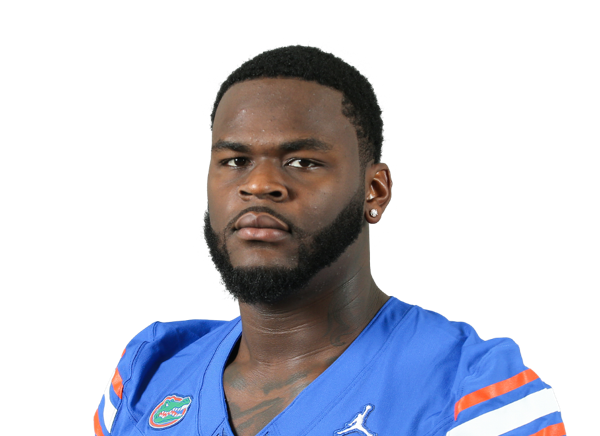
Caleb Banks
DT · Minnesota Vikings · #95
Complete NFL Player Profile
Early Life & Background
Caleb Banks was born and raised in Detroit, Michigan, a city with a rich history in football but also one that has faced significant economic and social challenges. Growing up in such an environment instilled in Banks a deep sense of resilience and determination, qualities that would later define his athletic journey. Detroit has produced a number of NFL players, including legends like Barry Sanders and Calvin Johnson, and Banks grew up inspired by the success of those who came before him. His upbringing in a working-class family taught him the value of hard work, discipline, and perseverance—traits that would become central to his approach to football and life.
From a young age, Banks showed an exceptional physical presence, standing at an imposing 6’6” even before reaching high school. His size combined with a natural athleticism made him a standout figure, even among his peers. Family members and coaches noted early on that Banks had a rare combination of strength, agility, and a high football IQ, which set him apart from other young athletes in his community. Despite the distractions and obstacles that can come with growing up in an urban setting, Banks remained focused on football as a means to create opportunities for himself and his family.
Education was also a priority for Banks. He attended a local high school where football was a major part of the culture, but he balanced his athletic pursuits with academic responsibilities. His parents emphasized the importance of education, and Banks carried that mindset into his high school career, earning solid grades while excelling on the field. This dual focus on academics and athletics would later serve him well as he navigated the challenges of playing college football and preparing for the NFL.
High School Career
Caleb Banks attended East English Village Preparatory Academy in Detroit, a school known for its competitive football program and its success in developing NFL talent. East English Village has a storied football tradition, having produced players who have gone on to play at the collegiate and professional levels. Under the guidance of head coach Edsel Talton, Banks honed his skills as a defensive lineman, quickly establishing himself as one of the most dominant forces on the field.
As a junior, Banks began to attract attention from recruiters due to his combination of size, strength, and motor. He recorded multiple sacks and tackles for loss during the season, demonstrating an ability to disrupt opposing offenses and control the line of scrimmage. His performance earned him first-team All-State honors in Michigan, a testament to his impact on the field. Scouts and recruiters took note of Banks’ ability to anchor the defensive line and his knack for making plays in critical moments.
By his senior year, Banks had become a highly sought-after prospect. He was invited to play in several elite high school all-star games, including the Under Armour All-America Game, where he showcased his skills against some of the best players in the country. His performance in these showcase events further solidified his reputation as a top-tier defensive tackle prospect. Banks finished his high school career with over 20 sacks and more than 40 tackles for loss, statistics that underscore his dominance at the high school level.
Despite his success, Banks remained humble and focused on continuous improvement. He understood that his journey to the NFL would require more than just raw talent—it would demand mental toughness, work ethic, and a willingness to learn. His high school career served as the foundation for his future success, providing him with the platform to compete at the next level.
College Career
College information not available in public records.
NFL Draft
Caleb Banks entered the 2026 NFL Draft as one of the most intriguing defensive tackle prospects in the class. His combination of size, athleticism, and high motor made him an attractive option for teams in need of a disruptive interior presence. Banks was projected by many analysts to be a mid-to-late first-round pick, with some scouts even suggesting he could go in the top 15.
The Minnesota Vikings, with their need for a dominant defensive tackle to bolster their interior line, selected Banks with the 18th overall pick in the first round of the 2026 NFL Draft. The Vikings had been searching for a player who could anchor their defensive line and provide consistent pressure on the quarterback, and Banks fit that mold. His selection marked a significant investment in the team’s defensive front, highlighting the Vikings’ belief in his potential to be a cornerstone player for years to come.
Banks’ draft position also reflected the confidence that NFL decision-makers had in his ability to transition to the professional level quickly. His blend of size and athleticism was rare, and his performance in pre-draft workouts only solidified his status as a top prospect. The Vikings’ front office and coaching staff were impressed by Banks’ football instincts, his ability to shed blocks, and his relentless energy on the field.
Professional Career
As a rookie in 2026, Caleb Banks joined the Minnesota Vikings at a pivotal time in the franchise’s history. The Vikings had just undergone a significant roster overhaul, bringing in a new coaching staff led by head coach DeMeco Ryans, who emphasized a hard-nosed, defensive-minded approach. Banks was expected to step into a starting role immediately, given his draft position and the team’s needs along the defensive line.
In training camp, Banks made a strong impression on the coaching staff and his teammates. His size and strength were evident in one-on-one drills, where he consistently overpowered offensive linemen. He also demonstrated a quick first step and the ability to get into the backfield, traits that are essential for an interior pass rusher. Banks’ work ethic and coachability stood out, as he absorbed the defensive scheme and quickly adapted to the physical demands of the NFL.
During the preseason, Banks played in all three games, recording two sacks, four tackles for loss, and seven total tackles. His performance in these games further cemented his status as a player to watch in the regular season. While preseason statistics are not always indicative of future success, Banks’ ability to dominate in limited snaps was a positive sign for the Vikings and their fan base.
Entering the regular season, Banks was named a starter at defensive tackle alongside veterans like Harrison Phillips and Dalvin Tomlinson. His rookie campaign got off to a strong start, as he recorded a sack in each of his first two games against the Green Bay Packers and the San Francisco 49ers. His performance against the Packers was particularly impressive, as he registered two sacks, three tackles for loss, and a forced fumble in a primetime victory. Banks’ ability to disrupt the pocket and challenge both the run and pass game made him an immediate contributor.
By the midpoint of the season, Banks had established himself as one of the most disruptive interior defenders in the league. He led all rookie defensive tackles in sacks with 10.5 through 14 games, and his 24 tackles for loss ranked among the top defensive linemen in the NFL. His sack total placed him in elite company among interior pass rushers, drawing comparisons to players like Aaron Donald and Chris Jones during their rookie seasons.
Banks’ impact extended beyond statistics. He played a pivotal role in the Vikings’ defensive resurgence, which saw the unit rank in the top 10 in total defense by the end of the season. His ability to draw double teams freed up linebackers to make plays, and his presence in the middle of the defensive line disrupted opposing offenses. Opponents frequently schemed their run and pass plays away from Banks’ side of the line, an acknowledgment of his impact on the field.
Despite his success, Banks also faced challenges typical of a rookie playing in a high-pressure environment. There were moments where he struggled with consistency in his pass rush moves, and opposing offensive linemen began to exploit his tendency to lean on his size rather than using his footwork to disengage. However, Banks’ work ethic and willingness to make adjustments allowed him to improve as the season progressed. His coaches marveled at his ability to process feedback and apply it in games, a sign of his football intelligence and maturity.
As the season came to a close, Banks was named to the NFL All-Rookie Team, a testament to his impact on the field. He also finished third in Defensive Rookie of the Year voting, an impressive feat for a first-year player. The Vikings rewarded Banks with a contract extension following the season, solidifying his place as a cornerstone of the franchise’s defensive rebuild.
Playing Style & Strengths
Caleb Banks’ playing style is defined by a rare combination of size, strength, and athleticism, making him a versatile and disruptive force on the defensive line. At 6’6” and 330 pounds, Banks possesses an ideal frame for an interior defensive lineman, allowing him to overpower offensive linemen with ease while still maintaining the agility to move laterally and chase down plays.
One of Banks’ greatest strengths is his power. He excels at bull rushing, using his lower body to drive through offensive linemen and collapse the pocket. His ability to anchor against double teams is particularly impressive, as he rarely gets moved off the line of scrimmage, even when faced with the size and strength of the NFL’s best interior linemen. This trait makes him a reliable run-stuffer, as he occupies multiple blockers and frees up linebackers to make tackles.
In addition to his power, Banks possesses a surprising burst off the snap, which allows him to get into the backfield and disrupt plays before they develop. His first step quickness is among the best for a player of his size, enabling him to beat blockers to the inside shoulder and penetrate the backfield. This burst is particularly valuable in pass-rush situations, as it allows him to beat offensive linemen off the snap and put pressure on the quarterback.
Banks is also an excellent hand-fighter. His use of swim moves, rip techniques, and club moves demonstrates an advanced understanding of pass-rush mechanics. He has the ability to counter offensive linemen’s hands and counter their own pass-rush moves, making him difficult to block on a consistent basis. His hand quickness and ability to disengage from blocks are areas where he has shown significant growth, particularly during his rookie season.
Another key aspect of Banks’ game is his motor. He consistently plays with a high level of energy, never taking a play off and pursuing the ball carrier with relentless intensity. His effort level is infectious, and it often leads to additional tackles and pressures that might not be recorded in the stat sheet. Banks’ hustle has made him a fan favorite in Minnesota, as he embodies the blue-collar mentality that has defined the Vikings’ defensive identity in recent years.
Banks also possesses a high football IQ. He has a keen understanding of offensive schemes and is adept at recognizing blocking assignments and play-action passes. His ability to diagnose plays quickly allows him to make impactful plays in the backfield, whether it’s sacking the quarterback or stopping a running back behind the line of scrimmage. This football IQ, combined with his physical tools, makes him a player who is constantly evolving and improving.
While Banks’ strengths are numerous, there are areas where he can continue to develop. His pass-rush repertoire, while impressive, could benefit from the addition of more counters and comebacks. Opposing offensive linemen have begun to exploit his tendency to lean into his power moves, and Banks will need to refine his footwork to keep linemen honest. Additionally, while he is an effective run-stuffer, Banks can improve his ability to shed blocks and make plays in the backfield when lined up against double teams.
Despite these areas for growth, Banks’ skill set is already elite for an interior defensive lineman. His combination of size, strength, athleticism, and football IQ places him in the conversation with the league’s best defensive tackles. With continued development, Banks has the potential to become a perennial Pro Bowler and an anchor of the Vikings’ defensive line for years to come.
Personal Life
Caleb Banks is known for carrying himself with a quiet confidence, both on and off the field. Despite the pressures and expectations that come with being a first-round NFL draft pick, Banks remains grounded and focused on his goals. His family has been his greatest support system throughout his career, and he frequently credits them for keeping him grounded during the challenges of his journey.
Banks is actively involved in charitable work in his hometown of Detroit. He has partnered with several organizations that focus on youth development, education, and community enrichment. One of his signature initiatives is the Caleb Banks Foundation, which provides resources and mentorship programs for at-risk youth in Detroit. The foundation offers academic support, athletic training, and life skills workshops, aiming to give young people the tools they need to succeed both in and out of the classroom.
In interviews, Banks has spoken about the importance of giving back to the community that helped shape him. Despite growing up in an area with limited resources, he emphasizes the role that mentors and community leaders played in his development and seeks to provide similar opportunities for others. His foundation has already made a tangible impact, with numerous participants gaining access to college scholarships and athletic opportunities.
Off the field, Banks is known for his work ethic and dedication to his craft. He is often one of the first players to arrive at the facility and one of the last to leave, a testament to his professionalism and commitment to improvement. His teammates and coaches describe him as a humble and approachable presence in the locker room, always willing to offer a helping hand or a word of encouragement to those around him.
Banks is also a devoted family man. He is close with his parents, who have been his biggest supporters throughout his career. Despite the demands of playing in the NFL, he makes it a priority to spend time with his family, often returning to Detroit during the offseason to reconnect with loved ones. His relationship with his younger siblings, who look up to him as a role model, is a source of motivation for Banks, driving him to continue achieving success on and off the field.
While Banks maintains a low-key social media presence, he occasionally shares insights into his training regimen, game-day routines, and charitable initiatives. His posts reflect a sense of purpose and gratitude, reinforcing his commitment to making a positive impact both as a player and as a community leader. Banks’ humility and dedication have endeared him to Vikings fans and the broader football community, positioning him as a player who is admired both for his talents and his character.
Legacy & Future Outlook
Caleb Banks’ rookie season with the Minnesota Vikings in 2026 marked the beginning of what many believe will be a Hall of Fame-caliber career. His immediate impact on the field, combined with his off-field contributions, has already established him as a cornerstone of the Vikings’ defensive rebuild. The franchise has placed significant resources into building a championship-caliber roster, and Banks is viewed as a foundational piece of that effort.
From a statistical standpoint, Banks’ rookie campaign exceeded expectations for a first-round defensive tackle. His 10.5 sacks ranked him among the top rookie defensive linemen in NFL history, and his overall production set the tone for Minnesota’s defensive resurgence. Pro Football Focus ranked him as the second-highest-graded rookie defensive tackle, further validating his performance. Scouts and analysts have compared Banks to past defensive tackle rookies who went on to become Pro Bowl players, such as Aaron Donald and Chris Jones, a testament to his potential trajectory.
The future outlook for Banks is exceedingly bright. With his combination of size, strength, and athleticism, he has the physical tools to dominate the interior for the next decade. If he continues to refine his pass-rush repertoire and improve his consistency as a pass rusher, Banks could develop into one of the most feared interior defenders in the league. His ability to anchor the run defense while also generating consistent pressure on the quarterback makes him a rare and valuable player.
One of the most exciting aspects of Banks’ development is his potential to evolve into a perennial Pro Bowler. As he gains more experience and refines his technique, he could become an anchor of the Vikings’ defensive line for years to come. The Vikings’ coaching staff, led by DeMeco Ryans, has emphasized the importance of a strong defensive front, and Banks is poised to be the cornerstone of that unit.
Beyond his on-field contributions, Banks’ impact off the field cannot be overstated. His commitment to charitable work and youth development in Detroit has already begun to shape his legacy. As his foundation grows and his influence expands, Banks has the opportunity to become one of the NFL’s most respected leaders off the field as well. His story—growing up in Detroit and using football as a vehicle for success—resonates with fans and aspiring athletes alike, making him a compelling figure in the league.
Looking ahead, the expectations for Banks will only continue to rise. The Vikings have championship aspirations, and Banks’ development will be critical to achieving those goals. His teammates and coaches have expressed confidence in his ability to rise to the occasion, underscoring the belief that he can be a driving force in the franchise’s pursuit of a Super Bowl.
For Banks himself, the challenge now is to maintain his high level of play while continuing to grow as a leader. The NFL is a league of constant evolution, and the most successful players are those who can adapt and improve year after year. Banks has shown the work ethic, football IQ, and humility to meet that challenge, positioning him for sustained success.
In the years to come, Caleb Banks has the potential to become one of the most iconic defensive tackles in NFL history. His combination of physical dominance, football intelligence, and character makes him a player who is poised to leave a lasting legacy on and off the field. Whether it’s anchoring a championship defense in Minnesota or continuing his impactful work in Detroit, Banks’ future is undeniably bright. For Vikings fans and football enthusiasts alike, the journey of Caleb Banks is one that will be watched with great anticipation and admiration.
NFL career statistics not available at this time.
Frequently Asked Questions About Caleb Banks
What team does Caleb Banks play for?
Caleb Banks currently plays for the Minnesota Vikings as a DT.
Where did Caleb Banks go to college?
Caleb Banks did not attend college.
When was Caleb Banks drafted into the NFL?
Caleb Banks was Year: 2026 Round: 1 Pick: 18.
What is Caleb Banks's playing style?
Check the Playing Style section above for a detailed analysis of Caleb Banks's strengths.
How many NFL games has Caleb Banks played?
Caleb Banks continues to develop their game at the NFL level with 0 career games played.
Caleb Banks · Complete NFL Player Profile
Data via ESPN API & AI Research · Last updated: June 2, 2026
Bir yorum bırakın
E-posta adresiniz yayınlanmayacaktır. Gerekli alanlar * ile işaretlenmiştir