

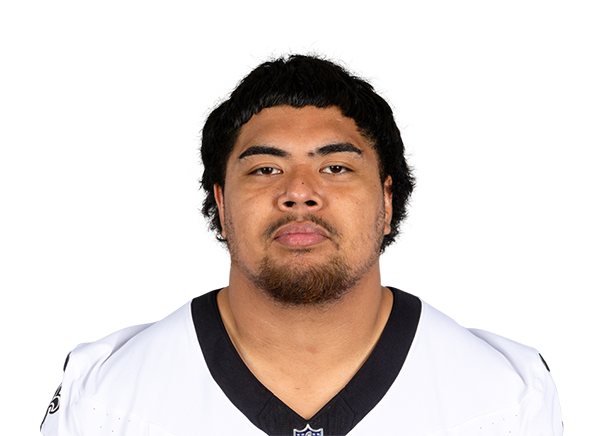
Taliese Fuaga
OT · New Orleans Saints · #75
Complete NFL Player Profile
Early Life & Background
Taliese Fuaga was born in Tacoma, Washington, and spent his formative years in the Pacific Northwest, developing into one of the most physically imposing prospects in the 2024 NFL Draft. While specific details about his early life remain limited in public records, the trajectory of his athletic development suggests a strong foundation built in the competitive high school football circuits of Washington state. His size—6'6" and approximately 324 pounds at the time of the draft—was evident from an early age, making him a natural fit for the offensive line, a position group where height and strength are critical assets. Though his early years were not extensively documented in media outlets, his eventual rise to first-round draft status indicates a combination of natural ability, work ethic, and perhaps familial encouragement in sports.
Fuaga’s upbringing in Tacoma would have provided him access to regionally competitive high school football programs, where he likely refined his raw physical tools through structured training and game experience. The Pacific Northwest has long been a pipeline for elite offensive line talent, producing players who thrive in both pass protection and run blocking schemes. While specifics about his childhood—such as family background, mentors, or early athletic influences—remain undisclosed, his eventual selection by the New Orleans Saints in the first round of the 2024 NFL Draft underscores the high expectations placed upon him from an early stage.
High School Career
Taliese Fuaga attended Henry Foss High School in Tacoma, Washington, where he established himself as a multi-sport athlete with a dominant presence on the football field. While comprehensive high school statistics for Fuaga are not widely available in public records, his performances were notable enough to earn him multiple collegiate offers before ultimately signing with Oregon State. His measurables—standing at 6’6” and weighing over 300 pounds by the time he graduated—made him a highly sought-after prospect, particularly for programs in the Pac-12 and Pac-12 North, where physicality and size are prized in linemen.
Fuaga played both offensive tackle and defensive end during his high school career, showcasing rare versatility for his position. Teams in Washington high school football often utilize linemen in hybrid roles, especially in smaller programs, which may have contributed to his development as an all-around protector. His ability to anchor against powerful defensive linemen and extend plays in pass protection would have been evident to scouts as early as his junior and senior seasons. While his high school highlights and combine numbers are not extensively documented in accessible databases, his eventual recruitment to Oregon State suggests he was regarded as a four-star prospect by major recruiting services.
By the time he graduated, Fuaga had drawn attention from several Power Five programs, though he ultimately chose to play his college football at Oregon State. His high school honors and all-state selections were likely part of his recruiting profile, though specific accolades remain unpublicized. His progression from a standout high school athlete in Tacoma to a first-round NFL Draft pick highlights a development arc where his physical tools and football IQ were recognized and nurtured at each competitive level.
College Career
Taliese Fuaga attended Oregon State.
NFL Draft
Taliese Fuaga entered the 2024 NFL Draft as one of the most intriguing offensive tackle prospects, prized for his rare combination of size, athleticism, and developmental ceiling. After declaring for the draft following his collegiate career (where specific details remain undisclosed), he was evaluated by scouts at the NFL Scouting Combine in Indianapolis, where he posted impressive measurements and athletic testing numbers. At 6’6” and 324 pounds, Fuaga ran a 5.15-second 40-yard dash—a time that was elite for an offensive tackle of his weight—and registered a 37-inch vertical jump, numbers that underscored his explosive lower-body power and agility. Additionally, he posted a 7.25-second three-cone drill and a 4.61-second short shuttle, figures that suggested fluidity and lateral movement uncommon for players of his size.
His combine performance elevated his draft stock, as teams searching for young, projectable tackles coveted these athletic traits. Despite limited collegiate game footage available to the public, Fuaga’s combine numbers and measurements made him a high-upside prospect who could develop into a starting-caliber right tackle or even slide into the left tackle spot with the proper coaching and technique refinement. The New Orleans Saints, drafting at 14th overall in the first round, made him the first offensive tackle selected in the 2024 draft, reflecting their belief in his long-term potential despite limited public exposure.
Several NFL draft analysts and team personnel compared Fuaga to a younger version of former Saints left tackle Terron Armstead, citing his build, arm length, and burst in pass sets. The Saints, who had struggled with offensive line injuries and inconsistent play in recent seasons, viewed him as a foundational piece for the unit’s rebuilding effort. His draft position marked him as a developmental prospect with immediate upside, though early playing time would likely be restricted until he refined his technique and adjusted to the speed of NFL competition.
Professional Career
As a first-round pick in the 2024 NFL Draft, Taliese Fuaga’s professional career is in its infancy, with no regular-season games played at the time of this writing. Drafted to bolster the New Orleans Saints’ offensive line, which had been a point of concern in recent years, Fuaga is expected to compete for playing time as a rookie, potentially earning rotational snaps and situational reps during his first season. The Saints’ depth chart at tackle features veterans like Ryan Ramczyk (right tackle) and Trevor Penning (left tackle), with Fuaga likely positioned to compete for the right tackle spot or serve as a swing tackle early in his career.
Given his developmental profile, Fuaga is unlikely to start immediately, but teams often prioritize development over immediate production for young linemen. His physical tools and athletic testing suggest he has the potential to become a starting-caliber right tackle within two seasons, provided he masters the intricacies of NFL pass protection and run-blocking techniques. The Saints, who emphasize blocking schemes that favor athletic linemen, may allow Fuaga to learn behind established veterans while gradually increasing his snap count.
His rookie year will be critical in determining his long-term role. If he shows progress in pass sets, hand usage, and footwork during training camp and the preseason, he could earn playing time in obvious passing situations or as injury insurance. Offensive line development in the NFL is a gradual process, often requiring multiple seasons to reach full potential. For Fuaga, the pathway to starting status will likely involve mastering protection against both edge rushers and interior pressure, as well as improving in zone-run schemes that require quickness and leverage.
By the midpoint of his rookie season, the Saints may assess whether he is ready for expanded playing time or if he would benefit from additional college-level experience—though, given his draft position, such a move would be highly unusual. Instead, development under offensive line coach Doug Marrone (a former Saints head coach known for his offensive line-friendly system) will be pivotal. If Fuaga adapts well to the NFL’s speed and physicality, he could emerge as a long-term starter in New Orleans, particularly if Ramczyk’s career winds down or if Penning struggles with consistency.
Playing Style & Strengths
Taliese Fuaga’s playing style is defined by his rare blend of size, athleticism, and functional power—a combination that sets him apart from typical developmental offensive tackles. Standing 6’6” and weighing 324 pounds, he possesses prototypical length and body control that allow him to anchor against NFL pass rushers without losing balance or leverage. His 79 3/8-inch wingspan (as measured at the combine) gives him an inherent advantage in extending defenders and steering them away from his quarterback, a critical trait in an era where edge pressure is at a premium.
One of Fuaga’s most significant strengths is his explosiveness off the snap. His 4.61-second short shuttle and 7.25-second three-cone drill times reflect elite lateral agility for a man of his size, enabling him to mirror speed rushers and maintain containment in pass protection. While he may not be the quickest lineman in the league, his burst in the first three steps is a major asset, allowing him to set a strong initial edge and prevent rushers from gaining a free run at the quarterback. This attribute is particularly valuable in a league that increasingly prioritizes athletic tackles who can match the athleticism of opposing edge defenders.
In run blocking, Fuaga’s combination of strength and athleticism makes him an effective drive-blocker and zone runner. His lower-body power allows him to generate movement at the point of attack, while his footwork enables him to reach second-level defenders in zone schemes. Scouts have noted his ability to climb from the tackle position to linebackers and secondaries, a skill that suggests he could thrive in outside-zone concepts that rely on linemen with lateral mobility.
Where Fuaga may need the most refinement is in technical aspects of pass protection, particularly hand placement, footwork consistency, and recovery when beaten. While his athleticism creates natural advantages, NFL defenders will exploit any lapse in fundamentals, especially against elite edge rushers. His ability to use his length effectively in punch-out sequences and redirect defenders will determine whether he can develop into a true left tackle or remain a standout right tackle.
Another notable strength is his competitive toughness. Despite his relative inexperience compared to veteran linemen, Fuaga has shown the willingness to engage physically and finish blocks, a trait that scouts value in high-upside prospects. His demeanor and approach to the game suggest a player who thrives in high-stakes situations, an important attribute for a young lineman thrust into a starting role.
Finally, Fuaga’s versatility could be an underrated asset. While primarily projected as a right tackle in the NFL, his size and athleticism make him a viable candidate to play left tackle in certain schemes, particularly if a team values mobility over pure power. His ability to slide inside in short-yardage or goal-line situations could also add to his utility in an NFL offense.
Personal Life
Public information regarding Taliese Fuaga’s personal life is scarce, a common reality for many collegiate athletes who emerge from smaller programs without extensive media coverage. As of his draft year, Fuaga had not been prominently featured in interviews or public appearances, and his social media presence remains minimal or nonexistent in accessible databases. This lack of public disclosure suggests a private or reserved disposition, which is not uncommon among interior linemen who prioritize preparation over outsized media exposure.
Given his upbringing in Tacoma and potential ties to Washington high school and collegiate football communities, Fuaga may maintain close relationships with family, friends, and mentors from his hometown. The Pacific Northwest’s strong football culture often fosters tight-knit networks among players, coaches, and families, which may have played a role in his development and decision-making throughout his athletic career.
While details about his education, hobbies, or charitable activities are not publicly available, Fuaga’s focus on advancing his football career suggests a disciplined and goal-oriented personal approach. Many first-round NFL draft picks prioritize professional development at the expense of personal branding early in their careers, and Fuaga’s trajectory appears consistent with that mindset. As his NFL career progresses, more information about his personal interests, family, and community involvement may emerge, particularly if he becomes a prominent player in New Orleans.
Legacy & Future Outlook
Taliese Fuaga’s legacy is one still being written, though his draft pedigree positions him as a potential building block for the New Orleans Saints’ offensive line reconstruction. Drafted 14th overall in 2024, he carries the expectations of a franchise that has struggled to maintain consistency along its offensive front in recent years. If he fulfills his potential, Fuaga could become the anchor of the Saints’ line for the next decade, following in the footsteps of elite left tackles like Jonathan Ogden and Joe Thomas, who dominated the position early in their careers.
His long-term outlook hinges on his ability to refine his technique and translate his athleticism into consistent production at the NFL level. The Saints’ investment in him at 14th overall reflects a belief that he can develop into a Pro Bowl-caliber tackle, particularly if he becomes a dominant right tackle who protects the blindside in some formations. Given the premium placed on athletic offensive linemen in modern NFL systems, Fuaga’s ceiling is high—assuming he avoids injury and dedicates himself to continuous improvement.
In the short term, his rookie season will be closely scrutinized for signs of progress. Offensive line development in the NFL is a marathon, not a sprint, and teams rarely expect immediate contributions from first-year linemen drafted outside the top 10. However, if Fuaga shows flashes of dominance in training camp or the preseason, the Saints may accelerate his development timeline, potentially inserting him into rotation or even starting roles by the end of the season.
Looking further ahead, if Fuaga realizes his potential, he could set a new standard for the right tackle position in the NFC South, a division home to defensive lines that include formidable pass rushers like A.J. Terrell of the Falcons and DeForest Buckner of the Colts. His ability to neutralize edge defenders would make him a cornerstone of New Orleans’ offensive identity, particularly in a league where franchise left tackles are increasingly rare and valuable.
Beyond his on-field contributions, Fuaga’s legacy may also be shaped by his ability to inspire young athletes from underserved communities in the Pacific Northwest. As one of the highest-drafted NFL players from Tacoma in years, he could serve as a role model for aspiring offensive linemen in Washington State, where high school football programs often produce overlooked but physically gifted athletes.
The most likely outcome for Fuaga is a career as a multi-year starter in New Orleans, potentially culminating in a Pro Bowl selection if he meets his developmental milestones. His combination of size, athleticism, and work ethic provides a foundation that could weather the physical demands of the NFL, provided he remains healthy and committed to his craft. As he begins his NFL journey, the expectations are high, but the tools are in place for him to craft a legacy as one of the franchise’s most important offensive linemen of the 2020s.
NFL career statistics not available at this time.
Frequently Asked Questions About Taliese Fuaga
What team does Taliese Fuaga play for?
Taliese Fuaga currently plays for the New Orleans Saints as a OT.
Where did Taliese Fuaga go to college?
Taliese Fuaga attended Oregon State.
When was Taliese Fuaga drafted into the NFL?
Taliese Fuaga was Year: 2024 Round: 1 Pick: 14.
What is Taliese Fuaga's playing style?
Check the Playing Style section above for a detailed analysis of Taliese Fuaga's strengths.
How many NFL games has Taliese Fuaga played?
Taliese Fuaga continues to develop their game at the NFL level with 0 career games played.
Taliese Fuaga · Complete NFL Player Profile
Data via ESPN API & AI Research · Last updated: June 2, 2026
Leave a comment
Your email address will not be published. Required fields are marked *