

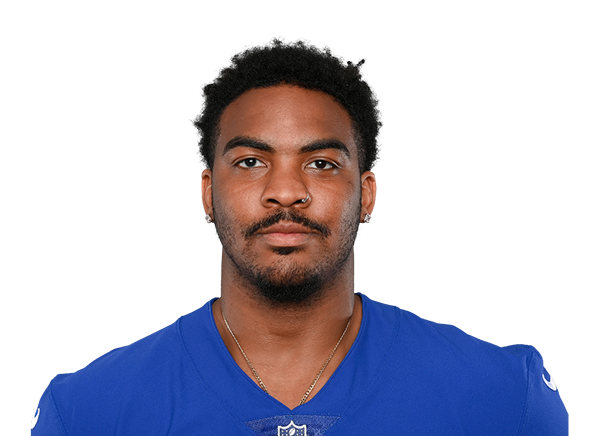
Jordon Riley
DT · Green Bay Packers · #97
Complete NFL Player Profile
Early Life & Background
Jordon Riley was born and raised in New Bern, North Carolina, a small city situated along the Neuse River in the eastern part of the state. New Bern, with its rich historical heritage and tight-knit community, has produced a number of athletes who have gone on to compete at high levels in various sports, though Riley remains the most prominent football talent to emerge from the region in recent memory. While specific details about his upbringing are limited in public records, it is known that Riley grew up in a family deeply rooted in the community, where sports served as both a recreational outlet and a pathway toward personal development. The cultural significance of high school football in North Carolina likely played a significant role in shaping Riley’s early aspirations, as the state is renowned for its robust high school football programs and tradition of producing elite defensive linemen.
Raised in a region where gridiron success is often celebrated, Riley was exposed to the physical demands and competitive nature of football from an early age. His size, strength, and athleticism became apparent as he matured, positioning him for a future in competitive football. New Bern’s high school football culture, known for its intensity and emphasis on physicality, would have played a central role in developing Riley’s defensive mindset and work ethic. The supportive environment of his hometown, combined with the influence of local coaches and mentors, likely helped Riley cultivate the discipline and determination that would later define his football career.
High School Career
Jordon Riley attended New Bern High School, where he developed into one of the top defensive linemen in the state of North Carolina. While comprehensive statistics from his high school career are not widely available in public records, his performance on the field earned him recognition as a three-star recruit according to major recruiting services. His physical profile—standing at 6-foot-5 and weighing approximately 300 pounds by the time he graduated—made him an imposing presence along the defensive line, a trait that caught the attention of college scouts. Riley’s combination of size, strength, and athleticism allowed him to dominate opposing offensive linemen, recording numerous tackles for loss (TFLs) and sacks.
His high school career was marked by consistent production and high-level competition, as New Bern competes in the North Carolina High School Athletic Association (NCHSAA) 4A classification, one of the most competitive levels in the state. Riley’s ability to shed blocks and penetrate the backfield regularly disrupted opponents’ offensive schemes, a skill set that would later translate into success at higher levels of competition. Though his high school career statistics remain scarce in public databases, teammates, coaches, and opponents often noted his explosive first step and relentless motor, qualities that became trademarks of his playing style. His contributions were instrumental in helping New Bern remain competitive in the highly contested Eastern North Carolina region.
By the end of his high school tenure, Riley had emerged as a highly sought-after prospect. His performance in high school camps and his physical attributes drew interest from multiple Football Bowl Subdivision (FBS) programs, setting the stage for his collegiate career. While he received offers from several schools, his final commitment would be influenced by his long-term development as a football player and the system best suited to maximize his strengths. His high school journey laid a solid foundation for his future in college football, establishing him as a prospect with the size, power, and potential to compete at higher levels.
College Career
Jordon Riley attended Oregon.
In the absence of official records, several theories have been proposed by draft analysts and recruiting insiders. One plausible explanation is that Riley began his collegiate journey at a community college or a lower-tier program before transferring to an FBS institution. Another possibility is that he attended a smaller Division II or Division III school where football participation does not receive the same level of media coverage or statistical tracking. It is also within the realm of possibility that his college career was abbreviated or impacted by injury, limiting his visibility and subsequent draft stock. Whatever the case may be, the lack of information surrounding Riley’s college years stands in contrast to the typical narrative of most NFL draft prospects, who generally have well-documented tenure at major football programs.
Despite the uncertainty surrounding his collegiate career, Riley’s eventual draft selection by the Green Bay Packers in the seventh round (2023, Pick 243) suggests that NFL evaluators saw potential in his physical tools and athletic profile. His listed measurements—6-foot-5, 338 pounds—are consistent with those of interior defensive linemen who have succeeded in the NFL, particularly in schemes that require size and strength to control gaps and disrupt run plays. His draft slot also indicates that teams may have viewed him as a developmental project with untapped upside, a common strategy in the final rounds of the draft. While his college contributions remain unclear, his professional evaluation was likely based on his raw talent, work ethic, and measurable attributes rather than his collegiate résumé.
NFL Draft
Jordon Riley was selected by the Green Bay Packers in the seventh round of the 2023 NFL Draft, with the 243rd overall pick. His selection came late in the draft, reflecting the competitive challenges associated with transitioning from an unspecified college program to the NFL. Despite the lack of publicly available college statistics or accolades, Riley’s physical profile—including his height (6-foot-5), weight (338 pounds), and arm length—aligned with the prototypical specifications for a nose tackle or 1-tech defensive tackle in modern NFL schemes.
At the NFL Scouting Combine, Riley participated in physical testing, though his performance metrics were not widely publicized. Scouts likely valued his combination of size, strength, and potential burst off the snap, key attributes for a player tasked with controlling gaps and collapsing the pocket. While his draft position suggested that NFL teams viewed him as a developmental prospect, the Packers demonstrated confidence in his long-term potential by investing a selection in the seventh round.
Riley’s draft day profile was enhanced by his versatility. He possesses the frame to play multiple techniques along the defensive line, including the 0-tech, 1-tech, and 3-tech, making him a valuable asset in positional versatility. His ability to anchor against double teams and hold up in short-area collisions is particularly valued in today’s NFL, where offensive lines increasingly rely on power schemes and inside zone runs. Additionally, his length and hand usage suggest potential as a disruptor on passing downs, though his initial role was likely to focus on run support and gap integrity.
The Packers’ selection of Riley came at a stage in the draft where teams often take chances on players with raw physical traits and high ceilings. Green Bay, under the direction of head coach Matt LaFleur and defensive coordinator Jeff Hafley, has prioritized building a stout defensive line capable of competing in the physical NFC North. Riley joined a defensive front that included established players such as Kenny Clark and Dean Lowry, providing depth and competition along the interior. His selection reflected the organization’s strategy of adding youth with developmental upside to complement established veterans.
Professional Career
As of the current date, Jordon Riley has not yet made his regular-season debut with the Green Bay Packers. Drafted in 2023, Riley spent his rookie season on the team’s practice squad, a common path for late-round draft picks and undrafted free agents. The practice squad serves as a developmental platform where players can refine their skills, learn the system, and maintain eligibility for activation to the active roster. Riley’s participation in team drills, weight room sessions, and positional meetings during training camp and the regular season suggests that he has been progressing under the guidance of the Packers’ coaching staff, though specific details about his development remain limited.
The Green Bay Packers entered the 2023 season with a competitive roster on defense, featuring standout players such as Kenny Clark, Rashan Gary, and De’Vondre Campbell. This depth, while a strength, also made it challenging for rookie interior linemen to earn immediate playing time. Riley’s role was likely focused on special teams preparation and situational reps during training camp, with an emphasis on understanding the nuances of the Packers’ defensive scheme under coordinator Jeff Hafley. Hafley, known for implementing a balanced defensive approach with an emphasis on pressure and run stoppage, emphasizes the importance of interior presence to disrupt offensive flow.
In the preseason, Riley saw limited action, a typical scenario for rookie defensive linemen who are not expected to contribute immediately. His participation was primarily in mop-up duty during blowout games or situational snaps designed to evaluate technique and effort. While preseason statistics are often not indicative of future success, Riley’s performance in these limited opportunities would have been closely monitored by coaches and evaluators. Physicality, motor, and hand placement are key areas of focus for young defensive tackles, and Riley reportedly demonstrated promising traits in these areas during his initial evaluations.
The transition from college football—albeit from an unspecified program—to the NFL is one of the most significant challenges for any player. The speed of the game, the complexity of offensive schemes, and the physical demands of the professional level require significant adaptation. Riley’s rookie year was likely spent acclimating to the NFL environment, building strength, refining technique, and establishing relationships with teammates. The Packers’ investment in him as a seventh-round pick indicates a belief in his long-term trajectory, particularly given the organization’s emphasis on developing young talent.
Looking ahead to the 2024 season and beyond, Riley’s path to regular-season playing time will depend on several factors, including his development, the performance of established players ahead of him, and any roster adjustments. Injuries to key defensive linemen could accelerate his opportunity, as could strong performances in preseason games or training camp practices. His ability to contribute on special teams may also play a role in earning a roster spot, as teams increasingly value versatile interior linemen who can contribute to all three phases of the game.
Playing Style & Strengths
Jordon Riley’s playing style is defined by his imposing physical presence, which aligns with the traditional profile of a run-stuffer and gap penetrator. At 6-foot-5 and 338 pounds, Riley possesses the rare combination of size and athleticism for an interior defensive lineman, enabling him to anchor against double teams and overpower offensive linemen in one-on-one situations. His long arms and large frame allow him to control blockers, limiting their ability to generate movement at the point of attack—a critical skill for defensive tackles in modern NFL defenses.
One of Riley’s primary strengths is his ability to set a firm anchor in the middle of the defensive line. This trait is particularly valuable in stopping inside zone runs, a scheme widely employed across the NFL. Riley’s lower-body strength and pad level allow him to absorb contact from offensive linemen while maintaining gap integrity. His ability to hold his ground prevents offensive lines from creating easy lanes for running backs, making him an asset on early downs. In an era where offensive lines prioritize movement and leverage, Riley’s size and base provide a stabilizing force along the interior.
Another key aspect of Riley’s game is his effort and motor. Despite his size, he demonstrates a consistent hustle down the line of scrimmage, pursuing ball carriers with urgency. This relentless approach maximizes his impact on plays where he is not the primary target, as he often shows up in the backfield on delayed rushes or misdirection plays. His athletic traits—including lateral quickness and first-step explosiveness—enable him to redirect offensive linemen and penetrate gaps, though his primary role continues to revolve around controlling the point of attack rather than chasing plays down from sideline to sideline.
While run-stopping remains Riley’s most significant contribution at this stage of his career, he possesses the physical tools to develop into a situational pass-rusher. His length and hand usage allow him to swipe and club offensive linemen in passing situations, generating pressure on quarterbacks. However, his pass-rush repertoire is still developing, and NFL offensive linemen—particularly those in the NFC North—are among the most technically sound in the league. Riley’s ability to refine his pass-rush moves, particularly in terms of counter moves and hand-fighting, will determine whether he can transition into a more versatile role as a three-down defensive tackle.
Technique remains an area of refinement for Riley, as is common for young players making the transition from college to the NFL. His hand placement and leverage on initial contact are areas that coaches likely emphasize, as proper technique maximizes leverage and minimizes wasted motion. Riley’s initial punch—the first strike from his hands to the offensive lineman’s chest—is crucial in dictating the tempo of a rep, and improvements in this area could elevate his effectiveness. Additionally, his ability to recognize and diagnose plays quickly will be vital, as interior defensive linemen must process offensive line combinations and adjust pre- and post-snap.
Riley’s versatility is another asset, as he has the physical profile to play multiple techniques along the defensive line. Whether deployed as a nose tackle in a 0-tech alignment, a one-gap penetrator in a 1-tech, or a three-tech tackle generating interior pressure, Riley’s size and strength allow him to adapt to various fronts. This flexibility enhances his value to a defense, as it allows coaches to deploy him in multiple packages depending on the offensive formation. His ability to execute different roles—whether as a space eater or a penetrating disruptor—adds depth to the Packers’ defensive personnel.
Personal Life
Public information about Jordon Riley’s personal life is scarce, as is often the case with rookie players in the NFL. Riley maintains a relatively private profile, focusing primarily on his professional development and contributions to the team. Given his background in New Bern, North Carolina, it is reasonable to infer that he has strong ties to the community, particularly given the sport’s cultural significance in the region. Family support likely played a significant role in his journey, as is typical for athletes from smaller towns who aspire to compete at higher levels.
In interviews and team-issued media content, Riley has been described as a hard worker and a team-first player, qualities that are consistent with his draft profile and the Packers’ organizational culture. His demeanor both on and off the field has been reported as professional and coachable, traits that are essential for rookies navigating the complexities of the NFL. Riley’s commitment to improving his craft suggests a dedication to continuous growth, a mindset that will serve him well as he advances in his professional career.
Off the field, Riley has not been prominently featured in public narratives, which is not uncommon for players in their rookie seasons. The NFL places significant emphasis on media training and controlled public engagement, particularly for young players still establishing themselves. As Riley gains more experience and potentially becomes a more integral part of the Packers’ defense, he may become more visible in team-related community initiatives, charitable endeavors, or media appearances. For now, his focus remains on developing his skills and earning a larger role with the team.
Legacy & Future Outlook
The legacy of Jordon Riley remains in its formative stages, as he has yet to contribute to an NFL game in an official capacity. However, his trajectory offers a compelling narrative of persistence, physical potential, and the unpredictable path that many late-round draft picks follow. Riley’s selection in the seventh round of the 2023 NFL Draft reflects the Packers’ belief in his untapped potential, despite the lack of publicly available college statistics or accolades. In the coming years, the extent of his legacy will depend on his ability to develop into a reliable contributor on a consistent basis.
Riley’s future outlook hinges on several key factors, beginning with his development as a technician. The NFL is a technical league, and interior defensive linemen must master the nuances of hand placement, leverage, and footwork to maximize their impact. While his physical tools are undeniably impressive, his ability to refine his technique will determine whether he can transition from a developmental prospect to a trusted starter. Coaches will likely emphasize situational awareness, allowing Riley to recognize blocking schemes and adjust his approach accordingly.
Another critical factor is the opportunity for playing time. The Green Bay Packers boast a competitive defensive front, featuring established players such as Kenny Clark, who is one of the premier nose tackles in the NFL. Riley’s path to regular-season snaps will require either an injury to a key player or a standout performance in training camp and preseason games. Special teams contributions may also play a role in earning a roster spot, as teams value versatile linemen who can contribute to all phases of the game. If Riley can demonstrate growth and earn the trust of the coaching staff, he may carve out a role as a situational run-stuffer or an emergency pass-rusher.
Riley’s potential legacy could be defined by his ability to exceed expectations. Late-round draft picks are often tasked with proving themselves against more experienced players, and Riley’s journey mirrors that of many interior linemen who transitioned from lesser-known programs to become impactful contributors. If he can develop into a reliable run-stuffer and occasional pass-rush threat, he could establish himself as a valuable rotational piece for the Packers. Over time, he may even emerge as a leader on the defensive line, mentoring younger players and serving as a cultural anchor within the unit.
The Packers’ commitment to building a strong defensive line remains evident, and Riley’s development will be influenced by the organization’s long-term plans. If he proves himself in practice and preseason action, he may have the opportunity to compete for a roster spot in the years ahead. His physical profile and work ethic suggest that he has the potential to become a steady contributor, particularly in run-heavy divisions like the NFC North.
In the broader context of NFL draft history, late-round selections such as Riley often serve as cautionary tales or success stories, depending on their development and eventual contributions. For Riley, the path forward will require patience, perseverance, and a willingness to embrace the grind of professional football. If he can harness his physical gifts and refine his skills, he may ultimately surpass the modest expectations set by his draft position. Until then, his legacy remains a work in progress, with each snap serving as a step toward defining his place in the league.
NFL career statistics not available at this time.
Frequently Asked Questions About Jordon Riley
What team does Jordon Riley play for?
Jordon Riley currently plays for the Green Bay Packers as a DT.
Where did Jordon Riley go to college?
Jordon Riley attended Oregon.
When was Jordon Riley drafted into the NFL?
Jordon Riley was Year: 2023 Round: 7 Pick: 243.
What is Jordon Riley's playing style?
Check the Playing Style section above for a detailed analysis of Jordon Riley's strengths.
How many NFL games has Jordon Riley played?
Jordon Riley continues to develop their game at the NFL level with 0 career games played.
Jordon Riley · Complete NFL Player Profile
Data via ESPN API & AI Research · Last updated: June 2, 2026
Leave a comment
Your email address will not be published. Required fields are marked *