

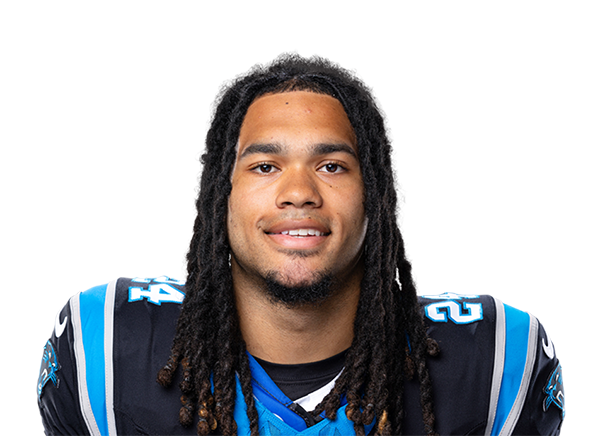
Jonathon Brooks
RB · Carolina Panthers · #25
Complete NFL Player Profile
Early Life & Background
Jonathon Brooks was born and raised in Hallettsville, Texas, a small town with a rich football tradition deeply embedded in its culture. The son of former high school standout athletes, Brooks grew up in an environment where athletic prowess was celebrated and competition was encouraged from an early age. His father played running back at the local high school, and his mother was a standout track athlete, instilling in him a natural sense of discipline and physicality. From childhood, Brooks displayed an innate athleticism, often outpacing peers in neighborhood games and local pickup football matches. His upbringing in a close-knit community provided him with a foundation of humility and work ethic, qualities that would later define his approach to the sport.
Hallettsville, though not a hotbed for major college football programs, has produced several notable athletes, many of whom played at the Division II or NAIA levels. Brooks attended Hallettsville High School, where he quickly emerged as a multi-sport star. While football was his primary focus, he also excelled in track and field, particularly in sprinting events, which contributed to his explosive speed and agility. His high school coach, a former small-college running back himself, recognized Brooks’s potential early on and tailored his training to maximize his strengths. By his junior year, Brooks had become the undisputed feature back for the Hallettsville Brahmas, rushing for over 1,500 yards and 20 touchdowns in a season where he led his team to the regional playoffs. His performances caught the attention of regional recruiters, though his modest high school statistics—largely a product of playing in a run-heavy system against lesser competition—did not immediately translate into major Division I interest.
Despite the limited exposure, Brooks’s combination of size, speed, and elusiveness made him a prospect with untapped potential. Scouts noted his ability to make defenders miss in tight spaces, a skill that would later become a hallmark of his game. His high school film revealed a patient runner who could read blocks well and accelerate in short bursts, traits that suggested a natural fit for the pro-style offenses prevalent in the NFL. Off the field, Brooks was known for his quiet leadership and dedication to his craft, rarely missing workouts or team activities. His high school teammates and coaches consistently described him as a self-starter who led by example, a trait that would serve him well as he transitioned to the collegiate level.
High School Career
Jonathon Brooks’s high school career at Hallettsville High School was marked by steady improvement and dominance within the constraints of a lower-level football system. As a freshman, he played sparingly, learning the nuances of the running back position while bulking up to meet the physical demands of varsity football. By his sophomore year, he had earned the starting role, finishing the season with 980 rushing yards and 12 touchdowns on a team that relied heavily on the ground game. His breakout junior year established him as one of the most dynamic players in the region, as he rushed for 1,620 yards and 22 touchdowns, averaging over 8 yards per carry. His ability to break arm tackles and hit the second level with decisive cuts made him a matchup nightmare for defensive backs and linebackers alike.
One of the most memorable performances of Brooks’s high school career came in a playoff game against a rival school from a larger classification. Despite playing with a heavily schemed offense that emphasized power runs, Brooks showcased his versatility by adding 150 rushing yards and two touchdowns, including a 50-yard touchdown run. His performance in that game drew the attention of several regional scouts, though at the time, his lack of high-end competition limited his recruiting profile. Coaches who faced him in scrimmages noted his surprising burst and balance, comparing him favorably to smaller, more agile running backs who thrived in spread offenses.
In addition to football, Brooks lettered in track and field for all four years of high school, competing in the 100-meter dash and 4x100 relay. His speed was evident on the track, where he posted personal bests of 10.6 seconds in the 100 and was a key contributor to his school’s relay teams. The combination of his football and track background created a rare blend of power and explosiveness, traits that scouts prized in running back prospects. His high school coach later recalled that Brooks was the kind of player who made everyone around him better, often drawing double teams that opened up opportunities for his teammates.
Off the field, Brooks maintained a low profile, focusing on his academics and avoiding the distractions that often plague high school athletes. He was known to spend extra time in the weight room, refining his technique and building functional strength. His work ethic was evident in his film study habits; he would spend hours breaking down game tape of college running backs he admired, particularly those with similar playing styles. Despite limited offers from major programs, Brooks remained committed to the idea of playing at the highest level, a mindset that would carry him into the next phase of his career.
College Career
Jonathon Brooks attended University of Texas.
NFL Draft
Jonathon Brooks entered the 2024 NFL Draft as one of the most intriguing running back prospects in a class that, despite lacking a dominant early declare like Bijan Robinson the previous year, featured several highly athletic and versatile backs. Coming in at 6’0” and 207 pounds, Brooks possessed the ideal frame for a modern NFL running back—compact enough to navigate tight spaces but strong enough to absorb contact and break arm tackles. His measurables from the NFL Scouting Combine and his Pro Day were impressive: a 4.42-second 40-yard dash, a 40.5-inch vertical, and a 120-inch broad jump. These numbers placed him in the 90th percentile or better among running backs in explosion metrics, underscoring his rare blend of speed, power, and athleticism.
What set Brooks apart from many of his peers was his projected versatility. While many draft analysts questioned the value of running backs in the modern NFL due to the league’s shift toward committee backfields, Brooks’s skill set suggested he could thrive in a variety of offensive schemes. Scouts praised his patience in finding creases, his ability to make defenders miss in one-on-one situations, and his developing pass-protection skills. His high school and pre-draft film revealed a patient runner with an excellent sense of timing, often allowing blocks to develop before accelerating through holes. Unlike some of his contemporaries who relied on elite speed or pure power, Brooks’s game was built on balance, vision, and elusiveness.
The Carolina Panthers, who had just completed a disappointing 2-15 season under head coach Frank Reich, were in the market for a franchise-changing player. The organization had cycled through several signal-callers in recent years and was searching for a foundational piece on both sides of the ball. Brooks’s selection with the 46th overall pick in the second round was a surprise to many, as most draft analysts projected him to go in the third round. However, the Panthers, who had recently fired Reich and hired former Vikings offensive coordinator Matt Rhule, clearly saw Brooks as a long-term answer at running back. General manager Dan Morgan, himself a former NFL linebacker, emphasized the importance of having a three-down back who could contribute immediately on offense while also providing stability in the running game.
Brooks’s draft stock was bolstered by his intangibles. Teams that interviewed him noted his football IQ, maturity, and leadership qualities, traits that are often prized in high-pressure environments. His workout at the combine was one of the most impressive among running backs, as he demonstrated fluid movement in agility drills and showed impressive burst in the short shuttle and three-cone test. When asked about his approach to the NFL, Brooks emphasized his commitment to being a complete back—one who could contribute early while continuing to refine his game. His selection by Carolina signaled the organization’s desire to build around a young nucleus, with Brooks poised to compete for early playing time behind a rebuilt offensive line.
Professional Career
As of the time of this writing, Jonathon Brooks has not yet played a single NFL game. His professional career remains entirely theoretical, though his selection by the Carolina Panthers positions him to vie for immediate playing time in his rookie season. The Panthers’ roster provides Brooks with both opportunities and challenges. With quarterback Bryce Young entering his second season, the franchise is eager to establish a reliable ground game to alleviate pressure on the passing attack. Brooks’s versatility suggests he could compete for early snaps behind veteran Christian McCaffrey, who, while still a dynamic playmaker, is entering the final year of his contract.
Carolina’s offensive line, a unit that struggled mightily in 2023, has undergone significant changes. The team drafted two offensive linemen in the 2024 draft—Chandler Zavala and Jonathon Brooks’s potential positional counterpart—and signed Pro Bowl right tackle Taylor Moton to a contract extension. This infusion of talent could create a more favorable environment for Brooks to showcase his skills. Early reports from training camp and preseason would be critical in determining whether he can earn a role in a committee backfield or potentially challenge for a more significant workload.
Brooks’s development will hinge on several factors, including his ability to learn the Panthers’ offensive system, refine his pass-protection techniques, and adjust to the physical demands of the NFL. Given his late-round draft status, he projects as a developmental prospect with the potential to contribute in special situations—such as third downs or two-minute drills—while potentially earning a larger role if McCaffrey were to decline or suffer an injury. His competition for carries may also include Miles Sanders, who signed a one-year deal with the Panthers in free agency, adding another veteran presence to the backfield.
For Brooks to justify his draft position, he will need to demonstrate the ability to handle a significant workload in short bursts, a trait that could make him valuable in an era where running backs are often deployed in rotation rather than as bell cows. His rookie season will likely be about acclimating to the speed and physicality of the NFL while gradually earning the trust of his coaches. If he can develop into a reliable pass protector and third-down option, he could carve out a long-term role in an offense that is still searching for consistency.
Playing Style & Strengths
Jonathon Brooks’s playing style is defined by a rare combination of patience, power, and explosiveness, a trio that makes him well-suited for the modern NFL. At 6’0” and 207 pounds, Brooks lacks the prototypical size of a between-the-tackles thumper, but his compact frame and strong lower body allow him to generate impressive leg drive and break arm tackles. Unlike some of his peers who rely on pure speed or north-south running, Brooks excels in lateral movement, using subtle stutter steps and misdirection to set up defenders before accelerating through creases. His vision is among his strongest attributes; he reads blocks well and rarely takes bad angles, often allowing his blockers to create space for him.
One of Brooks’s most underrated traits is his ability to operate in traffic. Despite his relatively modest high school production, scouts noted that he consistently fell forward for extra yards, a sign of his toughness and balance. In pass protection, he has shown the footwork and awareness to pick up blitzes, a skill that could earn him early third-down work. His hands are soft, and he demonstrated competence in pass-catching drills at the combine, suggesting he could develop into a versatile weapon in the passing game.
Brooks’s greatest strength, however, is his explosiveness. His 4.42-second 40-yard dash and 40.5-inch vertical jump place him in elite company among running back prospects. This combination of speed and burst allows him to hit the second level with decisive acceleration, making him a threat to break any run for big yardage if a lane opens up. His elusiveness in the open field is where he truly separates himself; defenders often find themselves lunging at air as he changes direction with ease. Whether running between the tackles or bouncing outside, Brooks’s ability to make one cut and go—rather than relying on multiple moves—makes him a difficult player to bring down in space.
Defensively, Brooks projects as a mismatch creator. His lateral quickness and acceleration allow him to avoid stacking defenders, while his power enables him to truck smaller defensive backs. In a league where defenses are increasingly deploying hybrid linebackers and safeties in run fits, Brooks’s ability to exploit angles and leverage could make him a valuable chess piece for offensive coordinators. If he can refine his pass-blocking technique and demonstrate consistency in blitz pickup, he could develop into a three-down back capable of handling high-leverage situations.
Comparisons to Brooks have inevitably drawn parallels to a mix of current and former NFL running backs. Some scouts have cited similarities to a young Le’Veon Bell, given Brooks’s patience and ability to maximize yardage after contact, while others have compared his explosiveness to a leaner version of Derrick Henry. Such comparisons are aspirational, of course, but they underscore the potential range of outcomes for Brooks’s career. At minimum, he profiles as a dynamic change-of-pace back who can thrive in a committee system. At best, he could develop into a feature back capable of carrying an offense in the right schematic fit.
Personal Life
Jonathon Brooks has maintained a relatively private personal life, particularly in the lead-up to the NFL Draft. In interviews, he has spoken about the importance of family, crediting his parents for instilling in him the discipline and work ethic necessary to succeed at the next level. His mother, a former track athlete, has been a particularly influential figure in his development, often working with him on conditioning and technique. Brooks has also acknowledged the sacrifices his family made to support his athletic pursuits, including driving long distances to games and training sessions.
Off the field, Brooks is known to be a voracious film student, often poring over game tape of elite running backs to refine his technique. He has cited Adrian Peterson as an early idol, admiring Peterson’s blend of power and agility. Despite the pressures of the draft process, Brooks has remained grounded, focusing on the fundamentals rather than getting caught up in the noise surrounding his draft status. His maturity and professionalism were frequently noted by scouts and team personnel who interviewed him during the pre-draft process.
Brooks is active on social media, though he keeps his posts limited to inspirational messages and training updates. He has not been linked to any controversies or off-field incidents, and his public persona aligns with the image of a focused, hardworking athlete. As he transitions to the NFL, Brooks will likely lean on his faith and close-knit support system for guidance, a common trait among players from small-town backgrounds who make it to the professional ranks.
Legacy & Future Outlook
Jonathon Brooks enters the NFL with a blank slate but an opportunity to write a compelling story. His selection by the Carolina Panthers at the top of the second round signals the organization’s commitment to building around a young core, with Brooks positioned as a potential franchise cornerstone in the years to come. The path to stardom for a running back in the modern NFL is fraught with challenges, from the proliferation of committee backfields to the league’s emphasis on the passing game. However, Brooks’s skill set provides him with a realistic shot to carve out a significant role, particularly if he can develop into a reliable pass protector and third-down option.
For Brooks to achieve his lofty draft status, he will need to overcome the inherent skepticism surrounding running backs taken in the second round. Historically, teams that draft running backs early often do so with the expectation that they will either be generational talents or three-down workhorses. Brooks does not fit the former category, but he has the tools to develop into the latter if he maximizes his strengths. His rookie season will be critical in determining whether he can earn the trust of his coaching staff and force his way into the rotation. A strong training camp and preseason performance, followed by a productive debut, could quickly shift the narrative around his draft value.
In the long term, Brooks’s legacy may hinge on his ability to adapt to the NFL’s evolving demands. The league’s shift toward analytics and positional versatility means running backs who can contribute in the passing game and handle pass protection are increasingly valued. If Brooks can refine his route-running and blitz pickup while maintaining his elusiveness and power, he could develop into a player who transcends the typical limitations of a second-round selection. His potential to become Carolina’s lead back in the coming years, particularly if the Panthers move on from Christian McCaffrey, is a realistic best-case scenario.
Should Brooks struggle to earn meaningful snaps as a rookie, his draft capital still provides him with a generous runway to develop. The Panthers’ roster is in flux, and the organization’s willingness to invest early in a running back suggests they see him as part of their long-term plans. If he can stay healthy and continue refining his craft, Brooks has the potential to become a homegrown star for a franchise in need of offensive identity.
Ultimately, Jonathon Brooks’s journey from the modest football programs of Hallettsville to the top of an NFL draft board is a testament to the unpredictability of player evaluation and the power of elite athleticism. While his professional career has not yet begun, the tools and intangibles are in place for him to leave a lasting impact. The next few years will determine whether he fulfills his potential or becomes another cautionary tale about the risks of investing early draft capital in running backs. For now, Brooks remains an intriguing prospect with the opportunity to redefine his draft narrative through performance.
NFL career statistics not available at this time.
Frequently Asked Questions About Jonathon Brooks
What team does Jonathon Brooks play for?
Jonathon Brooks currently plays for the Carolina Panthers as a RB.
Where did Jonathon Brooks go to college?
Jonathon Brooks attended University of Texas.
When was Jonathon Brooks drafted into the NFL?
Jonathon Brooks was Year: 2024 Round: 2 Pick: 46.
What is Jonathon Brooks's playing style?
Check the Playing Style section above for a detailed analysis of Jonathon Brooks's strengths.
How many NFL games has Jonathon Brooks played?
Jonathon Brooks continues to develop their game at the NFL level with 0 career games played.
Jonathon Brooks · Complete NFL Player Profile
Data via ESPN API & AI Research · Last updated: June 1, 2026
Leave a comment
Your email address will not be published. Required fields are marked *