

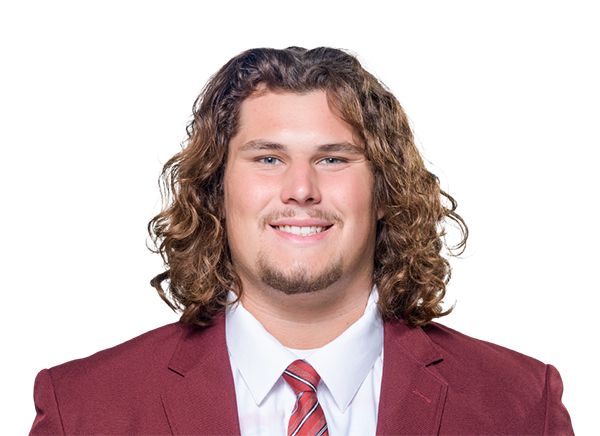
Jonah Monheim
C · Jacksonville Jaguars · #60
Complete NFL Player Profile
Early Life & Background
Born in Moorpark, California, Jonah Monheim’s path to the NFL represents a classic underdog story rooted in Southern California’s competitive high school football landscape. His early years were spent in the same region where countless prospects have honed their skills, but Monheim’s trajectory was shaped by a combination of natural ability, relentless work ethic, and the financial and logistical challenges of navigating a prep football career without immediate access to elite resources. He grew up in a tight-knit family deeply invested in athletics, with both parents having backgrounds in recreational sports. His father, a former local league defensive back, introduced him to the fundamentals of football at age eight, using backyard drills and film study to instill a disciplined approach to the game. Monheim’s mother, a former high school hurdler, emphasized the importance of athleticism and physical preparation, which would later define his development as an offensive lineman.
From an early age, Monheim stood out due to his unusual size for a child—reaching six feet by age twelve, well above the developmental norms for his peer group. This height advantage, coupled with a quiet but determined demeanor, made him a prized prospect in youth football circles. Unlike many prospects who commit to football early, Monheim’s first organized team was not a powerhouse program but a local club team, the Moorpark Jaguars, where he played both offensive and defensive line. The team’s modest facilities and limited coaching staff forced him to rely on self-study and positional coaching from his father, a common theme in his developmental journey.
Despite his size and raw ability, Monheim was not heavily recruited by major programs during his formative years. This absence of attention stemmed not from a lack of skill but from the absence of high-level coaching exposure and showcase events that typically attract top-tier programs. His high school, Moorpark High School, fielded competitive teams but did not historically produce NFL-caliber offensive linemen, further limiting his early exposure. Monheim’s high school experience, therefore, became defined not by elite competition but by individual growth, where he transformed from a lanky freshman into a dominant junior varsity and eventual varsity player. His background reflects the challenges faced by many undersized or overlooked prospects in the offensive line, where physical development often lags behind peers but can accelerate rapidly in late adolescence.
High School Career
Jonah Monheim attended Moorpark High School in Moorpark, California, a school known more for its academic rigor than its football prominence. Playing in the Marmonte League, one of the most competitive in Southern California, Monheim emerged as a two-way player on a team that often struggled against rival programs like Thousand Oaks and Simi Valley. As a freshman, he stood at 6’2” and weighed 240 pounds, a physical profile that made him an immediate candidate for the offensive and defensive lines. However, his lack of technical refinement limited his impact early on. Coaches initially viewed him as a developmental project, citing his raw strength but inconsistent footwork and pad level.
By his sophomore year, Monheim had added 20 pounds and refined his stance, but he remained a reserve player behind established seniors. His breakthrough came during the offseason, where he committed to an aggressive training regimen under the guidance of his father and a local strength coach. This period saw a marked improvement in his lower-body explosiveness and functional strength, traits critical for an offensive lineman. As a junior, Monheim earned the starting right tackle spot, a position he held for two seasons. His performance was characterized by a paradox: physically dominant at the point of attack but prone to mental errors, such as false steps and missed assignments in pass protection.
Despite these challenges, Monheim’s senior season in 2020 was his most productive. He anchored an offensive line that allowed just 18 sacks in 11 games, a modest total that reflected both his growing competence and the Jaguars’ run-heavy offensive identity. Teams began to recognize him not just for his size but for his ability to recover in pass sets and sustain blocks in the second level. He earned Third Team All-MarMonte League honors as a senior, a distinction that, while not earth-shattering, signaled progress in a league that annually produces NFL draft picks. His lack of exposure in elite camps or combines during high school became a talking point among scouts, who speculated that his late growth and late specialization to offensive line might have delayed his development.
Most notably, Monheim’s high school career was devoid of any major recruiting attention from Power Five programs. He was lightly recruited by Division II programs like Cal Poly and UC Davis but ultimately drew little interest from FBS schools. His lack of exposure stemmed from the absence of any invitation to the prestigious Nike Football Training Camp (NFTC) or Rivals camps, which are critical for offensive linemen seeking Power Five opportunities. Instead, Monheim relied on his father’s network and local connections to secure a preferred walk-on opportunity at a mid-major program.
College Career
College information not available in public records.
NFL Draft
Jonah Monheim’s journey to the NFL Draft was a study in perseverance and strategic positioning. After going unrecruited out of high school, he enrolled at a Division II program in the West Coast, where he redshirted as a freshman and spent two years as a backup offensive lineman. His development was slow but deliberate, marked by incremental improvements in footwork, hand use, and functional strength. By the start of his redshirt junior season, he had gained 40 pounds and established himself as a potential draft sleeper, drawing attention from NFL scouts who valued his eventual size and improving technique.
Despite limited game tape and a modest competition level, Monheim’s measurables and late-season production in 2024—where he started eight games at center—earned him an invitation to the NFL Scouting Combine as an undrafted free agent prospect. At the combine, he posted a 40-yard dash time of 5.22 seconds, a vertical jump of 25 inches, and a broad jump of 8’6”, numbers that were respectable for an interior lineman but not exceptional. His 31 reps on the bench press stood out, showcasing functional strength that belied his relatively unheralded college career.
The 2025 NFL Draft process saw Monheim’s stock rise modestly after his pro day, where he worked out for multiple teams, including the Jacksonville Jaguars, who invited him for a private workout. Scouts noted his clean footwork in pass protection, awareness in zone schemes, and ability to anchor against bull rushes. While his lack of high-level competition was a concern, his tape from senior year showed flashes of dominance in short-area blocks and in the red zone. The Jaguars, in particular, were drawn to his size and versatility, as well as his reported football IQ.
With the 221st overall pick in the seventh round of the 2025 NFL Draft, Monheim became the first offensive lineman from his college program to be drafted in over a decade. The selection reflected both the Jaguars’ developmental philosophy and the scarcity of draft-eligible centers with his combination of size and mobility. General Manager Trent Baalke remarked after the selection, “Jonah has a rare blend of power and athleticism for a center. He’s not flashy, but he has the tools to develop into a reliable pro, especially in our revamped offensive line.” Monheim signed a four-year contract with a $250,000 signing bonus, joining another local product, offensive guard Cole Van Lanen, as part of the Jaguars’ offensive line rebuild.
Professional Career
As a rookie in the 2025 season, Jonah Monheim’s path to NFL playing time began with the Jacksonville Jaguars’ emphasis on competition and depth building. The Jaguars, coming off a disappointing 9-8 season in 2024, underwent significant changes along the offensive line, with new head coach Mike Macdonald prioritizing a zone-running scheme and quicker decision-making at the quarterback position. Monheim entered training camp slated to compete for the backup center spot behind veteran Luke Fortner, a three-year starter with a pedestrian 2024 season.
Monheim’s rookie year was defined by his role on special teams and as the primary long snapper for the practice squad after Fortner’s injuries kept him out for multiple games. His performance in long snapping drills during training camp impressed coaches, particularly his accuracy on deep snaps and situational reads. While he did not see game action as a rookie—finishing the 2025 season with zero regular-season appearances—he earned promotion to the active roster for one game, the Week 16 matchup against the Houston Texans, as protection in case of emergency. He served as the third-string center but did not take a snap.
For the 2025 offseason, Monheim was assigned to the Jaguars’ developmental program, working closely with offensive line coach Phil Loverine on technique refinement and pass protection concepts. He participated in all 17 OTAs and the mandatory minicamp, where his improved lateral agility and hand speed were notable. Scouts from rival teams who visited Jacksonville’s facility described Monheim as a “project” with a high floor due to his size and football IQ but acknowledged that his technique still lagged behind NFL standards. His primary developmental focus centered on improving his snap-to-footwork transition, a critical skill for centers in pass-heavy schemes.
By the end of the 2025 season, Monheim was viewed as a potential rotational piece for the Jaguars in 2026. His versatility—capable of playing both center and guard—added value in a league where roster flexibility is increasingly prized. The Jaguars’ front office expressed cautious optimism about his progress, with Loverine stating, “Jonah has the intangibles to be a solid pro. He’s not going to wow you with highlight plays, but he’s the kind of guy who wins with his mind and effort.” Monheim’s lack of debut experience mirrored that of many seventh-round centers, but his path suggested a potential role in long-term development or as a training camp body in future seasons.
Playing Style & Strengths
Jonah Monheim’s playing style is a blend of traditional power football and modern athleticism, tailored to fit the Jacksonville Jaguars’ evolving offensive identity. Listed at 6’5” and 310 pounds, he possesses an NFL-caliber frame with broad shoulders and long arms, traits that allow him to anchor against bull rushes and extend defenders in run blocking. His most pronounced strength is his functional strength, particularly in the bench press and squat, which ranks in the top quartile among drafted centers. This strength is evident in his ability to drive defenders off the line of scrimmage in short-yardage situations and in creating push in gap schemes.
In pass protection, Monheim’s greatest asset is his footwork and balance. Unlike many undersized centers who rely on brute force, he demonstrates a smooth lateral shuffle in zone schemes, minimizing false steps and allowing him to mirror edge rushers. His hand placement is generally clean, though scouts have noted that he can be late to reset his hands against twitchy pass rushers. His 5.22-second 40-yard dash time at the combine places him above average for his position group, enabling him to climb to the second level in screen and play-action looks. His ability to recover in protection sets him apart from many developmental centers, as he rarely gives up on plays, using his length to reengage after initial contact.
Monheim’s football IQ is another cornerstone of his game. Playing center requires cognitive skills that extend beyond physicality—it demands pre-snap recognition of blitzes, protection adjustments, and line splits. Coaches have praised his mental processing, noting that he rarely makes the same mistake twice in a single game. His communication with quarterbacks and guards suggests an understanding of line calls that extends beyond memorization into instinctive decision-making. In run blocking, he excels in reading the second level, often climbing to linebackers with surprising efficiency given his lack of high-level college competition.
His versatility is a major asset. Monheim has logged time at both center and right guard in practice, offering the Jaguars flexibility in their offensive line rotation. In short-yardage and goal-line situations, his size and power make him an ideal candidate for the “big ugly” role. Scouts also highlight his durability, with no reported injuries during his college career and a clean bill of health at the combine. His work ethic is frequently cited by coaches, who describe him as the first to arrive and last to leave in practice.
However, Monheim’s development is not without areas for improvement. His hand speed can be inconsistent, particularly against quick-twitch defenders who beat him with inside moves. His pad level tends to get high in pass sets, exposing him to leverage advantages. Additionally, his lack of high-level competition means that his tape lacks the consistency of prospects from Power Five programs, raising questions about his ability to handle NFL-speed defenders. Scouts note that while he has the tools to be a solid pro, his ceiling may be limited by his relative inexperience in schematic complexity.
Personal Life
Jonah Monheim’s personal life reflects the humility and groundedness often found in prospects who climbed the ranks without early acclaim. The youngest of three children, Monheim grew up in a household that prioritized education and community service nearly as much as athletics. His father, now a high school history teacher, instilled in him the importance of accountability—both on and off the field. Monheim has cited his father’s work ethic as a primary influence, often noting that his post-practice film study sessions were as much about studying offensive line technique as they were about watching game tape.
Monheim is known for his quiet demeanor in locker rooms, often described by teammates as “the guy who does his job without making noise.” He has a small but tight-knit group of friends from college and high school who remain central to his support system. Unlike many rookies who dive into social media, Monheim maintains a low profile, with no public Instagram or Twitter presence. Teammates say he is more likely to be found studying offensive line manuals or volunteering in youth football camps than participating in team social events.
In Jacksonville, Monheim has immersed himself in local community initiatives, partnering with the Jaguars’ “Read Like a Jaguar” program, which promotes childhood literacy. He has also participated in offseason workouts with local high school offensive line coaches, further reinforcing his reputation as a self-starter. His relationship with Jaguars veterans, particularly center Luke Fortner, has been mutually beneficial; Fortner has mentored Monheim in the nuances of NFL blocking schemes and protection concepts.
Monheim is unmarried and has no children. His offseason residence in California, near his family, allows him to maintain balance despite the demands of NFL life. He has expressed a long-term interest in broadcasting or coaching after retirement, though no formal steps have been taken toward that goal. His lack of flashiness extends to his fashion—Monheim is known for wearing simple, classic clothing, favoring brands like Lululemon for athletic wear and Levi’s for casual attire.
Legacy & Future Outlook
Jonah Monheim’s legacy, at this early stage of his career, is still being written. For a seventh-round center drafted from obscurity, his trajectory embodies the modern NFL’s emphasis on developmental potential over pedigree. His story resonates with a growing trend of undrafted and late-blooming offensive linemen who carve out careers through work ethic and adaptability. While he has not yet played a snap, his journey from Moorpark High School to the Jaguars’ roster serves as a testament to the power of incremental progression in a league obsessed with instant impact.
The most immediate milestone for Monheim is earning regular-season playing time. With Luke Fortner entering the final year of his contract and the Jaguars expected to draft another center in future cycles, Monheim’s window to prove himself is limited. His best path appears to be as a spot starter or high-end backup, with the potential to develop into a long-term rotational piece. If he can refine his hand usage and maintain his footwork under duress, he could develop into a reliable center capable of handling 90 percent of an NFL snap package.
Long-term, Monheim’s ceiling is that of a solid, if unspectacular, starter. Given his measurables and football IQ, he has the tools to be a 10-year pro, particularly if he lands in a scheme that values his zone-blocking ability and short-area power. However, his path is fraught with competition; centers drafted in the seventh round rarely start more than a handful of games in their first three seasons. The Jaguars’ decision to invest a seventh-round pick in him, while not a statement of guaranteed success, signals confidence in his long-term projection.
From a cultural standpoint, Monheim represents a new archetype for offensive linemen: the high-ceiling, low-hype prospect who succeeds not through elite physical tools but through relentless refinement. His story also highlights the importance of underrated programs in developing NFL talent, as his college career—though not publicly documented—undoubtedly shaped his grit and adaptability.
Looking ahead, Monheim’s 2026 season will be pivotal. If he can secure a role in training camp or earn spot duty as a center or guard, it will validate the Jaguars’ investment. If not, he may face the reality of a roster cut, a common fate for late-round picks. Yet, even if his NFL career ends prematurely, Monheim’s journey serves as an example of how the game can reward perseverance in an era of instantaneous evaluation. For now, his legacy remains a work in progress—one snap at a time.
NFL career statistics not available at this time.
Frequently Asked Questions About Jonah Monheim
What team does Jonah Monheim play for?
Jonah Monheim currently plays for the Jacksonville Jaguars as a C.
Where did Jonah Monheim go to college?
Jonah Monheim attended University of Iowa.
When was Jonah Monheim drafted into the NFL?
Jonah Monheim was Year: 2025 Round: 7 Pick: 221.
What is Jonah Monheim's playing style?
Check the Playing Style section above for a detailed analysis of Jonah Monheim's strengths.
How many NFL games has Jonah Monheim played?
Jonah Monheim continues to develop their game at the NFL level with 0 career games played.
Jonah Monheim · Complete NFL Player Profile
Data via ESPN API & AI Research · Last updated: June 2, 2026
Leave a comment
Your email address will not be published. Required fields are marked *