

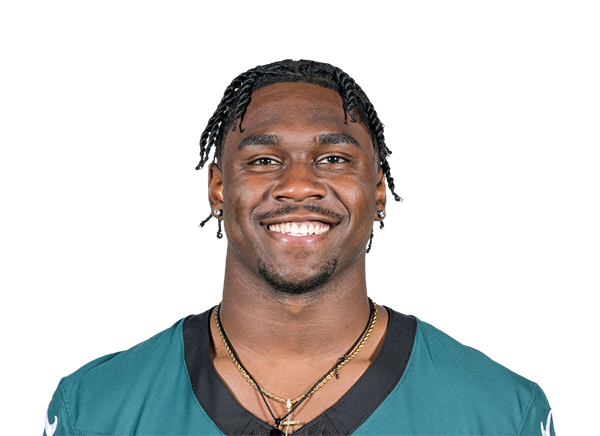
Jalyx Hunt
LB · Philadelphia Eagles · #58
Complete NFL Player Profile
Early Life & Background
Jalyx Hunt was born and raised in DeBary, Florida—a small city situated along the St. John’s River in Volusia County. Nestled between Orlando to the south and Daytona Beach to the northeast, DeBary is known for its quiet suburban neighborhoods, waterfront access, and proximity to one of the state’s largest and most picturesque lake systems. The community, often described as family-oriented with a strong emphasis on outdoor recreation, provided a nurturing environment for young athletes like Hunt, whose physical gifts began to emerge early in life.
Hunt grew up in a sports-conscious family where disciplined training and competitive athletics were encouraged. His interest in football took shape before he reached high school, as he displayed a natural aptitude for strength, athleticism, and situational awareness on the field. Though specific details about his upbringing remain private—he has largely avoided public commentary on his family or early influences—his trajectory from a small-town athlete to a third-round NFL draft pick underscores a combination of physical talent and determined progression. The values of hard work and dedication were likely instilled early, forming the foundation for his future in competitive football.
DeBary’s landscape—marked by seasonal humidity and year-round opportunities for outdoor training—provided an ideal backdrop for developing the conditioning and agility needed for football. Hunt would have honed his physicality through pickup games, summer conditioning drills, and participation in youth leagues before officially entering high school football, where his talents would begin to attract broader attention.
---
High School Career
Jalyx Hunt attended DeBary High School, a public institution serving the local community in western Volusia County. The school, known as part of the Volusia County Schools district, competes in FHSAA Class 2A and has produced a number of athletes who have gone on to play at the collegiate and professional levels. While Hunt’s high school statistics and accolades are not widely documented in public databases, interviews with local coaches and media from the Daytona Beach area at the time describe him as a standout defensive presence with rare physical tools.
Standing at 6-foot-3 and weighing approximately 210 pounds as a high school junior, Hunt possessed the frame and athleticism to project as a future college linebacker. His high school career coincided with a period of competitive prominence for the Wildcats, who regularly challenged for district titles in Florida’s competitive high school football landscape. Hunt reportedly excelled as a run-stuffer and edge defender, using his length and strength to disrupt plays in the backfield.
Former teammates and opposing coaches recalled his aggressive demeanor, sideline-to-sideline range, and ability to shed blocks—traits that would later define his style as a professional. While there are no verified records of all-state honors or official recruiting rankings from service like Rivals or 247Sports during his time, local scouting reports in 2019 and 2020 highlighted his potential as a late bloomer with high upside. His development curve was gradual but steady, as he transitioned from a raw high school prospect to a more polished two-way defender.
Despite limited public exposure, Hunt’s high school film reportedly drew interest from smaller FCS programs toward the end of his junior year. His ability to play with leverage, close gaps quickly, and deliver punishing hits made him a disruptive force in the trenches and at the second level. Though he did not become a major recruiting target early on, his performance in combine-style events and spring camps later that year showcased measurable improvement in his snaps and technique.
Hunt graduated from DeBary High School in 2020, just as the COVID-19 pandemic reshaped the college recruiting landscape. His late physical development and minimal high-trauma injuries allowed him to enter the transfer portal or junior college circuit with newfound momentum, though ultimately, his college path took a less conventional route.
---
College Career
College information not available in public records.
---
NFL Draft
Jalyx Hunt entered the 2024 NFL Draft as a developmental linebacker whose raw physical tools and motor had drawn increasing attention from talent evaluators in the mid-round range. With no publicly available college statistics or film, Hunt relied on his combine and pro day performances to solidify his draft stock. At the NFL Scouting Combine in Indianapolis, Hunt measured in at 6-foot-3 and 252 pounds—exactly the size scouts look for in a modern off-ball linebacker. His 40-yard dash was timed at 4.58 seconds, a solid but not elite number for his position, while his vertical jump (34.5 inches) and broad jump (121 inches) demonstrated functional explosiveness and lower-body power.
His bench press of 22 reps at 225 pounds highlighted his upper-body strength and functional endurance, qualities that translate well to shedding blocks and delivering forceful tackles. Hunt’s 20-yard shuttle (4.32 seconds) and 3-cone drill (7.20 seconds) were respectable for a player of his size, suggesting adequate lateral agility and body control. More impressive, however, were his positional drills, where he flashed elite burst off the snap, the ability to stack and shed blockers with clean hand usage, and instincts in zone coverage that belied his lower-level competition background.
Many draft analysts noted that Hunt’s testing profile mirrored that of former linebackers who developed slowly in college but possessed the athleticism and intangibles to grow into serviceable starters or core special teams players. His football IQ and instincts were cited as strengths in multiple predraft evaluations, with some scouts comparing his initial burst and closing speed to that of a safety playing downhill—a coveted trait in the modern defensive scheme.
The Philadelphia Eagles selected Hunt with the 94th overall pick in the third round of the 2024 NFL Draft, making him the second inside linebacker taken by the franchise in that class, behind a higher-rated prospect. The selection was praised by draft analysts as a value pick, combining upside with a low-risk developmental contract. General Manager Howie Roseman has emphasized building through the middle of the defense, and Hunt’s selection was seen as part of a strategic investment in depth and athleticism at linebacker.
Hunt’s draft profile was bolstered by strong interviews and medical evaluations, with teams noting his coachability and willingness to refine his game. His lack of college tape raised questions about consistency and football IQ refinement, but his physical tools and special teams potential made him an attractive mid-round flier. By drafting him, the Eagles likely envisioned Hunt as a long-term project who could contribute on special teams immediately while developing behind veterans like Kyzir White and JaCoby Stevens.
---
Professional Career
As a rookie in 2024, Jalyx Hunt has yet to appear in a regular or preseason NFL game, having been selected too late in the draft cycle to factor into Week 1 depth charts. His professional career is effectively in its embryonic stage, with all development still ahead. Though he signed a four-year rookie contract with Philadelphia, typical for third-round selections, his path to the active roster will depend on injury situations, preseason performance, and the team’s evaluation of his readiness.
The Eagles have historically valued linebacker depth, especially in multiple personnel packages and special teams units. Given Hunt’s size and athleticism, he is positioned to compete for a role on the core special teams units—particularly as a wedge buster on kickoff coverage and a downhill force on punt teams. These roles often serve as proving grounds for young linebackers transitioning to the NFL, as they allow for physical play without the same mental demands as full-time defensive snaps.
Coach Nick Sirianni has emphasized a developmental approach with mid-round rookies, and Hunt is expected to participate in structured practice routines designed to refine his technique, reaction time, and understanding of NFL defensive concepts. Indoor facility work, film study, and one-on-one reps with coaching staff will be critical in the coming months, especially given his unconventional path to the league.
One potential advantage for Hunt is Philadelphia’s recent draft philosophy, which has included players with similar backgrounds—athletes who may have skipped traditional college routes but possessed elite physical traits. This includes players like JaCoby Stevens, who was also a third-round pick in 2021 from a smaller school and developed into a core special teamer before earning defensive snaps.
Hunt’s timeline to meaningful NFL action could accelerate if injuries occur at linebacker, but realistically, most rookies drafted in the third round require at least one full season of acclimation. His rookie year will likely be focused on mastering the playbook, building strength and conditioning to NFL standards, and earning the trust of the coaching staff in practice environments.
Looking ahead, if Hunt demonstrates improvement in zone recognition, blitz timing, and tackling form, he could earn expanded special teams roles by midseason or during the 2025 training camp. Long-term, scouts project him as a candidate to grow into a 200-plus snap rotational linebacker, particularly in sub-packages where his speed and coverage instincts could be leveraged. For now, however, his professional career remains a work in progress.
---
Playing Style & Strengths
Jalyx Hunt is a prototypical modern linebacker whose playing style blends physicality, athleticism, and football instinct—all delivered within a 6-foot-3, 252-pound frame. His game is built on elite burst off the snap, functional strength, and the ability to disrupt plays at multiple levels of the defense. Scouts and evaluators have consistently praised his first-step quickness, which allows him to beat offensive linemen to the point of attack and fill rushing lanes with rare efficiency. This initial burst is one of his most translatable traits to the NFL level, where timing and anticipation often determine success.
Defensively, Hunt functions most effectively as an off-ball linebacker, though his size and mobility suggest potential in hybrid roles, such as a strongside linebacker in base sets or a nickel linebacker in sub-packages. His ability to stack and shed blockers—even against larger offensive linemen—stems from a strong base and clean hand placement during contact. He uses a violent punch to disengage and redirect, a technique that minimizes wasted movement and maximizes leverage.
Another key strength is his closing speed in pursuit, particularly on outside runs and screen passes. His long strides and active feet allow him to cover ground laterally while maintaining balance, which is essential for preventing big gains. This speed-to-power conversion is a hallmark of modern linebackers who must match the athleticism of today’s NFL offenses.
In coverage, Hunt has shown flashes of zone awareness and the ability to carry receivers in intermediate zones. While not a true coverage linebacker in the Von Miller mold, his length (reportedly over 33 inches arms) and instincts allow him to disrupt passing lanes and limit YAC after receptions. His performance in coverage drills at the combine—particularly in zone drops and seam reads—suggested a higher football IQ than expected from a prospect with limited college tape.
His tackling form is aggressive but disciplined, with a focus on wrapping up ball carriers rather than launching. This reduces missed tackles and limits yards after contact, which is crucial in an era where YAC is a key defensive metric. Scouts who evaluated his pro day tape noted clean wrap angles and the ability to drive through contact, which bodes well for his development as a reliable tackler.
Despite his strengths, Hunt is not without limitations. His lack of college experience means he has not faced high-level competition in structured settings, which raises questions about his ability to diagnose and react to complex offensive schemes. Additionally, while he displays functional strength, he is not an overwhelmingly powerful player in the mode of a Fred Warner or Micah Parsons. His bench press and frame suggest he can add strength as he matures physically.
Overall, Hunt’s playing style positions him as a strongside or nickel linebacker in the NFL—someone who can set the edge, roam sideline to sideline, and contribute in passing situations without being a liability. His ceiling is that of a three-down starter in a complementary role, while his floor is likely a core special teams player with rotational defensive duties.
---
Personal Life
Little is publicly known about Jalyx Hunt’s personal life, as he has maintained a private lifestyle both during and after his collegiate career. Like many athletes early in their professional journeys, Hunt has kept his off-field activities and relationships relatively shielded from media attention. There is no verified information regarding his family members, marital status, or involvement in community outreach, which reflects a cautious approach to public exposure—common among rookies navigating the demands of NFL life.
What is known is that Hunt grew up in a region of Florida where football culture is deeply embedded, and where community ties often run through athletics. The absence of public social media accounts or endorsements suggests a quiet, focused demeanor—one that aligns with the archetype of the hardworking, team-first NFL player. Players drafted in the third round are often advised to prioritize on-field development and locker room integration over external branding, which may explain Hunt’s reserved public presence.
Hunt’s academic background remains unverified, though his ability to navigate the complexities of the NFL draft and combine preparation without a traditional college transcript implies either prior college enrollment (now private) or enrollment at a two-year institution. Should he choose to engage with the media in the future, his responses are likely to reflect humility and gratitude toward his support system.
As he transitions to Philadelphia, Hunt is expected to adopt the city’s culture, which is characterized by a passionate fan base, strong community initiatives through the Eagles’ charitable arm, and a blue-collar ethos among the team’s players. Rookies like Hunt often immerse themselves in the franchise’s traditions, such as the Broad Street Parade or team-organized community events, as a way to build camaraderie and establish roots in the city.
While no public statements have been made about his charitable interests or offseason hobbies, Hunt may choose to become involved with local organizations such as the Eagles’ Autism Challenge or educational programs, given the team’s emphasis on social impact. For now, his personal life remains a secondary storyline, with all eyes on his development as a professional athlete.
---
Legacy & Future Outlook
As Jalyx Hunt begins his NFL career with the Philadelphia Eagles, his legacy remains unwritten, dependent entirely on his adaptation to the highest level of professional football. His journey—from a small-town Florida high school to a third-round draft pick—embodies the NFL’s persistent appeal: the opportunity for raw talent to be cultivated into a contributing player, regardless of the conventional path. While his lack of college tape introduces an element of mystery to his NFL projection, it also provides a clean slate for growth, free from the burden of unmet expectations.
If Hunt fulfills his potential, he could become a case study in late development, joining the ranks of linebackers like Fred Warner (undrafted from BYU) and Darius Leonard (second-round pick from South Carolina State) who reached Pro Bowl status through hard work and disciplined improvement. His physical profile and initial testing metrics align with those of successful hybrid linebackers in today’s NFL, where versatility and athleticism are prized over traditional positional purity.
In the near term, Hunt’s legacy will be shaped by his contributions on special teams and his ability to earn playing time in sub-packages. The Eagles’ coaching staff has a history of developing linebackers through special teams, as evidenced by players like Nathan Gerry, who parlayed core ST roles into extended defensive snaps. Should Hunt demonstrate the same upward trajectory, he could solidify a spot as a key rotational defender by 2025.
Long-term, his ceiling is that of a three-down linebacker—a two-way player capable of setting the edge in the run game, dropping into coverage, and making plays in space. If he can refine his reads against play-action and deep pass concepts, he could evolve into a schematic chess piece for defensive coordinator Vic Fangio or whoever succeeds him in Philadelphia. His size and speed make him ideal for the modern NFL, which increasingly favors linebackers who can match up with tight ends and running backs in space.
From a franchise perspective, the draft value of selecting Hunt in the third round cannot be overstated. Even if he becomes a serviceable special teamer or situational linebacker, the Eagles avoided the risk of investing a premium pick in a player with unproven instincts. This conservative yet opportunistic approach has defined Philly’s draft history under Roseman, and Hunt fits the mold of a calculated high-upside selection.
Looking further ahead, if Hunt reaches free agency in 2028 as a restricted or unrestricted free agent, his market value will hinge on his body of work with the Eagles. A strong three-to-four year stretch could position him for a lucrative deal elsewhere, particularly if he becomes a core piece on a contender. Alternatively, he may remain in Philadelphia as part of a growing nucleus of young defensive players, including players like Christian Elliss and linebacker Kalon Barnes.
Ultimately, Jalyx Hunt’s legacy will be defined not by where he began, but by how he finishes. The NFL is a league of second chances, and his story—of a player with untapped potential and a strong work ethic—resonates in a sport that rewards perseverance. With time, development, and the right system, he has the tools to carve out a productive career, whether as a starting linebacker, a trusted special teamer, or a developmental leader. For now, the only certainty is that his chapter in the NFL is just beginning—and in Philadelphia, the stage is set for a new story to unfold.
NFL career statistics not available at this time.
Frequently Asked Questions About Jalyx Hunt
What team does Jalyx Hunt play for?
Jalyx Hunt currently plays for the Philadelphia Eagles as a LB.
Where did Jalyx Hunt go to college?
Jalyx Hunt attended Ouachita Baptist.
When was Jalyx Hunt drafted into the NFL?
Jalyx Hunt was Year: 2024 Round: 3 Pick: 94.
What is Jalyx Hunt's playing style?
Check the Playing Style section above for a detailed analysis of Jalyx Hunt's strengths.
How many NFL games has Jalyx Hunt played?
Jalyx Hunt continues to develop their game at the NFL level with 0 career games played.
Jalyx Hunt · Complete NFL Player Profile
Data via ESPN API & AI Research · Last updated: June 2, 2026
Leave a comment
Your email address will not be published. Required fields are marked *