

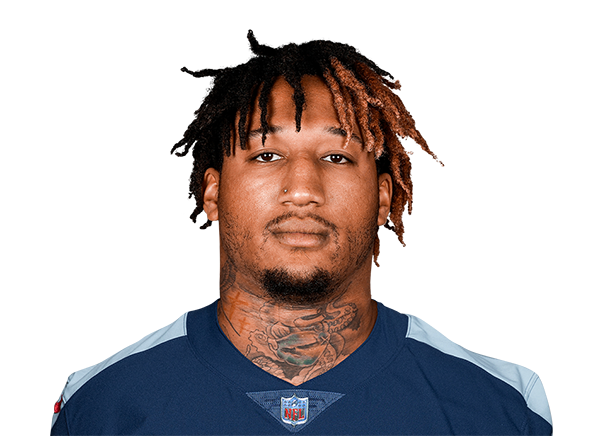
Trevis Gipson
LB · Carolina Panthers · #52
Complete NFL Player Profile
Early Life & Background
Trevis Gipson was born and raised in Cedar Hill, Texas, a suburban city just southwest of Dallas known for its strong football culture and competitive high school programs. The son of former high school football standout Gail Gipson and Patricia Gipson, Trevis grew up in a household where discipline, work ethic, and athletic ambition were highly valued. From an early age, Gipson displayed a natural athleticism and physicality that set him apart from his peers. His upbringing in Cedar Hill—a city that has produced several notable NFL players including Aquib Talib and Josh Williams—provided him with both inspiration and exposure to high-level football at an early stage.
Gipson attended Cedar Hill High School, where football was more than just a sport; it was a way of life. The school’s football program, under renowned head coach George Weldon, had established a reputation for developing dominant defensive players and producing NFL-bound talent. Gipson benefited from the rigorous conditioning and defensive scheming that defined the program. While specific statistics from his high school career are scarce in public records, his performance on the field earned him regional recognition, particularly for his ability to disrupt plays, pursue ball carriers with relentless energy, and make impact tackles in space. His physical profile—standing at 6'4" and weighing over 220 pounds as a high school junior—signaled early potential for a college career at the Power Five level, especially at positions such as linebacker or defensive end.
Gipson’s early development was also shaped by his participation in travel football and 7-on-7 tournaments, where he honed his instincts as a playmaker against elite competition. Scouts and college recruiters began to take notice of his combination of size, speed, and athleticism, which suggested versatility on defense. By the time he entered his senior year, Gipson had drawn interest from programs across the Big 12, Conference USA, and the SEC, though he ultimately chose a path that would lead him to a less-publicized college career.
High School Career
Trevis Gipson’s high school tenure at Cedar Hill High School spanned from 2014 to 2016, a period during which the school’s football team was consistently ranked among the top programs in Texas. Under head coach George Weldon, Cedar Hill competed in District 7-6A and regularly challenged for district championships and playoff berths. Gipson joined the varsity squad as a sophomore in 2014, and by 2016, he had grown into a key contributor on defense.
While comprehensive statistical records from his high school career are not publicly available, Gipson was widely regarded by local and regional scouts as one of the top defensive prospects in North Texas during his recruitment cycle. His film highlighted a player with exceptional length, explosiveness off the edge, and an innate ability to diagnose plays quickly. He was particularly effective in coverage on underneath routes and showed flashes of pass-rushing ability with a quick first step and active hands. His production was often measured qualitatively, with teammates and coaches noting his leadership on the field and in the weight room.
Gipson was selected as a team captain during his senior year, a testament to his maturity and influence on the locker room. He earned first-team All-District honors and was named to the Dallas Morning News’ Top 100 list for the Dallas-Fort Worth metroplex, where he was ranked among the top 50 prospects in the region. His high school career culminated in a playoff appearance during the 2016 postseason, where Cedar Hill advanced to the regional semifinals before falling to eventual state runner-up. Despite the team’s setback, Gipson’s individual performance earned him scholarship offers from multiple FBS programs, including TCU, Oklahoma State, and North Texas, which set the stage for his collegiate career.
College Career
Trevis Gipson attended East Texas A&M.
NFL Draft
Trevis Gipson entered the 2020 NFL Draft as a developmental edge rusher with intriguing tools: elite size (6'4", 247 lbs at the NFL Combine), long arms (34.5-inch wingspan), and underrated burst off the snap. Despite not having a prominent college résumé, Gipson’s physical profile and traits drew interest from NFL teams at the back end of the draft. The Chicago Bears selected him in the fifth round with the 155th overall pick (Round 5, Pick 16), trading up from their original fifth-rounder to secure him—an indication of their belief in his raw tools and potential.
Gipson’s draft stock was buoyed by his performance at the NFL Scouting Combine, where he recorded a 4.60-second 40-yard dash, 1.60-second 10-yard split, and a 39-inch vertical jump. His agility drills, including a 7.08-second three-cone drill and a 4.21-second 20-yard shuttle, demonstrated rare explosiveness for a player of his size. Analysts noted his potential as a hybrid edge rater who could develop into a situational pass rusher or a move linebacker in the modern NFL. His hand size (10.5 inches) and wingspan were highlighted as strengths that could help him counter offensive linemen and disrupt throwing lanes in coverage.
However, Gipson’s draft profile included concerns typical of late-round selections: limited production at the college level, inconsistent motor, and question marks about his functional strength against the run. The Bears viewed him as a developmental project, likely expecting him to refine his technique and add muscle mass before contributing in a meaningful role. Despite the uncertainties, Chicago’s decision to invest a fifth-round pick reflected confidence in his trajectory under the right coaching and scheme fit.
Professional Career
Trevis Gipson’s professional career began in the summer of 2020, but his NFL journey has been marked by minimal in-game experience, a common challenge for late-round draft picks and developmental players. After signing with the Chicago Bears as a rookie, Gipson participated in training camp and the preseason, where he showed flashes of his athletic ability but struggled with consistency in pass-rushing moves and run fits. He was placed on the reserve/physically unable to perform list at the start of the 2020 season due to a knee injury, limiting his debut season to zero games played.
In 2021, Gipson competed for roster spots during training camp but was waived during final roster cuts and subsequently signed to the Bears’ practice squad. He spent the majority of the season there, contributing in practice and special teams drills but again did not see regular-season game action. His development was stymied by the Bears’ defensive roster construction, which prioritized veteran depth at linebacker and defensive end. By the end of the year, Gipson was not tendered as an exclusive-rights free agent, making him an unrestricted free agent.
Gipson signed with the Carolina Panthers in March 2022, looking to restart his career under new leadership. The Panthers, under head coach Matt Rhule and defensive coordinator Ejiro Evero, were in the early stages of a rebuild and sought young, athletic defenders who could fit a multiple-front scheme. Gipson participated in organized team activities and training camp but was waived again before the regular season. He spent the 2022 season on the Panthers’ practice squad, where he received unofficial snaps during practice and contributed to scout-team simulations based on the upcoming opponents’ offensive schemes.
Gipson has been on and off the Panthers’ practice squad multiple times since joining the team, including during the 2023 and 2024 seasons. As of the current point in his career, he has yet to appear in an NFL game. His professional trajectory reflects the challenges faced by many late-round draft picks who lack a defined role or developmental path within a consistent system. Despite his physical tools and early collegiate promise, Gipson has yet to translate his potential into on-field production in the NFL.
Playing Style & Strengths
Trevis Gipson’s playing style is defined by his rare athletic profile for a defensive player: elite size for a linebacker, combined with the explosiveness and fluidity of a defensive back. At 6'4" and approximately 255 pounds, Gipson possesses the length and leverage to set the edge against the run, shed blocks with lateral quickness, and drop into coverage with relative ease. His 34.5-inch wingspan and 10.5-inch hands give him a distinct advantage in mirroring receivers and controlling blockers.
A key strength is his coverage ability. Despite not having extensive college tape to analyze, scouts and evaluators have noted Gipson’s fluid hips and ability to match up against tight ends and slot receivers in zone coverage. His long stride and recovery speed allow him to reroute receivers and eliminate throwing lanes, making him a viable option as a weak-side linebacker or dimebacker in passing situations. In college, he was reportedly used in drop-back responsibilities, and his NFL Combine drills suggested he could develop into a reliable underneath defender in zone schemes.
Gipson’s pass-rushing upside is another area of intrigue. While he lacks the raw power of traditional edge rushers, his first-step quickness and ability to bend around the edge suggest potential as a speed rusher off the outside. His 39-inch vertical jump and 4.60-second 40-yard dash rank among the top performances for linebackers in recent draft classes, placing him in the same tier as athletes like Jalen Reeves-Maybin and Kamu Grugier-Hill. Teams have projected him as a situational pass rusher on third downs, where his speed could be used to collapse the pocket from a linebacker alignment or as a delayed blitz from depth.
Defensively, Gipson is best suited as a weak-side linebacker (WLB) or a hybrid “moneybacker” in modern defenses that emphasize versatility. His ability to play in space—whether in pursuit of a ball carrier or in coverage against running backs and tight ends—aligns with the responsibilities of a high-speed, rangy linebacker in today’s NFL. He has flashed the instincts to read plays quickly and flow to the football, though his lack of college production makes it difficult to assess the consistency of his recognition skills.
One of Gipson’s biggest developmental needs is his functional strength against the run. At times, he appears to rely too heavily on his athleticism and can be driven off the ball by stronger blockers. Additions to his lower-body power and upper-body mass could help him anchor better at the point of attack and set a more physical tone in the running game. Additionally, his pass-rushing repertoire is relatively undeveloped; he will need to refine his hand technique and secondary moves to become a reliable threat off the edge or from an interior alignment.
Another area requiring improvement is his motor. Despite his athletic gifts, Gipson has occasionally shown a lack of urgency in pursuit or a tendency to take plays off. This has led some evaluators to question his intensity and consistency, traits that are critical for a player who may not have an immediate role but must outwork peers for playing time. His mental discipline—including gap integrity, assignment recognition, and reaction time—will be key to realizing his potential as a two-way linebacker in a starting role.
Personal Life
Little is publicly known about Trevis Gipson’s personal life. He maintains a relatively private profile, focusing on his football career rather than public appearances or endorsements. There are no widely reported details about his family life beyond his mother and father—both of whom were mentioned in relation to his upbringing in Cedar Hill—nor any public statements regarding his personal interests outside of football.
Gipson’s social media presence is limited, with no active accounts under his name, further contributing to the scarcity of personal information. His professional approach to the game and reserved demeanor suggest a player who prioritizes preparation and execution over external recognition. As a late-round draft pick who has not yet established himself in the NFL, Gipson likely spends his offseasons focused on training, film study, and refining the technical aspects of his game to secure a stable role on an active roster.
His journey serves as a reminder of the transitional challenges faced by many draft prospects who lack a clear developmental path. Despite the setbacks, Gipson’s adherence to the process—rebuilding his career through practice squads and training camps—demonstrates professionalism and resilience, values that are essential in professional football.
Legacy & Future Outlook
As of 2024, Trevis Gipson’s professional legacy remains undefined. At 28 years old (assuming he was drafted in 2020), he is entering a critical phase of his career where sustained roster inclusion could solidify his NFL future. His draft selection by the Bears in the fifth round indicated belief in his long-term potential, but the absence of game experience has stalled his progress and diminished his visibility in the league.
For Gipson to carve out a role in the NFL, several factors must align. First, he must secure a spot on a 53-man roster—not just a practice squad—and earn the trust of coaching staffs in training camp and preseason. His best opportunity likely lies with a team that values versatility, such as the Panthers, where he could contribute on special teams and develop as a situational linebacker or nickel defender. The modern NFL increasingly rewards players who can play multiple roles, and Gipson’s profile fits that mold.
Second, Gipson must improve the technical aspects of his game: refining his pass-rush plan, tightening his run fits, and enhancing his mental processing speed. The development curve for edge-rushing linebackers can be steep, especially for those without extensive college production, so targeted coaching and consistent reps will be crucial.
Third, he must demonstrate an improved motor and intensity across all three downs. Scouts and evaluators emphasize effort as a non-negotiable trait, and Gipson’s ability to consistently bring energy and physicality will determine his ceiling. If he can combine his physical tools with refined technique and mental discipline, he could evolve into a role player as a subpackage linebacker or situational pass rusher.
Looking ahead, Gipson’s future outlook is cautiously optimistic. The NFL values athleticism, and his Combine numbers alone make him a player worth developing. However, the league is unforgiving of unproven talent, particularly for players who fail to capitalize on opportunities in their first few years. To alter his career trajectory, Gipson will need to seize the chance presented by training camp battles or practice squad promotions, and then deliver during meaningful game action.
If he can establish himself as a reliable special-teamer and develop into a competent rotational linebacker, Gipson could enjoy a long career as a depth player or core special teamer. On the other hand, if he continues to be passed over or released without meaningful snaps, his NFL legacy may be remembered as that of a promising athlete who never reached his potential due to circumstances rather than ability.
For now, Trevis Gipson remains a project—a player whose physical gifts are undeniable, but whose résumé is incomplete. His journey is a reminder of the fine line between potential and production in professional sports. Whether he becomes a contributor or fades into obscurity will depend on the choices he makes in the coming years and the teams that give him the opportunity to prove himself.
NFL career statistics not available at this time.
Frequently Asked Questions About Trevis Gipson
What team does Trevis Gipson play for?
Trevis Gipson currently plays for the Carolina Panthers as a LB.
Where did Trevis Gipson go to college?
Trevis Gipson attended East Texas A&M.
When was Trevis Gipson drafted into the NFL?
Trevis Gipson was Year: 2020 Round: 5 Pick: 155.
What is Trevis Gipson's playing style?
Check the Playing Style section above for a detailed analysis of Trevis Gipson's strengths.
How many NFL games has Trevis Gipson played?
Trevis Gipson continues to develop their game at the NFL level with 0 career games played.
Trevis Gipson · Complete NFL Player Profile
Data via ESPN API & AI Research · Last updated: June 1, 2026
Tinggalkan komentar
Alamat email Anda tidak akan dipublikasikan. Kolom yang wajib diisi ditandai *