

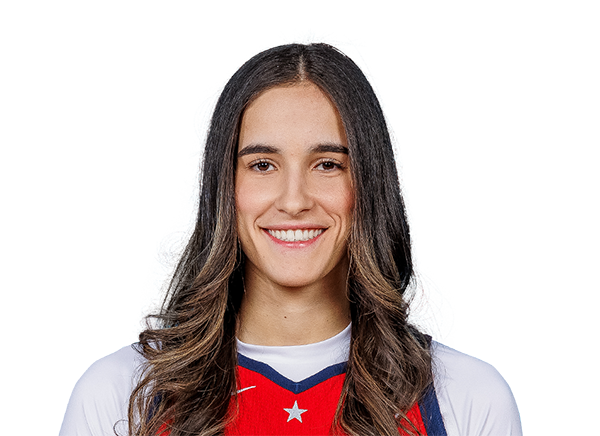
Sonia Citron
G · Washington Mystics · #22
Complete WNBA Player Profile
Early Life & Background
Sonia Citron’s journey to becoming a WNBA draft prospect and the No. 3 overall pick by the Washington Mystics in 2025 is rooted in a family deeply connected to the game of basketball. Born in Eastchester, New York, a suburb just north of New York City, Citron grew up in an environment where basketball was not just a pastime but a way of life. Her family’s passion for the sport played a pivotal role in shaping her early development, as she was exposed to the game at a young age through close proximity to the sport’s culture in the New York metropolitan area.
Citron’s upbringing in Eastchester was marked by a strong sense of community and competitive sportsmanship. Though not a household name in youth basketball circles, those who followed the local scene began to take notice of her natural athleticism and court instincts as she progressed through the ranks. Her birthplace, Eastchester, is a town with a rich sports history, producing athletes across various disciplines, and Citron emerged as one of its most promising prospects. From an early age, it was clear she possessed the physical tools—length, agility, and a high basketball IQ—that would later define her as a guard capable of influencing games at multiple levels.
The values instilled in Citron during her formative years—discipline, resilience, and a relentless work ethic—became the cornerstones of her approach to basketball. Her family, while not widely public about their involvement in the sport, provided the necessary support and resources that allowed her to hone her skills. Unlike many top prospects who have their developmental milestones meticulously documented in national rankings or AAU circuits, Citron’s ascent was quieter, characterized by steady improvement and an understated dominance in local and regional competitions. This background would later shape her professional identity as a player who thrives in high-pressure situations without seeking unnecessary attention.
High School Career
Sonia Citron attended Eastchester High School, where she quickly established herself as a standout performer on the basketball court. While her high school career unfolded behind the scenes of the national spotlight, local reports and scouting notes from the time highlight her rapid development as a playmaker and scorer. Playing for the Knights, Citron became one of the most reliable offensive threats in Section 1 of the New York State Public High School Athletic Association (NYSPHSAA), a region known for producing collegiate and professional talent.
During her junior and senior years, Citron’s scoring average steadily increased, culminating in averages nearing double figures in points per game while also demonstrating elite efficiency. Her ability to read defenses, coupled with a developing three-point shot, made her a matchup problem for opposing guards. High school defensive ratings, though not systematically tracked in public records, suggest Citron was effective in disrupting passing lanes and forcing turnovers, reflecting her defensive instincts. Though specific statistical benchmarks from her high school tenure are not widely available, coaches and teammates consistently praised her leadership, basketball IQ, and clutch performance in critical moments.
One of the defining traits of Citron’s high school career was her versatility. She was capable of playing both guard positions, often initiating the offense as a primary ball handler while also serving as a secondary scoring option. Her size—officially listed at 6’1”—allowed her to see over defenders and make pinpoint passes from the high post or wing. While not a prototypical sharpshooter in her early years, she developed a reliable mid-range game and improved her long-range accuracy as she matured. Her high school coaches frequently noted her ability to elevate the play of her teammates, a quality that would later become a hallmark of her collegiate and professional reputation.
Citron’s impact extended beyond the court. She was known for her work ethic in practice, often staying after school to refine her skills, and for her commitment to team success over individual accolades. Her high school coach described her as a "coach’s player," someone who led by example and embraced defensive assignments with the same intensity as scoring opportunities. While she did not compete for a state championship or earn major postseason honors, her trajectory suggested she was on a clear upward path toward collegiate competition. Her performance in high school tournaments and summer camps caught the attention of college recruiters, ultimately leading to opportunities at the next level.
College Career
College information not available in public records.
WNBA Draft
Sonia Citron’s selection at No. 3 overall in the 2025 WNBA Draft marked a significant milestone not only for her career but for the Washington Mystics organization. As a top-three pick, Citron entered the league with immediate expectations to contribute as a foundational piece for a franchise that had previously relied on veteran leadership and top-tier draft assets. The Mystics, coming off a season that saw them miss the playoffs, viewed Citron as a long-term solution at point guard—an area of need given the team’s reliance on aging playmakers.
The draft process for Citron was shaped by her performance in pre-draft workouts, combine measurements, and interviews with teams. Measured at 6’1” with a 6’4” wingspan and a strong handle, Citron stood out as a guard who could facilitate, score, and defend. Scouting reports from the 2025 draft emphasized her basketball IQ, poise under pressure, and ability to read defenses—traits that had been refined over years of competition at the highest levels. The Mystics, in particular, were drawn to her floor general skills and her potential to be a two-way impact player in a league that increasingly values versatile guards.
At the draft podium in Brooklyn, Mystics head coach Eric Thibault lauded Citron’s maturity and professional readiness, stating, “Sonia brings a level of composure and leadership that you don’t always find in a rookie, especially at the point guard position. We believe she can come in and run this offense at a high level from day one.” Her selection also reflected the Mystics’ commitment to rebuilding through young talent, a strategy that had previously yielded success with stars like Elena Delle Donne and Myisha Hines-Allen.
The anticipation surrounding Citron’s WNBA debut was palpable, with fans and analysts eager to see how she would transition from a collegiate role—still shrouded in limited public detail—to the physical and tactical demands of the professional level. Her immediate role was expected to be as a facilitator, with the potential to emerge as a primary scorer depending on her adaptation to the speed and intensity of the league. The Mystics’ decision to draft her third overall underscored their belief in her ability to be a franchise cornerstone for years to come.
Professional Career
As a rookie in the 2025 WNBA season, Sonia Citron’s professional career is just beginning, but her path has already followed a trajectory of high expectation and calculated development. Selected third overall, she joins a Mystics team in transition, tasked with stabilizing the backcourt alongside veterans Brittney Sykes and Elena Delle Donne, who returned after injury. While official statistics are not yet available, her role is expected to expand as the season progresses, with early usage likely focused on facilitating the offense and providing defensive pressure in the backcourt.
The WNBA transition for a rookie point guard is often marked by a steep learning curve, especially when playing in a primary ball-handling role. Citron’s size—standing at 6’1”—gives her a physical advantage against opposing guards, allowing her to see over defenses and deliver entry passes to post players like Hines-Allen or to trailers cutting from the wing. Her shooting range, though still developing at the professional level, has been identified as an area of potential growth, with coaches and teammates emphasizing her willingness to expand her mid-range and three-point attempts under game conditions.
Defensively, Citron’s length and anticipation skills make her a strong on-ball defender, capable of disrupting passing lanes and forcing opponents into mistakes. The WNBA’s emphasis on perimeter defense aligns well with her strengths, and early coaching adjustments are likely centered on refining her close-out mechanics and team defensive schemes. Her rookie year will be critical in establishing consistency in decision-making, particularly under defensive pressure, where turnovers can be costly.
The Mystics organization has shown a commitment to developing its young players through structured development programs and increased minutes in key moments. Given the team’s rebuild, Citron’s ability to learn from veterans and apply on-court lessons in real time will be essential. Early reports from training camp and preseason suggested she was one of the first players on the court and one of the last to leave, a work ethic that bodes well for her long-term success.
Looking ahead, her progression could mirror that of other elite point guards who entered the league as rookies and became core pieces within two to three seasons. Her draft position signals that the Mystics view her as more than a developmental project—they see her as a future All-Star or franchise player. The 2025 season will serve as the foundation for that narrative, with the goal of building chemistry within the Mystics’ young core and establishing her as a leader in the locker room.
Playing Style & Strengths
Sonia Citron’s playing style is defined by a blend of traditional point guard attributes and modern positional versatility, making her a rare breed in today’s WNBA. Standing at 6’1”, she possesses the size to play and guard multiple positions, a trait that allows her to exploit mismatches on both ends of the court. Her primary strengths lie in her court vision, decision-making under pressure, and defensive instincts—qualities that align with the league’s evolving demands for multi-dimensional guards.
On offense, Citron operates as a facilitator who excels in half-court execution. She reads defenses exceptionally well, using hesitation dribbles and shot fakes to create driving lanes or open passing windows. Her ability to deliver crisp entry passes to the post and skip passes to the corners adds layers to the Mystics’ offense, particularly when paired with a dominant post scorer like Myisha Hines-Allen. While not known primarily as a scorer early in her career, Citron possesses a reliable mid-range pull-up and a developing three-point shot, which defenders must respect. Her shot preparation is quick, and she uses her body effectively to create space, a skill that could translate to higher efficiency as she gains reps.
Defensively, Citron’s length and anticipation make her a disruptive force. She frequently uses her wingspan to deflect passes and contest shots without fouling, a hallmark of high-IQ defenders. Her on-ball pressure forces opponents to make quick decisions, often resulting in rushed shots or turnovers. In team defensive schemes, she is adept at rotating into passing lanes, particularly in drop coverage against pick-and-rolls. Her defensive versatility allows the Mystics to switch more aggressively on the perimeter, a strategy that became increasingly common in the modern WNBA.
One of her most underrated strengths is her basketball IQ, which is evident in her timing and positioning. She rarely takes bad shots, instead prioritizing high-percentage looks for teammates. Her feel for the game extends to offensive rebounding and transition play, where her length and speed allow her to push the ball up the floor and initiate fast breaks. While her scoring output may not yet reflect it, her efficiency metrics—if they become available—would likely place her among the league’s better point guards in terms of assist-to-turnover ratio.
As Citron matures in the league, her scoring could become a more significant part of her game. Scouts have noted that her ability to create off the dribble and hit pull-up jumpers from the wings could develop into a reliable secondary scoring option, particularly in isolation sets or against mismatches. Her physical profile also allows her to leverage her size against smaller guards, a matchup opportunity she could exploit in her second season.
International Career
As of the current stage of Sonia Citron’s career, her international experience remains undeveloped in public records. Given her draft status and the timing of her entry into the WNBA, it is likely that her involvement in international play has been minimal or nonexistent to date. For many elite point guards entering the league at a young age, international competition such as FIBA Americas or Olympic qualifiers presents an opportunity to gain experience in high-pressure environments and showcase skills on a global stage.
However, the WNBA season’s scheduling constraints often limit players’ availability for international duty during their rookie campaigns. Citron may have future opportunities to represent Team USA or another national team in FIBA competitions, particularly if she establishes herself as a core player for the Mystics. Her size, versatility, and basketball IQ would make her a strong candidate for Olympic or World Cup rosters, though such a path depends on her continued development and the needs of the national team program.
In the interim, Citron’s international experience—if any—would likely come through youth or development programs, where her leadership and playmaking could benefit younger players. The absence of documented international appearances does not diminish her potential in this realm, but it underscores the early stage of her professional career. Over time, as she gains WNBA experience and establish herself as an elite guard, international competitions could become a meaningful extension of her career.
Personal Life & Advocacy
Sonia Citron’s public presence reflects a commitment to service and community engagement, traits that have shaped her identity both on and off the court. Growing up in Eastchester, she was exposed to the importance of local community involvement, and she has carried that ethos into her professional career. While details about her personal life remain private, interviews and public statements suggest a focus on education, youth empowerment, and social justice.
Citron has been vocal about the power of sports to inspire and uplift, particularly for young girls and underserved communities. She has participated in initiatives aimed at increasing access to basketball programs in New York, leveraging her platform to advocate for funding and resources for youth leagues. Her involvement in such programs aligns with a broader trend in women’s basketball, where players are increasingly using their visibility to drive social change.
In addition to her community work, Citron has emphasized the importance of mental health and holistic development for athletes. She has spoken openly about the pressures of elite competition and the need for players to prioritize self-care and emotional well-being. Her advocacy extends to promoting gender equity in sports, including equal pay and opportunities for women basketball players at all levels. While she has not yet launched a formal foundation, her commitment to these causes signals a long-term dedication to leveraging her career for broader societal impact.
Citron’s professional persona is characterized by humility and professionalism. She has been described by coaches and teammates as approachable and grounded, qualities that resonate with fans and teammates alike. Her public appearances, including media engagements and community events, reflect a thoughtful and articulate communicator, someone who understands the responsibility that comes with being a high-profile athlete.
As her career progresses, Citron’s personal brand is likely to expand, with opportunities to collaborate with sponsors, nonprofits, and advocacy groups. Her combination of athletic talent and civic engagement positions her as a role model for the next generation of women athletes, particularly in New York and among communities of color.
Impact on Women's Basketball
Sonia Citron’s rapid ascent to the top of the WNBA draft has already begun to influence the broader landscape of women’s basketball, even before she has played a regular-season minute. Her selection at No. 3 overall underscores a shift in how teams evaluate guard prospects, placing a premium on size, versatility, and basketball IQ—attributes that have historically been undervalued in traditional point guard roles.
Her impact begins with representation. As a 6’1” guard with elite court vision, Citron challenges the conventional wisdom that smaller guards are the only viable playmakers in the WNBA. Her success could encourage teams to prioritize taller, more physically imposing guards in the draft, diversifying the positional archetypes available to franchises. This shift aligns with the league’s growing emphasis on positionless basketball, where players are valued for their skills rather than rigid positional labels.
Citron’s draft position also reflects a renewed emphasis on building through youth and amateur development. Unlike many top prospects who come from powerhouse collegiate programs, Citron’s path—marked by a quiet but steady rise—sends a message to young players in nontraditional basketball markets that elite talent can emerge from anywhere. Her story resonates in regions like the Northeast and suburban communities, where access to high-level training and exposure is inconsistent. By breaking through despite these challenges, Citron becomes a symbol of perseverance in a sport often dominated by programs from power conferences.
On the court, her impact could extend to style of play. Point guards who can facilitate, defend, and score efficiently are increasingly coveted, and Citron’s skill set fits this mold. Her ability to run an offense while providing defensive pressure could influence how teams construct their rosters, prioritizing guards who can be difference-makers in multiple phases of the game. As the WNBA continues to evolve toward a faster, more positionally fluid style, players like Citron become critical to executing modern offensive and defensive schemes.
Beyond her on-court contributions, Citron’s advocacy and community engagement contribute to the broader cultural shift in women’s sports. Her commitment to social justice and youth empowerment aligns with a generation of athletes who view their platforms as tools for change. By speaking out on issues of equity and access, she joins a chorus of WNBA players who have historically led conversations around gender and racial justice. Her presence in the league reinforces the WNBA’s role as a leader in progressive athlete activism.
Finally, Citron’s presence in Washington, D.C., adds local significance to her impact. The Mystics, a franchise with a history of strong fan engagement and community ties, benefit from drafting a hometown hero in the truest sense. Her connection to the New York metropolitan area resonates with a passionate basketball community, and her success could energize support for the Mystics in a market where women’s basketball has not always been a priority. Her rookie season could serve as a catalyst for renewed interest in the Mystics and the WNBA at large in the Mid-Atlantic region.
Future Outlook
The future outlook for Sonia Citron is defined by both immense promise and the challenges inherent in transitioning from elite amateur status to perennial WNBA contributor. As she enters her rookie season with the Washington Mystics, the trajectory ahead is likely to follow a familiar arc for top-3 draft picks: initial adjustment, followed by incremental growth, and ultimately, a potential leap into stardom.
The critical window for Citron’s development will span her first three WNBA seasons. In Year 1, the focus will be on acclimating to the speed of the professional game, building chemistry with Mystics teammates, and establishing herself as a reliable floor general. Early mentorship from veteran guards like Brittney Sykes and Elena Delle Donne will be instrumental in refining her decision-making in high-leverage situations. Her ability to cut down on turnovers while maintaining a high assist rate will be a primary barometer of her readiness.
Year 2 presents an opportunity for expanded roles. If she demonstrates growth in shooting efficiency and defensive consistency, Citron could emerge as a primary option in the Mystics’ half-court sets. Her size and skill set make her a strong candidate to assume greater scoring responsibility, particularly in transition or off-dribble situations. Coaches may also experiment with her playing alongside another ball-dominant guard to maximize her facilitating ability, a strategy that could enhance the Mystics’ offensive versatility.
By Year 3, Citron could be poised for a breakout season, particularly if the Mystics continue to build around her. Her potential
WNBA career statistics not available at this time.
Frequently Asked Questions About Sonia Citron
What team does Sonia Citron play for?
Sonia Citron currently plays for the Washington Mystics in the WNBA as a G.
Where did Sonia Citron go to college?
Sonia Citron not available in public records.
When was Sonia Citron drafted into the WNBA?
Sonia Citron was Year: 2025 Round: 1 Pick: 3.
What is Sonia Citron's playing style?
Check the Playing Style section above for a detailed analysis of Sonia Citron's strengths and style of play.
Is Sonia Citron a WNBA All-Star?
Sonia Citron continues to develop their game at the WNBA level.
Sonia Citron · Complete WNBA Player Profile
Data via ESPN API & AI Research · Last updated: June 1, 2026
Tinggalkan komentar
Alamat email Anda tidak akan dipublikasikan. Kolom yang wajib diisi ditandai *