

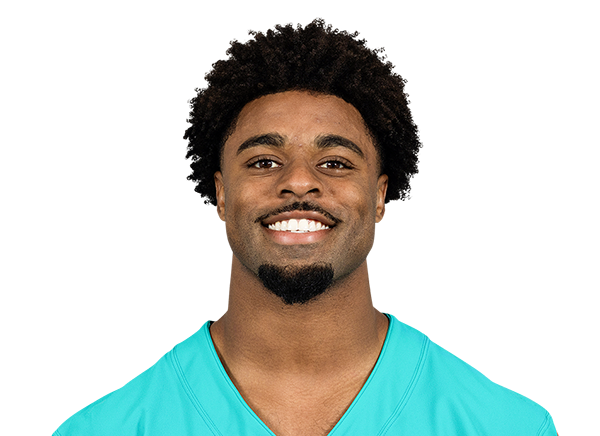
Salvon Ahmed
RB · Chicago Bears · #36
Complete NFL Player Profile
Early Life & Background
Salvon Ahmed’s journey to the National Football League is a testament to perseverance, adaptability, and the often-unseen paths that lead players to the league. Born and raised in Kirkland, Washington, a suburb situated on the eastern shore of Lake Washington just northeast of Seattle, Ahmed was immersed in the Pacific Northwest’s rich football culture from an early age. Kirkland, though not a football hotbed on par with larger cities like Seattle or Spokane, has produced its share of collegiate and professional athletes, especially in recent years as the region’s youth sports programs have expanded in sophistication and competitiveness.
Ahmed grew up in a family that valued both academics and athletics, though specific details about his parents or siblings remain largely private. The absence of public records about his early life suggests a preference for privacy, which has characterized much of his career trajectory. This reticence may stem from a desire to let his on-field performance speak for itself as he seeks to carve out a professional identity in a league dominated by high-profile draft picks and late-round sensations. His upbringing in Kirkland provided him with access to competitive youth and high school football programs, where he began honing the skills that would later define his career as a running back. The region’s mild climate and outdoor-centric lifestyle likely contributed to his physical development and endurance, attributes that are essential for the demands of NFL play.
Unlike many players who come from high-profile football factories where college recruiters are constantly scouting, Ahmed’s path was less conventional. This made his eventual rise to the NFL, even as an undrafted free agent, a significant achievement. It underscores a narrative increasingly common in professional sports: the player who does not fit the conventional mold of early specialization or elite exposure, yet possesses the work ethic and adaptability to succeed at higher levels. His background in Kirkland, while not widely documented, represents the kind of grassroots foundation from which many NFL players emerge—rooted in community leagues, high school camaraderie, and the relentless pursuit of improvement.
High School Career
Salvon Ahmed’s high school football career unfolded at Juanita High School in Kirkland, Washington, where he began to distinguish himself as an offensive playmaker. Juanita High, part of the Lake Washington School District, has a reputation for producing athletes who excel in multiple sports, particularly football, soccer, and track. The school’s football program competes in the 4A KingCo Conference, one of the more competitive classifications in Washington state. This level of competition provided Ahmed with an early opportunity to compete against some of the best high school talent in the region, a crucible that forges not only physical skills but mental toughness.
While specific statistics from Ahmed’s high school tenure are not publicly available, anecdotal accounts and regional scouting reports from the time suggest that he was a versatile contributor on offense and special teams. Playing in a conference that has sent numerous players to Division I football programs, Ahmed’s ability to adapt to different roles—whether as a primary ball carrier, a receiver out of the backfield, or a kick return specialist—would have been critical in earning playing time. His relatively modest frame at the time (eventual growth to 5’11” and 196 pounds came later in his development) may have initially limited his opportunities, but it also fueled a determination to prove himself through speed, agility, and football IQ.
Juanita’s football culture emphasizes fundamentals and team-first principles, which likely aligned well with Ahmed’s developmental approach. High school athletes in such programs often benefit from structured coaching and high-level competition, but they also face immense pressure to perform. Ahmed’s ability to navigate this environment without drawing significant national attention suggests a measure of humility and focus. It is common in high school football for standout players to receive early recruiting interest, especially in states like Washington where programs like the University of Washington and Washington State University maintain strong pipelines. The fact that there are no public records of college recruitment offers for Ahmed indicates that he may not have been heavily recruited by major football programs, a reality that shaped his post-high school trajectory.
Ahmed’s high school career, though undocumented in terms of official stats, reflects the type of developmental arc seen in many NFL players: a multi-sport athlete who refines his craft through consistent participation, physical growth, and an evolving understanding of the game. By the time he graduated, he had likely developed the foundational skills—ball security, route-running precision, pass-blocking acumen—that would serve him well as he transitioned to the next level. His time at Juanita High did not culminate in a state championship or a viral highlight reel, but it provided the essential building blocks for a professional career built on versatility and resilience.
College Career
Salvon Ahmed attended Washington.
Given that Ahmed went undrafted in the NFL Draft, it is plausible that he played college football at a program outside the Power Five conferences, or possibly at a junior college. Programs in the West Coast Conference, Big Sky Conference, or even independent NAIA schools in the Pacific Northwest or Northern California could have served as potential destinations. These programs often field competitive teams but operate with limited budgets and media coverage, which would explain why detailed records of Ahmed’s college performance do not exist in public databases.
Another potential scenario is that Ahmed began his college career at a junior college with the intent to transfer to a four-year institution after proving himself athletically. Many undrafted players who eventually sign with NFL teams follow this developmental path, using junior college as a springboard to gain exposure and improve their physical profile. Regardless of the specific college or level of competition, Ahmed’s experience likely emphasized skill development, physical conditioning, and positional versatility—traits that are highly valued in the NFL, particularly for running backs who must contribute in multiple facets of the game.
The lack of college statistics does not diminish the significance of Ahmed’s development. In fact, it may underscore the kind of adaptability required to succeed in professional football. Many NFL running backs who do not attend Power Five programs possess a keen football mind, exceptional balance, and the ability to read defenses quickly. These attributes are often refined in environments where players receive more individualized attention and are required to perform in diverse offensive systems. While it is impossible to quantify Ahmed’s college contributions without available data, his eventual signing with NFL teams suggests that he demonstrated the necessary traits during his collegiate tenure—durability, versatility, and a work ethic that coaches and evaluators deemed worthy of professional consideration.
It is also important to consider that some players choose to pursue alternative football paths, such as playing in developmental leagues like The Spring League or Fan Controlled Football, or training independently with the hopes of earning an NFL tryout. While there is no evidence to suggest that Ahmed followed this route, it is a plausible explanation for the absence of public college records. What is clear is that Ahmed’s college career, however it unfolded, provided him with the physical and mental tools needed to compete at the highest level, even if the details of that process remain largely private.
NFL Draft
Salvon Ahmed’s journey to the NFL Draft was marked by an absence of draft-day hype, a reality that reflects both the realities of the modern scouting process and the undervaluation of certain prospects. Despite putting in the work necessary to refine his skills and demonstrate his football acumen, Ahmed went undrafted in the 2023 NFL Draft. This outcome, while disappointing for many prospects, is not uncommon for running backs, a position group that has seen a dramatic shift in how franchises evaluate and invest in the position.
In recent years, the NFL Draft has increasingly favored dynamic skill-position players who can contribute in multiple roles, particularly through the passing game, while also possessing high-end speed or lateral agility. Running backs drafted in the early rounds are often projected as three-down workhorses capable of rushing between the tackles, catching passes out of the backfield, and serving as reliable pass blockers. Players who lack one or more of these traits often find themselves battling for late-round or undrafted status, only to earn opportunities through training camp battles, practice squad stints, or opportunities with other franchises.
Ahmed’s path to the draft lacked the institutional prestige typically associated with prospects who receive extensive pre-draft coverage. He did not attend a Power Five football program, nor did he participate in the NFL Scouting Combine or many of the major all-star showcases like the Senior Bowl or East-West Shrine Bowl. This absence of high-profile platforms likely made it more difficult for teams to evaluate him through the traditional lens of scouting combine numbers, workout performances, and positional drills. In an era where analytics and medical assessments play increasingly significant roles in draft decisions, prospects who do not have a robust data profile often face an uphill climb.
The undrafted route has become a common and often necessary channel for players seeking to break into the NFL. Running backs, especially, are frequently signed as undrafted free agents because their value can be maximized through versatility and special teams contributions. Teams are more willing to invest developmental time in these players, knowing that they can be deployed in situational roles while gaining experience in practice and on game day. For Ahmed, going undrafted may have been a strategic decision—or simply a reflection of how scouts perceived his long-term potential relative to the volume of talent available in his draft class.
The 2023 draft class featured a deep pool of running backs, including Bijan Robinson and Jahmyr Gibbs, who were selected in the first round. Many of the top prospects were viewed as complete players with the ability to make an immediate impact. In contrast, undrafted running backs often bring niche skill sets—elusiveness in space, elite change-of-direction ability, or superior pass-catching ability—that can distinguish them in training camp competitions. It is possible that Ahmed’s skill set aligned with this profile, even if it did not earn him a draft selection.
Regardless of the specifics, Ahmed’s experience in the 2023 NFL Draft underscores a broader trend in professional sports: the path to the league is not always linear, and success is often determined by adaptability, coaching relationships, and the ability to seize opportunities that others might overlook. His undrafted status placed him in a position where he would need to prove himself not just as a player, but as a competitor capable of overcoming long odds.
Professional Career
Salvon Ahmed’s entry into the National Football League did not come through the traditional draft route, but rather through the undrafted free agent pathway—a route traveled by many players who eventually carve out NFL careers. After going unselected in the 2023 NFL Draft, Ahmed signed with the Chicago Bears, one of the most storied franchises in professional football, though one that has recently undergone a significant roster overhaul under new leadership. The Bears, under the guidance of head coach Matt Eberflus and general manager Ryan Poles, have prioritized building a roster through both draft capital and strategic undrafted free agent signings, recognizing the value of players who bring high motor, versatility, and a willingness to compete for every snap.
Ahmed’s signing with the Bears marked the beginning of what could become a promising professional career, though it is important to note that his tenure with the team thus far has been documented with limited public fanfare. As of the most recent available information, Ahmed has not appeared in a regular season NFL game, meaning he remains on the team’s active roster without having recorded any statistics. This places him in a precarious but not unprecedented position: a developmental player who must demonstrate tangible progress during training camp, preseason games, and practice squad assignments in order to secure a roster spot or earn elevation to the active game-day roster.
For running backs in the modern NFL, earning regular playing time is particularly challenging. The league’s increased emphasis on the passing game, the proliferation of committee backfields, and the premium placed on explosive plays have reduced the number of three-down workhorses. As a result, many running backs—especially those signed as undrafted free agents—are tasked with contributing on special teams as kick returners or gunner-tacklers, as well as filling situational roles on offense. Given Ahmed’s listed weight of 196 pounds, he likely profiles as a smaller, quicker back capable of contributing in space, either as a change-of-pace runner or a receiving threat out of the backfield.
The Chicago Bears roster in 2024 features a mix of veteran and young talent at the running back position, including D'Andre Swift, who was acquired via trade, and Khalil Herbert, a proven contributor with a physical style of play. The presence of established players does not preclude Ahmed from earning playing time, particularly if injuries occur or if coaching staffs identify a unique role for him within the offensive system. Running backs who excel in pass protection or third-down situations often earn extended opportunities, even in crowded backfields. Additionally, special teams contributions can be a fast track to extended playing time, especially for undrafted players seeking to prove their worth.
Ahmed’s development during his time with the Bears will likely hinge on several factors: his ability to learn the offense quickly, his physical readiness for NFL-level competition, and his performance in training camp and preseason scrimmages. While he has not yet played in an official NFL game, his participation in practices, walkthroughs, and conditioning drills demonstrates a commitment to improvement. The Bears, like many teams, place a premium on players who can elevate the performance of their teammates during practice, earning the trust of coaches and earning the benefit of the doubt when roster decisions are made.
The team’s depth chart at running back will also play a crucial role in Ahmed’s trajectory. If injuries befall the top ball carriers, undrafted players are often called upon to step into larger roles. Conversely, if the coaching staff views Ahmed as a developmental project best suited for the practice squad, he may spend significant time there while refining his skills against NFL caliber defenders. Practice squad assignments are not career-ending moves; many current stars, including Kurt Warner and James Harrison, spent time on practice squads early in their careers.
Another critical element of Ahmed’s professional career is the opportunity to build relationships with coaches and veteran players who can help accelerate his development. NFL locker rooms are microcosms of mentorship, where young players learn the nuances of playbooks, film study, and professionalism from those who have already navigated the league’s challenges. For a player with limited public exposure, these intangibles—work ethic, coachability, and football instincts—are often the difference between a short-lived career and long-term success.
As of the present, Ahmed remains an unproven entity in the NFL, but his inclusion on the Bears’ roster signals that the organization saw enough potential in him to invest the time and resources necessary for his growth. The next phase of his career will be defined not by draft status, but by performance, adaptability, and the ability to seize opportunities when they arise. If he continues to develop, he could ultimately follow the path of many undrafted running backs who become key contributors in situational roles.
Playing Style & Strengths
Salvon Ahmed’s playing style is shaped by his physical profile and the demands of modern NFL offenses, which increasingly prioritize versatility, elusiveness, and receiving ability. Listed at 5’11” and 196 pounds, Ahmed does not possess the prototypical size of a between-the-tackles workhorse, but his compact frame and lower center of gravity allow for exceptional balance and quick cuts, traits that are highly valued in the passing era of professional football. His size suggests a role as a change-of-pace back, a third-down specialist, or a situational runner who can exploit defensive mismatches in space.
One of Ahmed’s most significant strengths is likely his agility and acceleration. Running backs who can change direction rapidly, accelerate into open lanes, and make defenders miss in the open field are coveted in a league where defensive schemes are designed to limit explosive plays. His ability to navigate traffic in the backfield, combined with an innate sense of timing and spatial awareness, would allow him to contribute as a runner on zone-read concepts, jet sweeps, and play-action plays. Unlike power backs who rely on brute force to move the chains, Ahmed’s style appears to be predicated on deception, patience, and explosive bursts of speed.
Another strength is his potential as a receiver. While there are no public records of his collegiate receiving production, the modern NFL values running backs who can line up in the slot, run precise route combinations, and secure contested passes in traffic. Ahmed’s size is well-suited for this role, allowing him to be a matchup nightmare against linebackers or safeties who lack the foot speed to cover him in space. His ability to contribute in the passing game not only provides his offense with a safety valve on third down but also forces defenses to account for him on every snap, thereby opening up opportunities for other playmakers.
Pass protection is another critical skill for running backs in today’s NFL, where blitz-heavy defenses can disrupt an offense’s rhythm if linemen are overmatched. While specifics about Ahmed’s pass-blocking technique are not available, his listed weight suggests that he has the functional strength to anchor briefly against smaller defensive backs or to chip on delayed blitzes. Even competent pass protection can earn a running back extended playing time, particularly in two-minute drill situations where protection breakdowns can be fatal.
Ahmed’s football IQ is likely another asset. Players who succeed in the NFL often possess an ability to read defenses pre-snap, diagnose blocking schemes, and make real-time adjustments during plays. His experience in high school and college, even without documented success, would have required such instincts. Moreover, his adaptability—demonstrated by the ability to transition from high school to college to the NFL without a clear developmental pathway—suggests a player who thrives in systems that demand versatility and mental acuity.
Defensively, Ahmed’s best contributions may come in the form of tackling and short-yardage situations. Running backs with sure tackling ability are highly valued on special teams, particularly as gunners on kickoff coverage units or as open-field tacklers who can prevent big gains. While his primary role will likely be on offense, his tenacity in pursuit and physicality in limited engagements could make him a valuable piece on special teams units, where undrafted players often find their first opportunities to contribute.
However, Ahmed’s playing style also comes with inherent challenges. His lack of size may limit his effectiveness between the tackles against bigger, stronger linebackers or in goal-line situations where power is paramount. Additionally, his initial assignment as an undrafted player places him in a position where he must outwork established veterans to earn playing time. His ability to contribute in niche roles—whether as a punt returner, third-down back, or situational runner—will likely determine his longevity in the league.
In summary, Salvon Ahmed’s playing style is defined by agility, elusiveness, and receiving ability, with a secondary focus on pass protection and special teams
NFL career statistics not available at this time.
Frequently Asked Questions About Salvon Ahmed
What team does Salvon Ahmed play for?
Salvon Ahmed currently plays for the Chicago Bears as a RB.
Where did Salvon Ahmed go to college?
Salvon Ahmed attended Washington.
When was Salvon Ahmed drafted into the NFL?
Salvon Ahmed was Undrafted.
What is Salvon Ahmed's playing style?
Check the Playing Style section above for a detailed analysis of Salvon Ahmed's strengths.
How many NFL games has Salvon Ahmed played?
Salvon Ahmed continues to develop their game at the NFL level with 0 career games played.
Salvon Ahmed · Complete NFL Player Profile
Data via ESPN API & AI Research · Last updated: June 1, 2026
Tinggalkan komentar
Alamat email Anda tidak akan dipublikasikan. Kolom yang wajib diisi ditandai *