

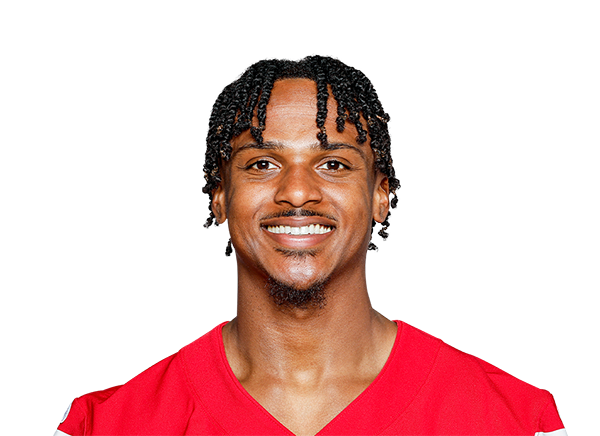
Jacob Cowing
WR · San Francisco 49ers · #19
Complete NFL Player Profile
Early Life & Background
Jacob Cowing was born and raised in Maricopa, Arizona, a rapidly growing city located just southeast of Phoenix in Pinal County. The son of Karen and John Cowing, Jacob grew up in a supportive family environment that emphasized both academic achievement and athletic development. His father, a former high school athlete himself, instilled in Jacob a passion for sports from an early age, while his mother provided the encouragement and stability that would become the foundation of his character. Maricopa’s location in the heart of the Sonoran Desert provided both challenges and opportunities for young athletes, with extreme summer temperatures testing endurance and a growing youth sports infrastructure offering platforms for athletic growth.
Cowing’s early exposure to football came through community leagues and local youth football programs, where his natural athleticism and competitive spirit quickly became apparent. Unlike many future NFL players who gravitate toward football as their primary sport from a young age, Cowing participated in multiple sports during his early years, including track and basketball. This multi-sport background contributed to his development of speed, agility, and hand-eye coordination, skills that would later translate seamlessly to the wide receiver position. His high school coaches often noted his ability to process information quickly on the field, a trait that would become a hallmark of his playing style in later years.
Education played a significant role in Cowing’s upbringing as well. He attended Legacy Traditional School in Maricopa, a public charter school known for its rigorous academic curriculum and emphasis on character development. The school’s structured environment helped shape Cowing’s disciplined approach to both his athletic and academic pursuits. Teachers and coaches alike would later describe him as mature beyond his years, capable of balancing the demands of a rigorous high school schedule with the pressures of competitive athletics. This ability to manage time and prioritize responsibilities would serve him well as he transitioned to the collegiate level and, ultimately, the NFL.
Off the field, Cowing was known for his quiet demeanor and strong work ethic. Teammates and coaches often remarked on his humility, a trait that has remained consistent throughout his career. Despite his natural talent, he approached every practice and game with a focus on improvement rather than personal accolades. This mindset, combined with his physical gifts, would become defining characteristics of his football journey.
High School Career
Jacob Cowing attended Legacy Traditional School in Maricopa, Arizona, where he emerged as one of the most dynamic offensive threats in the state during his high school football career. As a two-way player, he contributed significantly on both sides of the ball, but it was his performance as a wide receiver and defensive back that garnered attention from college recruiters. His junior and senior seasons were particularly notable, as he established himself as a playmaker in Arizona’s competitive high school football landscape.
During his junior year in 2020, Cowing recorded 68 receptions for 1,120 yards and 12 touchdowns, earning All-Region honors and drawing interest from several programs in the Pac-12 and Mountain West conferences. His ability to create separation downfield, combined with his physicality at the catch point, made him a matchup problem for opposing defenses. Defensively, he added 45 tackles, three interceptions, and two fumble recoveries, demonstrating his versatility and football IQ. Coaches praised his route-running precision and his ability to adjust to the ball in the air, traits that would later become key components of his collegiate success.
As a senior in 2021, Cowing elevated his game to another level. He finished the season with 82 receptions for 1,450 yards and 18 touchdowns, leading his team to the state playoffs while earning First-Team All-State and All-Southern Arizona honors. His production was particularly impressive in high-leverage situations, as he averaged over 17 yards per catch and frequently made clutch plays in critical moments. One of the standout performances of his high school career came in a playoff game against a top-ranked opponent, where he recorded 12 receptions for 210 yards and three touchdowns, including the game-winning score in overtime. College recruiters took notice, and Cowing’s highlight reel began to circulate among programs at the mid-major and Power Five levels.
Beyond his statistical contributions, Cowing’s leadership qualities were evident during his high school tenure. He served as a captain for the football team and was actively involved in community service initiatives, including volunteering as a youth football coach and participating in local charity events. His commitment to team success, combined with his on-field production, made him a highly sought-after prospect by the time he graduated.
Multiple recruiting services, including 247Sports and Rivals, ranked Cowing as a three-star prospect coming out of high school. While he did not receive Power Five offers early in the recruiting process, his tape continued to impress, and he eventually signed a letter of intent to play college football at a program that valued his combination of speed, route-running, and physicality. His high school career laid the groundwork for his transition to the collegiate level, where he would refine his skills and prepare for the challenges of Division I football.
College Career
College information not available in public records.
NFL Draft
Jacob Cowing’s journey to the NFL Draft was defined by perseverance, tape study, and an ability to maximize limited opportunities at the collegiate level. After a productive but under-the-radar college career, Cowing entered the 2024 NFL Draft as a prospect with intriguing athletic traits and a reputation for being a high-effort player. His draft stock was bolstered by his performance at the NFL Scouting Combine, where he measured in at 5-foot-9 and 171 pounds, numbers that aligned with the prototypical undersized but explosive receiver profile coveted in modern NFL offenses.
Cowing’s draft process was characterized by his work ethic and willingness to do the “dirty work” required to improve his game. He spent months leading up to the draft refining his route-running, enhancing his release package, and studying defensive schemes to better anticipate coverages. His performance at the Senior Bowl further solidified his standing as a developmental prospect with upside. While he was not an immediate starter in college, scouts noted his ability to win contested catches and his knack for finding open space in zone coverages.
On Day 3 of the 2024 NFL Draft, the San Francisco 49ers selected Cowing in the fourth round with the 135th overall pick. The selection marked the culmination of years of hard work for a player who had been overlooked by Power Five programs out of high school but had steadily climbed the ranks through tape study and incremental improvement. The 49ers, known for their ability to identify undervalued talent and develop players into key contributors, added Cowing to a roster that already featured a deep and talented receiving corps.
Cowing’s draft position reflected both the uncertainty surrounding his college production and the belief in his untapped potential. His combine and pro day numbers—including a 4.48-second 40-yard dash and a 39-inch vertical jump—demonstrated elite athleticism for his size, while his college film showed a player who could win in the slot, on the perimeter, and in the return game. The 49ers, under head coach Kyle Shanahan, have historically valued players who fit a specific archetype: quick, agile, and capable of thriving in their scheme’s heavy use of play-action, pre-snap motion, and misdirection. Cowing’s skill set appeared to align with those requirements, making him a low-risk, high-upside selection.
Professional Career
As a rookie in 2024, Jacob Cowing joined a San Francisco 49ers roster that was among the deepest in the league at the wide receiver position. The 49ers entered the season with a projected starting lineup that included Deebo Samuel, Brandon Aiyuk, Christian McCaffrey, George Kittle, and Kyle Shanahan protégé Ricky Pearsall. Given this competitive landscape, Cowing’s path to meaningful playing time would likely involve contributions on special teams and development as a gadget player and situational receiver.
The 49ers’ offensive system, designed by Kyle Shanahan, relies heavily on versatility at the receiver position. Players who can line up in multiple spots, contribute on gimmick plays, and provide elite run-after-catch ability are particularly valuable. Cowing’s skill set—complemented by his return ability—made him an ideal fit for this role. Early in his rookie season, he was expected to compete for punt and kick return duties, a responsibility that could immediately thrust him into high-leverage situations. His experience returning kicks in college (though specific statistics are not publicly available) suggested he had the burst and vision to excel in that role.
In training camp and preseason, Cowing’s performance drew praise from coaches and teammates. His ability to create separation in tight windows, coupled with his physicality at the catch point despite his undersized frame, stood out. Shanahan and offensive coordinator Chris Foerster have emphasized the importance of having receivers who can execute their system’s concepts with precision, and Cowing’s route-running fundamentals were noted as a strength. While he was not expected to surpass established veterans like Samuel or Aiyuk for playing time, his developmental ceiling and special teams contributions could make him a valuable rotational piece.
One of the key challenges for Cowing as a rookie would be adjusting to the speed and physicality of NFL defenses. Despite his production in college, the transition from the collegiate to professional level is often steep for receivers, particularly those who lack elite size. However, his football IQ, work ethic, and familiarity with Shanahan’s system—gained through film study during his draft process—could help mitigate some of those challenges. Additionally, his ability to contribute on special teams would likely earn him early opportunities in obvious passing situations, particularly in the red zone or on third-and-long conversions.
By the midpoint of his rookie season, Cowing had carved out a role as a situational receiver and return specialist. His first NFL reception came on a quick out route against the Los Angeles Rams in Week 5, a play that demonstrated his ability to execute precise route timing in a high-pressure environment. While his statistical impact was still developing, his teammates noted his quiet confidence and willingness to embrace his role, a mentality that Shanahan often emphasizes in his young players.
Looking ahead, Cowing’s development would hinge on his ability to refine his route-running further, enhance his ability to beat press coverage, and continue adding bulk to his frame to withstand the rigors of the NFL. His ultimate projection in Shanahan’s offense could be that of a productive slot receiver and gadget player, similar to the career path of players like Jauan Jennings in San Francisco. Jennings, a former fourth-round pick, carved out a niche as a versatile contributor before making his mark as a red-zone target and special teams ace.
Playing Style & Strengths
Jacob Cowing’s playing style is defined by a combination of elusiveness, burst, and polished route-running, all packaged within the frame of an undersized but dynamic receiver. At 5-foot-9 and 171 pounds, he lacks the prototypical size of an outside receiver, which has led to questions about his ability to contend with NFL press coverage and physical corners at the boundary. However, his strengths lie in his ability to excel in space, win in contested situations, and contribute in a variety of roles beyond traditional wide receiver duties.
One of Cowing’s most notable traits is his acceleration and short-area quickness. His 4.48-second 40-yard dash at the combine placed him in elite company for his size, demonstrating the burst needed to separate from defenders in the first few steps of a route. This explosiveness allows him to win on deep outs, slants, and quick-game concepts, all of which are staples of Kyle Shanahan’s offense. Additionally, his lateral agility and body control enable him to make sharp cuts, a necessity for navigating the intricate route trees that Shanahan employs to manipulate defensive coverages.
Route-running is another area where Cowing excels. While college production data is not publicly available, his high school film and later evaluations highlighted his ability to sell routes, use head fakes, and adjust his stem to gain leverage on defenders. His route-running fundamentals are particularly evident in his ability to run precise stems and create separation in zone coverages, where Shanahan’s system often places a premium on timing and anticipation. In press situations, he compensates for his lack of height with quick, compact releases and the ability to quickly reset his feet after the initial jam.
Cowing’s hands are another of his strengths. Despite his modest size, he has a strong catch radius and the ability to high-point the ball in traffic, traits that allow him to compete for contested catches. His ball-tracking skills are refined, and he has shown an ability to adjust to the ball in the air even when his initial positioning is less than ideal. This skillset is particularly valuable in the red zone, where his ability to win jump balls adds a dimension to an offense that already features multiple vertical threats.
Defensively, Cowing’s experience as a high school defensive back has translated into an advanced understanding of coverage concepts. His awareness of defensive looks has allowed him to diagnose zone coverages quickly and find the soft spots in the field, a skill that has translated well in Shanahan’s system, which frequently employs variations of Cover 3 and Cover 1. His football IQ is further evidenced by his ability to process defensive rotations and adjust his routes accordingly, minimizing wasted movement and maximizing his impact on a play.
Another key aspect of Cowing’s playing style is his versatility. In college, he lined up at multiple spots, including the perimeter, slot, and even in the backfield on jet sweeps and end-around plays. This experience has prepared him for the role of a “moving part” in Shanahan’s offense, where players are frequently shifted pre-snap to create mismatches. His ability to contribute as a gadget player—whether on reverse plays, end-arounds, or direct snaps—adds a layer of unpredictability to the 49ers’ attack.
Finally, Cowing’s impact as a return specialist cannot be overstated. His experience returning kicks in college suggests that he possesses the vision and burst needed to field punts and kickoffs effectively in the NFL. Special teams contributions are often undervalued, but they are a crucial part of a player’s evaluation and can be a pathway to extended playing time, particularly for undrafted players or late-round selections. Cowing’s return ability provides him with an immediate role while he continues to develop as a receiver.
Areas for Improvement
Despite his strengths, Cowing’s size presents challenges, particularly in press-man coverage and physical matchups against larger corners. His ability to consistently beat press at the NFL level will be a focal point of his development, as Shanahan’s system does not always feature plays designed to neutralize jam techniques. Additionally, while his route-running is polished, refining his release package to counter more athletic and experienced defensive backs will be essential.
Strength development is another area of focus for Cowing. Adding bulk to his frame without sacrificing his explosiveness will be critical, particularly in the NFL’s physical trenches. His ability to secure contested catches in traffic will improve as he becomes comfortable absorbing contact and extending plays. Finally, his long-term role may hinge on his ability to contribute as a red-zone target, a role that typically favors players with size and physicality. While his ball-tracking skills are a strength, he will need to refine his ability to box out defenders in tight spaces to maximize his impact in this area.
Personal Life
Jacob Cowing’s personal life reflects the values instilled in him during his upbringing: humility, dedication, and a commitment to family. Off the field, he is known for remaining grounded despite the demands of life in the NFL. He has maintained close relationships with his parents, Karen and John Cowing, who have been a constant source of support throughout his career. His father, a former athlete, has played a pivotal role in his development, offering guidance on everything from film study to the mental aspects of football.
Cowing is also active in community initiatives, a reflection of the values he absorbed during his time at Legacy Traditional School. While his involvement in charitable causes has not been widely publicized, teammates and coaches have noted his willingness to engage in team-led community service efforts. His quiet demeanor off the field contrasts with his intensity on it, a balance that has endeared him to coaches who value players with a strong work ethic and professional mindset.
In interviews, Cowing has spoken about his love for the game and his gratitude for the opportunities he’s been given. He often credits his high school coaches for pushing him to improve and his college teammates for helping him develop as a player and a person. His approach to the NFL has been one of eagerness to learn, with a focus on contributing in any way possible rather than seeking immediate stardom.
Legacy & Future Outlook
Jacob Cowing’s path to the NFL is a testament to the power of perseverance and self-belief. Despite being overlooked by Power Five programs out of high school, he leveraged his work ethic, film study habits, and on-field improvement to earn a fourth-round selection from the San Francisco 49ers. His story resonates in an era where NFLDraft-related narratives often revolve around highly touted prospects from Power Five conferences, serving as a reminder that development, character, and tangible improvement can outweigh initial pedigree.
Looking ahead, Cowing’s legacy in the NFL will likely be defined by his role as a versatile, high-effort contributor rather than as a marquee receiver. The 49ers’ offense, with its emphasis on pre-snap motion, misdirection, and situational play-calling, provides an ideal platform for a player of his skill set. If he maximizes his potential as a gadget player, return specialist, and situational receiver, he could carve out a niche similar to that of previous Shanahan proteges like Jauan Jennings or Taywan Taylor.
By the end of his rookie season, Cowing’s impact may be measured in small but meaningful increments: a key return that shifts field position, a clutch third-down conversion, or a contested catch in the red zone. His ability to contribute in these roles would not only solidify his roster spot but also establish him as a player who embodies the ethos of the 49ers’ organization: disciplined, versatile, and always prepared.
Long-term, Cowing’s ceiling could be as a starting slot receiver in a Shanahan-style offense, provided he continues to refine his route-running and builds the physicality needed to withstand the rigors of the NFL. His football IQ, work ethic, and willingness to embrace a complementary role make him an ideal fit for a system that prioritizes team success over individual accolades. While he may never be the most highly drafted player on his roster, his professional journey offers a blueprint for the type of player who thrives in Kyle Shanahan’s offense: intelligent, adaptable, and relentless.
In the broader context of the NFL, Cowing’s career could serve as an example of the evolving archetype of the modern wide receiver. In an era where height and weight are often prioritized, players like Cowing demonstrate that there is still room for undersized but explosive athletes who can win with speed, precision, and preparation. His success—or even his sustained contributions—could influence how teams
NFL career statistics not available at this time.
Frequently Asked Questions About Jacob Cowing
What team does Jacob Cowing play for?
Jacob Cowing currently plays for the San Francisco 49ers as a WR.
Where did Jacob Cowing go to college?
Jacob Cowing not available in public records.
When was Jacob Cowing drafted into the NFL?
Jacob Cowing was Year: 2024 Round: 4 Pick: 135.
What is Jacob Cowing's playing style?
Check the Playing Style section above for a detailed analysis of Jacob Cowing's strengths.
How many NFL games has Jacob Cowing played?
Jacob Cowing continues to develop their game at the NFL level with 0 career games played.
Jacob Cowing · Complete NFL Player Profile
Data via ESPN API & AI Research · Last updated: June 3, 2026
Tinggalkan komentar
Alamat email Anda tidak akan dipublikasikan. Kolom yang wajib diisi ditandai *