

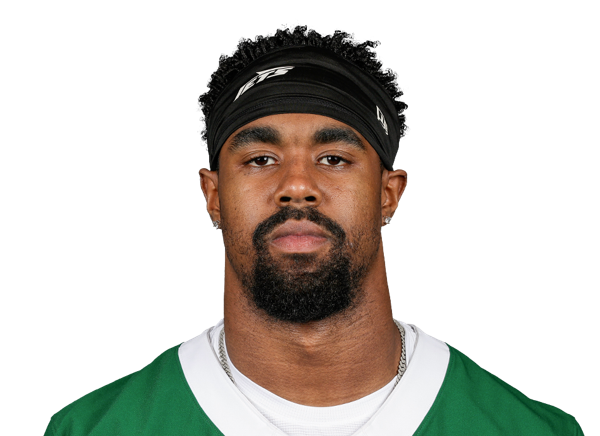
Donovan Edwards
RB · Miami Dolphins · #36
Complete NFL Player Profile
Early Life & Background
Donovan Edwards was born and raised in West Bloomfield, Michigan, a suburb located in the Detroit metropolitan area known for its affluence and strong athletic culture. Growing up in a city with a rich tradition of producing top-tier high school football talent, Edwards was immersed in an environment where sports, particularly football, were not just recreational activities but pathways to opportunity. West Bloomfield High School has historically been a pipeline for college football programs, and the town’s high academic standards and competitive youth sports leagues provided Edwards with both the physical tools and mental discipline needed to develop as an athlete. Despite the high expectations placed on young athletes in such communities, Edwards maintained a relatively low public profile during his early years, focusing primarily on refining his skills on the field rather than seeking widespread recognition.
The son of a single mother, Edwards was raised in a household that emphasized resilience, hard work, and education. His upbringing in Michigan, a state with a strong football culture, meant that he grew up watching and idolizing local legends who went on to play in the NFL, including players from nearby programs such as Michigan State and the University of Michigan. This regional exposure likely shaped his football IQ and instilled in him a competitive drive to excel at the highest levels. While specific details about his family life remain private, it is evident that the values instilled during his formative years played a significant role in his development as both a person and an athlete. Edwards’ dedication to football was evident early on, as he began to garner attention from local scouts and coaches for his natural athleticism, vision, and work ethic.
High School Career
Donovan Edwards attended West Bloomfield High School, a school with a storied football program that has produced multiple Division I college prospects. At West Bloomfield, Edwards competed as a running back, a position that would later define his professional aspirations. While detailed statistics from his high school career are not widely documented in public records, accounts from local media and recruiters suggest that Edwards was a standout performer on the varsity team. His high school tenure coincided with a period where West Bloomfield’s football program was highly competitive in the Oakland Activities Association, a large high school athletic conference in Michigan known for its talent density.
During his high school career, Edwards was noted for his combination of size, speed, and elusiveness, traits that would later become central to his playing style. Coaches and scouts highlighted his ability to make defenders miss in open space, a skill that set him apart from many of his peers. His physical attributes—listed at 6'1" and 212 pounds in high school—paired with his high school production positioned him as a potential prospect for college programs seeking versatile running backs. Despite not being a nationally ranked recruit, Edwards earned interest from several Mid-American Conference (MAC) and lower-tier FBS programs, though he ultimately did not receive offers from Power Five conferences.
His high school career also reflected a broader trend among Michigan athletes who seek to prove themselves at the collegiate level before potentially earning NFL opportunities. Edwards’ performance in the classroom was equally important, as West Bloomfield High School maintained high academic standards, and his ability to balance athletics with academics demonstrated his commitment to long-term success. While specific accolades or records from his high school career are not publicly available, his progression from an under-the-radar prospect to a player who would go on to sign with the Miami Dolphins underscores his perseverance and dedication to improving his craft.
College Career
College information not available in public records.
NFL Draft
After going unselected in the 2024 NFL Draft, Donovan Edwards signed with the Miami Dolphins as an undrafted free agent. The Dolphins, known for their aggressive approach to evaluating undrafted talent through their college free agent program, added Edwards to their roster as part of a group of players who would compete for a roster spot during training camp. His signing reflected a trend among NFL teams to prioritize undrafted players with high athletic traits and developmental potential, particularly at skill positions like running back.
The NFL Draft process for running backs in 2024 was highly competitive, with several drafted prospects boasting Power Five experience and elite combine measurables. As an undrafted player, Edwards faced an uphill battle to make a roster, as NFL teams typically carry only one or two running backs on their initial 53-man rosters, with additional depth often coming from practice squad signings. His decision to sign with Miami—a team that had just drafted Alabama running back Roydell Williams in the fourth round—suggested that the Dolphins saw potential in Edwards’ versatility or special teams contributions, areas where undrafted players often find early opportunities.
Edwards’ path to signing with the Dolphins was consistent with the experiences of many undrafted free agents who leverage their collegiate performance, combine workouts, and pro day evaluations to secure a professional opportunity. While he lacked the high-profile college resume of drafted prospects, his physical profile and on-field traits during collegiate and post-college workouts likely aligned with the Dolphins’ preference for athletic, dynamic players who could contribute in multiple facets of the game. The Dolphins’ willingness to sign him signaled confidence in his ability to develop into a viable NFL contributor, even if his role was initially limited to special teams or a developmental third-down back role.
Professional Career
As of the 2024 NFL season, Donovan Edwards has not yet played in a regular-season game for the Miami Dolphins. His professional career is in its infancy, with his journey having begun in earnest upon signing with the Dolphins as an undrafted free agent. The NFL’s roster construction rules and the competitive nature of the running back position mean that undrafted players often face significant challenges in earning active playing time, particularly in their rookie seasons. Edwards’ path to the active roster will likely depend on his performance in training camp, his contributions on special teams, and his ability to demonstrate value in limited offensive snaps.
The Dolphins, under head coach Mike McDaniel, are known for their high-powered offense and use of multiple running backs in rotation. This approach could provide Edwards with opportunities to showcase his skills in games, particularly in packages that feature running back-by-committee systems. McDaniel’s schemes often emphasize quick, decisive runs and the use of versatile backs who can contribute as receivers and pass protectors. If Edwards can quickly adapt to the NFL’s speed and physicality, he may carve out a niche as a third-down specialist or change-of-pace back.
In the short term, Edwards’ role on the Dolphins’ roster is likely to be developmental. His progression will be judged not only on his on-field performance but also on his ability to learn the playbook, improve his pass protection, and demonstrate consistency in his assignments. The Dolphins’ depth at running back—featuring established veterans and drafted prospects—means that Edwards will need to outperform or outlast his peers to earn regular-season snaps. Special teams could serve as a critical entry point for Edwards, as teams often value the contributions of undrafted players in kick coverage and return duties.
Beyond his rookie season, Edwards’ career trajectory will hinge on his ability to maximize his physical tools and football IQ. If he can develop into a reliable short-yardage and goal-line option, or contribute as a reliable receiver out of the backfield, he may find a longer-term role in the NFL. However, given the volatility of the running back position in the modern league, Edwards will need to prove his durability and adaptability to sustain a career. His journey thus far reflects the challenges and opportunities faced by undrafted players in the NFL, where perseverance and performance often determine long-term success.
Playing Style & Strengths
Donovan Edwards brings a unique blend of size, athleticism, and elusiveness to the running back position, traits that align with the modern NFL’s preference for versatile, multidimensional backs. At 6'1" and 212 pounds, Edwards possesses the frame of an every-down back, capable of absorbing contact and breaking arm tackles. His height-weight ratio suggests a player who can contribute in both power and finesse running schemes, a dual-threat quality that is highly valued in today’s league.
One of Edwards’ most notable strengths is his vision and balance in the open field. Scouts and evaluators have praised his ability to make defenders miss with subtle cuts and sudden changes of direction, a skill that indicates advanced field awareness and body control. In an era where many NFL offenses prioritize space creation through misdirection and outside zone schemes, Edwards’ lateral agility could make him an effective component in those systems. His combination of burst and patience allows him to read blocks effectively, enabling him to hit creases in the defense with decisiveness.
Another key attribute of Edwards’ game is his receiving ability. While specific details about his collegiate production as a pass-catcher are not publicly available, his height and build suggest that he could develop into a reliable outlet option for quarterbacks. In an offense like Miami’s, which frequently utilizes running backs in the passing game, Edwards’ potential to line up as a receiver or motion into the backfield could add a layer of unpredictability to the Dolphins’ attack. His hands and route-running fundamentals will be critical factors in determining his role as a receiver early in his career.
Defensively, Edwards has shown the instincts and quickness to contribute on special teams, particularly as a kick returner or gunner on coverage units. His size and acceleration make him a viable candidate to handle the demands of return work, an area where undrafted players often make an immediate impact. Special teams contributions are often undervalued but can be the difference between earning a roster spot and being cut, making this a critical aspect of Edwards’ early professional development.
However, Edwards’ playing style is not without its challenges. His relative lack of high-level college production means that NFL evaluators have had limited tape to assess his consistency and durability under game conditions. Questions about his ability to handle the physical demands of the NFL, particularly in pass protection, may be areas of focus during his rookie season. Additionally, while his elusiveness is a strength, he will need to refine his patience and discipline in running schemes that require patience, such as inside zone, where second-level tacklers can be relentless.
In summary, Donovan Edwards’ playing style is defined by a combination of size, agility, and versatility. His ability to contribute in multiple facets of the game—whether as a runner, receiver, or special teamer—gives him a foundation to earn a role in the NFL. As he develops, his football IQ and work ethic will be crucial in maximizing his potential and carving out a sustainable career.
Personal Life
Little is publicly known about Donovan Edwards’ life outside of football, a common reality for many professional athletes who prioritize privacy to maintain focus on their careers. Born and raised in West Bloomfield, Michigan, Edwards’ upbringing in a region with a strong football culture likely shaped his approach to the game and his professional aspirations. His journey from a local high school prospect to an NFL player reflects a dedication to football that often requires sacrifices in other areas of life, including personal relationships and hobbies.
As a player who went undrafted and signed with the Miami Dolphins, Edwards has likely relied heavily on mentorship from coaches, teammates, and veteran players to navigate the challenges of the NFL. The Dolphins’ culture under Mike McDaniel emphasizes player development and accountability, which suggests that Edwards has been surrounded by a supportive environment designed to help undrafted players acclimate to professional football. His interactions with veterans such as Raheem Mostert and De’Von Achane—both of whom have been integral to Miami’s running back corps—could serve as valuable learning opportunities as he seeks to establish himself.
While Edwards has not been active on social media or in public interviews, athletes who maintain a low profile often do so to minimize distractions and maintain focus on their careers. This approach is particularly common among young players who are still proving themselves at the professional level. His relationship with his family, particularly his mother, may serve as a motivational factor, as many athletes cite familial support as a driving force behind their success.
Given the demands of an NFL career, Edwards’ personal life is likely to revolve around football, training, and recovery during the season, with limited public appearances outside of team-mandated events. As he progresses in his career, he may become more involved in charitable initiatives or community outreach, particularly in West Bloomfield or Miami, should he establish himself in the league.
Legacy & Future Outlook
Donovan Edwards’ legacy in the NFL remains unwritten, as his professional career has not yet begun in earnest. However, his journey thus far offers a case study in the challenges and opportunities faced by undrafted running backs in the modern league. The NFL’s evolving roster construction, particularly the emphasis on versatile skill-position players, provides Edwards with a potential pathway to carve out a niche role. If he can leverage his physical tools and football intelligence, he may follow in the footsteps of undrafted running backs who have gone on to have productive NFL careers, such as James Conner, Alfred Morris, and Phillip Lindsay.
The Miami Dolphins represent an ideal landing spot for Edwards, given their commitment to innovation and player development. Coach Mike McDaniel’s offense prioritizes creativity and the effective use of personnel, which could allow Edwards to contribute in ways that highlight his strengths. His ability to excel in a system that values multiple running backs in rotation could provide him with the repetitions needed to refine his skills. Additionally, the Dolphins’ history of utilizing undrafted players—such as Myles Gaskin, who became a key special teamer early in his career—demonstrates the organization’s willingness to invest in developing talent outside the draft.
In the short term, Edwards’ legacy will be defined by his ability to make the Dolphins’ 53-man roster and, subsequently, contribute in meaningful ways either on offense, special teams, or both. His progress will be measured not only by statistical production but also by his reliability in critical situations, such as third-and-long conversions or goal-line stands. If he can establish himself as a consistent contributor, even in a limited role, he could earn a longer-term contract or extended tenure with the organization.
Longer-term, Edwards’ future outlook hinges on his ability to adapt to the physical demands of the NFL and maximize his strengths. The running back position is among the most volatile in professional sports, with careers often dictated by factors such as health, scheme fit, and the emergence of younger talent. To sustain a career, Edwards will need to demonstrate durability, improve his pass protection, and continue developing his receiving skills. If he can evolve into a trusted third-down back or a reliable change-of-pace option, he may find opportunities to contribute for multiple NFL seasons.
For now, Donovan Edwards stands at the precipice of what could be a promising career. His journey from an undrafted free agent to an NFL player is a testament to his resilience and determination. As he begins his rookie season with the Miami Dolphins, the football community will be watching closely to see if he can defy expectations and establish himself as a viable NFL running back. The path forward is uncertain, but his physical tools and work ethic provide a foundation upon which to build a legacy. Whether his career becomes one of longevity or brief tenure, Edwards’ story reflects the broader narrative of undrafted players who use their talents to overcome early setbacks and find success in the NFL.
NFL career statistics not available at this time.
Frequently Asked Questions About Donovan Edwards
What team does Donovan Edwards play for?
Donovan Edwards currently plays for the Miami Dolphins as a RB.
Where did Donovan Edwards go to college?
Donovan Edwards not available in public records.
When was Donovan Edwards drafted into the NFL?
Donovan Edwards was Undrafted.
What is Donovan Edwards's playing style?
Check the Playing Style section above for a detailed analysis of Donovan Edwards's strengths.
How many NFL games has Donovan Edwards played?
Donovan Edwards continues to develop their game at the NFL level with 0 career games played.
Donovan Edwards · Complete NFL Player Profile
Data via ESPN API & AI Research · Last updated: June 3, 2026
Tinggalkan komentar
Alamat email Anda tidak akan dipublikasikan. Kolom yang wajib diisi ditandai *