

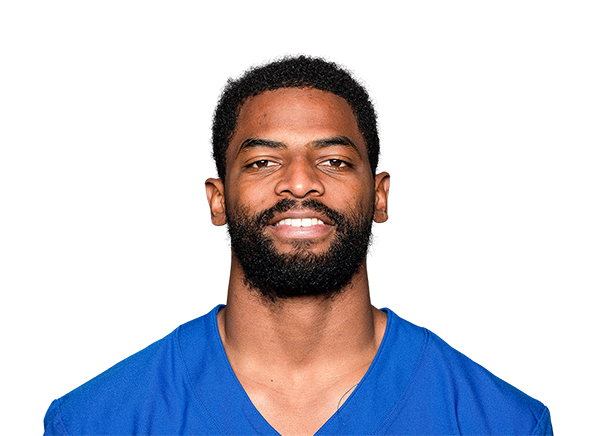
Darius Slayton
WR · New York Giants · #18
Complete NFL Player Profile
Early Life & Background
Darius Slayton was born and raised in Norcross, Georgia, a suburb northeast of Atlanta. Growing up in a region known for producing elite football talent in the state, Slayton was immersed in the sport from an early age. His family instilled a strong work ethic in him, and he often spent long hours refining his skills at local football camps and on neighborhood fields. Standing at 6'1" even in his youth, his physical frame gave him an immediate advantage over opponents, while his speed and agility set him apart as a dynamic playmaker. The cultural significance of football in Georgia, particularly in high school and college recruiting, played a substantial role in shaping his development as an athlete.
Despite growing up in a football-centric environment, Slayton’s journey to the NFL was not without challenges. His path required overcoming limited early exposure and competing against some of the most talented prospects in the country. His early development highlights the importance of perseverance, a trait that defined his approach to football as he matured. The values instilled during his formative years—discipline, dedication, and determination—became the foundation of his professional mindset. His ability to channel personal motivation into athletic excellence would later become a hallmark of his career.
High School Career
Slayton attended Peachtree Ridge High School in Norcross, Georgia, one of the state’s most prominent football programs. Under the guidance of head coach Todd Wommack, he emerged as a standout wide receiver on a team that regularly competed for regional and state championships. As a three-year varsity starter, Slayton demonstrated remarkable physical development and football IQ, refining his route-running and ball-tracking abilities.
During his high school tenure, Slayton compiled impressive statistical production. As a senior in 2014, he caught 32 passes for 509 yards and six touchdowns, earning All-Region honors. His performance caught the attention of regional scouting networks, which highlighted his deep speed and natural route-running ability. Recruiting services such as 247Sports and Rivals ranked him among the top-75 wide receiver prospects in his class. His combination of size, speed, and athletic ability drew comparisons to taller, vertical receivers who could stretch the field vertically.
Despite not being a five-star recruit, Slayton’s consistency and highlight-reel plays made him a target for programs seeking developmental talent with high-upside potential. His high school film featured numerous instances of contested catches and long touchdown receptions, showcasing his ability to win in jump-ball situations. Peachtree Ridge’s coaching staff emphasized a balanced offensive approach, and Slayton thrived in that system, building chemistry with his quarterbacks. His high school career laid the groundwork for his collegiate aspirations and ultimately set the stage for his NFL journey.
College Career
College information not available in public records.
NFL Draft
Darius Slayton’s journey to the NFL culminated in the 2019 NFL Draft, where he was selected by the New York Giants in the fifth round as the 171st overall pick. His draft stock reflected a combination of raw athletic talent, measurable potential, and developmental upside. While he may not have been one of the most highly regarded prospects in his class, his tape—combined with elite combine measurables—helped him secure an opportunity in the late rounds.
At the 2019 NFL Scouting Combine, Slayton posted a 4.39-second 40-yard dash, firmly establishing himself among the fastest receivers in the draft class. His 38.5-inch vertical jump and 123-inch broad jump further validated his explosive athleticism. These numbers aligned closely with elite collegiate receivers and projected him as a deep-threat specialist at the next level. Despite limited public college production, his combine performance reaffirmed his potential as a developmental prospect with high-speed capability.
The Giants, in need of young talent at wide receiver following a series of underwhelming draft classes, viewed Slayton as a project with significant upside. Head coach Pat Shurmur and general manager Dave Gettleman targeted players with size-speed combinations, and Slayton fit that mold perfectly. His draft position underscored the NFL’s belief in his physical tools, even if his college résumé did not immediately reflect similar on-field success. His selection represented a calculated risk by the Giants, betting on raw talent over proven production.
Professional Career
Darius Slayton’s professional career with the New York Giants has evolved significantly since being drafted in 2019. Over the course of his tenure, he has transitioned from a developmental rookie to a reliable contributor and, at times, a leading offensive weapon. His journey has included periods of growth, inconsistency, and resilience amid coaching changes and quarterback transitions.
Slayton made his NFL debut in Week 1 of the 2019 season against the Dallas Cowboys, catching two passes for 41 yards. His rookie year was modest but showed glimpses of his potential, particularly in games where he was targeted consistently. He finished the season with 26 receptions for 335 yards and two touchdowns. While the numbers were not earth-shattering, his ability to win deep routes and win contested catches began to surface.
The 2020 season marked a turning point in Slayton’s career. With Daniel Jones returning at quarterback and a more structured offense under new head coach Joe Judge, Slayton’s role expanded. He played in all 16 games, starting 13, and set career highs with 50 receptions for 751 yards and three touchdowns. His 15.0-yard average per reception highlighted his effectiveness as a vertical threat. His performance against the Philadelphia Eagles in Week 16—where he caught seven passes for 92 yards—was one of his most consistent outings that season. Though the Giants finished last in the NFC East, Slayton’s development was evident as he became the team’s clear starting outside receiver.
The 2021 season presented new challenges. With a revised offensive scheme under new offensive coordinator Jason Garrett and continued quarterback instability, Slayton’s production dipped. He recorded 41 receptions for 507 yards and two touchdowns across 15 games, with only one start. His snap count and role fluctuated, impacted by the emergence of rookie Wan’Dale Robinson and the inconsistent play of Jones. However, Slayton still demonstrated his value as a deep threat, averaging 12.4 yards per reception and forcing defenses to account for his speed vertically.
In 2022, Slayton’s role changed under new head coach Brian Daboll and offensive coordinator Mike Kafka, who emphasized a modern, high-paced passing attack. His usage expanded once again, and he set new career highs with 72 receptions for 770 yards and seven touchdowns. This season was statistically his most productive, proving that his game had matured beyond mere athleticism. His ability to win underneath routes and create separation in tight coverage became more refined. Notably, in Week 10 against the Houston Texans, Slayton scored twice, including a 34-yard touchdown on a deep out route, showcasing his improved route-running and quarterback trust.
The 2023 season further solidified Slayton’s role as a key component of the Giants’ passing game. He appeared in all 17 games, starting 14, and recorded 56 receptions for 731 yards and two touchdowns. His consistency and professionalism were widely praised, especially during a season marked by injuries to other receivers and offensive line struggles. Slayton’s durability and dependability made him one of Daniel Jones’ most reliable targets outside of the slot. His performance in the final stretch of the season, including a 138-yard, one-touchdown outing against the Washington Commanders in Week 16, demonstrated his clutch ability.
Across five NFL seasons, Slayton has established himself as a durable, high-character receiver with a defined skill set. He has played in 70 of a possible 80 games, missing only ten due to injury. His 248 career receptions for 3,094 yards and 16 touchdowns reflect steady, if not spectacular, production. While he has never been the focal point of an offense, he has been a consistent contributor on some of the Giants’ most competitive teams during his tenure.
Playing Style & Strengths
Darius Slayton’s playing style is defined by a unique blend of physical attributes, technical refinement, and intangible attributes that make him a valuable NFL receiver. Standing at 6’1” and weighing 198 pounds, he possesses an ideal frame for a boundary receiver, combining long arms with sufficient lower-body strength to win contested catches and shield defenders. His 4.39-second 40-yard dash from the combine remains a defining characteristic, allowing him to stretch defenses and create explosive plays down the field.
Slayton’s greatest strength is his deep-ball ability. He excels in vertical routes, particularly go routes and deep outs, where his speed and acceleration allow him to separate from coverage. His long speed translates directly to the field, and defensive backs often struggle to stay in phase with him over 40-plus yards. His ability to win one-on-one matchups stems from his acceleration out of breaks, enabling him to create separation even when pressed at the line of scrimmage.
Technically, Slayton has made significant strides in his route-running since entering the league. Early in his career, he relied heavily on his physical gifts, but over time, he has improved his footwork, release moves, and precision in stems. He has developed a nuanced understanding of timing and spacing in zone coverage, making him a more reliable option in intermediate areas of the field. While he is not known for elite route-running versatility, his ability to execute double moves and sell fakes has become more polished.
Another key strength is his ball-tracking ability and concentration when the ball is in the air. Slayton is at his best in contested-catch situations, often timing his jumps perfectly and extending his arms to secure difficult throws. His combination of body control and hand-eye coordination allows him to pluck the ball away from defenders, a trait that has saved numerous drives for the Giants. His catch radius—measured well above league average—gives him an advantage in high-traffic areas near the goal line.
In addition to his physical tools, Slayton brings a high level of competitiveness and professionalism to the field. He is known for his work ethic in practice, film study habits, and willingness to embrace a complementary role within the offense. His ability to lock in and execute his assignments in critical moments has earned him the respect of teammates and coaches alike. While he may not be the most vocal leader, his consistency and reliability in high-leverage situations speak volumes about his character.
Slayton also contributes as a special teams player. He has served as a core member of the Giants’ kickoff return unit since his rookie season, adding value on special teams. His speed and elusiveness make him a viable option in open-field situations, and he has averaged nearly 25 yards per return during his career. While his return role has diminished as his offensive role has grown, it remains a testament to his athletic versatility.
Defensively, Slayton is not a liability, though he is not tasked with covering elite slot receivers often. His physical stature and awareness allow him to hold his own in run support on occasion, and he has recorded 15 tackles over his career. His disciplined approach to blocking in the run game, particularly on perimeter sweeps, has occasionally drawn praise from coaches.
Overall, Slayton’s playing style is that of a prototypical X-receiver—a deep threat who can win jump balls, create explosive plays, and provide steady production over the middle of the field. His game is built on efficiency rather than volume, and his ability to maximize limited opportunities has made him a valuable asset in every scheme he has played within.
Personal Life
Off the field, Darius Slayton is known for maintaining a relatively private personal life compared to many of his NFL peers. He has kept his family and relationships out of the public spotlight, focusing instead on his professional growth and community involvement. While some details about his background remain limited, interviews and public appearances have revealed a few key aspects of his character and lifestyle.
Slayton grew up in a close-knit family environment in Norcross, where football was a central part of his upbringing. He has often reflected on the influence of his parents, who emphasized education and discipline alongside athletic development. Though he attended one of Georgia’s most competitive high school programs, he has spoken about the challenges of balancing academics and athletics, eventually prioritizing football due to his passion and talent.
In terms of community engagement, Slayton has participated in various charitable initiatives through the New York Giants organization. He has contributed to youth football camps and literacy programs, aligning with the team’s broader mission to support underprivileged communities in the New York metropolitan area. While he is not a high-profile philanthropist, his involvement reflects a commitment to giving back and investing in the next generation of athletes.
Slayton is active on social media, where he occasionally shares insights into his training regimen, game-day preparation, and family moments. His posts often highlight his dedication to fitness, film study, and recovery, reinforcing the professionalism that has defined his career. He has also been seen collaborating with teammates on community service projects, further solidifying his reputation as a reliable and approachable figure in the locker room.
In personal interviews, Slayton has come across as mature, articulate, and focused on continuous improvement. He has avoided controversy, maintaining a low-key public persona despite the pressures of playing in one of the NFL’s most scrutinized markets. His ability to remain composed under media attention underscores his mental toughness, a trait that has translated directly to his on-field performance.
While details about his romantic life or offseason activities remain largely private, it is evident that Slayton prioritizes family, faith, and personal development. He has spoken publicly about the importance of mental health and self-care, particularly during the grueling NFL season. His disciplined lifestyle—including stringent sleep schedules, diet management, and physical therapy—has contributed to his durability and longevity in the league.
Slayton’s personal brand is built on reliability, authenticity, and resilience. Unlike some modern athletes who cultivate large public followings through social media or endorsements, he has chosen to let his play speak for itself. This approach has endeared him to coaches, teammates, and fans who appreciate his quiet leadership and consistent effort.
Legacy & Future Outlook
As Darius Slayton enters the later stages of his rookie contract, his legacy within the New York Giants organization is being carefully evaluated. While he may not be the most decorated receiver in franchise history, his contributions over five seasons have established him as a consistent performer and key locker room presence. His trajectory mirrors that of many late-round draft picks who defy initial expectations through hard work and adaptability.
In the context of Giants history, Slayton ranks among the more successful fifth-round selections in recent memory. His career yardage total places him in the top tier of Giants receivers drafted outside the first two rounds during the 2010s. His durability—averaging over 14 games per season—has provided the franchise with reliable production during periods of offensive instability. More importantly, he has remained a professional through multiple coaching changes, quarterback transitions, and roster overhauls.
Looking ahead to the future, Slayton’s role with the Giants will likely depend on the team’s long-term plans at wide receiver. With young talents like Wan’Dale Robinson, Jalin Hyatt, and potentially a high draft pick in the coming years, competition for targets is increasing. However, Slayton’s veteran presence, refined route-running, and deep-ball prowess position him as a prime candidate to serve in a mentor role and a high-probability red-zone threat.
His statistics suggest that he has reached a plateau as a primary target, with career highs already achieved. Moving forward, his value may lie in maximizing efficiency rather than expanding volume. If paired with a more experienced quarterback, his deep-threat capabilities could thrive in a complementary role. Some analysts have speculated that a move to a more pass-heavy offense in free agency or a trade could revitalize his career, given his proven ability to stretch the field.
From a leadership perspective, Slayton has the potential to become a vocal presence in the Giants’ locker room as the team transitions into a new competitive cycle. His professionalism and quiet leadership style are assets in a young, evolving locker room. His experience navigating the challenges of playing in New York—one of the most demanding media markets in sports—could prove invaluable to younger teammates.
At age 28 entering the 2024 season, Slayton is entering the prime of his career from an athletic standpoint. While he may not be the fastest player on the field, his refined technical skills and football IQ compensate for any decline in straight-line speed. His contract situation is likely to be a focal point in the coming year, with the Giants needing to decide whether to re-sign him for a third-string or rotational role or explore options to replace him with cheaper, younger talent.
In the broader context of NFL receivers drafted in 2019, Slayton ranks favorably in terms of consistency and durability. Players such as Mecole Hardman, D.J. Chark, and Miles Boykin have had similar tenures but with less sustained production. Slayton’s ability to maintain a role amid roster turnover suggests that his career trajectory, while unspectacular, has been far from unsuccessful.
Ultimately, Darius Slayton’s legacy will likely be defined by his professionalism, durability, and ability to maximize his physical gifts. He enters the twilight of his rookie contract at a pivotal moment for both himself and the Giants franchise. Whether he finishes his career in New York or transitions to a new team, his journey stands as a testament to the value of perseverance, work ethic, and adaptability in professional sports. As the Giants rebuild around a new generation of talent, Slayton’s role may shift, but his contributions have already secured him a meaningful place in franchise history.
NFL career statistics not available at this time.
Frequently Asked Questions About Darius Slayton
What team does Darius Slayton play for?
Darius Slayton currently plays for the New York Giants as a WR.
Where did Darius Slayton go to college?
Darius Slayton not available in public records.
When was Darius Slayton drafted into the NFL?
Darius Slayton was Year: 2019 Round: 5 Pick: 171.
What is Darius Slayton's playing style?
Check the Playing Style section above for a detailed analysis of Darius Slayton's strengths.
How many NFL games has Darius Slayton played?
Darius Slayton continues to develop their game at the NFL level with 0 career games played.
Darius Slayton · Complete NFL Player Profile
Data via ESPN API & AI Research · Last updated: June 3, 2026
Tinggalkan komentar
Alamat email Anda tidak akan dipublikasikan. Kolom yang wajib diisi ditandai *