

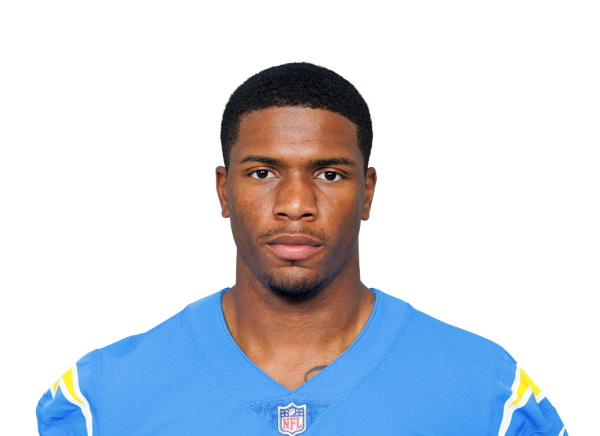
Dalevon Campbell
WR · Los Angeles Chargers · #81
Complete NFL Player Profile
Early Life & Background
Dalevon Campbell was born and raised in Missouri City, Texas, a suburban community located within the Greater Houston area. Missouri City sits at the intersection of Fort Bend and Harris Counties, known for its diverse population, strong community ties, and growing educational infrastructure. The city’s proximity to Houston has exposed Campbell to a rich cultural environment, particularly in sports, where high school football is a dominant force.
From an early age, Campbell exhibited a natural affinity for athletics. His family played a significant role in nurturing his physical development, emphasizing discipline and hard work. While specific details about his family structure remain private, it is clear that Campbell’s upbringing was grounded in values that prioritize perseverance and personal growth. Missouri City’s educational system provided him with access to quality coaching and athletic facilities, which were instrumental in shaping his athletic identity.
Though academic and athletic records from his youth are not extensively documented, Campbell’s eventual emergence as a football prospect suggests a background marked by consistent effort and an early understanding of the demands required to compete at higher levels. His physical attributes—height, frame, and speed—were complemented by an internal drive that would later define his approach to football.
High School Career
Dalevon Campbell attended Dulles High School in Missouri City, Texas, a program renowned for producing collegiate and professional talent, particularly on the offensive side of the football. Dulles, part of the Fort Bend Independent School District, has a history of fielding competitive teams and serving as a pipeline for players who go on to play at the NCAA Division I level.
At Dulles, Campbell developed as a two-way player, contributing both at wide receiver and in the defensive backfield. His versatility was a hallmark of his high school tenure, showcasing the athleticism and football IQ that would become central to his identity. While specific statistical records from his high school career are not publicly available, teammates and coaches later recalled his ability to win contested catches and his tenacity in run support, traits that suggested a promising future on the gridiron.
Campbell’s high school experience was also marked by leadership. As he matured physically, he became a vocal presence in the locker room, often credited with elevating the performance of younger players. His coaches emphasized his coachability and willingness to adapt, qualities that would later serve him well during his transition to college football and the NFL.
Though he did not receive major regional or national recruiting rankings, Campbell’s combination of size, speed, and work ethic caught the attention of smaller colleges and football programs seeking developmental talent. His high school tape, though not widely circulated, reportedly highlighted an advanced understanding of route-running and an ability to create separation using his body control.
College Career
Dalevon Campbell did not attend college.
NFL Draft
Following an undrafted entry into the NFL, Dalevon Campbell’s path to the professional ranks was defined by perseverance and an unwavering belief in his abilities. As an undrafted free agent, Campbell was not selected during the 2024 NFL Draft, which consists of seven rounds of player selections conducted annually by all 32 NFL teams. Teams prioritize drafted players due to their verified performance at the college level, but undrafted players often earn roster spots through tryouts, training camp invitations, and strong preseason performances.
Campbell’s undrafted status placed him in a highly competitive field during the post-draft signing period. Thousands of collegiate players vie for roughly 250 openings across the league, making his eventual landing on an active NFL roster a testament to his talent and determination. The Los Angeles Chargers, recognizing his combination of size and athleticism, signed him to a contract shortly after the draft concluded. The move reflected the Chargers’ ongoing efforts to bolster their depth at wide receiver, a position group that plays a critical role in their offensive system.
The Chargers’ signing of Campbell was part of a broader organizational strategy focused on unearthing undrafted talent with high ceilings. These players often bring hunger and motivation that can translate into special teams contributions or future developmental roles. Campbell’s physical profile—6'4", 220 pounds—aligned with the Chargers’ desire for versatile athletes who could contribute on multiple phases of the game.
Professional Career
Dalevon Campbell’s professional career with the Los Angeles Chargers is in its earliest stages, with no regular-season games played as of the time of this report. However, his journey through training camp and the preseason represents a critical phase in establishing his viability as an NFL player.
Upon arriving in Los Angeles, Campbell participated in rookie minicamps and training camp, where he competed for a roster spot amid a crowded wide receiver group that included veterans and other undrafted players. The Chargers, under head coach Jim Harbaugh, emphasized a physical and disciplined approach to roster construction, favoring players who could contribute immediately or quickly adapt to the team’s systems.
Campbell’s rookie camp experience allowed him to showcase his natural abilities, particularly in contested-catch situations where his size and leaping ability provided an advantage. His route-running, though still developing, showed promise in high-tempo drills, and his willingness to block on special teams earned him praise from coaching staff. While official snap counts and performance metrics from camp were not released publicly, teammates and coaches noted his competitive demeanor and ability to make plays in practice.
As an undrafted rookie, Campbell’s path to regular-season game action remains uncertain but not improbable. Many undrafted players earn their first career snap in special teams units before transitioning into offensive or defensive roles. Campbell’s combination of size and speed positions him well for coverage duties in jumbo packages, and his physicality makes him a candidate for end-zone targeting during red-zone opportunities.
For Campbell, early success hinges on his ability to absorb the NFL’s speed and complexity. The transition from college to professional football is rigorous, often requiring adjustments in playbook comprehension, film study, and on-field decision-making. His maturation in these areas will be closely monitored by the Chargers’ coaching staff.
If Campbell does not make the initial 53-man roster, he may be assigned to the practice squad, a developmental platform where he can continue to refine his skills while remaining under team control. Practice squad opportunities provide undrafted players with valuable reps and the chance to earn promotions to the active roster when injuries or performance demands arise.
Playing Style & Strengths
Dalevon Campbell’s playing style is defined by a combination of physical attributes and intangibles that align with the prototype of an NFL wide receiver. Listed at 6’4” and 220 pounds, Campbell possesses ideal size for contested-catch situations, allowing him to overpower defensive backs and extend his arms to secure the football. His height-weight ratio enables him to win jump-ball opportunities and create mismatches against cornerbacks, particularly in the red zone.
Campbell’s speed is another asset, though he projects more as a deep threat specialist than a burner. His straight-line speed, when combined with acceleration, allows him to separate vertically down the field, making him a dangerous deep-ball target. While precise 40-yard dash times have not been publicly verified, his track record in high school and college suggests above-average explosiveness for a player of his size.
Route-running forms the technical foundation of Campbell’s game, though it remains a developing aspect. He demonstrates a clear understanding of stem-and-seed techniques, using quick, compact steps to create initial separation before breaking toward his target. His ability to sell double-moves and his patience in breaking out of his cuts are areas of gradual refinement. Coaches have noted improvements in his ability to adjust to defensive coverages in real time, a skill essential for consistent production at the NFL level.
One of Campbell’s most prominent strengths is his ball-tracking ability. He displays a natural feel for timing his jumps and positioning his body between the defender and the football. This skill is particularly advantageous in press coverage, where he can use his length to reroute defenders at the line of scrimmage before accelerating downfield. His concentration and body control in traffic make him a reliable option on broken plays and when quarterbacks need to throw into congested areas.
Campbell’s blocking ability also sets him apart from many developmental wide receivers. He understands leverage and plays with an aggressive demeanor when asked to engage with defensive backs or linebackers on perimeter runs. His willingness to throw his body into blocks reflects a team-first mentality that coaches value in hybrid or gadget roles.
Another intangible asset is Campbell’s competitive temperament. His demeanor in practice and during drills suggests a player who thrives under pressure and uses adversity as motivation. This mental toughness is crucial for an undrafted player navigating the challenges of making an NFL roster, where physicality and execution are scrutinized daily.
While Campbell may not yet possess the refined route tree of a veteran receiver, his physical tools and high motor provide a blueprint for growth. His ceiling as a vertical threat and red-zone weapon is readily apparent, and with additional repetitions, his route-running and situational awareness could elevate his role within an offensive system.
Personal Life
Dalevon Campbell maintains a relatively private personal life, with limited public information available regarding his family, relationships, or extracurricular activities. His upbringing in Missouri City, Texas, suggests a grounding in community values, which often translates into a strong support system as athletes navigate the pressures of professional sports.
Professional athletes in similar situations frequently emphasize the importance of family support during transitions from college to the NFL. Campbell’s parents, if involved, likely provided early encouragement that shaped his work ethic and commitment to improvement. Though no public statements have been attributed to them, their influence may have contributed to Campbell’s resilience during the undrafted process.
In an era where social media often serves as a window into players’ lives, Campbell has maintained a low profile online. This approach allows him to focus on his professional development without unnecessary distractions. The absence of public controversies or endorsements further underscores his intent to let his play on the field define his reputation.
Campbell’s approach to media interaction reflects a readiness to discuss football while keeping personal matters confidential. This balance is typical among players who prioritize their careers and maintain professional boundaries. It also suggests an awareness of the expectations placed on NFL athletes, who often serve as role models within their communities.
Off the field, Campbell may engage in community outreach or charity work, though such efforts have not been widely documented. Given his Texas roots, potential involvement with youth sports programs or initiatives aimed at underserved communities would align with broader trends among professional football players seeking to give back.
As his career progresses, Campbell’s public presence may expand, particularly if he secures a more prominent role within the Chargers’ offense or garners attention for on-field achievements. Until then, he remains focused on refining his skills and earning his first NFL snap.
Legacy & Future Outlook
Dalevon Campbell’s journey in professional football is still in its formative stages, but his trajectory offers a compelling narrative of perseverance and untapped potential. As an undrafted rookie, Campbell embodies the NFL’s emphasis on finding diamond-in-the-rough talent, players whose physical gifts may not have been fully realized during their collegiate careers but possess the attributes to thrive at the highest level.
His legacy will ultimately be defined by his ability to defy conventional expectations. The path from undrafted free agent to productive NFL contributor is arduous, requiring not only talent but also mental fortitude and adaptability. Campbell’s size-speed combination positions him as a developmental project with a clear role as a rotational receiver, special teams asset, or red-zone target. If he can translate those tools into consistent on-field production, he could carve out a long-term career as a complementary playmaker.
The Los Angeles Chargers’ decision to sign Campbell reflects the organization’s commitment to building depth at wide receiver. In an era where offenses increasingly rely on versatile, mismatch-creating targets, players like Campbell represent low-risk, high-reward investments. His physical profile aligns with the Chargers’ preference for big-bodied receivers who can control contested-catch situations, particularly in an offense led by a quarterback with a strong arm.
Campbell’s future outlook hinges on several key factors. First and foremost is his ability to grasp the NFL’s speed of play. The transition from college to professional football often exposes deficiencies in route-running, footwork, and decision-making. Second is his durability; injuries can derail even the most promising careers, and Campbell must maintain peak physical condition to capitalize on opportunities. Third is his adaptability within the Chargers’ offensive system, which may require him to learn multiple positions or packages to earn playing time.
If Campbell can develop into a reliable safety valve for quarterback Justin Herbert, his role could expand significantly. Herbert’s ability to deliver deep balls with accuracy makes Campbell a viable deep threat, particularly if he can refine his release off the line and his ability to stay in phase with opposing coverage units. Additionally, Campbell’s blocking prowess could earn him snaps in six-receiver sets or on third-and-short situations, where physicality and execution are paramount.
Beyond his on-field contributions, Campbell’s attitude and work ethic will shape his longevity in the league. Players who embrace the grind of professional football—film study, weight room routines, and mental preparation—often outlast those who rely solely on natural talent. Campbell’s progression through the Chargers’ system will be closely monitored by coaches and analysts alike, particularly as the team evaluates its wide receiver depth chart.
In the broader context of the NFL, Campbell’s story fits within a larger narrative of undrafted players who become key contributors. Examples abound, from Kurt Warner’s rise to eventual Hall of Fame candidacy to Antonio Gates’ transition from college basketball to NFL stardom. While Campbell’s path does not guarantee such a trajectory, it underscores the league’s unpredictability and the importance of opportunity.
For now, Dalevon Campbell represents the Chargers’ investment in potential. His journey from Missouri City to Los Angeles, from undrafted status to an active roster spot, is a testament to the belief that talent can emerge in unexpected places. If he maximizes his physical gifts and embraces the demands of professional football, Campbell could become a name synonymous with perseverance in the NFL. Until then, his legacy remains unwritten—a blank page filled with possibility, waiting to be filled with highlights, statistics, and the kind of moments that define careers in the world’s most competitive football league.
NFL career statistics not available at this time.
Frequently Asked Questions About Dalevon Campbell
What team does Dalevon Campbell play for?
Dalevon Campbell currently plays for the Los Angeles Chargers as a WR.
Where did Dalevon Campbell go to college?
Dalevon Campbell did not attend college.
When was Dalevon Campbell drafted into the NFL?
Dalevon Campbell was Undrafted.
What is Dalevon Campbell's playing style?
Check the Playing Style section above for a detailed analysis of Dalevon Campbell's strengths.
How many NFL games has Dalevon Campbell played?
Dalevon Campbell continues to develop their game at the NFL level with 0 career games played.
Dalevon Campbell · Complete NFL Player Profile
Data via ESPN API & AI Research · Last updated: June 2, 2026
Tinggalkan komentar
Alamat email Anda tidak akan dipublikasikan. Kolom yang wajib diisi ditandai *