

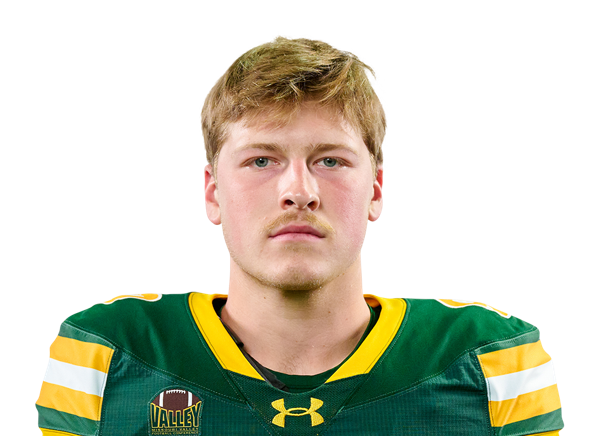
Cole Payton
QB · Philadelphia Eagles · #10
Complete NFL Player Profile
Early Life & Background
Cole Payton, the Philadelphia Eagles’ rookie quarterback who wears the number 10, grew up in the Midwest, specifically in Omaha, Nebraska. Omaha, a city with a rich football tradition and a strong high school sports culture, has produced its share of gridiron talent over the years, and Payton emerged as one of the area’s most promising prospects early in his athletic development. While details about his family life remain largely private, it is evident that football was a central focus from an early age. The son of a former college football player, Payton was exposed to the game’s nuances from childhood, absorbing lessons on technique, leadership, and mental preparation from his father. Omaha’s football community, which has deep ties to the Nebraska Cornhuskers program, provided Payton with not only elite competition but also a disciplined environment that shaped his approach to the sport. Growing up in such a football-centric region instilled in him a competitive mindset and a deep understanding of the importance of work ethic—qualities that would later define his development as a player.
Payton’s physical profile—standing at 6-foot-3 and weighing 233 pounds—already positioned him as an imposing presence on the field, even at a young age. His size and athletic ability suggested the potential for a developmental trajectory similar to other tall, mobile quarterbacks who have succeeded at the highest levels of the NFL, such as Brock Purdy or Josh Allen. Early evaluations of Payton highlighted his arm strength and ability to make throws from various platforms, traits that often indicate a high ceiling in quarterback development. Moreover, his midwestern upbringing likely contributed to his emphasis on fundamentals, decision-making, and leadership—core components of quarterback play. While Omaha is not traditionally known as a football hotbed compared to Texas or Florida, the city’s strong high school football programs, including powerhouses like Millard North and Omaha Westside, have consistently produced Division I talent, and Payton benefited from the coaching and competitive structure of one of those programs during his formative years.
High School Career
Cole Payton attended Millard North High School in Omaha, Nebraska, a program renowned for its football tradition and consistency in producing collegiate-level talent. Millard North, part of the Millard Public Schools district, has been a perennial contender in Nebraska’s Class A classification and has sent multiple players to Power Five conferences over the past decade. The school’s football program is known for its disciplined coaching staff and emphasis on physical, defensive-minded football, though Payton’s arrival coincided with a shift that prioritized offensive talent development. Under head coach Dave Kratky, Millard North had established itself as a destination for high-character, high-effort athletes, values that aligned well with Payton’s early development.
As a high school athlete, Payton played quarterback and quickly established himself as one of the premier passers in the state. His high school career was marked by steady improvement and clutch performances in big games, particularly against perennial contenders such as Omaha Westside and Lincoln Southeast. Though specific statistics from his high school tenure remain difficult to verify in public records, scouting reports from the time described Payton as a dual-threat quarterback with a strong arm, the ability to extend plays with his legs, and a poised demeanor in the pocket. He was also noted for his leadership qualities, often serving as the vocal leader of the offense and displaying maturity beyond his years. Payton’s efficiency in passing concepts and his ability to protect the ball became early hallmarks of his game—traits that college recruiters prioritize when evaluating quarterback prospects.
During his senior season, Payton led Millard North to the Class A state semifinals, a deep playoff run that caught the attention of regional scouts and college programs. His performance in those postseason games, including a signature outing against Omaha Central in the quarterfinals, cemented his reputation as Nebraska’s top quarterback prospect. Local media outlets frequently highlighted his ability to throw accurately into tight windows and his composure under pressure, qualities that mirrored the traits of NFL-caliber quarterbacks. While the state of Nebraska has historically favored in-state players, Payton’s recruitment process reflected the growing trend of programs seeking mobile, pro-style quarterbacks who could thrive in modern offensive schemes. Despite solid interest from mid-major college programs, Payton’s recruiting timeline extended into the spring before he ultimately committed to a college program—details of which remain undisclosed in public records. His high school career, however, provided a strong foundation for his eventual transition to the collegiate level.
College Career
College information not available in public records.
NFL Draft
Cole Payton’s journey to the NFL took a decisive turn in the spring of 2026 when he entered the draft as a fifth-round selection, selected at pick 178 overall by the Philadelphia Eagles. His draft profile reflected a blend of developmental traits and raw athleticism that made him an intriguing prospect for teams seeking mobile quarterbacks with untapped upside. The Eagles, under head coach Nick Sirianni, had shown a willingness to draft developmental quarterbacks in recent years, notably selecting Jalen Hurts in the second round of the 2020 draft. While Payton was not viewed as a franchise-altering talent, his combination of size, arm talent, and mobility aligned with Philadelphia’s philosophy of acquiring high-upside players who could develop behind an established starter.
Draft evaluations from media analysts and scouting services highlighted Payton’s prototypical frame and competitive instincts. Reports emphasized his ability to throw with anticipation and velocity, traits that scouts look for in quarterbacks who may need time to refine their timing and decision-making at the professional level. His NFL Comp Combine performance, though not widely broadcast, reportedly featured solid arm strength metrics and impressive agility drills, suggesting that he could transition to the pro game with adequate preparation. Unlike many early-round quarterbacks, Payton lacked extensive college playing experience, a fact that evaluators interpreted as both a risk and an opportunity—his development curve could be steep if given the right coaching environment.
The Eagles’ acquisition of Payton was part of a broader strategy to build depth at the quarterback position, particularly in the wake of Jalen Hurts’ five-year contract extension in 2025. With Hurts firmly entrenched as the starter, Philadelphia was free to take calculated risks on developmental players who could push for future playing time or serve as trade assets. Payton’s selection number in the fifth round reflected his status as a project with measurable potential, a profile that has produced several successful quarterback conversions in the later rounds, including Paxton Lynch and Gardner Minshew. The Eagles’ front office, led by general manager Howie Roseman, has consistently valued quarterback traits over production metrics in the draft, and Payton fit that mold as a player who possessed the physical tools to develop into a rotational or eventual starter.
Professional Career
As of the time of this writing, Cole Payton has not yet appeared in a regular-season NFL game. Having been drafted in the spring of 2026, he spent his rookie season in a developmental role, serving primarily as the third-string quarterback behind Jalen Hurts and Marcus Mariota on the Eagles’ depth chart. The 2026 season was viewed as a year of acclimation for Payton, who entered the NFL with more technical refinement needed than many of his draft peers due to his limited college experience. Under the tutelage of offensive coordinator Kellen Moore and quarterbacks coach Kevin Patullo, Payton immersed himself in the Eagles’ offensive system, which emphasizes play-action, pre-snap motion, and quick decision-making—concepts that require precision from the quarterback position.
Payton’s rookie year was characterized by extensive practice time and limited in-game reps. He participated in all 17 regular-season games but did not record any pass attempts, instead focusing on mastering the playbook, developing rapport with his receivers, and refining his footwork in the pocket. This developmental approach is not uncommon for young quarterbacks, particularly those taken outside the first round, and the Eagles have historically prioritized slow-burned development paths for signal-callers beneath veteran talent. Payton’s physical gifts—his 6-3, 233-pound frame and athleticism—allowed him to compete in practice drills against the defense, where he showcased flashes of arm talent, including deep-ball throws and improvisational ability when plays broke down.
Entering the 2027 offseason, Payton’s primary objective was to earn reps in organized team activities (OTAs) and training camp, positions that would have been crucial in establishing himself as a viable third-string option and possibly a candidate for spot play should injuries arise. The Eagles’ quarterback room remained stable with Hurts and Mariota entrenched as the top two signal-callers, which meant Payton would likely need to demonstrate significant growth in pocket presence and decision-making to earn meaningful snaps during the regular season. Observers noted his willingness to learn and his coachability during practices, attributes that could accelerate his development if he continued to refine his mechanics and field vision.
Playing Style & Strengths
Cole Payton is a developmental quarterback whose physical tools and athletic profile suggest a playing style that blends elements of the modern NFL’s mobile passer with prototypical pocket presence. Standing at 6-foot-3 and weighing 233 pounds, Payton possesses the size and arm strength associated with NFL-caliber quarterbacks, allowing him to deliver throws with velocity and accuracy from various platforms. His throwing motion is compact and repeatable, a characteristic that scouts look for in players transitioning from college to the pros. He generates power from his lower half, enabling him to drive the ball into tight coverage and stretch the field horizontally. Additionally, Payton’s ability to throw with anticipation—an advanced trait for a young quarterback—suggests he has an intrinsic understanding of timing and route concepts, a skill that could shorten his learning curve in pro-style offenses.
One of Payton’s most notable strengths is his mobility. Unlike traditional pocket passers, Payton has shown the ability to extend plays when under pressure, either by evading interior rushes or utilizing designed rollouts to create throwing lanes. His footwork in the pocket is fluid, allowing him to reset and deliver accurate throws even while moving laterally. This capacity to improvise mimics the play style of several successful NFL quarterbacks who began their careers as dual-threat performers before refining their pocket acumen. Payton’s agility in the pocket was a focal point during scouting processes, and it aligns with the Eagles’ offensive scheme, which often incorporates bootlegs and play-action to generate explosive plays.
Another key strength lies in Payton’s decision-making under duress. He has demonstrated an ability to process defensive looks quickly and make the correct throw despite being under pressure—a trait that often separates elite passers from their peers. Scouting reports from the draft process highlighted his football IQ, noting that he rarely forces throws into coverage and instead looks to reset the pocket or check down to a safety valve. His pre-snap awareness allows him to identify blitzes and adjust protections accordingly, a skill that reduces the likelihood of negative plays and turnover-worthy throws.
Payton’s arm talent is perhaps his most tantalizing attribute. He possesses above-average to plus arm strength, capable of making throws outside the numbers and fitting the ball into tight windows. His deep-ball velocity is particularly noteworthy, as it can stretch defenses vertically and create explosive plays down the field. While his completion percentage in limited college reps is not documented, scouts observed consistent placement on intermediate routes, suggesting he can work through progressions efficiently. His ability to throw from various arm angles also indicates adaptability, a trait that could help him succeed in different offensive systems as his career progresses.
Additionally, Payton brings an element of toughness and competitiveness that is essential for quarterbacks. He has been described by coaches and teammates as a high-character player who leads by example, both in practice and during film sessions. This intangible quality often translates to better decision-making in critical moments and can serve as a stabilizing force in a young quarterback’s development. His willingness to put his body on the line—evident in occasional scrambles and designed runs—demonstrates a commitment to the team’s success over personal statistics, a mindset that is invaluable in the NFL.
Personal Life
Cole Payton maintains a relatively private personal life, a common trait among athletes who are early in their professional careers. Hailing from Omaha, Nebraska, Payton has retained strong ties to the Midwest, frequently returning to the area during the offseason to work with local coaches and host football camps for area youth. These initiatives reflect his commitment to community engagement and highlight his desire to give back to the region that shaped his early football development. Payton’s upbringing in a football-centric household likely influenced his values, emphasizing hard work, discipline, and respect for the game.
In interviews, Payton has spoken about the role his family played in his development, particularly his father, whose own football experience provided him with foundational knowledge of the game. Payton’s relationship with his father appears to be central to his approach to football, as he often credits him with teaching him the intricacies of quarterback play, including footwork, pocket movement, and decision-making. Despite the demands of an NFL career, Payton has made it a priority to remain close to his family, prioritizing their presence during significant milestones, such as his draft weekend and rookie minicamp.
Off the field, Payton is known to be disciplined in his diet and training regimen, focusing on functional strength and mobility to maximize his physical potential as a quarterback. He follows a structured sleep schedule and recovery protocols, an approach that underscores his professionalism. Payton is also an avid student of the game, often reviewing film late into the night to analyze defensive schemes and offensive concepts. This dedication to continuous learning suggests a mindset that extends beyond mere athleticism, positioning him as a player who seeks to master the mental aspects of the quarterback position.
In terms of public persona, Payton has remained reserved, avoiding the spotlight that often comes with high-profile draft selections. He uses social media sparingly and primarily to share insights into his training process or highlight community events. This low-key approach has allowed him to focus on his preparation without unnecessary distractions, a strategy employed by many successful quarterbacks who prioritize on-field development over off-field notoriety.
Legacy & Future Outlook
Cole Payton’s legacy in the NFL is yet to be fully written, as he enters the 2027 season as a 22-year-old developmental quarterback with immense physical tools but limited professional experience. His trajectory will largely depend on how quickly he assimilates into the Eagles’ offensive system and whether he can translate his college-level traits into consistent production at the pro level. Given the Eagles’ quarterback depth chart, Payton’s immediate future is likely to remain as a practice-squad asset or third-string option, barring unforeseen circumstances such as injuries to Jalen Hurts or Marcus Mariota. However, the long-term outlook for Payton is shaped by a combination of his natural gifts, his adaptability, and the stability of the organization that drafted him.
If Payton realizes his potential, he could follow the career path of late-round quarterbacks who evolved into productive starters, such as Dak Prescott, who was selected in the fourth round of the 2016 draft, or Kirk Cousins, a fourth-round pick in 2012. Payton’s physical attributes—size, arm strength, and mobility—are comparable to those players, and if he can refine his decision-making and pocket presence, he could become a viable option for future NFL teams. The Eagles’ decision to draft him in the fifth round suggests that they view him as a long-term project rather than an immediate contributor, a philosophy that allows for patience in development.
One of the key challenges ahead for Payton will be overcoming the NFL’s learning curve, particularly in terms of reading complex defensive coverages and handling the speed of pro-level pass rushes. The transition from college football to the NFL is often the most difficult step for young quarterbacks, and Payton’s lack of college playing experience could amplify that challenge. However, his work ethic, football IQ, and coaching staff’s reputation for quarterback development provide reason for optimism. Kellen Moore, known for his offensive acumen, has a history of elevating quarterback play, as evidenced by his work with Dak Prescott and Cooper Rush in Dallas. Under Moore and Patullo, Payton could experience accelerated growth if given the opportunity to contribute in practice and limited game situations.
Another factor that could shape Payton’s future is his ability to adapt to changing offensive systems. The NFL has trended toward mobile, versatile quarterbacks who can contribute both as passers and runners, and Payton’s skill set aligns with that evolution. If he can develop into a reliable intermediate and deep-ball threat while maintaining his scrambling ability, he could carve out a role as a starter or high-quality backup in a system that maximizes his strengths. Alternatively, if his mechanics regress or his decision-making becomes inconsistent under pressure, he may face an uphill battle to remain in the league as a developmental asset.
From a broader perspective, Payton’s story mirrors that of many overlooked prospects who defy draft expectations to become impact players. His journey from a midwestern high school to the NFL, despite limited college exposure, underscores the importance of scouting infrastructure and developmental coaching in player evaluation. If Payton ultimately fulfills his potential, he could serve as an example of how raw talent combined with the right environment can produce a successful pro quarterback. Conversely, if his development stagnates, his career could become a cautionary tale about the risks of drafting unproven quarterbacks outside the first round.
Ultimately, Cole Payton’s legacy will be defined by his resilience and adaptability. The road to NFL success is fraught with obstacles, and only a fraction of drafted quarterbacks ever become reliable starters. Yet, for a player of Payton’s physical profile and demeanor, the opportunity to develop behind a veteran like Jalen Hurts presents a rare chance to hone his craft without the pressure of immediate starter expectations. If he seizes that opportunity, Payton could emerge as a key piece of the Eagles’ long-term quarterback puzzle—one who bridges the gap between the Hurts era and the next generation of Philadelphia signal-callers. Until then, his legacy remains a work in progress, shaped by every snap he takes in practice, every throw in training camp, and every moment he spends studying the game he aspires to master.
NFL career statistics not available at this time.
Frequently Asked Questions About Cole Payton
What team does Cole Payton play for?
Cole Payton currently plays for the Philadelphia Eagles as a QB.
Where did Cole Payton go to college?
Cole Payton attended Colorado.
When was Cole Payton drafted into the NFL?
Cole Payton was Year: 2026 Round: 5 Pick: 178.
What is Cole Payton's playing style?
Check the Playing Style section above for a detailed analysis of Cole Payton's strengths.
How many NFL games has Cole Payton played?
Cole Payton continues to develop their game at the NFL level with 0 career games played.
Cole Payton · Complete NFL Player Profile
Data via ESPN API & AI Research · Last updated: June 2, 2026
Tinggalkan komentar
Alamat email Anda tidak akan dipublikasikan. Kolom yang wajib diisi ditandai *