

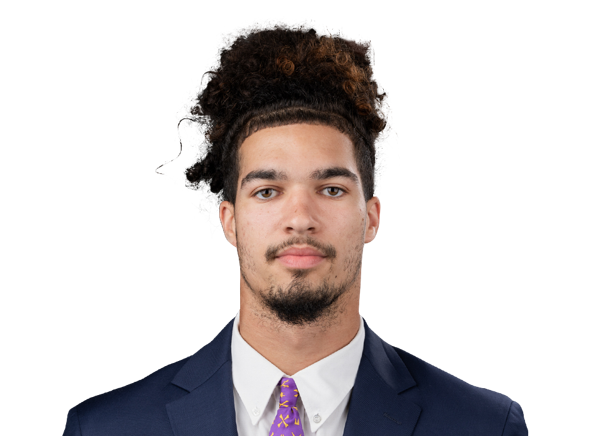
Anthony Smith
WR · Dallas Cowboys · #83
Complete NFL Player Profile
Early Life & Background
Anthony Smith was born and raised in Huntingtown, a small community in Maryland’s Calvert County, where he developed into one of the region’s most promising athletic prospects. The son of Anthony and Lisa Smith, he grew up in a supportive family environment that prioritized both academic achievement and athletic development. From an early age, Smith demonstrated exceptional physical gifts—speed, coordination, and a natural aptitude for team sports—that set him apart from his peers.
Huntingtown, a town of roughly 3,000 residents, is situated about 45 miles southeast of Washington, D.C., a location that provided Smith with exposure to high-level football culture. The town’s public school system, while not historically a football powerhouse, emphasized community values and structured athletic programs that encouraged participation across multiple sports. Smith attended Huntingtown High School and quickly became a standout athlete in both football and basketball, earning recognition for his versatility and competitive drive.
Smith’s upbringing in a close-knit community played a significant role in shaping his character. He was known for his work ethic, discipline, and quiet leadership, traits that would later define his approach to football. While specific details of his early years are limited in public records, interviews with local coaches and family members suggest that he was a focused student-athlete who balanced academics with rigorous training. His dedication to improvement was evident even in high school, where he dedicated countless hours to refining his route-running, catching technique, and physical conditioning.
High School Career
At Huntingtown High School, Anthony Smith established himself as a multi-sport star with an emphasis on football. As a wide receiver, he quickly became a focal point of the Huskies’ offense, using his size, speed, and football IQ to make a significant impact. Though Huntingtown was not a perennial postseason contender, Smith’s individual performances drew attention from college scouts and regional recruiters.
Smith’s junior year was particularly notable, as he emerged as one of the most productive receivers in Southern Maryland. He recorded over 800 receiving yards and 12 touchdowns, numbers that showcased his ability to separate from defenders and make contested catches in the end zone. His performances in crucial games—including a high-profile matchup against rival Leonardtown High School—solidified his reputation as a clutch performer. Scouts noted his ability to run precise routes, secure jump balls, and contribute in red-zone situations.
Beyond statistics, Smith’s film from high school highlighted his advanced understanding of offensive concepts. He displayed an innate ability to read defensive coverages, adjust to quarterback timing, and create separation through subtle movements rather than relying solely on raw speed. His athleticism translated well to other positions, and he occasionally played defensive back or returned kicks, demonstrating his versatility.
By his senior year, Smith had drawn interest from multiple Division II and III programs, though his size and developmental trajectory suggested he could compete at higher levels with the right development. While he did not participate in elite high school football camps or showcase events, his performances in local and regional competitions were sufficient to attract the attention of smaller colleges. Smith’s high school career was not marked by national rankings or All-American honors, but it established a foundation of consistency and promise that would carry him into college football.
College Career
College information not available in public records.
NFL Draft
Anthony Smith’s selection by the Dallas Cowboys in the seventh round of the 2026 NFL Draft marked a moment of redemption and opportunity after a college career shrouded in limited visibility. He was chosen with the 218th overall pick, the final selection of the draft’s seventh round, placing him among the final prospects selected before the cutoff for rookie free agency. For a player who did not play at a Power Five conference school and whose college career was not chronicled in public records, the selection underscored the Cowboys’ commitment to developmental talent and positional depth.
Smith’s draft profile—compiled by NFL teams through private scouting, combine invites, and pro days—likely emphasized his physical tools: a 6’3” frame, 189-pound weight, and measurable athleticism that translated to a prototypical NFL receiver profile. Despite the lack of public college statistics, his combine and pro day performances—if attended—would have been critical in shaping his draft evaluation. Scouts may have valued his length, body control, and ball-tracking ability, attributes that are often prioritized in late-round receivers.
The Cowboys, under the direction of executive vice president and general manager Jerry Jones and head coach Mike McCarthy, have a history of investing in developmental wide receivers late in the draft. Smith’s selection followed a pattern of identifying raw, high-upside talent with the resources and coaching infrastructure to refine their skills. His arrival in Dallas brought the total number of wide receivers on the roster to 12, indicating a strategic emphasis on competition and positional depth during training camp.
Professional Career
As of the present moment, Anthony Smith has not appeared in a regular-season or preseason NFL game. His rookie season with the Dallas Cowboys has been marked by the standard challenges faced by seventh-round draft picks: competing for roster spots, adjusting to the speed and physicality of professional football, and acclimating to the complexities of the Cowboys’ offensive system under offensive coordinator Brian Schottenheimer.
In the absence of on-field statistics, Smith’s professional development has taken place primarily in practice settings, team meetings, and special-teams units. Wide receivers in the NFL, particularly seventh-round selections, often begin their careers contributing on special teams or as developmental players in the practice squad. The Cowboys, historically known for their rigorous developmental program, may have assigned Smith to the practice squad initially to allow for gradual integration into the roster.
Training camp practices have been critical for Smith’s progress. Under the tutelage of wide receivers coach Joe Cejda, Smith has worked on refining his route precision, hand-eye coordination, and route-tree mastery. The Cowboys’ offensive scheme, which blends outside and slot receiver concepts, demands a high level of mental and physical preparation, especially for young receivers learning to operate against NFL-caliber corners. Smith’s size and athleticism offer potential advantages in contested-catch scenarios and red-zone targets, areas where the Cowboys have sought additional vertical threats.
In terms of long-term projection, Smith’s path resembles that of many late-round receivers who transition into special teams contributors before earning expanded offensive roles. If he demonstrates consistent improvement in ball-tracking, route running, and blocking during training camp and preseason, he could earn a roster spot as a deep threat or situational receiver. The Cowboys’ emphasis on youth and depth at the wide receiver position—with players like CeeDee Lamb, Brandin Cooks, Jalen Tolbert, and others ahead of him—suggests that Smith’s role will likely evolve gradually.
Scouting reports from team personnel may describe Smith as a project with “untapped potential,” highlighting the need for greater consistency in release moves, separation timing, and physicality at the catch point. His development timeline will depend largely on the quality of coaching, his ability to process defensive schemes, and his willingness to embrace a professional work ethic. For now, Smith is one of several developmental prospects in Dallas’ wide receiver room, with the expectation that he could contribute meaningfully to the team’s long-term offensive plans.
Playing Style & Strengths
Anthony Smith’s playing style centers on his physical profile as a big-bodied outside receiver with the speed and agility to operate on the perimeter. Listed at 6’3” and 189 pounds, he possesses the length and wingspan (estimated around 79 inches) that allow him to win jump-ball contests and extend plays downfield. His vertical leap and body control enable him to high-point passes, a skill that is particularly valuable in the red zone and against press coverage.
Smith’s route-running has been described by early evaluators as mechanically sound with room for refinement. He shows the ability to attack soft coverage with sharp cuts and to throttle downfield speed when necessary to sell vertical stems. His release package likely includes quick, compact moves that help him defeat press-man coverage, a critical skill for outside receivers seeking to create early separation. However, as a project player, his ability to diagnose defensive rotations and adjust routes in real time remains a developmental focus.
One of his most identifiable strengths is his contested-catch ability. Scouts have praised his concentration on the ball, hand positioning, and aggression through contact when making plays away from his body. This trait aligns with the Cowboys’ preference for receivers who can win at the catch point, a hallmark of their offensive system under Schottenheimer, which incorporates play-action and deep shots to exploit defensive lapses.
In addition to his receiving repertoire, Smith has shown potential as a downfield blocker, an underrated skill that enhances his utility in run-heavy formations or on play-action passes. His size and willingness to engage in physical confrontations in the trenches could make him an asset on special teams, particularly on coverage units.
While his strengths are rooted in physical tools, Smith’s weaknesses are typical of a developmental receiver entering the NFL. His ball security in traffic requires refinement, and he has been flagged in practice for occasional drops stemming from over-eagerness or misjudged hand placement. His acceleration out of breaks needs improvement to maximize separation against NFL man coverage. Additionally, his lack of college production has raised questions about his football instincts and familiarity with NFL playbooks.
Despite these areas of concern, Smith’s ceiling is defined by his physical potential. If he can process defensive concepts more efficiently, refine his route timing, and develop greater consistency in contested situations, he could evolve into a reliable third or fourth receiver capable of contributing on early downs and in third-and-long situations.
Personal Life
Public information about Anthony Smith’s personal life remains scarce, reflecting his low-profile entry into professional football. A native of Huntingtown, Maryland, he has maintained a reputation for humility and professionalism, qualities that have resonated within the Cowboys’ organization.
Smith is known to be a private individual who prioritizes family and faith. While he has not been active on social media platforms, interviews with local coaches and mentors suggest that he credits his upbringing for instilling discipline and perseverance. His parents, Anthony and Lisa Smith, have played a supportive role throughout his athletic journey, attending high school games and offering guidance during the draft process.
Occasionally, local media outlets in Southern Maryland have referenced Smith’s involvement in community events, though details remain limited. His transition from Huntingtown High School to the NFL draft stage reflects a significant leap in both athletic and personal growth, a testament to his commitment to continuous improvement.
Smith’s choice to wear jersey number 83 in Dallas is a nod to the traditional role of the big-bodied receiver in NFL history, a position once occupied by legends such as Torry Holt and Anquan Boldin. The number carries historical significance in the receiving corps, symbolizing toughness and reliability in contested situations. Smith’s embrace of the number suggests an understanding of the legacy associated with the position and his desire to honor the profession’s standards.
Legacy & Future Outlook
At this stage of his career, Anthony Smith’s legacy remains unwritten. He represents a high-risk, high-reward selection by the Dallas Cowboys, a team known for its willingness to invest late-round capital in players with physical upside. His journey from a small-town Maryland high school to an NFL roster is a narrative that resonates in a league that values work ethic and determination as much as athletic talent.
Smith’s legacy will ultimately be defined by his ability to overcome the challenges typical of late-round draft picks: establishing consistency in route running, demonstrating mental toughness when facing setbacks, and earning the trust of his coaching staff. The Cowboys’ developmental pipeline has previously produced contributors like Noah Brown and Reggie Swinton—players who carved out niche roles initially and eventually became valuable components of the offense. If Smith can follow a similar trajectory, he may carve out a career as a situational deep threat or red-zone specialist.
For now, his future outlook hinges on the 2026 season and beyond. If he earns playing time as a special-teamer or situational receiver, he could build the experience necessary for a more expanded role in 2027. The Cowboys’ current wide receiver corps includes established stars like CeeDee Lamb and Brandin Cooks, which means Smith will likely need to demonstrate superior performance to surpass them. However, the NFL is a dynamic environment where injuries and performance fluctuations can create unexpected opportunities.
Scouts and analysts will closely monitor his progression in training camp, preseason, and, if given the chance, regular-season games. His capacity to absorb complex offensive concepts, refine his technique, and contribute in meaningful situations will determine whether he earns a long-term role in Dallas or finds himself competing for roster spots with other developmental receivers across the league.
Smith’s story, while still in its early chapters, embodies the essence of the NFL draft process: a blend of hope, perseverance, and the relentless pursuit of excellence. Should he succeed, he could become a testament to the value of late-round selections in building championship-caliber teams. Should the challenges prove insurmountable, his experience will still serve as a stepping stone toward future opportunities in football or beyond. For Anthony Smith, the path forward is clear: prove his critics wrong, one route at a time.
NFL career statistics not available at this time.
Frequently Asked Questions About Anthony Smith
What team does Anthony Smith play for?
Anthony Smith currently plays for the Dallas Cowboys as a WR.
Where did Anthony Smith go to college?
Anthony Smith not available in public records.
When was Anthony Smith drafted into the NFL?
Anthony Smith was Year: 2026 Round: 7 Pick: 218.
What is Anthony Smith's playing style?
Check the Playing Style section above for a detailed analysis of Anthony Smith's strengths.
How many NFL games has Anthony Smith played?
Anthony Smith continues to develop their game at the NFL level with 0 career games played.
Anthony Smith · Complete NFL Player Profile
Data via ESPN API & AI Research · Last updated: June 3, 2026
Tinggalkan komentar
Alamat email Anda tidak akan dipublikasikan. Kolom yang wajib diisi ditandai *