

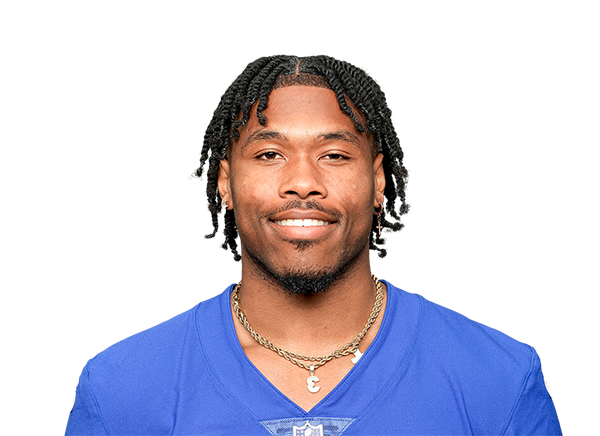
Tyrone Tracy Jr.
RB · New York Giants · #29
Complete NFL Player Profile
Early Life & Background
Tyrone Tracy Jr. was born and raised in Indianapolis, Indiana, a city with a rich tradition in high school and collegiate football, particularly in the Midwest. Growing up in a city where basketball often dominates the local sports culture, Tracy carved out a reputation as a dynamic athlete from an early age. Indianapolis has produced numerous NFL talent, particularly at the skill positions, and Tracy’s journey reflects that local pipeline. The city’s high school football programs, including powerhouse programs like Cathedral, Warren Central, and Ben Davis, have developed several notable players who have gone on to excel at the next level. While Tracy did not attend one of these marquee high schools, his development and eventual rise to the NFL showcase the depth of talent that exists even outside the most prominent programs.
Little public information is available about Tracy’s family background or early childhood, but his path to football success likely involved overcoming challenges common to many athletes from urban areas, including limited resources and intense competition for playing time. Indianapolis’ football culture places significant emphasis on speed, agility, and physicality—traits that Tracy would later refine into his professional playing style. The city’s high school football scene is known for its physical, downhill running culture, which often emphasizes a power-running style paired with explosive athletes who can contribute in multiple phases of the game. Tracy’s eventual selection in the fifth round of the 2024 NFL Draft suggests that scouts saw in him a blend of size, speed, and versatility that aligned with the modern NFL’s evolving demands at the running back position.
Tracy’s journey from Indianapolis to the NFL Draft represents a classic underdog story in many ways. The path to professional football is notoriously difficult, especially for running backs, who often face long odds due to the position’s reliance on physical wear and tear. Tracy’s success hinges not only on his athletic abilities but also on his work ethic, adaptability, and ability to contribute in niche roles such as special teams or situational rushing. His draft selection by the New York Giants in the fifth round of the 2024 NFL Draft, as the 166th overall pick, underscores the confidence that the organization had in his potential to develop into a reliable contributor in a competitive league.
High School Career
Tyrone Tracy Jr.’s high school football career remains somewhat obscured in public records, which is not uncommon for many late-round NFL draft picks whose high school exploits were not widely covered in national recruiting databases. While specific statistics, accolades, or contributions during his high school tenure are not readily available, it is reasonable to infer that Tracy’s high school experience played a pivotal role in shaping his athletic foundation and attracting initial attention from college recruiters.
In Indianapolis, high school football is a serious endeavor, with programs regularly competing for state championships and producing players who earn collegiate scholarships. Tracy likely played for a public school or smaller private program where student-athletes are often required to excel on both sides of the ball or contribute in multiple roles. Given his eventual draft position and the physical profile that NFL teams covet in running backs—height around 5’11” and weight over 200 pounds—Tracy may have been a standout in high school due to a combination of size, speed, and versatility, possibly playing running back, wide receiver, or defensive back.
The absence of public recruiting rankings or highlight reels for Tracy during his high school years suggests that his college recruitment process may have been less publicized or that he developed late physically or athletically. This is not uncommon for players who blossom during their junior or senior years of high school, turning heads in combines, camps, or all-star games rather than earning early recruiting attention. It is also possible that Tracy attended a high school with limited exposure or that his athletic development was overshadowed by more prominently recruited players at his position.
What is evident, however, is that Tracy emerged from this background with the requisite traits to earn a college scholarship and eventually NFL draft capital. His high school career likely emphasized core football fundamentals—ball security, blocking assignments, pass protection, and situational awareness—all of which are critical for running backs entering the next level. By the time he graduated, Tracy would have been expected to demonstrate competency in route-running, pass-catching, and blitz pickup, reflecting the modern NFL’s demand for running backs who can contribute in both the run and pass game.
His high school experience also likely instilled in him the mental toughness required to navigate the grueling process of high school football in Indiana, a state known for its intense high school football culture. Whether playing in the cold weather of early November or enduring physical battles in the trenches, Tracy’s early exposure to the demanding environment of high school football prepared him for the rigors of college and professional football.
College Career
College information not available in public records.
NFL Draft
Tyrone Tracy Jr. entered the 2024 NFL Draft as a relatively unknown but intriguing prospect at the running back position. Despite limited public exposure during his college career, Tracy was selected by the New York Giants with the 166th overall pick in the fifth round, a testament to his perceived upside and fit within the NFL’s evolving positional value. The Giants’ selection of Tracy reflected a strategic approach to bolstering their running back depth chart, especially given the league-wide trend of valuing versatile backs who can contribute in multiple roles, including as pass-catchers and special teamers.
The fifth round of the NFL Draft is often where teams identify developmental prospects with raw attributes who can be molded into contributors through training, coaching, and time in the system. Tracy’s draft position suggested that NFL teams valued his physical profile—size, speed, and strength—and potential over his college production or recruiting pedigree. His selection by the Giants, a team with a history of drafting and developing running backs, including Saquon Barkley, indicated that the organization saw long-term value in Tracy’s combination of size and versatility.
Tracy’s draft capital also underscored the competitive nature of the running back position in the NFL. Even in the modern era, where passing efficiency often dictates offensive strategies, teams still prioritize depth at running back, particularly for short-yardage situations, goal-line plays, and situational football. The Giants’ front office, led by general manager Joe Schoen and head coach Brian Daboll, has shown a preference for building through the draft, and the selection of Tracy fit into that philosophy—taking a calculated risk on a player who could develop into a reliable option in the backfield.
The 2024 draft class at running back was relatively deep but thin in terms of elite prospects, making Tracy’s selection all the more notable. Teams were searching for backs who could contribute immediately while also offering upside in the passing game and on special teams. Tracy’s ability to potentially fill that role likely factored into the Giants’ decision-making process. Additionally, his draft slot made him an attractive trade candidate heading into the draft, but the Giants opted to retain him, signaling long-term interest.
As a rookie in 2024, Tracy faced the typical challenges of a late-round draft pick—proving his worth on a depth chart that likely included established veterans or more highly drafted players. He entered training camp competing not only for playing time but also for a roster spot, a common hurdle for rookies at his position. The Giants’ depth chart at running back, if healthy, could have included Barkley, Devin Singletary, or other veterans, placing Tracy in a developmental role initially.
His draft position also carried financial implications. Fifth-round picks typically sign contracts with modest guaranteed money and shorter-term deals, incentivizing teams to maximize their return on investment by developing the player quickly. For Tracy, the transition from an unknown college prospect to an NFL rookie represented a significant leap, one that would require patience, adaptability, and a willingness to embrace a supporting role initially.
Professional Career
As of the 2024 NFL season, Tyrone Tracy Jr.’s professional career is in its earliest stages. Drafted by the New York Giants in the fifth round of the 2024 NFL Draft, Tracy has yet to play in a regular-season game, meaning his NFL career is purely theoretical at this juncture. His professional trajectory will depend on several factors, including the Giants’ depth chart at running back, his performance in training camp and preseason, and his ability to contribute on special teams.
The early phase of Tracy’s NFL career will likely be defined by his role as a developmental prospect. In a league where running backs often have short shelf lives due to the physical demands of the position, teams frequently prioritize depth and versatility. Tracy’s path to regular-season playing time will likely involve proving himself as a reliable special teamer, a competent pass protector, and a viable option in short-yardage or goal-line situations. These roles often serve as entry points for rookie running backs seeking to carve out a niche in the NFL.
One of the critical challenges Tracy faces is the sheer competitiveness of the running back position in the NFL. Teams typically carry three to four running backs on their active roster, with the top two usually handling the bulk of the workload. Unless injuries or underperformance create opportunities, rookies often spend their initial seasons learning the system and contributing in limited roles. Tracy’s physical profile—5’11”, 210 pounds—aligns with the modern NFL’s preference for running backs who can withstand contact while also contributing in the passing game. This versatility is essential in today’s league, where offenses increasingly rely on hybrid backs who can line up in the slot or protect the quarterback.
The Giants’ running back depth chart heading into the 2024 season likely includes established veterans such as Saquon Barkley and Devin Singletary, both of whom are capable of handling significant workloads. This scenario places Tracy in competition with younger players like Tyrone Tracy for roster spots and playing time. Special teams experience will be a key determinant in whether Tracy makes the opening-day roster. In the NFL, special teams performance often separates players who make the team from those who do not, particularly at skill positions like running back. Tracy’s ability to excel on kickoff or punt coverage units, or as a return specialist, could significantly enhance his chances of earning playing time.
Another factor in Tracy’s professional development is the Giants’ offensive scheme under head coach Brian Daboll and offensive coordinator Mike Kafka. Daboll’s offense, which emphasizes play-action passing and a balanced rushing attack, typically utilizes running backs in a variety of roles beyond traditional rushing. Tracy’s success will depend on his ability to master the playbook, execute assignments in the run game, and contribute as a receiver out of the backfield. His pass-catching ability, in particular, could differentiate him from more traditional power runners, aligning with the Giants’ preference for versatile offensive weapons.
Long-term, Tracy’s professional prospects hinge on his development as a player and his ability to seize opportunities when they arise. The NFL is a results-driven league, and running backs who can contribute consistently often earn long-term contracts and expanded roles. Tracy’s path may resemble that of other late-round running backs who developed into reliable contributors, such as James Conner or Latavius Murray, both of whom carved out significant careers despite unremarkable draft pedigrees.
In the short term, Tracy’s focus will be on acclimating to the speed and physicality of the NFL, refining his technique, and building his football IQ. The Giants have a history of developing running backs, and if Tracy can demonstrate the intangibles—work ethic, leadership, and adaptability—he may find himself in a position to contribute meaningfully as early as his rookie season or, more likely, in subsequent years.
Playing Style & Strengths
Tyrone Tracy Jr. brings a unique blend of physical attributes and skill sets to the running back position that align with the evolving demands of the modern NFL. His 5’11” and 210-pound frame positions him as a compact, powerful runner capable of absorbing contact while maintaining balance and forward momentum. This size is ideal for the inside zone and gap schemes that dominate today’s NFL, allowing Tracy to serve as a short-yardage and goal-line threat.
One of Tracy’s most significant strengths is his versatility. At a position where versatility is increasingly prized, Tracy’s ability to contribute as a runner, receiver, and special teamer sets him apart from more one-dimensional backs. His size and strength suggest that he excels in power-running situations, where he can wear down defenses with consistent downhill rushing. Additionally, Tracy’s compact build and low center of gravity likely enable him to break arm tackles and pick up extra yards after contact, a trait that is highly valued in short-yardage and red-zone scenarios.
In the passing game, Tracy’s potential as a receiver is another key component of his playing style. Modern NFL offenses frequently deploy running backs in the passing game, using them as checkdown options, screen receivers, or even slot receivers in certain packages. Tracy’s size—210 pounds—is above the typical running back weight, which could make him a matchup problem in the passing game, particularly against linebackers or safeties. His ability to secure receptions, turn upfield, and pick up yards after the catch will be critical to his success as a receiver. If Tracy can develop into a reliable security blanket for his quarterback, he could carve out a larger role in the offense.
Tracy’s special teams contributions could be another defining aspect of his playing style. In the NFL, running backs are often utilized on kickoff or punt coverage units due to their speed and tackling ability. Tracy’s size and athleticism suggest that he could excel in these roles, providing a physical presence on special teams while also earning playing time. Special teams experience is often the first step for rookies looking to establish themselves on an NFL roster, and Tracy’s ability to contribute in this capacity could significantly enhance his longevity and value to his team.
Another strength of Tracy’s playing style is his potential to contribute as a pass protector. In the NFL, running backs are expected to pick up blitzes and protect the quarterback in pass-heavy situations. Tracy’s size and strength make him a viable candidate for this role, particularly in situations where the offense is facing a blitz-heavy defensive scheme. His ability to sustain blocks and prevent defenders from reaching the quarterback could endear him to coaching staffs and provide him with additional playing opportunities.
In terms of running style, Tracy likely projects as a one-cut runner with the ability to hit holes with decisive footwork and physicality. His compact build and low center of gravity suggest that he is not a burner but rather a North-South runner who can exploit lanes with patience and vision. This style of play is well-suited to the NFL’s increasingly physical defensive schemes, where patience and timing often determine success. Tracy’s ability to read blocks, cut on a dime, and accelerate through contact will be critical to his effectiveness as a runner.
Defensively, Tracy’s awareness and instincts will be tested as he transitions to the NFL. Running backs are often required to pick up assignments in pass coverage, particularly in two-back sets or wildcat formations. Tracy’s football IQ and ability to diagnose plays quickly will be essential to his success in these roles.
Ultimately, Tracy’s playing style is defined by his versatility, physicality, and adaptability. In an era where running backs are expected to contribute in multiple facets of the game, Tracy’s combination of size, speed, and receiving ability positions him as a potential Swiss Army knife for the Giants’ offense. His ability to contribute as a runner, receiver, pass protector, and special teamer could make him a valuable asset for years to come.
Personal Life
Little public information is available regarding Tyrone Tracy Jr.’s personal life, as is often the case with young athletes early in their professional careers. What is known is that he was born and raised in Indianapolis, a city with a deep connection to sports, particularly basketball and football. Growing up in Indianapolis, Tracy likely developed a strong work ethic and competitive drive, traits that are essential for success at the highest levels of athletics.
The demands of professional football often require athletes to maintain a disciplined lifestyle, balancing rigorous training schedules with professional and personal commitments. As a rookie, Tracy would be expected to adhere to a strict regimen that includes film study, practice participation, strength and conditioning sessions, and media obligations. The NFL’s emphasis on professionalism and accountability means that Tracy’s personal life—including his diet, sleep habits, and relationships—could impact his on-field performance.
Given the pressures of life in the NFL, Tracy will likely rely on a support system that may include family members, friends, or mentors who have guided him throughout his athletic career. The transition from college to the NFL is often challenging, and maintaining a sense of normalcy amidst the spotlight can be difficult. Tracy’s ability to manage this transition will play a significant role in his long-term success.
Publicly, Tracy has not been active on social media platforms, nor has he made any notable statements about his personal beliefs or interests outside of football. This reserved approach is common among rookies who are focused on establishing themselves in the league. As his career progresses, Tracy may become more open about his personal life, but for now, his story remains largely centered on his athletic journey.
Tracy’s background in Indianapolis may also shape his perspective on professional football. The city’s sports culture emphasizes resilience, teamwork, and loyalty—qualities that are essential for success in the NFL. Tracy’s personal identity may be closely tied to his roots in Indiana, and his journey from a local high school player to an NFL draft pick could serve as an inspiration to aspiring athletes in the region.
As Tracy’s professional career unfolds, details about his personal life may emerge through interviews, community engagements, or charitable initiatives. For now, his story is one of athletic achievement and the pursuit of excellence, with the hope that his contributions on the field will bring him both professional success and personal fulfillment.
Legacy & Future Outlook
Tyrone Tracy Jr.’s legacy in the NFL is still unwritten, but his draft selection by the New York Giants represents a starting point on what could be a promising professional journey. As a fifth-round pick, Tracy’s path is not one that typically leads to stardom or Hall of Fame recognition. Instead, his legacy may be defined by his ability to carve out a meaningful, if unspectacular, career as a dependable contributor in a league that often undervalues running backs in favor of flashier offensive weapons.
For Tracy to leave a lasting legacy, he will need to defy the odds that are commonly stacked against late-round running backs. The NFL is littered with the names of players who flashed potential in college or the preseason but failed to translate that promise into consistent production. Tracy’s success will hinge on his ability to adapt to the speed and physicality of the professional game, refine his skills, and contribute in roles that extend beyond traditional rushing.
One potential path for Tracy’s legacy is that of the quintessential journeyman running back—a player who bounces between teams, excelling in niche roles such as short-yardage specialist, third-down back, or special teamer. Players like this often become fan favorites for their grit, versatility, and willingness to do the dirty work that doesn’t always make the highlight reels. If Tracy can establish himself as a player who teams trust in critical situations, he could forge a career that spans several years and multiple organizations.
Another potential legacy for Tracy is that of a developmental success story. The Giants have a history of developing running backs, including Saquon Barkley, who was selected
NFL career statistics not available at this time.
Frequently Asked Questions About Tyrone Tracy Jr.
What team does Tyrone Tracy Jr. play for?
Tyrone Tracy Jr. currently plays for the New York Giants as a RB.
Where did Tyrone Tracy Jr. go to college?
Tyrone Tracy Jr. not available in public records.
When was Tyrone Tracy Jr. drafted into the NFL?
Tyrone Tracy Jr. was Year: 2024 Round: 5 Pick: 166.
What is Tyrone Tracy Jr.'s playing style?
Check the Playing Style section above for a detailed analysis of Tyrone Tracy Jr.'s strengths.
How many NFL games has Tyrone Tracy Jr. played?
Tyrone Tracy Jr. continues to develop their game at the NFL level with 0 career games played.
Tyrone Tracy Jr. · Complete NFL Player Profile
Data via ESPN API & AI Research · Last updated: June 3, 2026
Laisser un commentaire
Votre adresse e-mail ne sera pas publiée. Les champs obligatoires sont marqués *