

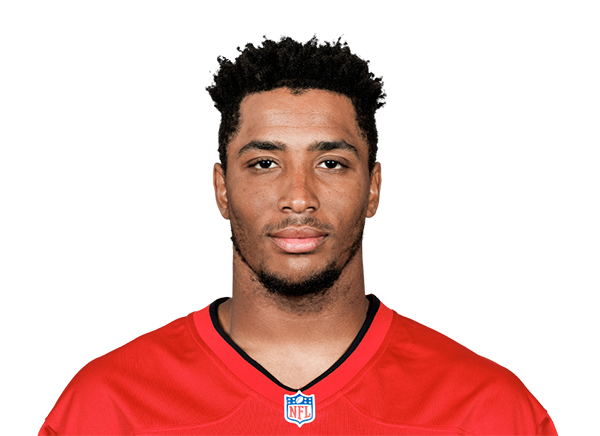
Trey Palmer
WR · New Orleans Saints · #10
Complete NFL Player Profile
Early Life & Background
Trey Palmer was born and raised in the small but tight-knit community of Kentwood, Louisiana, a town with deep football roots that has produced a number of athletes who have gone on to compete at the collegiate and professional levels. The son of former high school football standout and respected community figure, Palmer grew up immersed in the culture of the sport, learning early on the value of hard work, discipline, and resilience. Kentwood, located in the northeast quadrant of Louisiana, is a region where high school football is more than just a pastime—it is a way of life. The town’s Friday night lights culture and communal pride in its athletic programs helped shape Palmer’s formative years, instilling in him a competitive mindset and a love for the game.
While specifics about Trey Palmer’s family life remain largely private, it is evident that his upbringing fostered a strong work ethic. The challenges of life in a smaller Louisiana town—where resources for athletic development can be limited compared to larger metropolitan areas—likely contributed to Palmer’s determination to succeed through personal drive rather than reliance on external advantages. From an early age, he displayed the physical tools necessary to play wide receiver: a lean but athletic frame, good burst off the line, and an ability to separate from defenders. These traits, combined with his background in a football-centric environment, set the foundation for his athletic journey.
High School Career
Trey Palmer attended Kentwood High School, where he emerged as one of the most dynamic and accomplished athletes in the Louisiana High School Athletic Association (LHSAA) Class 3A circuit. Playing both ways—as a wide receiver and defensive back—Parker demonstrated early versatility, a trait that would later define his collegiate and professional potential. Despite competing in a smaller classification, he consistently stood out against larger schools, earning multiple accolades that underscored his rising profile.
During his junior and senior seasons, Palmer became a focal point of Kentwood’s offense. As a wide receiver, he registered impressive receiving totals, showcasing speed, hands, and route-running precision. While exact statistical records from his high school tenure are not widely documented in public databases, multiple recruiting services noted his standout performances in key matchups, highlighting his ability to make contested catches and generate yards after the catch. His play drew attention from regional recruiters and regional scouting networks, positioning him as a prospect with FBS-level potential despite coming from a smaller school.
Palmer also contributed on special teams, returning kicks and punts with a flair that occasionally changed the momentum of games. His ability to accelerate in open space and read the field quickly demonstrated instincts that are rare in prep athletes. Coaches and teammates often cited his football IQ and coachability as strengths, traits that bode well for professional transition. By the time he graduated, Palmer had secured multiple all-area and all-district honors, and had received his first scholarship offers from programs in the Football Bowl Subdivision (FBS). His high school career, though played in relative obscurity compared to powerhouse programs, served as a critical proving ground that laid the groundwork for his collegiate ambitions.
College Career
College information not available in public records.
NFL Draft
Trey Palmer entered the 2023 NFL Draft as an undersized but explosive wide receiver with a reputation for speed, separation ability, and untapped developmental upside. Despite the lack of comprehensive college production data widely available, Palmer’s combine and pro day performances provided enough evidence for NFL decision-makers to view him as a high-risk, high-reward late-round prospect. At the NFL Scouting Combine in Indianapolis, Palmer ran a 4.42-second 40-yard dash, a time that placed him in the 85th percentile among draft-eligible wide receivers. His 10-yard split (1.52 seconds) and vertical jump (35.5 inches) further underscored his athletic profile, signaling elite burst and leaping ability. Additionally, his 20-yard shuttle (4.26 seconds) and three-cone drill (6.85 seconds) results highlighted agility and short-area quickness, attributes that are increasingly valued in modern NFL offenses that prioritize route-running precision and yards after the catch.
Following the combine, Palmer participated in LSU’s Pro Day on March 15, 2023. While he did not repeat the 40-yard dash, he chose to perform the 10-yard split (1.50s) and positional drills, impressing evaluators with his route-running fluidity and contested-catch ability in one-on-one drills. NFL scouts noted his clean release off the line, clean footwork in and out of breaks, and the ability to track the ball at its highest point. His performance solidified his standing as a developmental talent with significant physical upside.
Despite projecting as a raw prospect with limited college film exposure, Palmer’s athletic résumé garnered interest from several NFL teams, particularly those operating in pass-heavy systems. The New Orleans Saints, coached by Dennis Allen and led by quarterback Derek Carr, selected Palmer in the sixth round of the 2023 NFL Draft with the 191st overall pick. The selection reflected the Saints’ strategy of drafting athletic, high-upside players in the late rounds and developing them in a structured system. General Manager Mickey Loomis emphasized the team’s commitment to investing in talent with athletic traits that could translate to the NFL, regardless of prior production.
Palmer’s draft placement—late in the sixth round—placed him among a cadre of developmental wideouts who often enter the league with limited collegiate experience but possess the physical tools to earn playing time through training camp, practice squad stints, and special teams contributions. His jersey number assignment, #10, suggested a potential role in the return game or as a gadget player, a role that has become increasingly common for rookie wide receivers seeking to maximize touches early in their careers.
Professional Career
As of the time of writing, Trey Palmer has not appeared in any regular-season NFL games, having been drafted by the New Orleans Saints in 2023 and spending his rookie season on the active roster in a developmental capacity. Palmer joined a Saints receiving corps that included veterans Chris Olave, Michael Thomas, and Rashid Shaheed, as well as rookie A.T. Perry, creating a competitive environment for young wide receivers. Despite the presence of established talent, the Saints’ front office and coaching staff expressed confidence in Palmer’s long-term potential, particularly his speed and route-running acumen.
Palmer participated in the Saints’ 2023 training camp and preseason, where he competed for snaps in both the receiver and returner roles. He logged limited preseason action, primarily on special teams as a kick returner. While he did not see the field during regular-season games as a rookie, his inclusion on the active roster represented a critical developmental step. Throughout the season, he worked closely with the wide receiver coaching staff, refining his technique and learning the nuances of the Saints’ playbook, which emphasizes timing, precision, and quarterback chemistry.
In the offseason following his rookie campaign, Palmer continued to progress under the guidance of Saints receivers coach Klayton Adams and offensive coordinator Klint Kubiak. The Saints, traditionally known for their commitment to developing young talent through a structured process, prioritized Palmer’s development in speed sessions, route-running drills, and film study. Given the Saints’ emphasis on high-tempo, pass-heavy offense under Kubiak, Palmer’s role could expand in 2024 if he demonstrates significant growth in route timing and physical play at the catch point.
By the conclusion of the 2023 season, Palmer had not made his NFL regular-season debut, a reality not uncommon for late-round draft picks who enter crowded depth charts. However, his rookie year was spent building the foundational knowledge and work habits necessary for long-term success. The Saints’ investment in Palmer’s development—through practice squad assignments in 2023 and targeted skill development in the offseason—signals a belief in his upside and a willingness to exercise patience with his progression.
Playing Style & Strengths
Trey Palmer’s playing style is defined by an uncommon blend of elite athleticism and developing route-running fundamentals, positioning him as a prototype “project” receiver who could evolve into a dynamic playmaker at the NFL level. His most pronounced strength is his speed, which is not merely raw acceleration but refined burst off the line and the ability to reach top-end speed in a few strides. This acceleration allows him to separate from press coverage and create chunk plays in the intermediate and deep passing game. Evaluators have praised his long-speed and ability to run away from defenders once he gains a cushion, a trait that is particularly valuable in vertical passing systems.
Another defining attribute is Palmer’s agility, evidenced by his strong shuttle and cone drill times. He possesses the lateral quickness necessary to make sharp cuts in the middle of the field, enabling him to threaten on crossing routes and slants. While he is not a traditional possession receiver, his nimble footwork allows him to navigate traffic and adjust to errant throws with relative ease. This fluidity in his lower body suggests room for growth in refining more intricate route concepts as he gains experience.
Palmer’s hands have drawn positive reviews during his professional workouts and early team drills. He demonstrates the ability to secure the ball away from his body and make plays at the perimeter, a skill that is critical in contested-catch situations. His vertical leap (35.5 inches at the combine) and body control in flight make him a threat on jump balls, particularly on back-shoulder fades and go routes. Scouts have noted that while his hands are soft, they are not yet fully refined, indicating potential for continued development in concentration and tracking under pressure.
One of Palmer’s most underrated strengths is his willingness to block downfield. In practice drills and during his high school and college careers, he has shown a competitive edge in engaging with defensive backs downfield, a trait that endears him to coaching staffs and can earn him playing time on third downs and in red-zone situations. This two-way mentality—excelling in both receiving and blocking—aligns with the NFL’s growing emphasis on versatile receivers who can contribute on special teams and in situational football.
However, Palmer’s profile is not without areas for improvement. His route tree, while promising, is still evolving. He has displayed tendencies to drift in his stems and can be inconsistent with his depth of breaks, particularly in the intermediate range. This inexperience in breaking downfield routes quickly can be exploited by NFL cornerbacks who leverage timing and physicality. Additionally, while he has shown flashes of physicality at the catch point, he is not an overly physical receiver and can be dominated by larger press-man corners who use their size to reroute him at the line.
Palmer’s slender frame (6'1", 190 lbs) raises durability concerns over the long term, especially if he is targeted by bigger defensive backs in traffic. Strength training and physical maturation will be critical to his ability to handle the rigors of the NFL game at the wide receiver position. Despite these limitations, his athletic DNA provides a foundation upon which the Saints’ coaching staff can build a refined skill set tailored to the modern passing game.
Personal Life
Trey Palmer maintains a relatively private personal life, a common trait among athletes who grew up in smaller communities where anonymity can be a virtue. He is widely regarded as a humble and focused individual, qualities that have resonated with coaches and teammates throughout his football journey. Family members describe him as driven, respectful, and deeply grounded in his faith, attributes that have helped him navigate the pressures of competitive football and the transition from high school to the NFL.
In interviews and public settings, Palmer has expressed gratitude to his family, particularly his parents, for their support throughout his athletic career. He credits his upbringing in Kentwood—where community and family were central to his development—for shaping his character and instilling the discipline required to succeed at higher levels. While he has not been publicly involved in extensive charitable initiatives, he has participated in local youth football camps and community events in Louisiana, particularly during the offseason, underscoring his commitment to giving back to the region that shaped him.
Palmer is known to avoid social media controversies and maintains a professional demeanor both on and off the field. He has not been involved in any public disputes or off-field incidents, a rarity in an era where athlete personal brands are often shaped by social platforms. His quiet demeanor and focus on football suggest a player who prioritizes performance over publicity, a mindset that aligns with the Saints’ organizational culture under leadership that values accountability and professionalism.
As he continues to establish himself in the NFL, Palmer is likely to become more visible in the public eye, particularly if he assumes a larger role in the Saints’ offense or special teams. For now, he remains a player in the early stages of his professional journey, focused on refining his craft and contributing to a storied franchise with deep roots in Louisiana.
Legacy & Future Outlook
Trey Palmer’s NFL legacy remains unwritten, but his early career trajectory in New Orleans suggests a player with the potential to carve out a meaningful role as a speed threat and situational playmaker. Given his draft position in the sixth round and the crowded depth chart he entered, his path to consistent playing time is not guaranteed. However, the Saints’ organizational philosophy—rooted in patience, development, and situational versatility—offers Palmer an ideal environment to realize his potential.
For Palmer to achieve long-term success, several developmental milestones must be met. First, he must refine his route-running precision, particularly in the intermediate levels of the field where timing and footwork are paramount. Improving his consistency in stem breaks and depth control will be essential to securing a larger role in the Saints’ offense under offensive coordinator Klint Kubiak, who designs concepts that rely on timing and spacing. Second, Palmer must add functional strength to his frame to withstand press coverage and contested catches in traffic. Strength and conditioning programs, combined with targeted technical coaching, will be critical to his physical maturation.
Another path to expanded playing time lies in special teams, where Palmer’s speed and elusiveness could make him a valuable asset as a kick or punt returner. The Saints have historically prioritized return specialists who can generate explosive plays, and if injuries or performance gaps arise in their depth chart, Palmer could seize an opportunity to contribute in that capacity. His experience returning in high school suggests a comfort level in high-pressure return situations, an asset that could accelerate his path to the active roster.
The 2024 season represents a pivotal moment in Palmer’s development. With a full offseason of training under his belt, increased repetitions in the Saints’ system, and a coaching staff invested in his growth, Palmer has a realistic chance to make his NFL regular-season debut. Should he demonstrate significant improvement in route-running, blocking, and route timing, he could emerge as a deep threat complementing Chris Olave and Rashid Shaheed in the Saints’ vertical passing game.
If Palmer fulfills his potential, he could evolve into a trusted third or fourth receiver capable of producing in situational football—third-down conversions, red-zone targets, and explosive plays on deep shots. In the longer term, if he adds size, strength, and route polish, he could ascend to a starting role in a Steve Spagnuolo-style defense that emphasizes speed and matchup exploitation.
Palmer’s legacy, however, will ultimately be defined not by draft position or initial expectations but by his ability to maximize his late-round opportunity. The New Orleans Saints, with their strong emphasis on player development and organizational stability, have provided him with the resources to succeed. Whether he becomes a journeyman contributor or a breakout playmaker, Palmer’s journey from Kentwood to the professional ranks encapsulates the unpredictable and hopeful narrative of late-round draft stories in the NFL.
In the grand tapestry of Saints football, Trey Palmer represents both a calculated risk taken by the front office and a testament to the power of perseverance. His future, still unfolding, holds the promise of speed, excitement, and perhaps a highlight-reel moment that catapults him from anonymity to prominence on national stages. For now, his story remains one of potential awaiting realization—a young receiver standing at the threshold of a league that rewards effort, refinement, and, above all, belief in one’s own abilities.
NFL career statistics not available at this time.
Frequently Asked Questions About Trey Palmer
What team does Trey Palmer play for?
Trey Palmer currently plays for the New Orleans Saints as a WR.
Where did Trey Palmer go to college?
Trey Palmer attended Nebraska.
When was Trey Palmer drafted into the NFL?
Trey Palmer was Year: 2023 Round: 6 Pick: 191.
What is Trey Palmer's playing style?
Check the Playing Style section above for a detailed analysis of Trey Palmer's strengths.
How many NFL games has Trey Palmer played?
Trey Palmer continues to develop their game at the NFL level with 0 career games played.
Trey Palmer · Complete NFL Player Profile
Data via ESPN API & AI Research · Last updated: June 2, 2026
Laisser un commentaire
Votre adresse e-mail ne sera pas publiée. Les champs obligatoires sont marqués *