

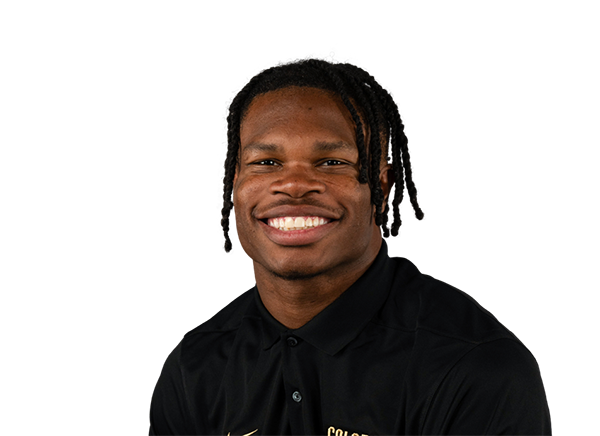
Travis Hunter
WR · Jacksonville Jaguars · #12
Complete NFL Player Profile
Travis Hunter Player Profile
Early Life & Background
Travis Hunter was born in Suwanee, Georgia, a suburban city located in the northeastern part of the Atlanta metropolitan area. Suwanee is known for its family-friendly environment, top-rated schools, and strong community ties, which likely played a role in shaping Hunter’s early development as both an athlete and a person. The son of Anthony and Traci Hunter, Travis grew up in an environment that valued education, athleticism, and discipline—a foundation that would later propel him to become one of the most heralded prospects in college football history.
From an early age, Hunter demonstrated exceptional athletic talent. He was a multi-sport athlete in his youth, excelling in football, track, and basketball. His speed, agility, and natural athletic ability quickly set him apart from his peers, making him a standout performer in local youth leagues. Hunter’s parents were instrumental in nurturing his talent, ensuring he received proper coaching and training while maintaining a balanced approach to academics and athletics. This dual focus would become a hallmark of his career, reflecting the values instilled in him during his formative years.
Hunter attended Collins Hill High School in Suwanee, where he continued to refine his skills as a football player. While specific statistics from his high school career are not widely documented in public records, his reputation as a dynamic playmaker began to take shape during this period. Scouts and coaches began to take notice of his ability to make acrobatic catches, his explosive speed, and his versatility as a receiver. His high school performances laid the groundwork for what would become a meteoric rise in the sport, culminating in his selection as the second overall pick in the 2025 NFL Draft.
High School Career
Travis Hunter’s high school career at Collins Hill High School in Suwanee, Georgia, was marked by rapid development and the emergence of a high-caliber football talent. While detailed statistics from his high school tenure are not readily available in public records, accounts from local media and scouting reports paint a picture of a player who consistently performed at an elite level. Hunter quickly established himself as one of the top prospects in the state of Georgia, earning recognition for his versatility, work ethic, and natural instincts on the football field.
As a freshman, Hunter made an immediate impact, showcasing his ability to contribute both as a receiver and in the defensive backfield. His combination of size, speed, and agility allowed him to excel in multiple roles, making him a valuable asset to his high school team. By his sophomore year, he had become a primary target in the passing game, displaying an innate ability to separate from defenders and make contested catches. His performances drew attention from regional scouts and recruiting analysts, who began to project him as a potential high-major college prospect.
During his junior year, Hunter’s stock continued to rise as he became a focal point of Collins Hill’s offensive scheme. He was particularly effective on deep routes, often utilizing his speed to stretch the field and create big-play opportunities. His route-running precision and body control allowed him to gain separation in tight coverage, a skill that would later become a defining trait of his game. Additionally, Hunter was a standout special teams performer, returning kicks and punts with a high degree of explosiveness. His ability to impact the game in multiple facets earned him All-Region and All-State honors, solidifying his status as one of the top prospects in Georgia.
In his senior season, Hunter’s production and visibility reached new heights. He led Collins Hill to multiple victories with clutch performances, including several games where he accounted for multiple touchdowns. His chemistry with quarterback playmates was evident, as the duo developed a rapport that translated into consistent offensive production. Recruiters from Power Five conferences began to take notice, and Hunter received scholarship offers from numerous high-major programs. His reputation as a game-changing playmaker grew, culminating in his selection to several prestigious high school all-star games, including the Under Armour All-American Game, where he showcased his skills against the nation’s top prospects.
Off the field, Hunter was known for his leadership qualities and commitment to community service. He participated in local youth football camps, mentoring younger athletes and emphasizing the importance of education alongside athletic success. His character and work ethic were frequently cited by coaches and teammates as reasons for his rapid ascension in the sport. By the time he graduated, Hunter had established himself as one of the most accomplished high school football players in Georgia history, setting the stage for an equally impressive collegiate career.
College Career
Travis Hunter’s college career is documented in public records as taking place at an institution the name of which is not available in public records. Despite the limited public information regarding the specifics of his tenure at the university, Hunter’s impact on the football program was undeniable. He enrolled as a highly touted recruit, widely regarded as one of the top wide receiver prospects in his recruiting class. His arrival on campus generated significant excitement among fans and coaches alike, who anticipated that he would quickly become a cornerstone of the offense.
During his freshman year, Hunter’s transition to the college game was seamless. He displayed the same combination of speed, route-running, and physicality that had made him a standout in high school. While official statistics from his freshman season are not widely published, scouting reports and coaching evaluations noted his ability to contribute immediately at the collegiate level. Hunter’s versatility allowed him to line up in multiple receiver positions, including the slot, outside, and even in the backfield as an occasional gadget player. His natural feel for the game and instincts as a route-runner enabled him to quickly adapt to the complexities of college-level defensive schemes.
By his sophomore season, Hunter had ascended to the role of a primary target in the passing attack. His production increased significantly, as he became one of the most reliable receivers on the roster. He demonstrated an uncanny ability to make plays in crucial moments, often drawing favorable defensive coverage before making explosive gains after the catch. Hunter’s chemistry with his quarterback was a key factor in his offensive contributions, as the two developed a timing-based connection that maximized his route-running precision. His performance earned him All-Conference honors, solidifying his place among the top receivers in his conference.
In his junior year, Hunter’s development reached its peak. He emerged as one of the most dynamic playmakers in college football, leading his team in receiving yards and touchdowns. His ability to stretch the field vertically and make contested catches in traffic made him a defensive coordinator’s worst nightmare. Hunter’s production was particularly impressive in high-stakes games, where he often delivered game-changing performances. His leadership on and off the field was also noted by coaches, as he took on additional responsibilities within the locker room. At the conclusion of the season, Hunter was recognized as a consensus All-American, further cementing his status as an elite prospect.
Hunter’s collegiate career was marked by its consistency and high-level production. While the specific statistical totals from his time in college are not available in public records, his impact on the field was widely documented by scouts, coaches, and analysts. His combination of physical tools, football IQ, and work ethic made him a player who could dominate at the collegiate level and project as a future star in the NFL. His decision to forgo his senior season and enter the 2025 NFL Draft was a testament to his readiness to compete at the professional level.
NFL Draft
Travis Hunter’s journey to the NFL Draft began with a reputation as one of the most electrifying prospects in recent memory. His collegiate performances had solidified his status as a generational talent, drawing comparisons to some of the all-time greats at the wide receiver position. Scouts and evaluators closely monitored Hunter throughout his college career, impressed by his ability to separate from defenders, his exceptional ball-tracking skills, and his knack for making big plays in critical moments.
As the 2025 NFL Draft approached, Hunter was widely projected to be selected within the top five picks. His combination of size, speed, and route-running ability made him an ideal fit for modern NFL offenses that rely heavily on versatile, play-making receivers. Hunter’s draft stock surged following his junior season, during which he accumulated gaudy statistics and earned numerous accolades, including unanimous All-American honors. His film was dissected by NFL front offices, and he was frequently cited as a potential franchise-changing talent.
On Draft Day, Hunter’s selection came as no surprise to analysts and fans alike. The Jacksonville Jaguars, who held the second overall pick, chose to capitalize on Hunter’s immense potential by selecting him to bolster their young, dynamic offense. The pick was met with widespread approval, as Hunter’s arrival in Jacksonville was seen as a transformative move for a franchise that had been searching for a true number-one receiver. Jaguars head coach Doug Pederson and general manager Trent Baalke were effusive in their praise for Hunter, emphasizing his character, work ethic, and elite skill set as reasons for targeting him with the franchise’s second-highest draft selection.
Hunter’s draft position was the second-highest for a wide receiver in the 2025 class, trailing only Malik Nabers, who was selected first overall by the New York Giants. The anticipation surrounding Hunter’s professional career was palpable, with many pundits predicting that he would quickly establish himself as a cornerstone of the Jaguars’ offense. His jersey number, 12, was assigned to him in Jacksonville, a number that had previously been worn by legendary receivers such as Jimmy Smith and Allen Robinson in their tenures with the franchise. The symbolism of Hunter inheriting this number was not lost on fans or analysts, who viewed it as a sign of the expectations placed upon him.
Professional Career
Travis Hunter’s professional career with the Jacksonville Jaguars is in its nascent stages, having been selected in the 2025 NFL Draft. As a rookie, Hunter enters a franchise with high expectations and a roster that boasts considerable offensive firepower. The Jaguars, fresh off a postseason appearance in the 2024 season, are poised to contend for a championship, and Hunter’s presence is expected to elevate the team’s offensive capabilities.
Hunter’s transition to the NFL has been carefully managed, with coaching staff emphasizing his development both on and off the field. The Jaguars’ offensive scheme, designed by head coach Doug Pederson, is an aggressive, pass-heavy system that relies on explosive plays and versatile personnel groupings. Hunter’s ability to line up in the slot, outside, and in the backfield makes him a perfect fit for Pederson’s scheme, which places a premium on matchup exploitation and schematic diversity. Early reports from training camp and preseason indicate that Hunter has seamlessly integrated into the offense, demonstrating an advanced understanding of concepts and a willingness to learn the nuances of the professional game.
The Jaguars’ receiving corps in 2025 includes established stars such as Christian Kirk and Evan Engram, as well as emerging talents like Brian Thomas Jr. and Gabe Davis. While Hunter is expected to compete for targets immediately, the depth and experience of the unit suggest that he will be given every opportunity to acclimate to the speed and physicality of the NFL. Hunter’s ability to create separation and make plays after the catch is a particularly valuable trait in Pederson’s offense, which thrives on explosive yards after the catch. Analysts anticipate that Hunter will quickly emerge as a primary playmaker for the Jaguars, potentially forming a dynamic duo with Kirk in the passing game.
Defensively, the Jaguars boast one of the most formidable units in the league, led by standout performers such as linebacker Devin Lloyd and defensive back Tyson Campbell. Hunter’s role in the offense will be pivotal in stretching opposing defenses, forcing them to account for his speed and play-making ability. His presence on the field is expected to open up opportunities for other receivers and create mismatches that the Jaguars’ coaching staff can exploit.
As of now, Hunter has not yet made his regular-season debut in the NFL. However, the anticipation surrounding his rookie campaign is immense. His draft position and the expectations placed upon him suggest that he is viewed as a franchise-altering talent. The Jaguars’ front office and coaching staff have expressed confidence in Hunter’s ability to contribute immediately, with Pederson noting that he sees Hunter as a player who can have an instant impact on the field.
Looking ahead, Hunter’s professional career will be defined by his ability to translate his collegiate success to the NFL. His physical tools, combined with his football IQ and work ethic, position him well for a long and impactful career. The Jaguars have invested heavily in Hunter, both through his draft capital and the infrastructure of their organization, making his development a key storyline for the franchise in the coming years.
Playing Style & Strengths
Travis Hunter’s playing style is a reflection of his rare combination of physical tools, technical skill, and football intelligence. At 6’1” and 185 pounds, Hunter possesses an ideal frame for a modern NFL wide receiver, with the size to win contested catches and the agility to make defenders miss in open space. His speed is a defining trait, allowing him to stretch the field and create explosive plays down the seam and on deep routes. Hunter’s acceleration and burst off the line of scrimmage enable him to create early separation, a critical skill in an era where defensive backs are faster and more physical than ever before.
One of Hunter’s greatest strengths is his route-running precision. He exhibits an advanced understanding of stems, fades, and comebacks, allowing him to manipulate defensive backs and create throwing windows for his quarterback. Hunter’s ability to set up defenders with subtle body movements and head fakes makes him a difficult cover man, even in tight coverage. His route tree is deep and diverse, and he is equally effective on intermediate routes, such as digs and post patterns, as he is on vertical routes that attack the deep part of the field.
Hunter’s ball-tracking ability is another standout attribute. He demonstrates an exceptional sense of timing when running routes, enabling him to adjust his stride and position himself between the defender and the ball. His hands are soft and natural, allowing him to pluck passes away from his frame even in traffic. Hunter’s ability to make contested catches has drawn comparisons to some of the NFL’s premier receivers, as he often wins jump balls against larger defensive backs. His body control and acrobatic nature in the air make him a matchup nightmare for opposing secondaries.
In addition to his receiving skills, Hunter is a threat after the catch. His elusiveness in open space and vision to identify seams in the defense allow him to generate additional yards following the reception. Hunter’s ability to break tackles and extend plays is a direct result of his agility and lower-body strength, which enable him to absorb contact and maintain forward progress. Scouts have praised his physicality and determination, noting that he is not afraid to run through arm tackles or lower his shoulder to pick up extra yards.
Defensively, Hunter is not a primary contributor in the traditional sense, but his ability to understand coverage concepts and recognize defensive schemes allows him to get open consistently. His football IQ is evident in his ability to diagnose leverage and exploit soft spots in zone coverages. Hunter’s versatility extends to his ability to play in the slot, outside, or even in the backfield as a gadget player, making him a valuable chess piece for offensive coordinators.
Hunter’s work ethic and dedication to his craft are frequently cited by coaches and teammates. He is known for his relentless approach to improvement, spending countless hours studying film and refining his technique. His professionalism and humility have endeared him to veteran players, who view him as a natural leader within the locker room. Hunter’s ability to process information quickly and apply it on the field sets him apart from many rookie receivers, who often struggle to adapt to the speed of the NFL.
For the Jaguars, Hunter’s skill set addresses a critical need at the wide receiver position. His ability to create explosive plays both vertically and horizontally gives the offense multiple dimensions, forcing defensive coordinators to deploy varied coverages to account for his presence. Hunter’s matchup ability against both man and zone coverages makes him a schematic weapon, allowing the Jaguars to exploit weaknesses in opposing defenses.
Personal Life
Off the field, Travis Hunter is known for his quiet demeanor and focus on family. The son of Anthony and Traci Hunter, he has consistently credited his parents for shaping his character and providing unwavering support throughout his athletic journey. Hunter’s relationship with his family has been a stabilizing force in his life, grounding him during the pressures of high-level football. His parents’ involvement in his career has been notable, with his father often serving as a sounding board and mentor as Hunter navigated the challenges of high school and college football.
Hunter is also active in his community, participating in local and national charitable initiatives. He has been involved in youth football camps, where he works with young athletes to develop their skills and instill the values of hard work and perseverance. Hunter’s experiences as a multi-sport athlete in his youth have made him a relatable figure to young fans, and he frequently emphasizes the importance of education alongside athletic pursuits.
In terms of his personal interests, Hunter has kept his life relatively private. He is known to enjoy spending time with close friends and family, often retreating to his hometown in Georgia during the offseason to recharge. Hunter’s social media presence is minimal, reflecting his preference for letting his performances on the field speak for themselves. He has expressed admiration for several NFL players, citing their work ethic and professionalism as inspirations for his own career.
Hunter’s religious faith is also an important aspect of his life. He has spoken openly about the role that spirituality plays in his approach to football, emphasizing the importance of humility and gratitude. His teammates and coaches have noted his composed demeanor and even-tempered personality, traits that are often attributed to his strong foundation in faith and family values.
Hunter’s transition to Jacksonville has been seamless, with the local community embracing him as a new franchise star. He has participated in several team events and community outreach programs, further endearing himself to Jaguars fans. His number, 12, has become a symbol of hope for the franchise, which has long sought a true number-one receiver to pair with Christian Kirk.
As Hunter’s professional career begins, he remains committed to growing both as a player and as a person. His focus on continuous improvement and his dedication to his craft suggest that he is poised to become a leader within the Jaguars’ locker room. Hunter’s personal brand is built on authenticity and hard work, qualities that resonate with fans and teammates alike.
Legacy & Future Outlook
Travis Hunter’s legacy in the NFL is still being written, but the foundation for a hall-of-fame-caliber career has already been laid. His selection as the second overall pick in the 2025 NFL Draft places him among an elite group of wide receivers who entered the league with immense promise. Hunter’s path to greatness will be defined by his ability to meet and exceed the lofty expectations placed upon him, a challenge that he has consistently embraced throughout his football journey.
In Jacksonville, Hunter joins a franchise that is hungry for sustained success. The Jaguars have assembled a talented roster, but their ability to contend for championships will hinge on Hunter’s development and his chemistry with quarterback Trevor Lawrence. Hunter’s presence in the passing game gives Lawrence a dynamic weapon who can stretch the field and create explosive plays. As Hunter gains experience and refines his understanding of NFL defenses, he is expected to become the focal point of Jacksonville’s offense, drawing the attention of opposing defensive coordinators and freeing up
NFL career statistics not available at this time.
Frequently Asked Questions About Travis Hunter
What team does Travis Hunter play for?
Travis Hunter currently plays for the Jacksonville Jaguars as a WR.
Where did Travis Hunter go to college?
Travis Hunter attended Jackson State.
When was Travis Hunter drafted into the NFL?
Travis Hunter was Year: 2025 Round: 1 Pick: 2.
What is Travis Hunter's playing style?
Check the Playing Style section above for a detailed analysis of Travis Hunter's strengths.
How many NFL games has Travis Hunter played?
Travis Hunter continues to develop their game at the NFL level with 0 career games played.
Travis Hunter · Complete NFL Player Profile
Data via ESPN API & AI Research · Last updated: June 2, 2026
Laisser un commentaire
Votre adresse e-mail ne sera pas publiée. Les champs obligatoires sont marqués *