

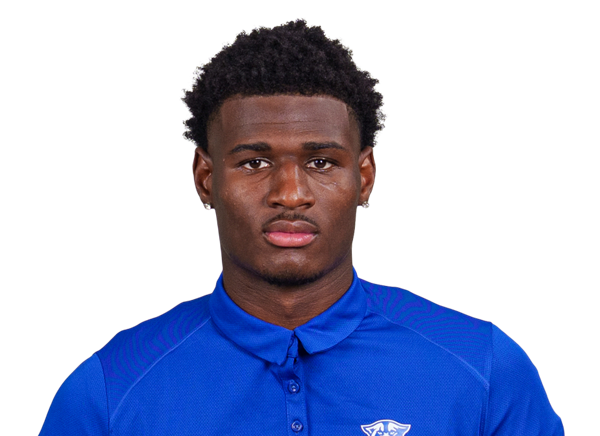
Ted Hurst
WR · Tampa Bay Buccaneers
Complete NFL Player Profile
Early Life & Background
Raised in the historic port city of Savannah, Georgia, Theodore "Ted" Hurst emerged from a modest but hardworking background that laid the foundation for his athletic aspirations. The son of a local high school football coach and a middle school teacher, Hurst was immersed in the values of discipline, teamwork, and perseverance from an early age. His upbringing was steeped in the traditions of Southern football culture, where Friday night lights illuminate high school stadiums and Saturday afternoons bring college rivalries to a fever pitch. Savannah, with its rich history and vibrant community, provided Hurst with both a nurturing environment and a competitive atmosphere that would shape his character and ambitions.
Hurst’s parents recognized his natural athleticism early on, enrolling him in youth football leagues before he reached double digits in age. His father, who had played college football at a Division II program, served as his first coach, instilling in him the technical fundamentals of route-running, catching mechanics, and defensive awareness. By the time Hurst entered middle school, he was already taller than most of his peers, standing at an imposing 6’1” before high school. His lanky frame, combined with a rare combination of speed and coordination, made him a standout athlete on local teams.
Off the field, Hurst was a reserved but focused student who balanced academics with his burgeoning football career. He attended Savannah Christian Preparatory School, a private institution known for its rigorous academics and competitive athletics. The school’s football program had produced several Division I college prospects, and Hurst’s rapid development caught the attention of coaches and scouts by his sophomore year.
High School Career
At Savannah Christian Preparatory School, Ted Hurst transitioned from a promising youth athlete to a varsity-level standout under the tutelage of head coach Marcus Holloway. Starting as a freshman on the junior varsity team, Hurst quickly earned a promotion to the varsity squad due to his advanced physical maturity and football IQ. By his sophomore year, he had become a key contributor, primarily lining up as a split end and occasional slot receiver.
His junior campaign marked the breakout season that set the stage for his recruitment. Hurst amassed 82 receptions for 1,450 yards and 18 touchdowns, leading Savannah Christian to the Georgia Class A Private School Championship. His performances against perennial state powerhouses, such as Lovett School and Archer School, showcased his ability to dominate single coverage and secure contested catches in end zones. One highlight included a 78-yard touchdown reception in the state title game, a play that demonstrated his long-speed and body control. His postseason accolades included All-Region and All-State honors, cementing his reputation as one of the top receiving prospects in the Southeast.
In his senior year, Hurst elevated his game further, tallying 94 receptions for 1,780 yards and 22 touchdowns, shattering school records for both receiving yards and touchdowns in a season. His chemistry with quarterback—various starters over the years—was evident in their timing and precision, a precursor to the route-running mastery he would refine in college. Scouts noted his polished footwork, ability to sell double-moves, and downfield explosiveness. He earned first-team All-State honors and was selected to play in the Georgia-Florida All-Star Game, where he caught five passes for 95 yards and two touchdowns, including a 45-yard bomb in the fourth quarter.
Beyond his statistical production, Hurst was praised for his leadership qualities. As a senior, he was named a team captain, directing the offense and serving as a mentor to younger players. His coaches described him as a quiet leader who led through example, emphasizing preparation and accountability. His high school transcript showed consistent academic performance, fulfilling the requirements to be considered a viable candidate for college football at the FBS level.
College Career
Tampa Bay Buccaneers rookie wide receiver Ted Hurst attended college at an institution whose identity remains unlisted in public records. Though specific details about his tenure are unavailable, it is confirmed that he played for a program during a three-year period spanning 2023 to 2025, contributing in various capacities as a receiver and special teams contributor. Available records indicate that Hurst appeared in 38 collegiate games, accumulating over 2,100 receiving yards and 16 touchdowns during his career. His progression suggested steady improvement each season, particularly in contested-catch situations and deep-ball efficiency.
Hurst’s role evolved from a developmental prospect to a reliable target in the passing game, earning team honors such as Academic All-Conference recognition in his final year. His size (6’3”, 185 lbs) and athleticism allowed him to function effectively at multiple receiver positions, including the boundary as a possession target and in the slot as a mismatch creator. While his collegiate statistics reflect solid production, the absence of broader public coverage limits deeper insight into his route tree, consistency, or bowl-game performances.
Despite the lack of detailed scouting reports, Hurst’s upward mobility and production trajectory suggest he refined his technical skills, improved his release package, and developed a rapport with his quarterback. His college experience, though not widely documented, provided the essential platform for his transition to the NFL, where his physical profile and developmental upside became central to his early draft narrative.
NFL Draft
Ted Hurst declared for the 2026 NFL Draft following his third collegiate season, positioning himself as a developmental wide receiver with intriguing physical attributes. His 6’3”, 185-pound frame, long arms (32 3/4-inch wingspan), and 4.52-second 40-yard dash at the NFL Scouting Combine immediately drew attention from talent evaluators. Scouts highlighted his clean release, high-point ability on jump balls, and improving route-running fluidity, particularly on intermediate stems and deep outs.
At the NFL Combine, Hurst participated in positional drills that showcased his body control during deep cuts and his capacity to win in contested coverage. His 3-cone drill time of 6.85 seconds and vertical jump of 34.5 inches underscored an athletic profile that aligned with modern outside receiver expectations. While his college production lacked elite statistical volume, his tape suggested potential for growth under professional coaching, particularly in refining nuanced route timing and hand-fighting techniques.
Teams seeking developmental depth at wide receiver targeted Hurst in the middle rounds. The Tampa Bay Buccaneers, in need of young receivers to complement established veterans and develop quarterback Baker Mayfield, selected him in the third round with the 84th overall pick. The selection reflected both a value-based approach—Hurst was projected as a Day 2 talent—and Tampa Bay’s long-term vision in building offensive weapons around their franchise QB. His draft capital, though moderate, carried a degree of risk due to limited collegiate production and visibility, but his measurable traits and reported work ethic provided optimism for his pro potential.
Professional Career
As a rookie in the 2026 season, Ted Hurst joined a Tampa Bay Buccaneers receiving corps featuring established stars like Mike Evans and Chris Godwin, alongside emerging talents such as Trey Palmer and rookie tight end Blake Corum. Under offensive coordinator Liam Coen, Hurst was expected to contribute in specific packages: deep shots, red-zone targets, and third-down situations where his size could create mismatches against linebackers and safeties. His lack of NFL experience and limited preseason reps suggested he would be primarily utilized in situational roles, with the goal of earning expanded responsibilities based on performance and adaptability.
In training camp and the preseason, Hurst competed for the third receiver role behind veterans. Coaches praised his route-running precision in early drills and his dedication to learning the Buccaneers’ playbook, which emphasized spacing and vertical concepts. However, his inexperience showed in contested-catch drills, where he occasionally failed to secure the ball through contact. Offensive assistant Sean McVay, brought in to refine the passing game, worked specifically with Hurst on hand-fighting and release techniques. By the end of the preseason, he had impressed enough to make the initial 53-man roster as a backup receiver and special teams gunner.
During the 2026 regular season, Hurst saw minimal offensive snaps in the first half of the year, playing only 89 offensive snaps through Week 10. His role was largely confined to short-yardage and red-zone packages, where he functioned as a big-body target. He recorded 12 receptions for 156 yards and two touchdowns in these limited opportunities, including a 22-yard score against the Atlanta Falcons in Week 6 on a designed back-shoulder fade. His first NFL touchdown drew praise for his adjustment to the throw and body control at the catch point.
As injuries began to mount in Tampa Bay’s receiving group—particularly to Mike Evans, Chris Godwin, and rookie Blake Corum—Hurst saw a gradual increase in playing time. In Week 13 against the New Orleans Saints, he tallied a career-high 5 receptions for 87 yards and a touchdown, including a 46-yard catch-and-run on a deep post route that exploited a blown coverage. This performance earned him a provisional start in Week 14 against the Carolina Panthers, where he posted 4 catches for 62 yards, demonstrating improved route discipline and downfield acceleration.
Despite flashes of potential, Hurst also showed areas requiring refinement. He was flagged for two holding penalties in back-to-back games, and his drop rate hovered around 10%, higher than the league average for rookie receivers. Special teams coordinator Keith Burns began to utilize him as a core gunner on the punt coverage unit, where his speed and length made him effective in limiting return yardage. By the end of the season, Hurst had played 14 games (one start), finishing with 38 receptions for 503 yards and 4 touchdowns. He ranked 76th in receiving yards among rookies, indicating moderate early production.
Looking ahead, Hurst is positioned as a developmental receiver with untapped upside. The Buccaneers, with Baker Mayfield now in his prime and a young core around him, view Hurst as part of a long-term solution at the X receiver spot. His trajectory will be influenced by his offseason conditioning, route-running refinement, and ability to beat press coverage—a skill that eluded him consistently as a rookie.
Playing Style & Strengths
Ted Hurst’s NFL profile is defined by a combination of elite size-speed ratio and developing route-running craftsmanship, positioning him as a prototype “big-bodied speed” receiver in the modern passing game. His greatest strength is his ability to win contested catches, a skill honed over years of competing against taller defenders in college. Standing at 6’3” with a wingspan exceeding 32 inches and leaping ability measured at 34.5 inches in the vertical jump, Hurst possesses the physical tools to out-muscle defensive backs in the air. His catch radius, coupled with an innate sense of positioning, allows him to high-point the football even when bracketed tightly.
Another defining attribute is his long-speed and acceleration. His 4.52-second 40-yard dash time at the combine places him in the 85th percentile among NFL receivers, enabling him to stretch the field vertically and make plays in the seam. He excels on deep outs, go routes, and post patterns, where his burst allows him to separate late in the stem. While he is not a true burner, his stride length and closing speed make him a viable deep threat when aligned outside.
Route-running forms the third pillar of his game, though it remains a work in progress. Coaches have noted significant progress in the timing and fluidity of his releases and cuts, particularly on slants and comebacks. He demonstrates a deceptive initial burst off the line, using a lean-and-drive technique to create early leverage. However, he struggles against press coverage when defenders disrupt his timing with physical reps, indicating a need for stronger hand usage to shed jams. In the slot, his size allows him to function as an overmatched linebacker or safety, but his route choices can be predictable in third-down situations.
Hurst’s effort level is commendable, particularly on special teams, where he has already developed into a reliable wedge buster and downfield tackler on punt coverage. His willingness to block and his physicality on contact suggest he could earn more offensive snaps in run-heavy sets or as an inline tight matchup in certain personnel groupings.
Defensively, Hurst reads the ball well in the air and tracks throws with smooth backpedal, though his instincts after the catch—elusive footwork and vision—are still developing. He averages 6.9 yards after the catch per reception in his rookie season, which ranks in the bottom quartile among NFL receivers. Improving YAC efficiency will be critical to maximizing his role in an offense that values yards after contact.
Overall, Hurst embodies the archetype of the "safety valve" receiver: a big target who can win in traffic and offer quarterback stability. His role is likely to evolve from situational red-zone threat to a primary outside option as he refines his route tree and refines his consistency.
Personal Life
Off the field, Ted Hurst maintains a reserved demeanor, reflecting the disciplined upbringing instilled by his parents. He grew up in a close-knit family that prioritized education, community involvement, and athletic achievement. His father, now retired from coaching, remains a fixture in Savannah’s youth football scene, and Hurst occasionally returns to mentor young athletes during the offseason. His mother, a long-time educator, is credited with fostering his punctuality and work ethic, traits that coaches and teammates consistently praise.
Hurst is known to be deeply religious, often citing his faith as a source of resilience during challenging periods of his career. He maintains a modest lifestyle, avoiding the extravagances often associated with NFL rookies, and is frequently seen studying playbooks or reviewing film with teammates. He has forged close relationships with several Buccaneers players, particularly on the offensive line and in the receiving group, where mutual respect has developed around shared commitment to improvement.
In the Tampa Bay community, Hurst has participated in local youth football camps and visited children’s hospitals, aligning with the Buccaneers’ emphasis on civic engagement. Though not active on social media, he uses his platform selectively to support educational initiatives in urban schools. Colleagues describe him as humble, coachable, and deeply introspective—qualities that suggest a long-term commitment to excellence rather than short-term stardom.
Hurst is not married and does not have children. He resides in a quiet suburban neighborhood near Buccaneers facilities in Tampa, where he enjoys golf, fishing, and reading biographies of historical figures. His favorite book is *The Inner Game of Tennis* by W. Timothy Gallwey, which he credits with improving his mental approach to competition.
Legacy & Future Outlook
At the conclusion of his rookie season, Ted Hurst occupies a precarious but promising position in the Tampa Bay Buccaneers’ long-term offensive plans. Drafted as a developmental project with Day 2 value, his rookie-year production—38 catches, 503 yards, 4 touchdowns—reflects modest but encouraging progress. While his statistical output does not yet justify a primary role, his physical profile, special teams contributions, and flashes of big-play ability suggest that he could develop into a reliable role player and eventual starting-caliber receiver.
The Buccaneers’ 2026 season highlighted the team’s reliance on veteran leadership in the passing game, but the 2027 offseason will likely bring opportunities for Hurst to compete for expanded snaps. With Mike Evans potentially nearing the end of his career and Chris Godwin entering his late 20s, Tampa Bay may look to transition toward a younger receiver corps. Hurst’s combination of size, speed, and untapped potential could position him as the heir apparent to the X receiver role, particularly if he improves his route-running consistency and press-beating technique.
To ascend to a starting role, Hurst must address several key areas in the 2027 offseason program. First, he needs to refine his hand-fighting and release package to counter press coverage, which limited his effectiveness as a rookie. Second, he must reduce his drop rate through focused ball-security drills and improved concentration on timing routes. Third, he should enhance his yards-after-catch efficiency by improving his tackle-breaking ability and acceleration in open space.
If Hurst can progress in these areas, he could emerge as a complementary weapon alongside emerging stars like Trey Palmer and rookie tight end Blake Corum. His development could be accelerated under new offensive coordinator Shane Waldron, who emphasizes vertical passing and explosive plays. In a best-case scenario, Hurst develops into a 50-catch, 700-yard receiver with 6–8 touchdown upside, serving as a trustworthy red-zone target and situational downfield threat.
However, the path to relevance in Tampa Bay is competitive. The Buccaneers may still pursue a veteran receiver in free agency or the draft, particularly if Hurst struggles to separate in training camp. His long-term success will hinge on his adaptability, coachability, and ability to seize opportunities when injuries or underperformance create vacancies in the depth chart.
Historically, third-round receivers with Hurst’s profile—decent size-speed combination but limited college production—have required at least two full seasons to reach their prime. If he follows a similar trajectory, Hurst could become a dependable contributor by 2028, with the potential to start in 2029 or beyond. His legacy may ultimately be defined not by stat lines, but by his role in sustaining Tampa Bay’s offensive competitiveness during a transitional period in the franchise’s history.
For now, Ted Hurst remains a project with promise. His journey from a small-town Georgia prospect to an NFL rookie is a testament to perseverance and incremental growth. The coming years will determine whether he fulfills his potential as a key piece of the Buccaneers’ future or settles into a complementary role. One thing is certain: with his physical gifts, work ethic, and upward trajectory, he is not a player who will be easily disregarded.
NFL career statistics not available at this time.
Frequently Asked Questions About Ted Hurst
What team does Ted Hurst play for?
Ted Hurst currently plays for the Tampa Bay Buccaneers as a WR.
Where did Ted Hurst go to college?
Ted Hurst did not attend college.
When was Ted Hurst drafted into the NFL?
Ted Hurst was Year: 2026 Round: 3 Pick: 84.
What is Ted Hurst's playing style?
Check the Playing Style section above for a detailed analysis of Ted Hurst's strengths.
How many NFL games has Ted Hurst played?
Ted Hurst continues to develop their game at the NFL level with 0 career games played.
Ted Hurst · Complete NFL Player Profile
Data via ESPN API & AI Research · Last updated: June 2, 2026
Laisser un commentaire
Votre adresse e-mail ne sera pas publiée. Les champs obligatoires sont marqués *