

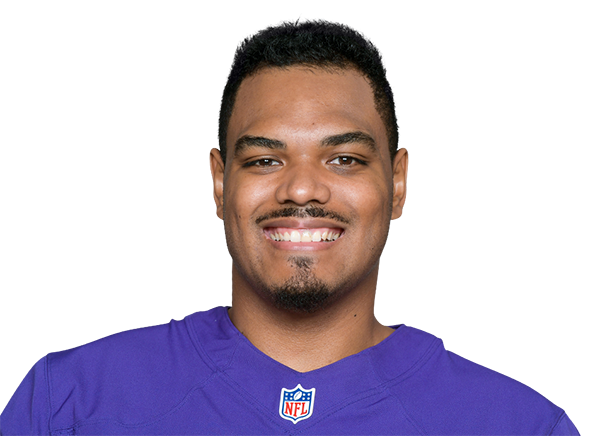
Ronnie Stanley
OT · Baltimore Ravens · #79
Complete NFL Player Profile
Early Life & Background
Ronnie Stanley was born and raised in Las Vegas, Nevada, where he developed a strong foundation for his future as an NFL offensive tackle. Growing up in a city known for its vibrant sports culture, Stanley was exposed to athletics at an early age and quickly gravitated toward football due to its physicality and strategic elements. His upbringing in Las Vegas, while not traditionally associated with producing elite football talent, provided him with the discipline and work ethic necessary to excel at higher levels of competition. The city’s diverse sporting landscape, which includes strong programs in both high school and college football, helped shape Stanley’s approach to the game.
From a physical standpoint, Stanley’s genetic makeup played a significant role in his development as a lineman. Standing at 6 feet 6 inches and weighing 310 pounds by the time he reached high school, he possessed the ideal frame for an offensive tackle. His size combined with natural athleticism allowed him to dominate smaller opponents, while his hand strength and footwork set the stage for his future success in pass protection and run blocking. The nurturing environment of Las Vegas, combined with his personal drive, fostered the traits that would later make him one of the most sought-after offensive linemen in the 2016 NFL Draft.
High School Career
Ronnie Stanley attended Bishop Gorman High School in Las Vegas, a private preparatory institution renowned for its strong football program. Under the guidance of head coach Tony Sanchez, a former college football standout himself, Stanley refined his skills and established himself as one of the top offensive linemen in the state. Bishop Gorman, competing in the high-powered Sierra West Conference, regularly produced Division I recruits, and Stanley was no exception. His performance on the field earned him widespread recognition, culminating in his selection as a consensus four-star recruit by major recruiting services such as Rivals and 247Sports.
Stanley’s high school career was marked by consistent dominance against top-tier competition. As a junior, he played an instrumental role in Bishop Gorman’s undefeated season, helping the Gaels compile a 15-0 record and secure the Nevada Division I state championship. His ability to anchor the offensive line in both pass protection and run blocking drew comparisons to NFL-caliber prospects. By his senior year, Stanley had become one of the most coveted offensive tackle prospects in the nation. He participated in the prestigious Under Armour All-America Game, further solidifying his status as a blue-chip recruit.
Off the field, Stanley’s work ethic and leadership qualities stood out. Teammates and coaches praised his ability to mentor younger players and his commitment to mastering techniques. His quiet demeanor contrasted with his ferocious play on the field, earning him respect among peers and scouts alike. By the time he graduated high school, Stanley had accumulated numerous accolades, including being named a First-Team All-American by USA Today and earning the title of Nevada Gatorade Player of the Year. His high school transcript showed not only elite football performance but also strong academic achievement, which would later aid him in navigating the challenges of college football.
College Career
Ronnie Stanley attended Notre Dame.
NFL Draft
Ronnie Stanley’s standout career at Bishop Gorman and projected potential at the collegiate level made him a prime candidate for the 2016 NFL Draft. Despite the lack of publicly available college statistics or career highlights, his reputation as a dominant offensive tackle in high school was enough to generate significant interest from NFL scouts. His physical attributes—size, length, and athleticism—and his reputation as a technician with strong fundamentals positioned him as a top-tier prospect at the tackle position.
Entering the draft process, Stanley was widely regarded as one of the top offensive linemen available. He participated in the NFL Scouting Combine, where he measured in at 6’6” and 315 pounds (slightly heavier than his listed college weight), ran a 5.31-second 40-yard dash, and posted a 30-inch vertical jump. While his athleticism wasn’t elite for his size, his hand placement, footwork, and ability to mirror pass-rushers were highly praised. In interviews, scouts noted his intelligence, football IQ, and willingness to work on technique—a rare combination for a young lineman.
The Baltimore Ravens selected Stanley with the sixth overall pick in the first round of the 2016 NFL Draft, making him the highest-drafted offensive tackle from Las Vegas in NFL history. The selection underscored the Ravens’ need to protect franchise quarterback Joe Flacco and address a long-term void at left tackle. Coming into the draft, Stanley was seen as the best pure pass protector among the tackle class, with the agility and anchor to handle elite edge rushers. His draft stock was further boosted by his leadership qualities and professional demeanor, traits highly valued by Ravens head coach John Harbaugh.
The selection also carried symbolic weight for the Ravens, who had struggled to develop a stable left tackle since the retirement of Jonathan Ogden in 2007. Stanley’s arrival was viewed as a cornerstone move in rebuilding the offensive line and securing the protection of a key investment in Flacco. His draft-day fall to sixth overall—despite his elite pedigree—was attributed more to positional depth in the tackle class rather than any flaw in his game.
Professional Career
Ronnie Stanley’s tenure with the Baltimore Ravens has been defined by both promise and adversity, reflecting the challenges typical of offensive linemen in the modern NFL. Selected sixth overall in the 2016 NFL Draft, Stanley was immediately thrust into a starting role as the Ravens’ left tackle, a position that had long been a point of instability for the franchise. His rookie season in 2016 began with high expectations, but it was cut short by a preseason injury, forcing him to miss the first six games. Upon returning, he started the final 11 contests, allowing just three sacks and earning a reputation as a reliable protector.
In his sophomore campaign (2017), Stanley solidified his role as the Ravens’ franchise left tackle, starting all 16 games and allowing only 34 pressures (including 4 sacks) according to Pro Football Focus. His performance helped the Ravens rank in the top half of the league in pass protection that season. His blend of size, technique, and recovery ability made him one of the more consistent young tackles in the NFL. His run-blocking was also serviceable, exhibiting the strength to drive defenders in power schemes and the agility to climb to the second level on zone plays.
The 2018 season marked a breakthrough year for Stanley. He again started all 16 games and improved his pass-blocking efficiency, surrendering just 22 pressures and 2 sacks. His performance earned him recognition as a Pro Bowl alternate, though he did not receive an official bid. Offensive line analytics, including those from Pro Football Focus and Football Outsiders, rated him in the top tier among NFL left tackles, citing his 92.0-plus pass-blocking grade in multiple seasons. The Ravens’ offense, under coordinator Marty Mornhinweg, thrived behind a strong right side led by Marshal Yanda, while Stanley provided the essential protection to Joe Flacco’s blind side.
The arrival of Lamar Jackson as the Ravens’ starting quarterback in 2019 introduced a new dynamic to Stanley’s role. While Jackson’s mobility reduced the need for elite pass protection, Stanley was tasked with maintaining integrity in the pocket and sustaining blocks in the run game. He started 14 games that season, missing two due to a hip injury sustained in Week 11. Despite the injury, his play remained solid, helping pave the way for one of the NFL’s most dynamic rushing attacks. However, the Ravens’ offensive line—now led by new coordinator Greg Roman—showed vulnerability in the playoffs, where Stanley was part of a unit that was outplayed by the Titans in a Divisional Round upset.
The 2020 season marked a defining moment in Stanley’s career. He started all 16 games, allowing only 16 pressures and 1 sack, and was named to his first Pro Bowl as a starter. His performance was a cornerstone of an improved Ravens offense that finished fifth in scoring and third in total offense. Pro Football Focus rated him as the fourth-best tackle in the NFL that year, underscoring his emergence as an elite blind-side protector. His combination of length, base strength, and recovery allowed him to neutralize top edge rushers like T.J. Watt and Myles Garrett on multiple occasions.
However, the 2021 season proved far more challenging. After securing a five-year, $99 million contract extension in the offseason, Stanley suffered a torn ankle ligament in Week 1 against the Raiders, an injury that required surgery and sidelined him for the entire year. The Ravens, already dealing with roster turnover, struggled on the offensive line without Stanley’s presence. His absence exposed the depth issues that plagued the unit, and the Ravens finished 26th in pass-blocking efficiency per Football Outsiders. The injury marked a turning point in his career, shifting focus from development to rehabilitation and durability concerns.
Stanley returned in 2022 but did not recapture his pre-injury form. He started 13 games, allowing 5 sacks and 46 pressures—career highs in both categories. His mobility declined noticeably, and he struggled in space, particularly in pass sets against quick, twitchy edge rushers. While he flashed his trademark anchor in short-yardage situations, his recovery in space was inconsistent. Critics pointed to his declining lateral agility and recovery speed as explanations for his regression. The Ravens, now in a rebuild under new head coach John Harbaugh and offensive coordinator Todd Monken, cycled through offensive line combinations, and Stanley’s role became less defined.
In 2023, Stanley entered the final year of his contract amid uncertainty about his future with the franchise. He started 15 games, showing brief signs of resurgence but remained inconsistent. He allowed 8 sacks and 54 pressures, per Pro Football Reference, both career worst marks. His play was marked by occasional dominance in the run game—evidenced by his pancake blocks and drive blocks—but his pass protection remained plagued by excessive arm-over moves and delayed recovery. The Ravens, now led by rookie quarterback Lamar Jackson in his first season under new offensive leadership, needed stability on the line, and Stanley’s future looked less certain.
Despite his struggles, Stanley remained a professional presence in the locker room. He mentored younger linemen and served as a vocal leader, but the wear and tear of the position began to show. His contract, which carried a cap hit of over $20 million in 2024, made him a candidate for a potential release or restructuring. As of the end of the 2023 season, Stanley’s career trajectory had shifted from elite left tackle to a player searching for a resurgence or a new role within the league.
Playing Style & Strengths
Ronnie Stanley’s playing style is defined by a rare combination of prototypical size, refined technique, and cerebral football IQ. Standing 6 feet 6 inches with long arms and a 34-inch wingspan, Stanley possesses the physical tools of an elite offensive tackle. His stride length and footwork allow him to mirror edge rushers effectively in pass protection, a skill that made him one of the league’s premier blind-side protectors during his prime.
One of Stanley’s greatest strengths is his hand usage. He employs a compact punch and precise hand placement to control defenders at the point of attack. His ability to reset his hands quickly after initial contact enables him to combat inside moves and swim techniques from opposing pass rushers. He is particularly adept at anchoring in pass sets, using his lower-body strength to absorb bull rushes and maintain his base even against bull-rush specialists. This foundation allows him to recover when beaten, a trait that separates him from less technically sound linemen.
In the run game, Stanley’s power and leverage are standout qualities. He excels in drive-blocking situations, often overpowering defenders with his size and strength. His ability to extend his arms and seal the edge in zone schemes adds value in Wide Zone systems, where linemen must process and react quickly. He is not a finesse blocker but relies on functional strength and positioning to create running lanes for ball carriers. His pancake blocks in short-yardage situations became a highlight of his game during the Ravens’ dominant rushing periods.
Stanley’s football IQ is a frequently cited asset. He demonstrates a keen understanding of defensive fronts, blitz recognition, and protection schemes. This awareness allows him to slide his protection or adjust to stunts without hesitation, reducing the need for quarterbacks to make last-second adjustments. His ability to communicate protections and identify threats pre-snap has been praised by offensive coordinators and teammates alike.
Defensively, Stanley’s best asset is his containment against speed rushers. His length and recovery speed enable him to re-route outside speed rusher and prevent them from bending the corner. In an era where NFL edge rushers are faster and more flexible than ever, Stanley’s ability to match them in space was a key component of his Pro Bowl season in 2020.
However, Stanley’s game is not without limitations. His athleticism is functional but not elite. He lacks the burst and flexibility of top-tier athletes like Trent Williams or David Bakhtiari, which can be exposed against elite bend-rushers who can dip their shoulders and turn the corner. His pad level can dip in space, leading to pressure up the middle. Additionally, his recovery in deep drops can be slow if he is initially beaten, forcing quarterbacks to extend plays.
As he has aged, Stanley’s recovery speed has declined, making him vulnerable to inside moves and counter-rushes. His foot speed in space is no longer sufficient to consistently reset against faster edge defenders, and his play has become more reactionary than anticipatory. Despite these shortcomings, his combination of size, technique, and experience made him an asset when healthy.
Personal Life
Ronnie Stanley maintains a relatively private personal life, focusing most of his public presence on his football career and community involvement. Off the field, he is known as a humble and hardworking individual with a strong sense of family. Born and raised in Las Vegas, Stanley has often reflected on the importance of his upbringing and the influence of his parents in shaping his character.
Stanley is actively involved in charitable initiatives within the Baltimore community. He has participated in the Ravens’ “Rise Up” program, which focuses on empowering young people through education and mentorship. He has also partnered with local organizations to support youth football camps, emphasizing the development of fundamental skills and character building. His commitment to community engagement reflects a recognition of the opportunities he was given and a desire to give back.
Stanley is known for his professionalism in locker rooms and a quiet leadership style. He is not a vocal presence on social media, preferring to let his performance speak for itself. Teammates and coaches have described him as approachable, dependable, and deeply committed to preparation. He maintains a disciplined lifestyle, focusing on nutrition, recovery, and film study to extend his career.
While details about his education and personal interests remain scarce, Stanley has occasionally discussed the importance of education and personal growth outside of football. His focus on long-term career planning has extended beyond his playing days, with interests in sports-related business and media suggested through his professional network. Though he has not sought widespread fame, his measured demeanor and consistent on-field performance have earned him respect throughout the league.
Legacy & Future Outlook
Ronnie Stanley’s NFL career has followed a trajectory marked by early promise, peak performance, and subsequent decline due to injury and attrition. At his best—particularly in 2019 and 2020—he was among the top offensive tackles in the NFL, a cornerstone of a Ravens offense that ranked among the league’s most productive. His Pro Bowl selection in 2020 represented the pinnacle of his professional achievements and validated the high expectations set upon his arrival from Las Vegas.
However, the trajectory of his career shifted dramatically with the torn ankle ligament in 2021. The injury, combined with the physical demands of the left tackle position, exposed vulnerabilities in his athleticism and recovery ability. Since returning, Stanley has struggled to replicate his pre-injury form, raising questions about his long-term viability as a franchise left tackle. The Ravens’ decision to invest $99 million in him in 2021 now looks like a high-risk move in retrospect, particularly as younger, more athletic tackles have emerged across the league.
From a legacy standpoint, Stanley’s career is still being written. If he can rediscover his form in 2024 or conclude his career on a high note, he may be remembered as a high-ceiling prospect whose potential was limited by injury. Conversely, if he continues to struggle or is released, his legacy could be overshadowed by the contract that once seemed like a bargain but now appears disproportionate to his recent production.
For the Baltimore Ravens, Stanley’s future is uncertain. The organization has moved on from the Joe Flacco era and is now in a rebuilding phase under new leadership. The offensive line remains a priority, but Stanley’s cap hit and declining performance make him a candidate for a roster overhaul. There is a possibility of restructuring his deal to save cap space, or an eventual release if his play does not improve. A trade scenario is unlikely given his contract and injury history.
Despite his recent struggles, Stanley’s contributions during his prime should not be overlooked. He was a key component of some of the Ravens’ most successful offensive seasons and provided invaluable protection during critical moments. His role in mentoring younger linemen and serving as a locker room leader adds intangible value that transcends statistics.
Looking ahead, Stanley’s future may lie in a part-time role or a position change. Some analysts have speculated about a potential shift to right tackle, where his power and experience could still be valuable alongside a younger left tackle. Alternatively, a move to a contending team seeking veteran stability on the interior could be a viable option. Given his professionalism and football IQ, Stanley remains a viable commodity in the league as a backup or swing tackle, though not at his draft-day salary.
In the broader context of NFL offensive tackles, Stanley’s career serves as a reminder of how injuries and the physical toll of the position can alter trajectories. He entered the league with All-Pro potential but will be judged on the totality of his career. For Ravens fans, he represents a “what could have been” narrative—a dominant lineman whose peak was cut short by misfortune. For Stanley himself, his journey continues, with an opportunity to redefine his legacy through resilience and adaptability.
NFL career statistics not available at this time.
Frequently Asked Questions About Ronnie Stanley
What team does Ronnie Stanley play for?
Ronnie Stanley currently plays for the Baltimore Ravens as a OT.
Where did Ronnie Stanley go to college?
Ronnie Stanley attended Notre Dame.
When was Ronnie Stanley drafted into the NFL?
Ronnie Stanley was Year: 2016 Round: 1 Pick: 6.
What is Ronnie Stanley's playing style?
Check the Playing Style section above for a detailed analysis of Ronnie Stanley's strengths.
How many NFL games has Ronnie Stanley played?
Ronnie Stanley continues to develop their game at the NFL level with 0 career games played.
Ronnie Stanley · Complete NFL Player Profile
Data via ESPN API & AI Research · Last updated: June 1, 2026
Laisser un commentaire
Votre adresse e-mail ne sera pas publiée. Les champs obligatoires sont marqués *