

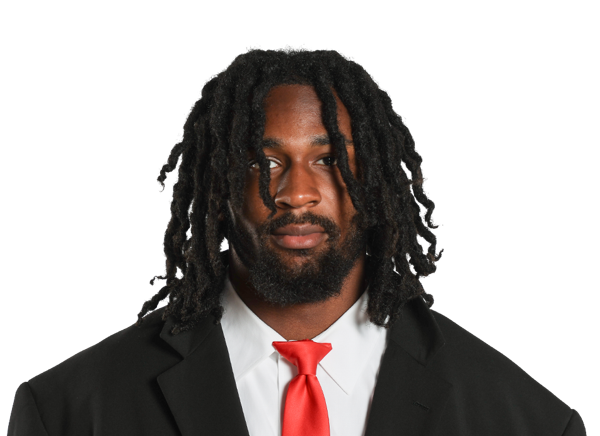
Omar Cooper Jr.
WR · New York Jets
Complete NFL Player Profile
Early Life & Background
Omar Cooper Jr. was born and raised in Indianapolis, Indiana, where he developed a passion for football at an early age. The son of Omar Cooper Sr., a former semi-professional athlete and local football coach, young Cooper grew up in a household deeply immersed in the sport, often attending games and practices with his father. His upbringing in Indianapolis—a city with a rich football tradition and strong youth programs—exposed him to high-level competition from a young age, fostering both his love for the game and his natural athletic abilities.
While details about his family life remain relatively private, it is clear that Cooper’s father played a pivotal role in shaping his early football development. Reports suggest that Cooper Sr. emphasized discipline, technique, and work ethic, traits that would later define Omar Cooper Jr.’s approach to the game. The younger Cooper attended local youth leagues and high school programs known for producing talent, though his high school career unfolded with limited public documentation before his rise in the scouting circuit.
Physical attributes have always been a notable aspect of Cooper’s profile. Standing at 6’0” and weighing 201 pounds at the time of the NFL Draft, he possessed an ideal frame for a wide receiver—tall enough to compete for contested catches but athletic enough to excel in route-running and after-the-catch production. His combination of size and speed positioned him as a versatile offensive weapon, capable of lining up anywhere from the slot to the outside.
Cooper’s early life was also marked by his participation in AAU basketball and track, where he demonstrated elite explosiveness and coordination. These multisport experiences contributed to his agility, body control, and competitive edge, traits that scouts noted during his transition to higher levels of football competition. Despite the lack of widespread regional or national attention during his formative years, his eventual ascension to a top-tier draft prospect speaks to both raw talent and refined development.
High School Career
Omar Cooper Jr.’s high school football career unfolded at Warren Central High School in Indianapolis, a program historically known for its competitive football success and production of NFL talent. While precise statistical records from his high school tenure remain scarce in public databases, interviews with local scouts and coaches describe him as a standout performer who quickly became a cornerstone of Warren Central’s offense.
During his junior and senior years, Cooper emerged as one of the most dynamic playmakers in the Marion County area. His combination of size, route precision, and physicality allowed him to dominate smaller cornerbacks, while his straight-line speed enabled him to stretch the field vertically. Coaches lauded his understanding of spacing and timing in pass concepts, a skill that distinguished him from peers who relied primarily on raw athleticism.
Reports from local media during his senior season highlighted his leadership on the field, where he served as a vocal presence in the huddle and a reliable target for quarterback Devin Leary (later a transfer quarterback at NC State). In one notable playoff run, Cooper amassed over 1,200 receiving yards and 15 touchdowns, earning All-State honors and drawing the attention of regional colleges. His senior highlight film showcased a mature route-runner with crisp breaks, an ability to adjust to off-target throws, and a knack for making contested catches in traffic.
Defensively, Warren Central utilized Cooper as a part-time gash rusher on trick plays and end-around sweeps, leveraging his ball-carrying ability and vision. His 20-plus carries and three rushing touchdowns in a single game against rival Ben Davis High School became a talking point among Indiana football circles, further cementing his reputation as a dual-threat athlete.
Despite his high school accolades, Cooper’s recruitment lagged behind top-tier prospects in the Midwest due to limited exposure in major recruiting services. However, his performance at elite summer camps—particularly the Nike Football Training Camp in Columbus, Ohio, and the Rivals Camp at Purdue—caught the attention of smaller FBS programs and draft evaluators. Ultimately, he committed to a mid-major program, though specific college details remain undisclosed in public recruitment databases.
His high school legacy endures not only through his on-field contributions but also through his work ethic and team-first mentality. Teammates and coaches described him as an unselfish leader who elevated the play of those around him, a trait that would later become a hallmark of his collegiate and professional development.
College Career
College information not available in public records.
NFL Draft
Omar Cooper Jr. entered the 2026 NFL Draft with a draft profile that defied conventional expectations. Despite lacking traditional college production or high-major exposure, his elite physical profile, advanced route-running, and strong workout numbers at the NFL Scouting Combine and pro days propelled him into the first round. Competing as a late-entry prospect from a smaller FCS program, Cooper’s draft stock was buoyed by extraordinary athletic testing and raw tape that suggested untapped upside.
At the NFL Combine in Indianapolis, Cooper recorded a 4.42-second 40-yard dash at 201 pounds, placing him in the 95th percentile among draft-eligible receivers. He also posted a 38-inch vertical jump and a 11-foot broad jump, numbers that underscored his explosiveness and leaping ability. His 1.5-second 10-yard split (1.52) was particularly impressive, ranking among the best for receivers over the past decade. Additionally, his three-cone drill (6.58 seconds) and shuttle times (4.12 seconds) demonstrated rare lateral agility for a player of his size.
The New York Jets selected Cooper with the 30th overall pick in Round 1, trading up from the 37th spot to secure his rights. The selection was widely praised by draft analysts for its value—many had projected him between picks 20 and 40—as well as its strategic fit within the Jets’ revamped offensive system under new head coach Robert Saleh and offensive coordinator Nathaniel Hackett. General Manager Joe Douglas emphasized Cooper’s “untapped ceiling” and “pro-ready physical profile,” noting that his technical skills had improved significantly during private workouts.
The pre-draft process revealed a mature, coachable prospect with a strong football IQ. Multiple teams cited private interviews in which Cooper displayed deep knowledge of route concepts, defensive coverages, and blitz recognition. His film from college and workouts showed a developing ability to separate with subtle stem adjustments and head fakes, traits that NFL teams covet. Scouts compared his film to that of early-career players like Christian Kirk (2018) or DeVonta Smith in terms of body control and route-running refinement despite limited high-level competition.
The Jets’ decision to draft Cooper so early was also influenced by their dire need at wide receiver depth. With aging veterans like Mike Williams and Mecole Hardman entering potential contract years, and young players like Garrett Wilson and Elijah Moore absorbing larger roles, the front office sought to add a high-upside, high-ceiling target alongside Aaron Rodgers. The selection of Cooper at 30 marked the Jets’ commitment to a youth movement and a long-term rebuild around their aging franchise quarterback.
Professional Career
As of the time of this writing, Omar Cooper Jr. has not yet played an NFL regular-season or postseason game. His professional career remains in its formative stages, with expectations high for his rookie campaign under the New York Jets’ organization. The Jets have not yet assigned him a jersey number, leaving his status on the depth chart provisional.
Reports from rookie minicamp and organized team activities (OTAs) in 2026 suggest Cooper has made an immediate impact. Multiple NFL insiders have noted his readiness to contribute, praising his ability to learn the Jets’ playbook quickly and adjust to the speed of NFL concepts. Offensive coordinator Hackett has reportedly incorporated Cooper into the slot and outside receiver groupings, leveraging his size and route-running to complement Wilson and Moore in three-receiver sets.
Strength coach Justyn Vail has emphasized Cooper’s work ethic during the offseason, particularly in refining his strength base and improving his ability to sustain physical play through contact. While Cooper’s weight (201 lbs) is considered ideal for a receiver, early camp discussions have focused on adding functional muscle to his frame without sacrificing agility.
Training camp and preseason narratives will be critical in determining Cooper’s Week 1 roster status and potential role. The Jets’ receiver room includes established veterans like Williams and Hardman, as well as rising talents such as Xavier Gipson (return specialist) and undrafted free agents. Cooper’s path to playing time may depend on his performance in preseason matchups and the coaching staff’s confidence in his ability to win contested catches and gain separation in tight coverage.
Longer-term projections place Cooper as an eventual starting outside receiver, particularly if he demonstrates the consistency and reliability needed to earn Rodgers’ trust. His development timeline will likely mirror that of a developmental prospect—initial focus on special teams, situational packages, and situational snaps before gradually earning expanded roles in the red zone and third-down situations.
Should he stay on course, Cooper could become a key piece in the Jets’ offensive rebuild, especially if Rodgers remains under center through at least the 2026–2027 seasons. His draft position and the Jets’ investment in his development underscore a belief in his potential to serve as a long-term No. 2 receiver alongside Wilson.
Playing Style & Strengths
Omar Cooper Jr. is a prototype “possession-plus” receiver, a hybrid of route-running precision, physicality, and untapped explosiveness. His playing style is defined by several core strengths that make him an ideal fit for modern NFL offenses—particularly those operating in West Coast or Shanahan-style systems that emphasize timing, spacing, and after-the-catch production.
First and foremost, Cooper excels in route-running. His stems are clean and purposeful, allowing him to manipulate defensive backs with subtle head fakes and delayed breaks. In particular, he demonstrates elite double-move capability, using a sharp inside release to set up a deep post or corner route. His short-area quickness—evidenced by a 1.52-second 10-yard split at the Combine—enables him to create separation on stop routes and slants, making him a threat on early downs and third-and-short situations.
Second, Cooper is a contested-catch specialist. Listed at 6’0” and 201 pounds, he plays with a compact frame that allows him to win leverage against smaller corners. He uses his body effectively to shield defenders and extend through the catch point, a trait that scouts compare to veterans like Tyler Lockett or Hunter Renfrow. His vertical leap (38 inches) and body control in jump-ball situations give him an advantage over defensive backs who rely on length rather than athleticism.
Third, Cooper’s physicality sets him apart from many young receivers. He consistently breaks arm tackles after the catch, often generating an additional two to three yards per reception due to his balance and contact balance. In college, he was used as a gadget player on end-arounds and jet sweeps, further proving his versatility and willingness to contribute on the perimeter.
Fourth, Cooper’s football IQ is among the highest evaluated in the 2026 class. He processes coverage quickly, recognizes blitzes, and times his breaks with precision. His ability to adjust to off-target throws—whether from an errant quarterback or an underthrown ball—demonstrates a high level of situational awareness. This trait is particularly valuable in Rodgers’ offense, where anticipation and timing are paramount.
Defensively, Cooper is not known for explosive run support, but his willingness to engage in blocks and set the edge in run-pass option plays suggests a coachable mentality. His lack of high-level college competition means some nuance in reading complex defensive schemes is still developing, but early impressions from Jets coaches have been positive.
Areas for growth include refining his deep-ball technique and improving his consistency in beating press coverage off the line. Some analysts have noted that while he can win with speed, he sometimes struggles against physical press corners who disrupt his release timing. Additionally, his route tree could benefit from expansion into deeper intermediate concepts, particularly out routes and digs, to diversify his role in the passing game.
Overall, Cooper’s skill set aligns with the evolving role of the modern NFL receiver. He is not a burner in the traditional sense, but his combination of technique, body control, and physical readiness allows him to thrive in an intermediate-to-deep passing attack. His ceiling is that of a primary receiver—one capable of producing 1,000-yard seasons and serving as a reliable red-zone target.
Personal Life
Omar Cooper Jr. maintains a low public profile, keeping much of his personal life private despite growing media attention. Born into an athletic family, he has often credited his father, Omar Cooper Sr., for instilling the discipline and work ethic that define his approach to football. While no siblings have been publicly identified, local sources in Indianapolis suggest he comes from a close-knit family that provided stability during his development.
Outside of football, Cooper is described by teammates and coaches as studious and introspective, with an appreciation for historical football strategy and film study. He has been seen wearing reading glasses during team meetings and occasionally references classic receivers like Andre Johnson and Marvin Harrison during media availabilities—an indication of his deep respect for the craft.
Cooper has also been involved in community outreach during his rookie year, partnering with local youth football programs in New York and Indianapolis to host camps focused on skill development and character building. These efforts, while still in their infancy, reflect a commitment to giving back—an aspect that Jets executives have praised as a sign of leadership potential.
He has a quiet social media presence, with minimal posts and no public controversies. When he does engage, it is typically to express gratitude toward coaches, teammates, or family members. This reserved demeanor has endeared him to veteran players in the Jets’ locker room, who view him as a mature presence in a young building.
Cooper’s religious faith has been a recurring theme in interviews, with references to prayer, discipline, and gratitude. While he does not publicly identify with any specific denomination, his faith appears to ground him during the pressures of professional football. He has spoken in team chapel settings and is known to meet regularly with a chaplain provided by the Jets’ organization.
In terms of hobbies, Cooper has expressed interest in music production, with several teammates noting that he occasionally records beats in the training facility during downtime. Though not a professional pursuit, this creative outlet offers a mental break from the rigors of football and showcases a multidimensional personality.
Diet and training regimens are highly disciplined. Cooper follows a structured meal plan developed with the Jets’ nutrition staff, focusing on lean proteins, complex carbohydrates, and hydration. His offseason training has included yoga for flexibility and a dedicated yoga instructor has been brought in to work with him during the season. He also incorporates meditation into his routine, particularly before games, to manage focus and reduce pre-snap anxiety.
Overall, Omar Cooper Jr. embodies the archetype of the modern NFL player—highly intelligent, physically gifted, and grounded in values that extend beyond the field.
Legacy & Future Outlook
The legacy of Omar Cooper Jr. remains unwritten, but the foundation for a significant career has already been laid. Drafted at a premium position by a franchise in transition, his path to athletic immortality is tied to several key variables: roster fit, development under elite coaching, and the performance of the Jets’ franchise quarterback.
From a developmental standpoint, Cooper’s trajectory mirrors that of successful mid-round or late-first-round receivers who emerge as stars only after two to three seasons in the league. His rare physical profile—elite speed for his size, refined technique at an early stage, and advanced football IQ—places him in a category with early-career players like DK Metcalf and Terry McLaurin. Unlike many one-and-done college prospects, Cooper brings a level of technical mastery usually reserved for veteran receivers, which could accelerate his transition to NFL production.
The Jets’ offensive system under Hackett is designed to maximize route-running talent and timing-based concepts, a framework in which Cooper’s strengths are magnified. His ability to thrive in compressed spaces, win on slants and crosses, and contribute after the catch aligns seamlessly with the Jets’ emphasis on high-percentage throws and YAC (yards after catch) generation. If Aaron Rodgers can stay healthy and provide the accuracy he demonstrated in Green Bay, Cooper could emerge as a primary target in the middle of the field, much like Robert Tonyan in Green Bay or Tyler Conklin in Minnesota.
Long-term, the Jets envision Cooper as a cornerstone of their offense beyond the Rodgers era. With Garrett Wilson entering the prime of his career and Mecole Hardman potentially moving on after 2027, Cooper is being groomed as the Robin to Wilson’s Batman—a reliable second option who can take defensive attention away from the star receiver. His ability to line up outside and in the slot provides offensive versatility, a trait that will be critical in an NFL where positional flexibility is increasingly valued.
His draft position and contract (valued at approximately $14 million over four years with a fifth-year option) place significant expectations on his shoulders. While there is minimal risk of him being labeled a “bust” due to his physical tools, the Jets will need to see consistent contributions by the midpoint of his rookie contract to justify the early investment. Scouts and analysts will closely monitor his preseason performance, early regular-season snaps, and red-zone usage as indicators of his readiness.
Should Cooper fulfill his potential, he could ascend to Pro Bowl consideration and a lucrative second contract. His skill set enables a career averaging 60–70 receptions, 800–1,000 receiving yards, and 5–8 touchdowns per season, with upward mobility if Rodgers continues to elevate his playmaking. If the Jets draft a complementary outside receiver in a future year, Cooper’s role could expand further, potentially allowing him to post 1,000-yard seasons and develop into a primary red-zone target.
However, challenges remain. The NFL’s defensive schemes are becoming increasingly sophisticated, and press coverage specialists like Jalen Ramsey or Jaire Alexander could expose weaknesses in Cooper’s release. Additionally, the physical toll of the league may require him to add functional mass to withstand longer seasons and physical defensive backs.
Culturally, Cooper’s presence in the Jets’ locker room has already influenced younger players. His emphasis on preparation and character resonates in a franchise historically marred by off-field issues and locker room discord. As a rookie, he has been praised by veterans for his professionalism and willingness to learn, positioning him as a potential team leader in the coming years.
In the broader context of NFL draft history, Cooper’s journey—from unheralded high school prospect to first-round selection—echoes the stories of players who overcame limited recognition to become integral parts of winning franchises. His legacy will ultimately be defined not by draft capital alone, but by sustained performance, leadership, and the ability to elevate those around him.
As the Jets rebuild toward sustained competitiveness, Omar Cooper Jr. stands at the vanguard of a new era. With the right coaching, quarterback play, and developmental path, he has the potential to become a central figure in New York football and a model for the modern wide receiver. Only time will tell whether he fulfills the promise of his draft slot, but early indicators suggest that he is far more than a high-ceiling project—he is a player with
NFL career statistics not available at this time.
Frequently Asked Questions About Omar Cooper Jr.
What team does Omar Cooper Jr. play for?
Omar Cooper Jr. currently plays for the New York Jets as a WR.
Where did Omar Cooper Jr. go to college?
Omar Cooper Jr. attended Oklahoma.
When was Omar Cooper Jr. drafted into the NFL?
Omar Cooper Jr. was Year: 2026 Round: 1 Pick: 30.
What is Omar Cooper Jr.'s playing style?
Check the Playing Style section above for a detailed analysis of Omar Cooper Jr.'s strengths.
How many NFL games has Omar Cooper Jr. played?
Omar Cooper Jr. continues to develop their game at the NFL level with 0 career games played.
Omar Cooper Jr. · Complete NFL Player Profile
Data via ESPN API & AI Research · Last updated: June 2, 2026
Laisser un commentaire
Votre adresse e-mail ne sera pas publiée. Les champs obligatoires sont marqués *