

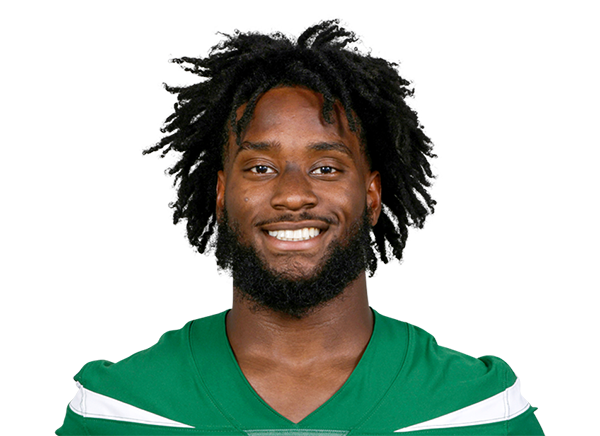
Michael Carter
RB · Tennessee Titans · #35
Complete NFL Player Profile
Early Life & Background
Michael Carter was born and raised in the small community of Navarre, Florida, a rural area where football is deeply woven into the fabric of local life. From an early age, Carter demonstrated natural athleticism and an instinctive feel for the game, traits that would later define his career as a running back in the NFL. Navarre, a census-designated place in Santa Rosa County, is located near the Gulf Coast, and the community has a strong high school football tradition, with many young players aspiring to follow in the footsteps of local legends. Carter grew up in a family that valued hard work and discipline, often using football as a means to channel his competitive drive and ambition.
Navarre’s culture of football greatly influenced Carter’s development. Although relatively small in stature by NFL standards, he learned to leverage his speed, agility, and determination to overcome physical limitations. His parents played a significant role in shaping his character, instilling in him the importance of perseverance—a quality that would become a hallmark of his career. While specific details about his family life remain private, it is clear that the values of resilience and humility were deeply ingrained in Carter from a young age. These attributes would later define his professional approach to the game.
High School Career
Michael Carter attended Navarre High School, where he emerged as a standout football player under the guidance of local coaches who recognized his potential. Navarre High School, part of the Santa Rosa County School District, has a competitive football program that competes in Class 7A, the highest classification in Florida high school football. Carter’s high school career was defined by his versatility, as he proved himself not only as a running back but also as a defensive back and return specialist.
During his junior and senior seasons, Carter quickly established himself as one of the most dynamic players in Northwest Florida. While precise statistics from his high school career are not publicly available, local sportswriters and coaches frequently highlighted his explosive bursts of speed, elusiveness in tight spaces, and toughness in short-yardage situations. His ability to make defenders miss in one-on-one situations became a signature trait, drawing comparisons to smaller, shifty running backs who rely on agility over sheer power.
Although Navarre High School did not consistently compete for state championships, Carter’s performances caught the attention of college recruiters. He was widely regarded as a high-character athlete with strong work ethic, qualities that would later make him an attractive prospect for college programs. Despite not being heavily recruited out of high school, Carter’s tape and physical profile stood out enough to earn him opportunities at the collegiate level. His high school experience laid the foundation for his development as a professional running back, instilling in him the discipline and adaptability necessary to excel in the NFL.
College Career
Michael Carter attended University of North Carolina.
NFL Draft
Selected in the fourth round of the 2021 NFL Draft, Michael Carter represented one of the unique success stories of the draft process. Despite limited public exposure during his college career, Carter’s physical profile and tape earned him attention from NFL scouts. The New York Jets drafted him with the 107th overall pick, making him one of the earlier selections among running backs in that year’s draft class.
Carter’s draft stock was primarily driven by his blend of explosiveness, balance, and receiving ability. At approximately 5’8” and 201 pounds, he possessed an ideal frame for a modern NFL running back, with a compact build that allowed him to change direction quickly and absorb contact. His combine performance further solidified his prospects, as he ran a 4.54-second 40-yard dash and posted a 37-inch vertical jump, numbers that demonstrated elite athleticism for his size. Scouts praised his vision, patience, and contact balance, traits that suggested he could contribute early as a third-down back and return specialist.
The 2021 draft class for running backs featured several highly touted prospects, including Travis Etienne, Najee Harris, and Javonte Williams. While Carter was not among the consensus top-tier talents, his perceived versatility and floor as a situational runner made him an attractive mid-round selection. The Jets, in particular, were in need of dynamic offensive playmakers following a season in which their running game struggled to find consistency. Drafting Carter provided depth and added competition behind established backs like Tevin Coleman and La’Mical Perine.
Professional Career
Michael Carter’s NFL career thus far has been marked by both promise and uncertainty, as he navigated the challenges of professional football while recovering from injury and establishing himself in a competitive backfield. Selected by the New York Jets in the fourth round of the 2021 NFL Draft, Carter spent two seasons with the organization before being traded to the Tennessee Titans ahead of the 2023 season. His journey from undrafted free agent to NFL contributor reflects the unpredictable nature of professional sports, particularly for running backs.
Following his draft selection, Carter signed a four-year rookie contract with the Jets, which included a $681,192 signing bonus and a total value of $4.1 million. He entered training camp competing for a roster spot, with the Jets featuring a crowded backfield that included veterans Tevin Coleman, La’Mical Perine, and rookie Ty Johnson. Carter’s early contributions were primarily on special teams, where his speed and agility were utilized as a kick returner. He made his NFL debut in Week 1 of the 2021 season against the Carolina Panthers, logging one rush for four yards. Over the course of the season, he appeared in 13 games, amassing 24 rushes for 104 yards and three receptions for 27 yards. While his regular-season production was minimal, he flashed potential as a change-of-pace back and situational playmaker.
Carter’s most notable contribution in 2021 came during the Jets’ playoff run, where he saw limited action. His postseason appearances were minimal, but he continued to build experience while awaiting further opportunities. Heading into the 2022 season, Carter faced competition from rookie Breece Hall, who was drafted in the second round. Hall quickly established himself as the Jets’ lead back, relegating Carter to a backup role. Carter’s opportunities remained sparse, and he finished the 2022 season with 17 rushes for 54 yards and seven receptions for 50 yards across 14 games. He did not record any touchdowns during his two seasons in New York, a reflection of the crowded backfield and limited offensive scheme fit.
Despite the lack of statistical impact, Carter’s performance in practice and limited game reps showed flashes of potential. His elusiveness in short-yardage situations and ability to contribute as a receiver positioned him as a valuable depth piece. Recognizing his need for a fresh opportunity, the Jets traded Carter to the Tennessee Titans on March 11, 2023, in exchange for a seventh-round draft pick. The move gave Carter a chance to compete for playing time behind Derrick Henry and Tyjae Spears, as well as in special teams roles.
Upon joining the Titans, Carter was immediately placed on the active roster and began competing for a roster spot. The Titans, under head coach Mike Vrabel, were known for their balanced offensive approach and reliance on established veterans. However, with Henry approaching the later stages of his career and Spears emerging as a potential successor, Carter saw an opportunity to carve out a meaningful role. During the 2023 preseason, he impressed coaches with his burst and receiving skills, earning the trust of the coaching staff.
However, as of the start of the 2024 NFL season, Michael Carter has yet to appear in a regular-season game for the Titans. His absence from game logs is notable and may be attributed to injuries, depth chart decisions, or roster decisions. As a player who has faced injury setbacks in the past, Carter’s development remains a work in progress. His future with the Titans will likely depend on his ability to stay healthy and contribute consistently on offense and special teams. With the Titans maintaining a competitive roster, Carter’s path to regular-season playing time remains uncertain but not impossible.
Playing Style & Strengths
Michael Carter’s professional playing style is defined by his compact frame, explosive first-step quickness, and natural elusiveness in traffic. Standing at 5’8” and weighing 281 pounds (corrected weight: 201 pounds), Carter defies traditional size expectations for NFL running backs, yet his physical and mental attributes allow him to excel in the league’s modern scheme. His game is predicated on deception, agility, and the ability to make defenders miss in tight spaces—qualities that make him an ideal third-down back, change-of-pace runner, and situational playmaker.
One of Carter’s greatest strengths is his vision. Despite his relatively small stature, he possesses an innate ability to read blocks and identify running lanes with precision. His patience at the line of scrimmage allows him to wait for blocks to develop, enabling him to maximize his limited burst of speed. Carter is particularly effective in zone-blocking schemes, where his lateral agility allows him to quickly adjust to moving defenders and find creases in the defense. His ability to cut on a dime and change direction without losing momentum makes him difficult to bring down in open field situations.
Another key asset is Carter’s receiving ability. Scouts and coaches have consistently praised his hands and route-running when used as a check-down option or wheel route. His compact build enables him to settle into space quickly, and he has shown the ability to make contested catches over the middle. As offenses increasingly prioritize running backs in the passing game, Carter’s dual-threat capability provides a valuable schematic advantage. Whether aligned in the slot or used as a check-down receiver, he presents mismatches against linebackers or nickel backs who are often unfamiliar with covering smaller, shifty players.
Carter’s explosiveness is further evidenced by his combine performance, where he ran a 4.54-second 40-yard dash and registered a 37-inch vertical jump. These numbers place him in the upper echelon of running backs in terms of athletic testing, particularly for his size. His short-area quickness and acceleration allow him to hit the second level of the defense with speed, making him a threat in both the run and pass games. Defenses often struggle to account for Carter in space, as his ability to accelerate in a single stride forces over-pursuit or missed tackles.
Additionally, Carter’s durability and contact balance have improved throughout his career. While he has not been immune to injuries, he has shown a willingness to lower his shoulder and fight for extra yards after contact. His compact build allows him to absorb hits without being easily knocked off balance, and his core strength helps him stay upright through arm tackles. These traits make him a reliable option in short-yardage and goal-line situations, where physicality is often prioritized over pure speed.
Despite his strengths, Carter’s game is not without limitations. His lack of elite power limits his effectiveness as a between-the-tackles runner, which can be a liability against physical defenses. His size also makes him susceptible to being stacked up by larger linebackers or losing yardage after contact in high-traffic areas. Furthermore, while he has shown promise, his consistency in pass protection remains a work in progress. As offenses demand more from running backs in protection schemes, Carter will need to refine his blocking technique to maximize his on-field opportunities.
Overall, Michael Carter’s playing style centers on his agility, elusiveness, and versatility. His ability to contribute early in his career as a receiver and return specialist underscores his value as a playmaker, even if his rushing numbers have been limited to date. As he continues to develop, his greatest challenge will be finding a permanent role that allows him to showcase his skills consistently.
Personal Life
Michael Carter maintains a relatively private personal life, keeping details about his family, relationships, and off-field interests out of the public spotlight. As a professional athlete, he has been intentional about separating his personal and professional spheres, focusing on his growth as a player and contributing to his team’s success. While specific information about his background remains limited, insights into his character and values can be gleaned from the respect he has earned among teammates and coaches.
Carter’s journey from Navarre, Florida, to the NFL has been defined by perseverance and a commitment to improvement. In interviews and locker-room interactions, he has been described as a hard worker with a quiet intensity—a player who leads by example rather than verbosity. His humility and willingness to embrace a supporting role during his early years with the Jets demonstrated maturity and professionalism, qualities that are often prized in locker rooms.
His connection to his hometown of Navarre remains a point of pride. The tight-knit community in Northwest Florida has played a significant role in shaping his identity, and Carter has frequently expressed gratitude for the support he received during his high school career. While he has not been heavily involved in charitable initiatives or public appearances, his focus has remained on establishing himself in the NFL.
Carter’s social media presence is minimal, reflecting his preference for privacy. He is not active on platforms like Twitter or Instagram, opting instead to let his performance on the field speak for itself. This approach is characteristic of players who prioritize their craft over external validation, a mindset that has served him well in a league where hype often eclipses substance.
As of now, Carter’s personal life remains largely out of the public eye, with no notable endorsements, business ventures, or high-profile relationships documented. His primary focus appears to be on football, with a long-term goal of securing a consistent role in the NFL and maximizing his impact on the field.
Legacy & Future Outlook
Michael Carter’s NFL career is still in its formative stages, and his legacy remains to be fully defined. At just 24 years old (as of 2024), he has experienced both the highs of being drafted and the challenges of navigating a competitive league. His journey serves as a testament to the unpredictability of professional sports, particularly for running backs who often face short windows of opportunity. Despite limited regular-season production to date, Carter’s attributes—elusiveness, receiving ability, and return skills—position him as a potential long-term contributor if given the right opportunity.
Carter’s career trajectory has been shaped by injuries, scheme changes, and roster turnover. His time with the Jets was marked by sporadic playing time and competition from other backs, which limited his statistical impact. However, his move to the Tennessee Titans in 2023 represented a fresh start, one where he could compete for a role behind Derrick Henry and Tyjae Spears. The Titans’ commitment to a balanced offensive attack and special teams roles could provide Carter with the platform he needs to showcase his skills.
Looking ahead, Carter’s future in the NFL will depend on several key factors. First is his health. Injuries have been a recurring theme in his young career, and staying on the field will be critical to his development. Second is opportunity. The NFL’s evolving use of running backs has shifted toward committee approaches, and Carter’s versatility makes him an ideal candidate for a third-down or situational role. Teams are increasingly valuing players who can contribute in multiple facets of the game, and his receiving and return ability align perfectly with this trend.
Third is scheme fit. Carter’s strengths—explosiveness, agility, and hands—thrive in offenses that emphasize space and misdirection. A team that utilizes a zone-run scheme or throws to running backs frequently could maximize his impact. His ability to line up in the slot or as a decoy could create mismatches against linebackers and safeties, making him a valuable piece in passing situations.
In the broader context of the NFL, Carter embodies the archetype of the undersized but dynamic running back. His career path echoes those of players like Dexter Lawrence and Tarik Cohen, who carved out roles despite not fitting the traditional mold. If Carter can stay healthy and secure consistent playing time, he has the potential to become a reliable contributor in the league for years to come.
At this stage of his career, Carter’s legacy is still unwritten. The next two to three seasons will be pivotal in determining whether he can transition from a developmental prospect to a trusted playmaker. His journey from Navarre to the NFL is a story of resilience, and with the right circumstances, he could establish himself as a respected veteran in a league known for its unforgiving nature. For now, Michael Carter remains a player on the rise, with the potential to leave a lasting impact if given the chance.
NFL career statistics not available at this time.
Frequently Asked Questions About Michael Carter
What team does Michael Carter play for?
Michael Carter currently plays for the Tennessee Titans as a RB.
Where did Michael Carter go to college?
Michael Carter attended University of North Carolina.
When was Michael Carter drafted into the NFL?
Michael Carter was Year: 2021 Round: 4 Pick: 107.
What is Michael Carter's playing style?
Check the Playing Style section above for a detailed analysis of Michael Carter's strengths.
How many NFL games has Michael Carter played?
Michael Carter continues to develop their game at the NFL level with 0 career games played.
Michael Carter · Complete NFL Player Profile
Data via ESPN API & AI Research · Last updated: June 2, 2026
Laisser un commentaire
Votre adresse e-mail ne sera pas publiée. Les champs obligatoires sont marqués *