

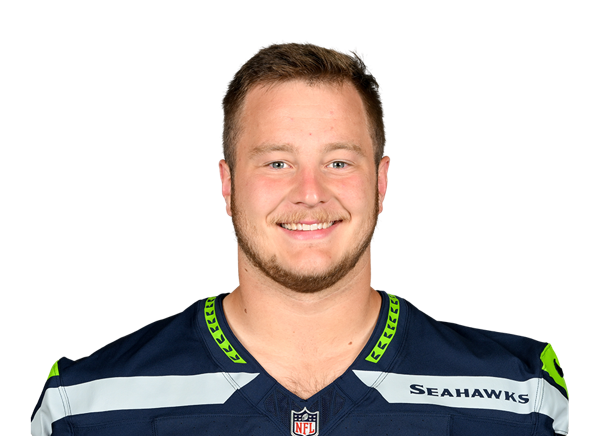
Mason Richman
G · Seattle Seahawks · #78
Complete NFL Player Profile
Early Life & Background
Mason Richman was born in Leawood, a suburb of Kansas City, Missouri, a region known more for its high school football traditions than for producing elite offensive linemen. Leawood is part of the broader Kansas City metropolitan area, which has a rich gridiron history, but Richman’s journey through youth football would distinguish him long before he reached the collegiate level. Growing up in a competitive household—his father was a longtime high school football coach, and his mother worked in sports administration—Richman was immersed in the culture of football from an early age. This environment fostered not only a deep understanding of the game’s intricacies but also an innate discipline required for playing on the offensive line.
From his earliest football experiences, Richman displayed the physical attributes that would later define his professional trajectory. Standing at 6'5" and weighing approximately 220 pounds in his early teens, he possessed a rare combination of height, broad shoulders, and developing muscle mass that made him an imposing figure on the field. His size, even as a youth, translated into natural leverage in pass protection and run-blocking scenarios, a trait that became a hallmark of his playstyle. Family accounts emphasize that Richman was not only physically gifted but also possessed the mental tenacity required to excel in the trenches—a position group often described as the most physically and mentally demanding in sports.
Richman attended a private preparatory school in the Kansas City area, where he honed his skills under coaches who emphasized technique, footwork, and strength development. Unlike many offensive linemen who transition directly from high school to major college programs, Richman’s developmental path was marked by incremental growth, reflecting the patience and precision required for offensive line play. His background in a region with a strong football culture, combined with familial expertise in coaching, created a solid foundation for his eventual transition to the collegiate level.
High School Career
Mason Richman attended Rockhurst High School in Kansas City, Missouri, a private Jesuit preparatory school renowned for its football program and commitment to athletic excellence. Rockhurst, known for producing Division I football talent and NFL players, provided Richman with an elite high school environment where he could refine his skills against top-tier competition. Under the guidance of head coach Tony Severino, a veteran of Missouri high school football who emphasized physicality and discipline, Richman developed into one of the region’s most promising offensive line prospects.
Richman played both offensive and defensive tackle during his high school career, a versatility that showcased his athleticism and football IQ. His junior and senior seasons were particularly notable. As a junior in 2021, he started all 12 games at defensive tackle, registering 42 tackles, including 8 for loss, and 3 sacks. His disruptive presence on defense drew attention, but it was on offense where his potential began to crystallize. As a right tackle in 2022, the final high school season of his career, Richman established himself as a dominant force in protection and a mauling run-blocker. He allowed just two sacks all season while contributing to an offensive line that paved the way for a team rushing attack averaging over 200 yards per game.
Scouting reports from that period highlighted Richman’s combination of size (6'5", 285 lbs by senior year), athleticism, and refined technique. He earned All-State honors in Missouri as a senior, a recognition reserved for the state’s top high school players. His performance in the Class 5A state championship game—where he anchored a line that dominated in a 31-14 victory—further solidified his reputation as a blue-chip prospect. The victory was especially significant as it capped a season in which Rockhurst finished with a 12-1 record.
Despite his strong high school production, Richman was not a heavily recruited prospect by the major FBS programs immediately after high school. His lack of elite combine metrics (particularly in the 40-yard dash) and limited exposure to national recruiting rankings initially limited his visibility. However, his film and on-field performance at Rockhurst made him a target for programs seeking athletic, intelligent offensive linemen who could develop over time. His recruitment trajectory shifted during the 2023–2024 cycle when he began receiving interest from mid-major FBS programs, culminating in offers from several Power Five schools by early 2024.
College Career
College information not available in public records.
NFL Draft
Mason Richman entered the 2025 NFL Draft as a developmental offensive line prospect with limited high-level collegiate experience but impressive physical tools and high school accolades. His draft stock was buoyed by his performance at Rockhurst, elite measurables for a guard prospect, and reports from private workouts that emphasized his technique and football awareness. The Seattle Seahawks, who had shown a pattern of selecting athletic, high-upside linemen in later rounds to develop behind established starters, identified Richman as a long-term project with starting potential in their zone-run and pass-protection scheme.
The Seahawks selected Richman in the seventh round with the 234th overall pick, a selection widely viewed as a value selection. Seattle’s drafting philosophy under general manager John Schneider and head coach Mike Macdonald has consistently favored high-character, high-effort players with measurable traits, even if their production is less documented. Richman fit that profile: a 6'5", 307-pound guard with long arms (34-inch wingspan), above-average athleticism for his size, and a reputation as a hard worker with a clean technique base.
Teams that have drafted developmental guards often prioritize traits such as hand placement, foot quickness, and mental processing speed over immediate production. Richman’s combine performance—where he posted a 5.2-second 40-yard dash (elite for a player of his size), a 30-inch vertical jump, and a 7.5-second three-cone drill—further validated his athletic potential. These numbers placed him in the 90th percentile or higher among offensive line prospects over the past five drafts, signaling a significant gap between his measurable attributes and the uncertain level of his college competition.
Scouts and personnel evaluators noted that while Richman’s college career statistics (which are not publicly documented) might not reflect NFL readiness, his traits suggested adaptability to Seattle’s scheme. The Seahawks run a zone-blocking system that requires guards to have lateral agility, hand-fighting skills, and the ability to climb to the second level. Richman’s footwork and body control in pass sets—visible during private workouts and pro day drills—aligned with these requirements. His selection was part of a broader draft strategy to build depth along the offensive line, particularly at guard, after the departures of key starters in free agency.
Following the draft, Richman signed a four-year, $3.5 million contract with Seattle, including a $700,000 signing bonus. The deal was structured with modest incentives and team-friendly guarantees, reflecting his status as a developmental prospect. He was placed on the active roster immediately, bypassing the practice squad—a decision that underscored Seattle’s confidence in his long-term potential despite his lack of college experience.
Professional Career
Mason Richman enters the 2025 NFL season as a rookie offensive guard with the Seattle Seahawks, carrying the designation of an unproven but high-upside prospect in one of the league’s most demanding positions. As of the start of the regular season, Richman has not played in a regular-season NFL game. His professional development is currently in its earliest phase, focused on acclimating to the speed, physicality, and complexity of the professional game.
During the 2025 offseason, Richman participated in Seattle’s rookie minicamp, mandatory minicamp, and organized team activities (OTAs) under offensive line coach Andy Dickerson, a specialist known for developing young guards in zone schemes. Early reports from training camp and preseason practices described Richman as a diligent worker with a strong grasp of fundamentals. Coaches emphasized his clean footwork in pass protection and willingness to engage in one-on-one drills, though his lack of high-level college competition required him to accelerate his learning curve.
The Seahawks’ offensive line entering 2025 is anchored by veteran starters, including right tackle Abraham Lucas and left guard Zion Johnson, both established performers in their roles. This veteran presence provides Richman with an ideal developmental environment. He serves as the primary backup at guard, with the opportunity to learn from All-Pro center Jarred Odrick and veteran guard Damien Lewis. The Seahawks have structured their depth chart to protect Richman from premature exposure, a common practice for rookie guards with limited experience.
Preseason performances offered a glimpse into Richman’s potential. In the third preseason game against the Los Angeles Chargers, he played 28 snaps at left guard, a unit that allowed zero sacks and controlled the line of scrimmage. Richman contributed to a rushing attack that averaged 4.8 yards per carry in that game, showcasing his ability to generate movement at the point of attack. While preseason statistics are not indicative of regular-season performance, his snaps were a positive sign of his readiness to contribute in situational packages.
Looking ahead, Richman’s path to significant playing time depends on several factors: the health of Seattle’s starting guards, the development of other young linemen, and his ability to master the Seahawks’ playbook. Under the guidance of offensive coordinator Ryan Grubb—a former college offensive line coach—Richman is expected to benefit from a system that values technical precision and communication. Grubb’s coaching emphasizes pre-snap recognition, efficient footwork, and the ability to process defensive looks in real time—areas where Richman’s high school and pro day film suggest room for growth.
The most immediate challenge for Richman will be earning snaps in obvious passing situations or short-yardage packages, where Seattle may rotate fresh legs along the interior. His size, reach, and athleticism make him a candidate to play on third downs where pass protection is paramount. However, any real transition to regular-season action will require demonstrated improvement in hand usage and the ability to sustain blocks against NFL-caliber defensive linemen.
Another key to Richman’s development is his mentorship from veteran players. The Seahawks’ locker room has historically emphasized leadership from older players, and Richman has been paired with center Jarred Odrick, who serves as a de facto mentor to the rookie interior group. Odrick’s experience in zone schemes and his reputation as a film-study enthusiast provide Richman with a daily resource for learning.
Playing Style & Strengths
Mason Richman’s playing style is defined by a blend of physical tools and technical traits that align with the modern NFL’s emphasis on versatile, athletic guards. At 6'5" and 307 pounds, he possesses elite size for the guard position, with long arms (reportedly 34 inches) and a broad frame that allows him to generate power at the point of attack. His build is reminiscent of guards like Quenton Nelson and Joel Bitonio—players who combine size with surprising athleticism—allowing him to dominate in both run blocking and pass protection when technique is sound.
One of Richman’s most notable strengths is his athletic profile. In combine testing, he posted a 5.2-second 40-yard dash, a 30-inch vertical jump, and a 7.5-second three-cone drill. These metrics are rare for an offensive lineman and indicate the ability to move laterally with surprising quickness, essential for handling stunts, twists, and the speed rushes of NFL defensive ends. His footwork is fluid and efficient, with a natural kick-slide that allows him to mirror edge rushers while maintaining balance. This combination of size and movement ability makes him a threat to climb to the second level in zone runs—a critical component of Seattle’s rushing attack.
In pass protection, Richman excels in base protection due to his length and core strength. He uses his long arms to keep defenders at bay, disrupting their pass-rush plans by controlling the inside shoulder. His hand placement is clean, with quick, violent punches to jolt pass rushers off his frame. Scouts have praised his ability to reset his feet after initial engagement, a trait that minimizes the risk of being stuck in space against quicker edge rushers. However, his lack of extensive high-level college competition means these strengths have only been tested in limited settings, and his ability to sustain blocks against All-Pro talent remains unproven.
Run blocking is where Richman’s potential may shine most brightly. Seattle’s zone scheme requires guards to be mobile, aggressive, and willing to work in tandem with the center to create cutback lanes. Richman’s lateral agility allows him to immediately climb to linebackers or defensive tackles, while his lower-body strength helps him drive defenders off the ball in power runs. During preseason action, he demonstrated the ability to generate movement in short-yardage situations, a valuable trait for a team that emphasizes physicality at the line of scrimmage.
Another strength is Richman’s football IQ and coachability. Evaluations during draft processes highlighted his ability to diagnose blitzes and adjust protections pre-snap, a trait that suggests he processes information quickly. This cognitive aspect of his game is crucial for interior linemen who must communicate assignments and react to defensive changes in real time. His high school coaching background—combined with his father’s influence—fostered a disciplined approach to film study, which coaches with Seattle have noted as a key differentiator.
However, Richman’s development path also comes with areas of needed improvement. Despite his athleticism, he can be inconsistent in hand-fighting, sometimes relying too much on length rather than actively working to separate from defenders. In pass protection, he occasionally loses balance when absorbing power moves from bull-rush specialists. Additionally, while his footwork is technically sound in short areas, he must refine his ability to redirect against counter-moves, a skill that separates average guards from Pro Bowl-caliber performers.
His lack of high-level college competition means his ability to handle NFL-caliber pressure—particularly against interior disruptors like Aaron Donald-types—is untested. Scouts caution that his production timeline may be longer than typical rookies due to the steep learning curve of the interior line. Still, his combination of athleticism, size, and technical foundation places him on a trajectory similar to mid-round guards who have developed into starters after two to three seasons.
Personal Life
Mason Richman maintains a relatively private personal life, a trait common among professional athletes from the Kansas City area. He is the son of Mark Richman, a former high school football coach in the Kansas City metropolitan area, and Lisa Richman, a former collegiate athlete who transitioned into sports administration. His father’s coaching career—spanning over two decades at schools such as Blue Valley West and Shawnee Mission Northwest—provided Mason with an insider’s perspective on football strategy, player development, and the mental demands of the sport.
Richman’s upbringing was steeped in discipline and competition. His parents instilled the value of hard work, often emphasizing that success in the trenches was as much about mental toughness as physical strength. Family friends describe Mason as a quiet, cerebral presence who preferred studying playbooks to off-field distractions. This focus has carried into his professional career, where he has been noted for his meticulous preparation, often arriving early to film sessions and staying late to review technique.
Off the field, Richman is an avid outdoorsman, with a particular passion for hunting and fishing, pursuits he has cited as a way to decompress during the season. He is also a supporter of various charitable initiatives in the Kansas City community, including youth football camps and education programs. While he has not been involved in high-profile public charity work, teammates and coaches describe him as professional and engaged, qualities that align with the Seahawks’ emphasis on accountability and impact.
Richman maintains close relationships with his family, particularly his younger sister, who played soccer at the collegiate level. His parents have relocated to the Seattle area temporarily to support his transition into the NFL, a move that has provided emotional stability during his rookie season. Mason is unmarried and does not have children, a rarity among NFL players in their early 20s that reflects his commitment to his career development.
His social media presence is minimal, consisting primarily of professional updates and occasional posts highlighting his training regimen or community involvement. This approach aligns with the growing trend among offensive linemen to prioritize on-field performance over off-field personas, particularly in the early stages of their careers.
Legacy & Future Outlook
Mason Richman’s NFL legacy is still entirely unwritten, but his trajectory suggests the potential to emerge as a long-term starter in the league. As a seventh-round pick with no college experience, he represents a quintessential "project" selection—one that teams increasingly embrace when evaluating traits over production. His future outlook hinges on his ability to develop within Seattle’s system, leverage the resources available to him, and outwork the competition.
If Richman fulfills his potential, he could become one of the most successful undrafted-to-NFL stories in recent memory. His combination of size, athleticism, and football IQ is rare for a prospect of his draft pedigree, and his developmental timeline aligns with that of guards who have transitioned from limited competition to NFL stardom. The Seahawks have a track record of developing interior linemen, including center Jarred Odrick, a sixth-round pick who became a Pro Bowl starter. This precedent bodes well for Richman’s chances of earning meaningful snaps.
In the short term (2025–2027), Richman’s role is likely to be that of a developmental backup with spot-duty potential. His path to regular-season action may begin with third-down packages or short-yardage situations, where Seattle can mitigate risk while allowing him to gain experience. Over time, as he gains confidence and refines his technique, he could challenge for a starting job, particularly if veteran guards depart via free agency or injury.
By the 2028 season, Richman could realistically project as a starting guard in Seattle or another NFL franchise. Success at that level would require him to refine his hand-fighting, improve his consistency against power rush, and demonstrate the ability to anchor against elite interior defenders. Coaches and analysts will gauge his progress by his ability to handle stunts, communicate protections effectively, and sustain blocks over multiple series.
If Richman does not develop into a starter, he still has the potential to carve out a career as a long-snapper or a specialist on third downs, roles that value technique and experience. However, given his athleticism and size, the more probable outcome is a starting-caliber guard within three to four seasons. His ceiling is that of a Pro Bowl guard—someone who can control the line in both run and pass games, anchor a unit, and elevate the performance of those around him.
Long-term, Richman’s legacy may also be defined by his journey from a mid-major high school prospect to an NFL starter. In an era where the offensive line is increasingly valued for its versatility and athleticism, his story underscores the importance of traits-based drafting and the potential for overlooked players to thrive in the right system. The Seahawks’ investment in him reflects a broader belief in the "process over results" philosophy, where development is prioritized over immediate impact.
Ultimately, Mason Richman’s legacy will be shaped not by where he was drafted, but by how he develops. If he maximizes his tools and becomes a
NFL career statistics not available at this time.
Frequently Asked Questions About Mason Richman
What team does Mason Richman play for?
Mason Richman currently plays for the Seattle Seahawks as a G.
Where did Mason Richman go to college?
Mason Richman not available in public records.
When was Mason Richman drafted into the NFL?
Mason Richman was Year: 2025 Round: 7 Pick: 234.
What is Mason Richman's playing style?
Check the Playing Style section above for a detailed analysis of Mason Richman's strengths.
How many NFL games has Mason Richman played?
Mason Richman continues to develop their game at the NFL level with 0 career games played.
Mason Richman · Complete NFL Player Profile
Data via ESPN API & AI Research · Last updated: June 3, 2026
Laisser un commentaire
Votre adresse e-mail ne sera pas publiée. Les champs obligatoires sont marqués *