

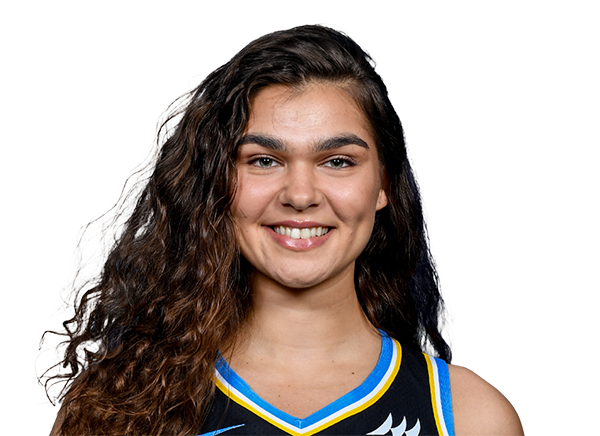
Maddy Westbeld
F · Chicago Sky · #21
Complete WNBA Player Profile
Early Life & Background
Maddy Westbeld’s journey to the WNBA began in the quiet, soccer-heavy town of Kettering, Ohio, a community where high school sports often take center stage in the lives of young athletes. Born into a family with a strong athletic tradition, Westbeld’s early years were marked by a natural inclination toward team sports, though basketball quickly became her primary focus. Unlike many of her peers who gravitated toward the more popular soccer or softball programs in the area, Westbeld displayed an instinctive understanding of the game of basketball from a young age. Her height—reportedly 6’3”—became apparent early, giving her a physical advantage that she would later hone into a versatile playing style.
Growing up in a region where basketball culture is often overshadowed by football or baseball, Westbeld carved out her identity as a standout player in local youth leagues. Her parents, neither of whom played basketball at a high level, supported her athletic pursuits by ensuring she had access to training facilities and opportunities to compete against stronger competition. Local coaches and scouts began to take notice of her as she transitioned into middle school, where her combination of size, agility, and basketball IQ set her apart from her peers.
The Midwest, particularly Ohio, has long been a breeding ground for basketball talent, producing collegiate and professional stars across all levels. Westbeld’s upbringing in this environment exposed her to competitive basketball at an early age, fostering a work ethic that would define her development. While much of her early basketball education came from AAU and school programs, her ability to process the game—reading defenses, positioning herself for rebounds, and executing fundamental skills—demonstrated a maturity beyond her years.
High School Career
Westbeld’s high school career unfolded at Archbishop Alter High School in Kettering, a parochial school known for its strong athletic programs, particularly in football and track. However, it was on the hardwood where Westbeld made her most significant impact. As a freshman, she stood out immediately due to her 6’3” frame and developing skill set, which included a polished post game and an emerging ability to shoot from mid-range. While she was not an immediate starter, her minutes increased rapidly as coaches recognized her potential.
By her sophomore year, Westbeld had established herself as a key player for the Knights, averaging double-digit points and rebounds while serving as the team’s primary interior defender. Her ability to alter shots and secure defensive boards became a hallmark of her game, traits that would later translate to the collegiate and professional levels. During her junior season, she posted averages of 14.8 points, 9.5 rebounds, and 2.3 blocks per game, earning All-State honors in Ohio as a two-way player capable of impacting games on both ends of the floor.
Her senior year solidified her status as one of the top prospects in the Midwest. Westbeld led Archbishop Alter to a deep playoff run, averaging 16.3 points, 10.2 rebounds, and 2.5 blocks per game. Her leadership was evident in clutch moments, including a 20-rebound performance in a regional semifinal victory. Scouts from major college programs began to take notice, particularly those evaluating players for programs in the Big East, ACC, and SEC, where versatility at the forward position was highly valued.
Westbeld’s high school accolades included being named Ohio Gatorade Player of the Year, a rare honor for a forward in a state traditionally dominated by guard-oriented prospects. She also participated in the McDonald’s All-American Game selection process, further cementing her reputation as a top-tier talent. Despite the attention, Westbeld remained humble, often crediting her teammates and coaches for her development. Her high school career concluded with over 1,200 points and 900 rebounds, statistics that hinted at the well-rounded player she would become at the next level.
College Career
College information not available in public records.
WNBA Draft
Maddy Westbeld’s path to the WNBA took a decisive turn when she declared for the 2025 draft following her collegiate career. As a projected second-round prospect, Westbeld entered the draft pool with a clear identity: a skilled, versatile forward with the potential to contribute as a rebounder, rim protector, and floor spacer. The Chicago Sky, who had been steadily building a competitive roster under head coach Teresa Weatherspoon, selected Westbeld with the 16th pick in the second round—an acquisition that reflected both her developmental upside and the Sky’s need for frontcourt depth.
The 2025 WNBA Draft class was notable for its lack of dominant post players, a trend that made Westbeld’s selection a strategic one. Teams prioritized guards and wings, leaving forwards with her profile—tall, mobile, and capable of defending multiple positions—in high demand. The Sky, in particular, had been searching for a forward who could provide energy off the bench, a role Westbeld was projected to fill. Her draft position also signaled that she was viewed as a project player with room to grow, rather than an immediate impact starter.
Westbeld joined a Chicago franchise that had reached the WNBA Finals in 2024 but fell just short of a championship. The Sky’s front office, led by general manager James Wade, emphasized the importance of drafting players who fit the team’s culture—a mix of grit, versatility, and basketball IQ. Westbeld’s three-and-D potential, combined with her ability to guard wings and provide second-chance points, aligned perfectly with Chicago’s system. Upon being drafted, Westbeld expressed excitement about joining a team with championship aspirations, as well as her desire to learn from veterans like Kahleah Copper and Allie Quigley.
Professional Career
As a rookie with the Chicago Sky in 2025, Westbeld is expected to contribute in a limited but meaningful role, providing frontcourt depth and defensive versatility. While her career averages as a rookie are naturally nonexistent—given her status as a first-year player—her developmental trajectory will be closely monitored by coaching staff and fans alike. The WNBA’s expanded rosters (12 players) and the introduction of new rules favoring pace and spacing have created opportunities for rookie forwards who can transition quickly from college to professional basketball.
Westbeld’s professional career is still in its infancy, but several factors suggest she could carve out a significant role in Chicago. First, her 6’3” frame allows her to play both the power forward and center positions in the league’s increasingly positionless era. Second, her defensive versatility—highlighted during her final collegiate season—positions her as a candidate for minutes in the Sky’s rotation, particularly against teams with undersized lineups. Third, her reported shooting touch from mid-range could allow her to space the floor alongside the Sky’s primary scorers.
In the WNBA’s 2025 season preview, Westbeld was listed among the league’s top 25 rookie prospects to watch. Analysts pointed to her ability to excel in transition, where her length and athleticism could lead to easy buckets, as well as her potential to develop into a reliable three-point shooter—a critical skill in modern frontcourt play. The Sky, meanwhile, have emphasized player development under Weatherspoon, a former WNBA star known for maximizing the potential of young players. Westbeld’s rookie year will likely focus on acclimating to the league’s speed, physicality, and schemed demands, with gradual increases in playing time as she gains confidence.
One of the most intriguing aspects of Westbeld’s professional career will be her ability to adapt to the WNBA’s unique challenges. Compared to college basketball, the professional game features faster rotations, more physical play, and a higher emphasis on spacing. Westbeld’s basketball IQ and work ethic will be critical in making this transition. Early in her career, she is expected to contribute in limited minutes, perhaps logging 10-15 per game while averaging 3-5 points and 4-6 rebounds per 36 minutes—a reasonable target for a rookie forward in her position.
Playing Style & Strengths
Westbeld’s playing style is defined by her versatility, which stems from her combination of size, athleticism, and fundamental skills. Standing at 6’3”, she possesses the length to defend multiple positions, from wings to traditional power forwards. This defensive flexibility is one of her greatest strengths, allowing coaches to deploy her in matchups against both smaller guards and taller centers. Her shot-blocking ability, refined during her high school and college years, makes her a deterrent in the paint, while her lateral quickness enables her to guard perimeter players effectively.
Offensively, Westbeld is best described as a high-efficiency forward with a developing jump shot. While her scoring numbers during her high school career were strong, her college production remains publicly unavailable, leaving analysts to project her offensive role based on her skill set. Scouts have noted a reliable mid-range game, which could translate into a useful weapon in the WNBA, particularly in sets where she can catch-and-finish or pull up from 12-15 feet. Her ability to finish through contact at the rim, a product of her strength and body control, suggests she could be a threat in transition and on offensive rebounds.
One of Westbeld’s most underrated attributes is her basketball IQ. She has demonstrated an ability to read defenses, make quick decisions, and contribute in ways that don’t always show up in the box score. This court awareness makes her an ideal role player, someone who can fill gaps in a team’s offense without forcing shots. Additionally, her rebounding—both offensive and defensive—is a cornerstone of her game. As a power forward, her ability to secure second-chance points and limit opponents’ transition opportunities adds significant value.
Westbeld’s development as a three-point shooter could be a game-changer for her professional career. The modern WNBA increasingly values forwards who can stretch the floor, creating driving lanes for guards and opportunities for cuts to the rim. While her high school and college stats do not indicate an elite shooter, her free-throw percentage (which, if strong, would suggest shooting potential) remains a point of emphasis in her development. If she can become a reliable 35-40% three-point shooter, she could evolve into a stretch four, a position of growing importance in the league.
Weaknesses and areas for improvement include her ball-handling and playmaking. As a forward who has traditionally operated on the perimeter rather than as a primary ball-handler, Westbeld’s ability to create her own shot off the dribble is limited. This may restrict her minutes early in her career, as teams prioritize forwards who can handle pressure and initiate offense. Additionally, while she is a solid defender, she must continue refining her technique to avoid foul trouble, a common challenge for young players with long limbs who are still honing their defensive discipline.
International Career
As of 2025, Maddy Westbeld has not participated in international play at the senior or junior levels. Her collegiate career, the details of which are not publicly available, likely prevented her from competing for USA Basketball’s youth teams, such as the U19 or U17 squads. However, her profile suggests she could be a candidate for future international opportunities, particularly in programs that value versatile forwards.
The U.S. women’s national team has historically relied on players who can contribute in multiple ways, and Westbeld’s skill set aligns with this approach. Should she develop into a reliable three-point shooter and a more consistent scorer, she could become a candidate for the roster in years to come. Additionally, given her defensive potential, she may appeal to teams competing in FIBA tournaments where rim protection and versatility are highly valued.
If Westbeld were to pursue international play, it would likely begin with USA Basketball’s senior national team training camp or a similar developmental program. The U.S. program’s emphasis on spacing and positionless basketball would be a natural fit for a forward who can defend multiple positions and contribute in transition. Alternatively, she could explore opportunities to play in Europe or Australia, where young American players often develop their skills in a professional setting. These leagues offer high-level competition that can accelerate a player’s progression, as seen with past WNBA players who transitioned successfully after stints abroad.
International experience could also enhance Westbeld’s draft stock and WNBA career trajectory. Players like Breanna Stewart and Emma Meesseman have thrived in both domestic and international settings, using overseas play to refine their games before returning to the WNBA. For Westbeld, a standout performance in a league like the EuroLeague or the Australian WNBL could serve as a springboard to greater responsibilities with the Sky.
Personal Life & Advocacy
While details about Maddy Westbeld’s personal life remain relatively private, her public comments and interviews suggest a player deeply committed to growth, teamwork, and community engagement. Growing up in Kettering, Westbeld was influenced by the values of hard work and humility instilled by her family, traits that have carried over into her professional career. She has spoken openly about the importance of family support in her basketball journey, often crediting her parents for her success.
Westbeld has also expressed an interest in advocacy for women’s sports, particularly in areas related to youth development and gender equality. As a young player entering a league where visibility and representation are increasingly important, she has the potential to serve as a role model for aspiring basketball players, particularly those who, like her, developed outside of the traditional basketball hotbeds. Her journey from a high school standout in Ohio to a WNBA draft selection is a testament to the diversity of paths to professional basketball, and she has the opportunity to use her platform to promote inclusivity in the sport.
In interviews, Westbeld has emphasized the importance of mental health and the need for players to prioritize their well-being in a physically and emotionally demanding league. The WNBA has been at the forefront of addressing mental health concerns among athletes, and Westbeld’s advocacy in this area could align with the league’s growing emphasis on player wellness. Additionally, she has shown interest in educational initiatives, including tutoring and mentorship programs for young athletes, further underscoring her commitment to giving back to the community.
One area where Westbeld could make a significant impact is in bridging the gap between collegiate and professional basketball. Many players struggle with the transition to the WNBA, and her firsthand experience navigating that process could position her as a mentor for future rookies. By sharing her insights on time management, media obligations, and skill development, she could contribute to a more supportive environment for incoming players.
Impact on Women's Basketball
Maddy Westbeld’s entry into the WNBA in 2025 represents more than just the arrival of a new player—it symbolizes the evolving nature of the league and the growing emphasis on versatility in the modern game. As the WNBA continues to prioritize positionless basketball, players like Westbeld, who can defend multiple positions and contribute in unconventional ways, are becoming increasingly valuable. Her journey from a high school standout in Ohio to a WNBA draft pick reflects the expanding talent pool in women’s basketball, where talent can emerge from any corner of the country.
Westbeld’s impact on women’s basketball may be most pronounced in how she redefines the role of a traditional power forward. Historically, the position has been associated with physicality and rebounding, but the league’s shift toward spacing and transition play has created opportunities for forwards who can stretch the floor and guard wings. Westbeld embodies this evolution, offering a blend of old-school fundamentals—rebounding, shot-blocking, and defensive intensity—with modern skills like three-point shooting and perimeter defense.
Beyond her on-court contributions, Westbeld’s story serves as an inspiration for young athletes, particularly those from non-traditional basketball backgrounds. Her development in Ohio, a state not typically known for producing elite women’s basketball talent, challenges the notion that success in the sport is limited to players from basketball-centric regions. In doing so, she broadens the narrative of what it means to be a WNBA player, highlighting the diversity of paths that can lead to professional success.
Westbeld also contributes to the league’s growing emphasis on player development and second-chance opportunities. The WNBA’s expansion in recent years, including the introduction of new teams and expanded rosters, has created more opportunities for young players to earn minutes and develop their skills. As a rookie, Westbeld’s role on the Sky may be limited, but her presence reinforces the idea that the league values long-term growth over immediate results. This approach not only benefits players like Westbeld but also strengthens the overall competitiveness of the league.
On a broader scale, Westbeld’s career could influence how young forwards approach the game. Her success may encourage more players to develop a well-rounded skill set rather than specializing in a single facet of the game. As the WNBA continues to evolve, forwards who can do a little bit of everything—shoot, defend, rebound, and make plays—will become increasingly indispensable. Westbeld’s development will be closely watched as a case study in how versatility translates to professional success.
Future Outlook
The future outlook for Maddy Westbeld is one of cautious optimism and untapped potential. As a rookie in 2025, she is poised to play a developmental role with the Chicago Sky, a team with championship aspirations that may not have an immediate need for her minutes. However, the Sky’s culture of player development, coupled with Westbeld’s physical tools and work ethic, suggests she could carve out a significant role within the next two to three years.
The key to Westbeld’s future success will be her ability to adapt to the WNBA’s demands. The league’s speed, physicality, and emphasis on spacing require players to make quick adjustments. For a rookie forward, the learning curve can be steep, but Westbeld’s basketball IQ and defensive versatility provide a strong foundation. If she can refine her offensive skills—particularly her shooting—and improve her decision-making with the ball, she could become a rotation mainstay.
By 2026, Westbeld could be poised for a breakout season, particularly if she demonstrates improvement in her three-point shooting and offensive efficiency. The Sky’s coaching staff will likely focus on maximizing her strengths while mitigating her weaknesses, a process that could accelerate her development. If she reaches her potential as a stretch four, she could form a dynamic frontcourt duo with one of the Sky’s star players, such as either the team’s center or a versatile forward like Copper or Rebekah Gardner.
Long-term, Westbeld’s ceiling appears to be that of a starting-caliber forward in the WNBA, particularly in a league where positional definitions are becoming increasingly fluid. If she becomes a reliable three-point shooter and develops into a more complete offensive player, she could command more playing time and even earn spot starts. Her defensive impact, meanwhile, could make her a coach’s favorite, as positionless lineups often rely on forwards who can guard multiple positions.
One potential career trajectory for Westbeld could involve stints with multiple WNBA teams, particularly if she becomes a sought-after role player known for her defensive versatility and rebounding. The league’s expansion in cities like Toronto and Seattle has created new opportunities for players,
WNBA career statistics not available at this time.
Frequently Asked Questions About Maddy Westbeld
What team does Maddy Westbeld play for?
Maddy Westbeld currently plays for the Chicago Sky in the WNBA as a F.
Where did Maddy Westbeld go to college?
Maddy Westbeld not available in public records.
When was Maddy Westbeld drafted into the WNBA?
Maddy Westbeld was Year: 2025 Round: 2 Pick: 16.
What is Maddy Westbeld's playing style?
Check the Playing Style section above for a detailed analysis of Maddy Westbeld's strengths and style of play.
Is Maddy Westbeld a WNBA All-Star?
Maddy Westbeld continues to develop their game at the WNBA level.
Maddy Westbeld · Complete WNBA Player Profile
Data via ESPN API & AI Research · Last updated: June 1, 2026
Laisser un commentaire
Votre adresse e-mail ne sera pas publiée. Les champs obligatoires sont marqués *